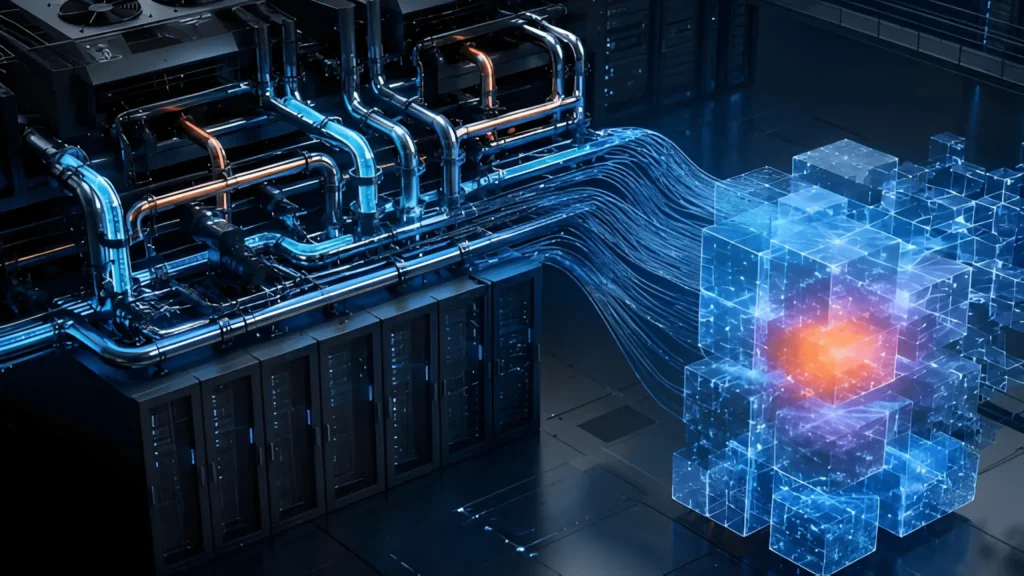
Cooling Infrastructure Is Becoming the New Capacity Multiplier for AI
A decade ago, operators treated cooling systems as background machinery that simply kept servers alive while compute platforms handled the […]


A decade ago, operators treated cooling systems as background machinery that simply kept servers alive while compute platforms handled the […]
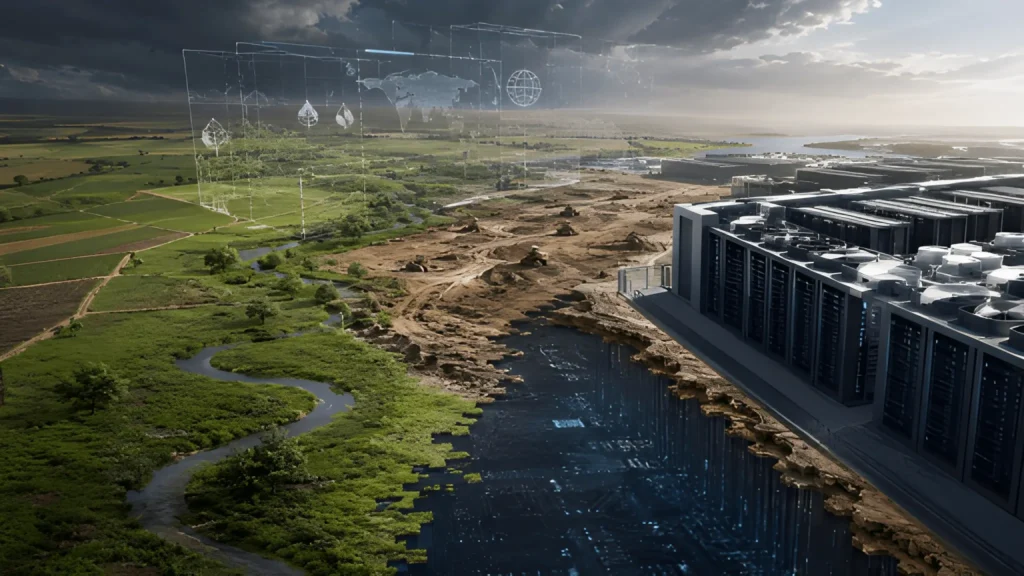
A patch of farmland disappears faster than most infrastructure reports can register it, reflecting the growing scale of land transformation

There is a pattern in how the AI boom is being financed that Bloomberg documented in a detailed investigation in
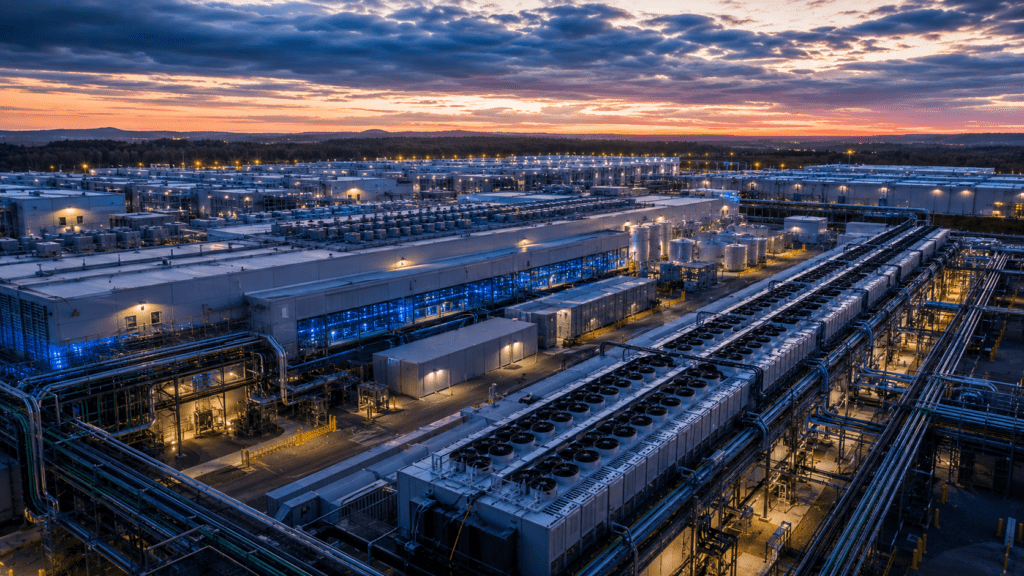
On April 20, Amazon announced an additional $5 billion investment in Anthropic alongside a commitment to invest up to $20
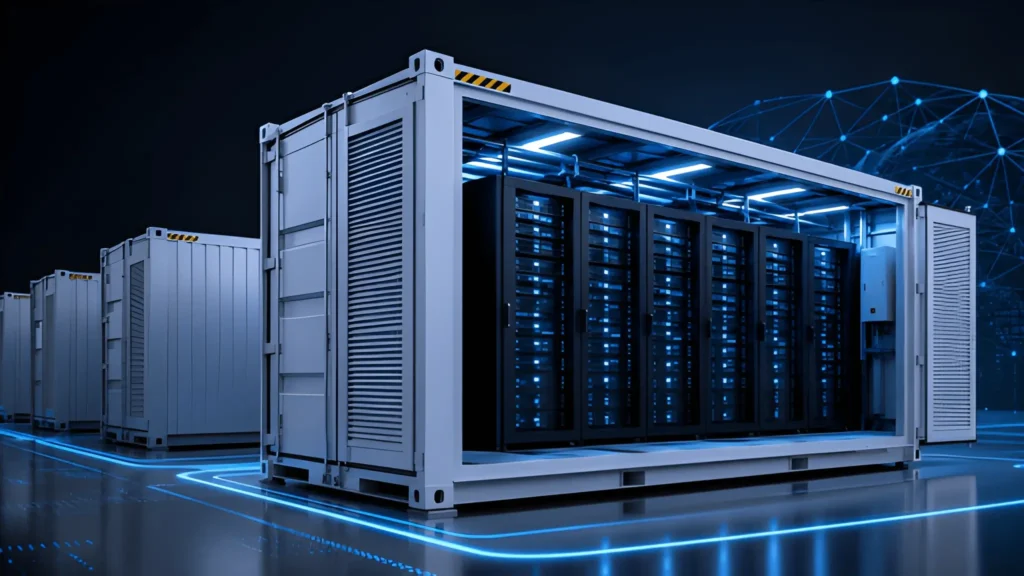
The race to build artificial intelligence infrastructure no longer revolves around who owns the biggest campus or the deepest land
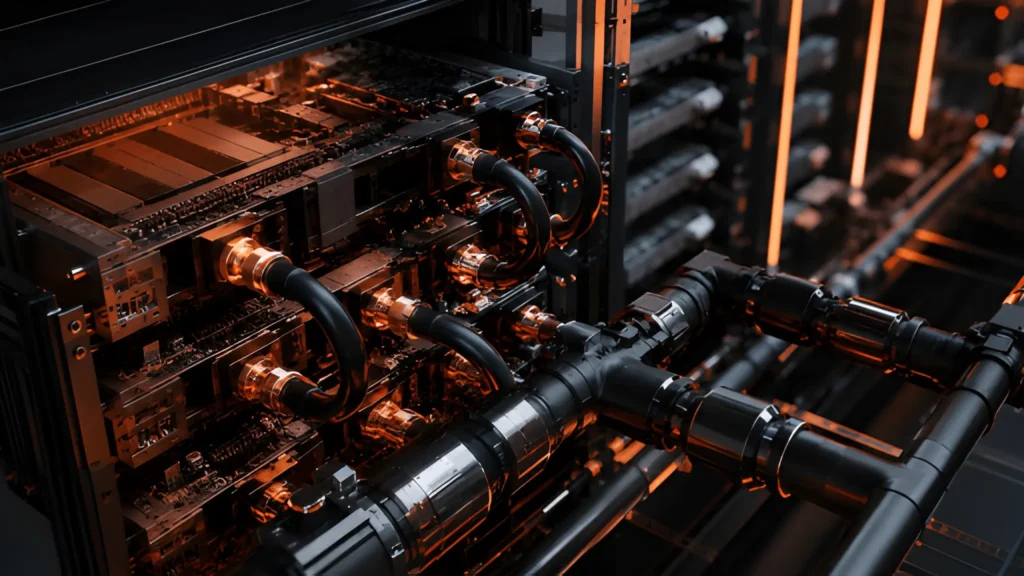
The AI economy didn’t kick off on factory floors, inside turbine rooms, or at mechanical control panels. It started in

The AI infrastructure buildout has a capital problem, a supply chain problem, a grid interconnection problem, and a community opposition

The enterprise IT budget conversation of 2024 was dominated by training costs. Which models to build, how much compute to

Twelve months ago, the US Data Center Moratorium Tracker listed eight active bans across American jurisdictions. Today, the tracker lists 78,

The Next Data Center You Build Has to Serve Two Fundamentally Different Workloads The data center industry spent the past

Enterprise security teams spent decades building defenses around malicious outsiders, compromised employees, and sophisticated ransomware groups. Autonomous software agents now

Environments that were off the radar in data center discussions a decade ago are now front and center for infrastructure

Goldman Sachs published a research note in May 2026 that landed differently from most AI infrastructure commentary. Not because the

The AI infrastructure conversation has focused on the supply side for three years. Which GPU clusters companies are deploying. How

The Quiet Crisis Behind Every AI Expansion AI growth is exposing a structural reality that many organizations underestimated. Scaling compute

A few years ago, infrastructure investors spoke about the Nordic region as if it operated like a single coordinated market
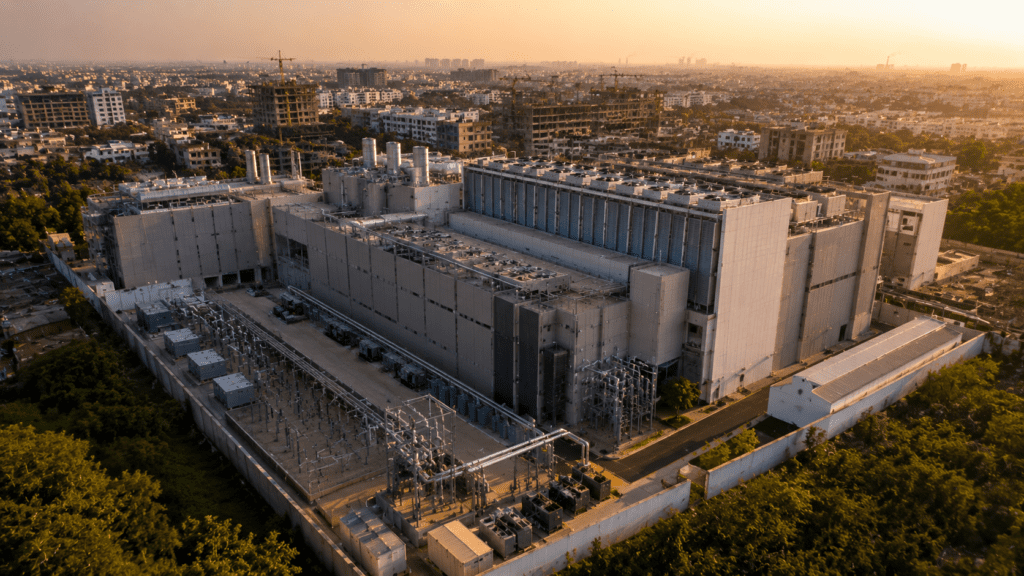
India’s data center market has spent the better part of a decade being talked about in terms of Mumbai, Chennai,

The neocloud narrative has always been about GPUs. Who has the most H100s. Who landed the first GB200 cluster. Which

When AI Facilities Stop Sounding Like Airports Anyone stepping inside a modern AI facility for the first time usually notices

AI infrastructure doesn’t slow down just because a maintenance window shows up on the calendar. Training clusters keep pulling power,

The AI infrastructure conversation has been dominated by power. Grid connection queues, transformer shortages, utility rate disputes, and behind-the-meter generation

The history of data center rack density is a history of predictions that turned out to be underestimates. In 2012,

Too often, modern AI infrastructure discussions begins with procurement numbers instead of operational behavior. Enterprises announce accelerator purchases measured in

Today’s facilities can no longer rely on predictable thermal behavior. Rising compute density, intensive AI processing cycles, and highly variable

A new layer of competition is emerging inside the global AI infrastructure market, and it has less to do with

Artificial intelligence investment has started reshaping infrastructure markets long before many facilities break ground. Capital groups, industrial developers, utility-linked investors,

The data center network was designed for a specific traffic pattern, and that pattern shaped every design decision that followed,

The home data center idea resurfaces every few years, and each time the question is slightly different. It surfaced during

Electricity rarely sat at the center of India’s digital infrastructure discussions because land, fiber, and rack density dominated executive attention.

Nobody notices digital infrastructure when systems work normally, which is exactly why the sector spent years operating outside mainstream economic

The data center industry spent a decade building the narrative that its facilities were invisible, clean, and economically beneficial to

For most of the past two decades, battery storage in data centers meant one thing: uninterruptible power supply systems that

The AI infrastructure race no longer stops at accelerator density, switching capacity, or training scale because physical infrastructure has entered

Every major technology revolution eventually collides with the physical world, and artificial intelligence has now reached that point. Behind the

Twelve months ago, the global AI infrastructure investment map was simple. The United States dominated overwhelmingly. Europe was a secondary

Three years ago, India was a data center market that global operators watched with interest and invested in cautiously. The
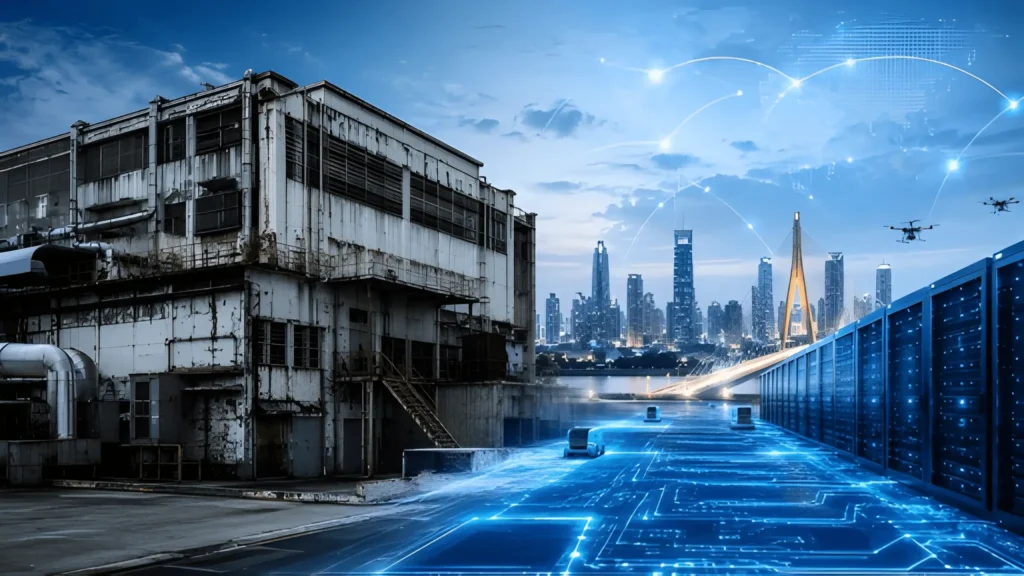
Thailand’s digital infrastructure market entered a different phase once expansion timelines stopped matching demand acceleration. Operators that once focused almost

The data center industry once treated infrastructure relevance as a slow-moving curve that aligned with long depreciation schedules and predictable

The conversation around AI infrastructure has focused heavily on processing clusters, specialized chips, and energy capacity, yet a quieter constraint

Modern AI infrastructure no longer struggles with raw processing capability; it struggles with heat. Thermal constraints now dictate how far

The standard data center lease was designed for a stable world. A tenant signs a 10 to 20-year agreement to

Annual sustainability reporting is now standard practice among hyperscalers. Net zero commitments from data center operators typically target the 2030

For most of the past century, the electrical equipment industry served a broad and diversified customer base. Utilities bought transformers

The data center industry has started to treat immersion cooling as a decisive response to escalating thermal densities driven by

India’s digital economy has entered a phase where demand signals no longer originate only from established metropolitan hubs, and this

On April 27, the Wisconsin Public Service Commission spent more than six hours debating a question that utility regulators across

India’s data center market has moved beyond being a future growth story. It is expanding in real time at a

In February 2024, a little-known agency in Rockland County, New York held a public hearing on a proposed subsidy for

For decades, the semiconductor roadmap delivered a predictable rhythm of performance gains that shaped every layer of digital infrastructure. Engineering

The CO₂ Tunnel Vision Problem Most hyperscale reporting frameworks prioritize Scope 1 and Scope 2 emissions because they align with

The race to scale artificial intelligence infrastructure no longer unfolds inside silicon roadmaps or software stacks alone, as thermal constraints

Northern Virginia still has the largest concentration of operational data center capacity in the world. Phoenix is currently the fastest-growing

The AI infrastructure buildout has been designed, almost exclusively, around training. That focus made sense in 2023. It does not

Australia’s energy transition has moved beyond policy ambition into physical reality, where gigawatts of solar capacity now interact directly with
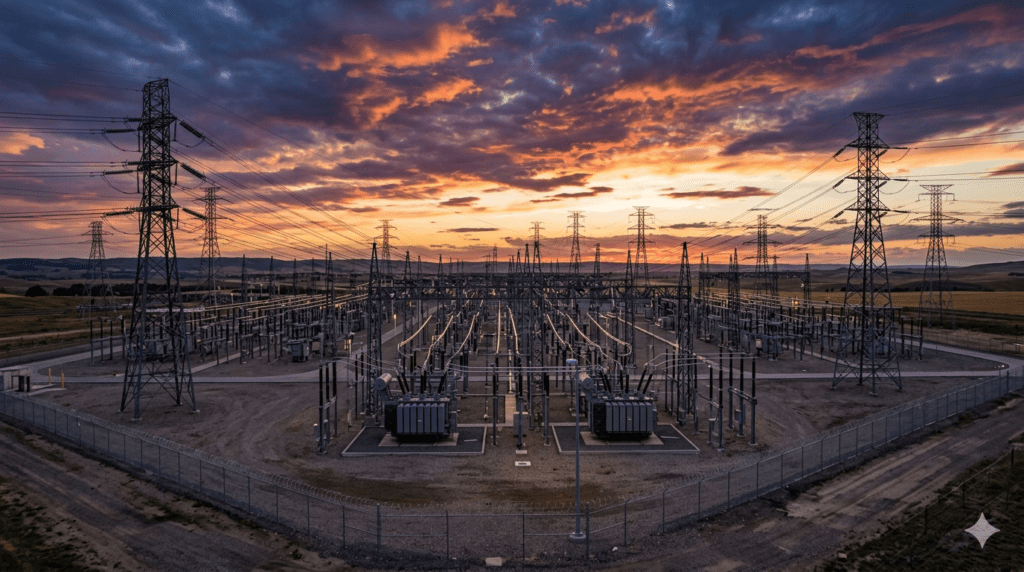
On April 21, the North American Electric Reliability Corporation (NERC) published an alert on data center load stability that has
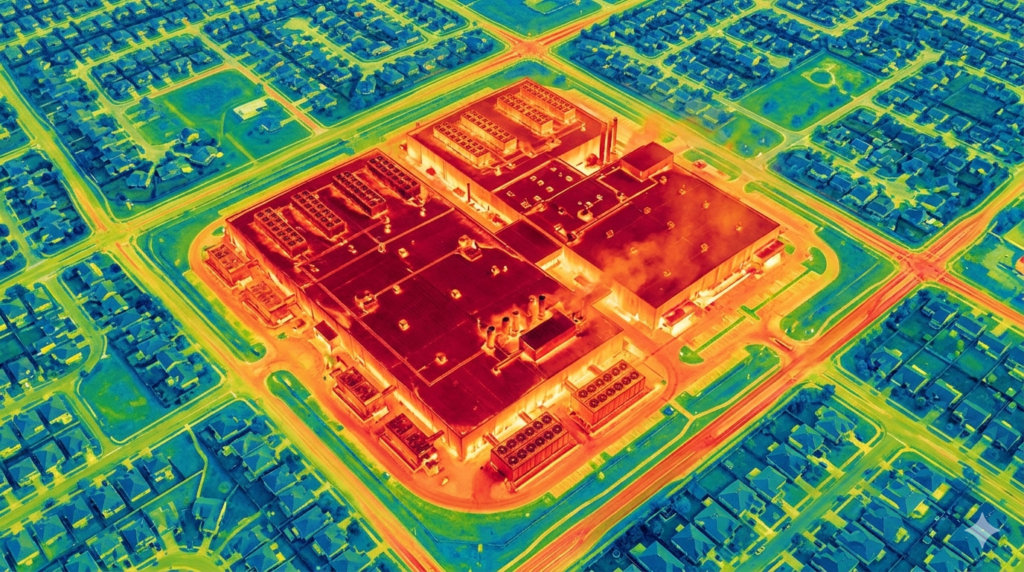
A preprint study published in March 2026 by researchers at the University of Cambridge, Singapore, and Hong Kong has put

Artificial intelligence infrastructure rarely fails in obvious places, yet it often stalls in the least visible layer of the stack.
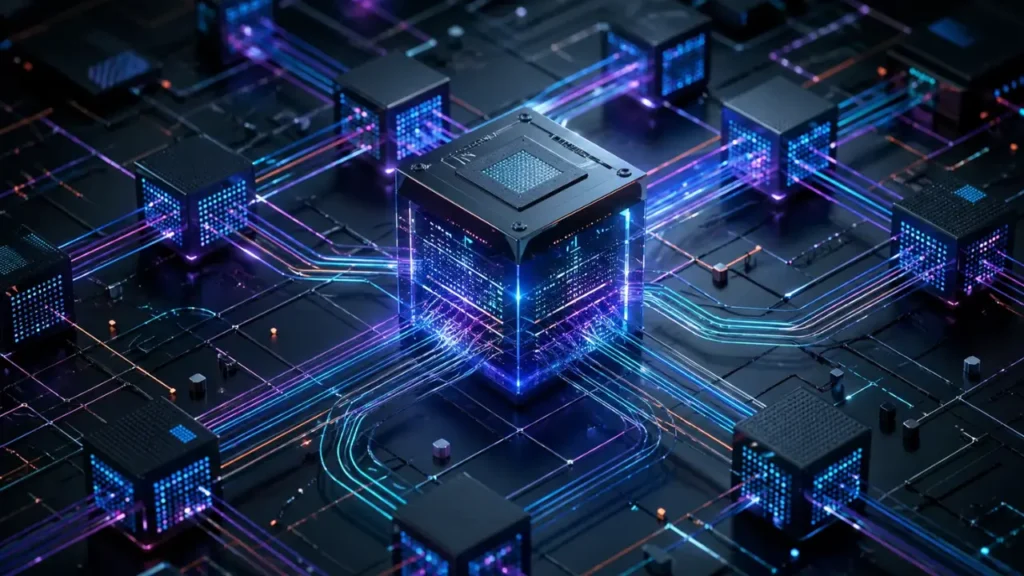
The modern AI facility no longer resembles a passive warehouse of servers waiting for isolated tasks. It behaves more like

The conversation around artificial intelligence infrastructure no longer sits inside engineering teams or policy rooms, as it now unfolds in

The global race to build digital infrastructure no longer depends only on technology roadmaps or capital availability. Energy systems are

The AI infrastructure industry sold liquid cooling as a performance solution. Denser GPU clusters. Lower operating temperatures. Better power usage

The AI data center industry has a sustainability reporting problem that sits in plain sight. Operators announce renewable energy commitments.

Data center power design has always been built around predictability. Training workloads consume power at a known rate for a

Modern digital systems no longer operate within the clean boundaries that once defined enterprise architecture, as the convergence of classical

The global race to scale artificial intelligence infrastructure has moved far beyond traditional technology hubs, reshaping how geography intersects with

The land problem in AI infrastructure is not about availability. There is no shortage of land in the United States.

The narrative around GPU infrastructure has focused almost entirely on scarcity. Chips are in short supply. Power availability constrains every

Data center developers once treated capacity reservation as a straightforward operational activity. They identified a site, secured a grid connection

The acceleration of artificial intelligence has shifted the competitive landscape from model capability to deployment readiness, where the ability to

The global infrastructure narrative has started to shift in a way that does not announce itself loudly, yet its impact

The infrastructure industry has long measured progress through efficiency gains, density improvements, and incremental cost reductions that rarely challenged the

The logic behind where digital infrastructure gets built has shifted in a way that most outside the industry still underestimate,

The clean energy conversation in AI infrastructure has spent three years circling the same two technologies. Solar and wind dominate

India’s data center market produces announcements at a pace that bears little relationship to the pace at which projects actually

Air cooling built the data center industry. For decades it worked well enough. Operators pushed cold air under raised floors,

The rack was never the bottleneck. For most of data center history, the limiting factor was floor space, fiber, or

The expansion of artificial intelligence systems has moved beyond a simple scaling problem and into a structural constraint defined by

The physical limits of electricity infrastructure rarely enter conversations about artificial intelligence, yet they increasingly dictate where and how compute

The neocloud value proposition has been tested hard in 2026. Hyperscalers have closed the gap on GPU availability. Spot pricing

The infrastructure conversation has expanded from scale to include placement, and that added dimension introduces a more difficult question than

The AI infrastructure conversation in 2026 focuses on GPU generations, power density, and cooling architectures. Those priorities make sense. However,

Modern data centers rarely fail in dramatic ways, yet they consistently lose efficiency in subtle, compounding increments that escape immediate

Modern AI infrastructure no longer struggles with compute density; it struggles with keeping that density stable under sustained operational stress.

The expansion of artificial intelligence infrastructure no longer follows a simple supply-demand curve; it behaves more like a financial system

The conversation about AI hardware almost always focuses on the wrong thing. Benchmark scores, teraflops, memory bandwidth, rack power requirements:
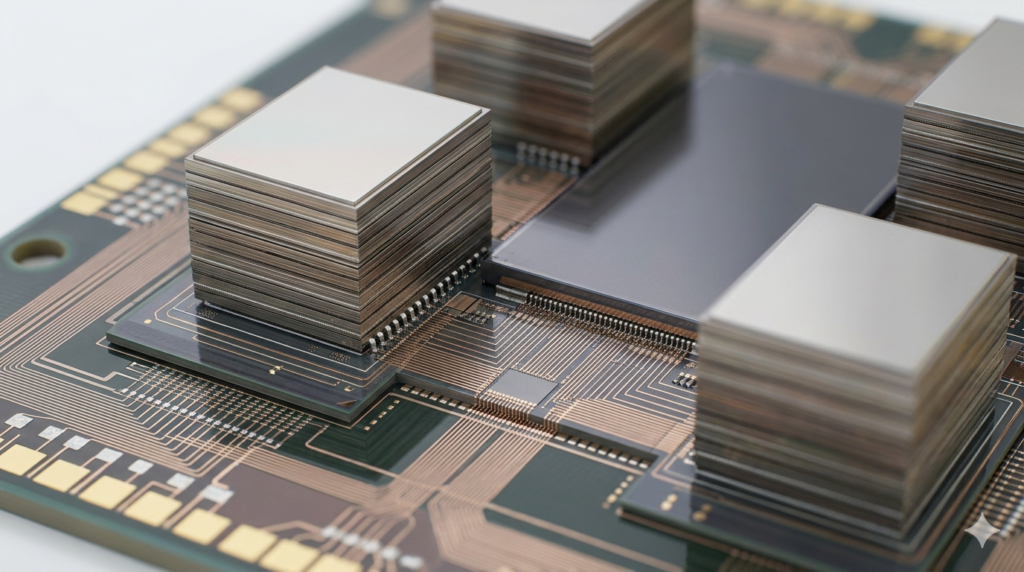
Three years ago, the conversation about AI infrastructure constraints was almost entirely about compute. Get enough GPUs, connect them fast

Modern AI systems embed cryptographic assumptions deep within their architecture, long before security teams evaluate exposure. Model pipelines, data routing

Water used to be an afterthought in data center site selection. Power availability, land cost, connectivity, and tax incentives dominated

The sequence of decisions in data center design used to follow a predictable order: site, power, cooling, structure, hardware. Each

Modern AI systems no longer end their lifecycle at the moment they generate an output, because that output often triggers

The semiconductor industry long equated scale with transistor density, pushing monolithic chips toward their physical and economic limits. That model

AI demand looks explosive on paper, but the revenue behind it tells a narrower story. A small group of hyperscalers

The conversation about AI hardware almost always focuses on the wrong thing. Benchmark scores, teraflops, memory bandwidth, rack power requirements:

Three years ago, the conversation about AI infrastructure constraints was almost entirely about compute. Get enough GPUs, get them connected

Built to Deploy, Not to Last The design philosophy of segments of modern data center infrastructure, particularly modular and edge

The data center cooling conversation has been heading in one direction for several years. Air cooling, the default for most

The data center industry spent a decade getting comfortable with high-density compute. What was once a specialist challenge for supercomputing

The prevailing constraint in advanced AI systems is increasingly shifting from hardware scarcity toward execution latency, as some organizations mitigate

The ESG Illusion: When “Green” Stops at the Brochure Sustainability messaging in the data center industry has grown increasingly sophisticated,

The Shift No One Saw Coming The global data center landscape has entered a phase where traditional metro hubs no

Transformers: The Missing Link in AI’s Power Chain AI infrastructure discussions often concentrate on compute density, semiconductor performance, and power

Scale Is Easy. Clean Paths Aren’t. Modern AI infrastructure expands rapidly because compute, storage, and networking resources can scale horizontally

The colocation market spent the past three years watching hyperscalers self-build at a scale that left limited room for optimism.

Three years ago, major technology companies were competing to announce the most ambitious renewable energy commitments. 100 percent clean energy

GPU density inside modern data center racks has increased at a pace that outstrips the evolution of supporting thermal systems.

Capital deployment in data center infrastructure often begins generating financial exposure long before it produces any measurable output. Power capacity

The default assumption in AI infrastructure has always favoured greenfield. Build new, build big, build for the future. When hyperscalers

For the past three years, AI training dominated the infrastructure conversation. Building the model was the hard part. Compute clusters

The Queue That Doesn’t Show Up in Capacity Numbers Capacity metrics in AI infrastructure often present a misleading snapshot because

Machine learning built its credibility on static datasets that allowed controlled iteration, benchmarking, and deterministic evaluation across environments. Physical AI

Telecom operators spent the last decade watching hyperscalers build the infrastructure that runs the internet. They provided the pipes. Someone

The uninterruptible power supply has not changed much in thirty years. It bridges the gap between a power outage and

The construction timeline for a conventional data center has always been one of the most stubborn constraints in infrastructure development.

The Myth of “Zero-Cost Cooling” The narrative around ambient cooling often positions it as a near-zero cost solution, yet operational

Water has never featured prominently in the public conversation about data center sustainability, but that is changing. The industry’s rapid

AI infrastructure expansion has triggered an unprecedented surge in power interconnection requests across global grids, yet not all signals reflect

India’s data centre expansion narrative continues to assume linear scalability, yet AI workloads are reshaping infrastructure requirements at a non-linear

Grid connectivity has long been treated as a proxy for stability in large-scale infrastructure, yet that assumption begins to fracture

The sustainability conversation around data centers concentrates almost entirely on operational energy consumption. Power usage effectiveness, renewable energy certificates, water

Data center network topology has historically been designed around predictable traffic patterns. Enterprise applications generated relatively stable flows between clients

India’s data center market has entered a new phase. What once attracted investment as a growing enterprise cloud market now

The relationship between AI infrastructure and the power grid is undergoing a structural transformation. For decades, data center developers treated

The global transition toward sustainable digital infrastructure has reached a critical inflection point where simple procurement of renewable energy is

AI data centers once expanded based on available power capacity, but the equation has shifted toward thermal constraints that now

Immersion cooling has spent the better part of a decade proving itself inside hyperscale data centers, where operators building at

For decades, data center infrastructure planning began and ended with one question: how many megawatts can this facility draw? Capacity

Power delivery in data center design has long been approached as a fixed boundary condition, shaping decisions without being actively

Beyond the Site Boundary Sustainability strategies in digital infrastructure have historically centered on optimizing individual facilities, where operators focused on

Legacy data centers were designed around predictable, low-density compute patterns that rarely exceeded 10–15 kW per rack, which now contrasts

Edge computing architectures promised consistent low-latency performance by placing compute closer to end users and devices, yet real-world deployments reveal

Modern data centers no longer treat thermal conditions as a downstream concern because heat patterns now influence compute decisions directly.

The rapid expansion of artificial intelligence workloads has elevated uptime requirements to near-continuous operational thresholds, often aligning with Tier IV-level

AI-scale datasets introduce new constraints that traditional compute-centric models cannot absorb efficiently. Large training corpora, continuously updated embeddings, and high-frequency

The emergence of ultra-large AI campuses has shifted infrastructure planning toward modular expansion strategies that prioritize adaptability over immediate scale.

Site selection for digital infrastructure has entered a phase where power availability defines the initial feasibility of any project. Developers

Design-to-Deploy Pipelines: Owning the Chip Lifecycle Hyperscalers have moved beyond traditional procurement cycles by integrating silicon design directly into infrastructure

Traditional data center security relied on clearly defined perimeters that segmented defense into outer boundaries, facility interiors, and rack-level protections.

Traditional data centers evolved around uniform cooling strategies that assumed consistent heat output across all workloads and hardware configurations. This

NeoCloud providers are increasingly incorporating energy efficiency into infrastructure design decisions alongside traditional priorities such as flexibility and scalability, rather

Data centres have historically treated uninterruptible power supply systems as insurance layers designed to activate only during outages, leaving vast

Centralized data vaults once simplified storage management, yet they now impose measurable latency penalties on modern AI workloads. Physical separation

The past decade saw remarkable improvements in data center efficiency, driven by better cooling architectures, advanced silicon design, and optimized

Operators have moved beyond once-through cooling toward recirculation systems that promise reduced withdrawal and improved efficiency. Yet the idea of

Energy availability has moved from a supporting variable to the primary gating condition in modern data center site selection strategies.

Modern AI workloads rely on tightly coupled GPU clusters that operate with precise synchronization across nodes. Training frameworks distribute model

Robotics simulation environments aim to approximate physical reality, yet they often rely on simplified assumptions that cannot fully capture environmental

The Expanding Physical Footprint of AI Infrastructure Large-scale computing facilities increasingly occupy expansive tracts of land as organizations build clusters

The expansion of artificial intelligence computing has begun to reshape the physical geography of digital infrastructure. Training clusters for large

Artificial intelligence has introduced infrastructure requirements that differ fundamentally from the architecture of conventional enterprise data centers. Facilities once treated

Cloud portability has become a strategic priority for enterprises that want to avoid provider lock-in and maintain architectural flexibility across

Environmental pressures increasingly influence how enterprises define competitiveness and long-term viability across global markets. Climate policies, regulatory mandates, and investor

Modern data centers operate under increasing pressure to support high-density compute environments driven by artificial intelligence workloads, cloud services, and

Modern facilities that host large-scale artificial intelligence clusters demand infrastructure that behaves as an integrated architecture rather than a collection

For more than two decades, the colocation industry revolved around a relatively stable commercial structure built on space, power, and

Modern hyperscale facilities emerged from architectural principles developed during an earlier phase of enterprise computing growth. Designers optimized these environments

Modular data centers emerged to accelerate infrastructure deployment by shifting significant portions of construction into controlled manufacturing environments. Prefabricated modules

Artificial intelligence research has long associated progress with larger neural networks and increasing computational scale. Technology companies invested heavily in

Artificial intelligence development has entered an era defined by large-scale model training and unprecedented computational intensity. Training modern models requires

Digital services now underpin commerce, finance, healthcare, and communication across global economies. Organizations delivering these services increasingly treat uptime as

Why AI Infrastructure Is Moving Beyond Data Centers Artificial intelligence infrastructure is entering a scale phase that no longer fits

Modern artificial intelligence systems rely on massive computing clusters that require highly specialized hardware built with exceptional precision. Manufacturing of

Digital infrastructure expansion increasingly depends on a complex relationship between energy production, thermal management, and water availability. Modern computing environments

The global digital landscape is undergoing a seismic shift as nations reevaluate their reliance on centralized foreign technology providers. Governments

Understanding Hybrid Power in Data Centers Large digital infrastructure facilities require uninterrupted electricity because compute workloads operate continuously across distributed

Why Rack-Level Cooling Is No Longer Enough for AI Processors Modern artificial intelligence accelerators operate at power densities that challenge

Critical infrastructure facilities now operate in an environment where energy continuity defines operational credibility and financial stability.Utilities once delivered predictable

Digital infrastructure now shapes economic systems, urban planning decisions, and the global exchange of information at unprecedented scale. Data centers,

Artificial intelligence initiatives rarely begin in a single environment, because business units often select cloud platforms that align with immediate

As artificial intelligence becomes more deeply embedded in enterprise systems and business processes, the limitations of traditional monolithic AI architectures

As countries and utilities accelerate the shift to wind and solar power, one persistent challenge remains: energy intermittency. Renewable generation

Digital infrastructure expands across metropolitan and industrial landscapes with an intensity that mirrors the acceleration of cloud computing, artificial intelligence,

Edge intelligence no longer operates within the forgiving boundaries of centralized data centers, where redundant power feeds and industrial cooling

The term ‘AI supercycle‘ reflects a structural, multi-year investment trend driven by unprecedented global spending on artificial intelligence infrastructure, hardware,

Modern efforts to decarbonize electricity systems depend on how efficiently renewable energy and storage can deliver usable power to the

The modern data hall no longer whispers beneath raised floors and humming fans; instead, it pulses with concentrated energy as

The next transformation is unfolding inside the world’s most advanced computing environments, and it does not begin with new hardware

As data centers evolve to support generative artificial intelligence and high-performance computing, the thermal management challenge is moving beyond incremental

In 2026, the global map is changing through “compute corridors”. Artificial intelligence has evolved from a Silicon Valley novelty into

Companies can secure funding, land, construction crews, and multibillion-dollar commitments for new data centers. However, a new reality has emerged:

Cities rarely notice the invisible exchange taking place inside their digital backbone, yet every search, simulation, and streamed interaction generates

As models grow larger and training cycles intensify, the physical limits of infrastructure are becoming impossible to ignore. High-density GPU

Engineers exploring physics-inspired computing for AI observe nanoscale materials as electrical currents reshape internal states in ways that resemble learning.

We are building artificial intelligence systems that demand exponential growth in processing power, yet we rely on silicon-based hardware that

A hyperscale campus powers up in one region while a micro-edge cluster activates inside a dense urban exchange across the

Cloud computing once meant elastic, global infrastructure that could support workloads anywhere on the planet. Organizations assumed data and systems

The next wave of artificial intelligence will not be limited by silicon or software, but by something far more fundamental

Inside every data center, an invisible exchange unfolds as electricity fuels computation and leaves behind concentrated warmth. That warmth, once

The modern data center no longer competes on raw capacity alone; it competes on how intelligently it consumes power.Across global

The Middle East is emerging as a formidable player in the global artificial intelligence landscape that is shifting rapidly. Governments

Enterprise infrastructure strategy has entered a decisive new chapter, and it no longer revolves solely around performance or cost optimization.

Artificial intelligence no longer operates as a peripheral digital utility; it now defines the trajectory of modern infrastructure expansion. Hyperscale

The future of digital infrastructure will not be defined by compute density alone, but by how responsibly it engages with

As the first major global AI gathering hosted in the Global South, the India AI Impact Summit 2026, taking place

A French startup recently announced plans to deploy 1,000 sovereign AI micro-data centers worldwide by 2030, combining distributed computing with

The intelligence people attribute to an algorithm actually depends on an orchestrated environment of servers, accelerators, networks, and storage operating

As AI workloads grow, data center operators are adopting liquid-based cooling systems to handle rising heat densities and energy demand.

Artificial intelligence has reshaped the global technology landscape faster than almost any previous capital cycle in modern history. Hyperscale data

A decade ago, showcasing a low carbon footprint could elevate a facility into industry headlines and conference keynotes. Today, that

Infrastructure used to sit quietly in the background, drawing power, rejecting heat, and fulfilling its function without question. Today, however,

Artificial intelligence does not sleep, and neither does the electricity that feeds it. AI clusters train models through the night,