Annual sustainability reporting is now standard practice among hyperscalers. Net zero commitments from data center operators typically target the 2030 to 2040 timeframe. Meanwhile, cloud providers are reporting energy use, renewable procurement, and operational emissions with steadily increasing detail and transparency. What almost none of them report with any consistency is the embodied carbon embedded in the steel, concrete, copper, servers, GPUs, cooling equipment, and power distribution infrastructure that makes up the physical data center itself. That omission is not accidental. It reflects a structural limitation in how the industry measures and reports its environmental impact, and it is becoming increasingly consequential as the scale of AI infrastructure construction accelerates.
Embodied carbon captures the greenhouse gas emissions from manufacturing, transporting, and installing building materials and equipment, rather than the operational emissions produced once the facility begins running. For a conventional office building, embodied carbon typically represents 20 to 50 percent of lifetime emissions. For an AI data center, where the capital intensity of servers, GPUs, liquid cooling equipment, and high-density power distribution infrastructure is far higher than conventional construction, embodied carbon can represent a substantially larger share of lifetime emissions. Furthermore, as hyperscalers upgrade their GPU fleets on 18 to 24 month cycles to remain competitive, the embodied carbon of hardware manufacturing recurs at a pace that has no parallel in conventional real estate or industrial infrastructure.
What the Numbers Actually Look Like
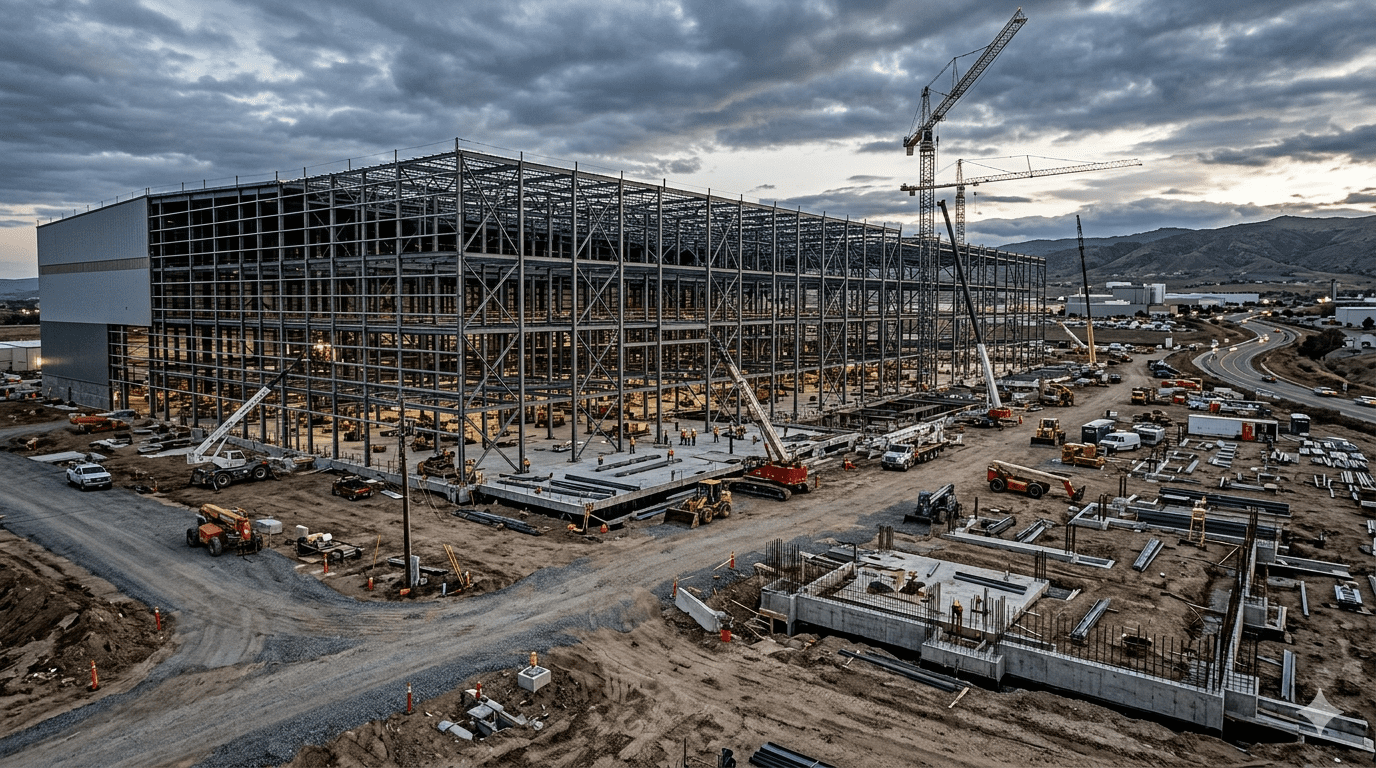
The scale of AI infrastructure construction makes the embodied carbon question material in ways that earlier data center buildout cycles did not. A single hyperscale AI campus can use upwards of 20,000 tonnes of structural steel alone, alongside substantial volumes of concrete, copper, aluminium, and specialised cooling alloys. The World Economic Forum estimates that data centers and adjacent power infrastructure could require over 4.3 million tonnes of copper globally by 2035, with industry analysts warning of a 25 to 30% copper shortfall at that timeline. Manufacturing and transporting those materials generate a substantial emissions footprint before any server is installed, yet hyperscaler sustainability reports still do not capture it in a standardised, comparable way.
The server and GPU hardware layer adds a second embodied carbon dimension that is even less consistently reported. Apple has disclosed that product manufacturing accounts for approximately 59% of its total carbon footprint, with its own operations contributing less than 2%, illustrating how heavily embodied carbon dominates even for a company running 100% renewable electricity across its facilities. Data center infrastructure carries an even higher operational carbon intensity than consumer devices due to continuous 24-hour power draw, which means the manufacturing share of lifetime emissions is lower. However, the manufacturing carbon of GPU clusters is still substantial in absolute terms.
Nvidia’s own product carbon footprint report puts the HGX H100 8-card baseboard at 1,312 kg CO2e, approximately 164 kg per card. A 100,000-chip training cluster therefore carries an embodied manufacturing carbon burden of over 16 million kilograms before it processes a single token. Additionally, as covered in our analysis of the carbon accounting gap inside AI data centers, the gap between what hyperscalers report and what their facilities actually emit is widening as AI infrastructure density increases.
The Reporting Framework That Makes Omission Easy
The sustainability reporting framework that most data center operators use is the Greenhouse Gas Protocol, which divides emissions into three scopes. Scope 1 covers direct emissions from sources under a company’s control, while Scope 2 accounts for emissions linked to purchased electricity. Scope 3, by contrast, includes all other indirect emissions, including those from supply chain manufacturing, business travel, and end-of-life product disposal. The GHG Protocol technically requires Scope 3 reporting for material categories, and manufacturing of purchased goods and services is a Scope 3 category that would capture server and GPU embodied carbon. However, Scope 3 reporting is discretionary under most current regulatory frameworks, and the methodology for calculating manufacturing embodied carbon for complex electronics is genuinely difficult, creating practical grounds for omission that companies have been slow to overcome.
The result is a reporting environment where operational carbon, which is relatively easy to measure because it is directly related to electricity consumption, receives detailed public disclosure while embodied carbon, which is harder to measure but potentially larger in aggregate over a facility’s lifetime, receives minimal disclosure. Consequently, the sustainability rankings and net zero assessments that evaluate AI infrastructure operators are based on an incomplete picture of their actual environmental impact. An operator that powers its facilities with 100% renewable electricity can report zero Scope 2 emissions while simultaneously generating millions of tonnes of Scope 3 manufacturing emissions through annual GPU fleet refreshes that its sustainability report never mentions.
What Genuine Accountability Would Require
Closing the embodied carbon reporting gap in AI infrastructure requires two things that the industry has so far resisted: standardised methodology for calculating manufacturing embodied carbon across complex electronics supply chains, and mandatory disclosure requirements that treat Scope 3 manufacturing emissions with the same rigour as Scope 2 operational emissions. The SEC’s climate disclosure rules, before their partial rollback, would have required material Scope 3 disclosure from large public companies. The EU’s Corporate Sustainability Reporting Directive extends beyond US rules by mandating value chain emissions reporting for large companies and progressively capturing the manufacturing carbon of AI hardware as implementation advances.
The operators who get ahead of mandatory disclosure by developing robust embodied carbon accounting now will have several advantages when those requirements arrive. They will have the methodology in place rather than scrambling to develop it under regulatory deadlines. They will have the supplier data agreements needed to calculate manufacturing carbon, which require relationships with TSMC, Samsung, SK Hynix, and other semiconductor manufacturers that take time to establish. And they will have the credibility that comes from voluntary disclosure before it was required, which matters increasingly to the enterprise customers, institutional investors, and government procurement agencies that are incorporating sustainability criteria into their evaluation frameworks. The embodied carbon blind spot in AI infrastructure sustainability reporting is not going to stay hidden as the scale of the buildout continues to grow. The question is whether the industry addresses it proactively or waits for regulators to force the issue.