...
.Nscale Locks $3.5 Billion Figure Robotics Compute Deal  ·Qatar’s Meeza Lands Major Hyperscaler Deal for 8MW ·Qualcomm Strikes Amazon AI Chip Deal, Opens Door to $4 Billion Stock ·Hitachi Energy Bets $300M on China Grid Manufacturing Corvex Builds Toward 8MW Cloud Infrastructure Footprint LITEON Bets $176 Million on DCX Liquid Cooling EdgeConneX Backs Singapore’s AI-Ready Tropical Data Center Testbed

AI Campuses Built for Training Are the Wrong Infrastructure for Inference

The AI infrastructure buildout has been designed, almost exclusively, around training. That focus made sense in 2023. It does not

Share
AI inference infrastructure design mismatch training data center 2026

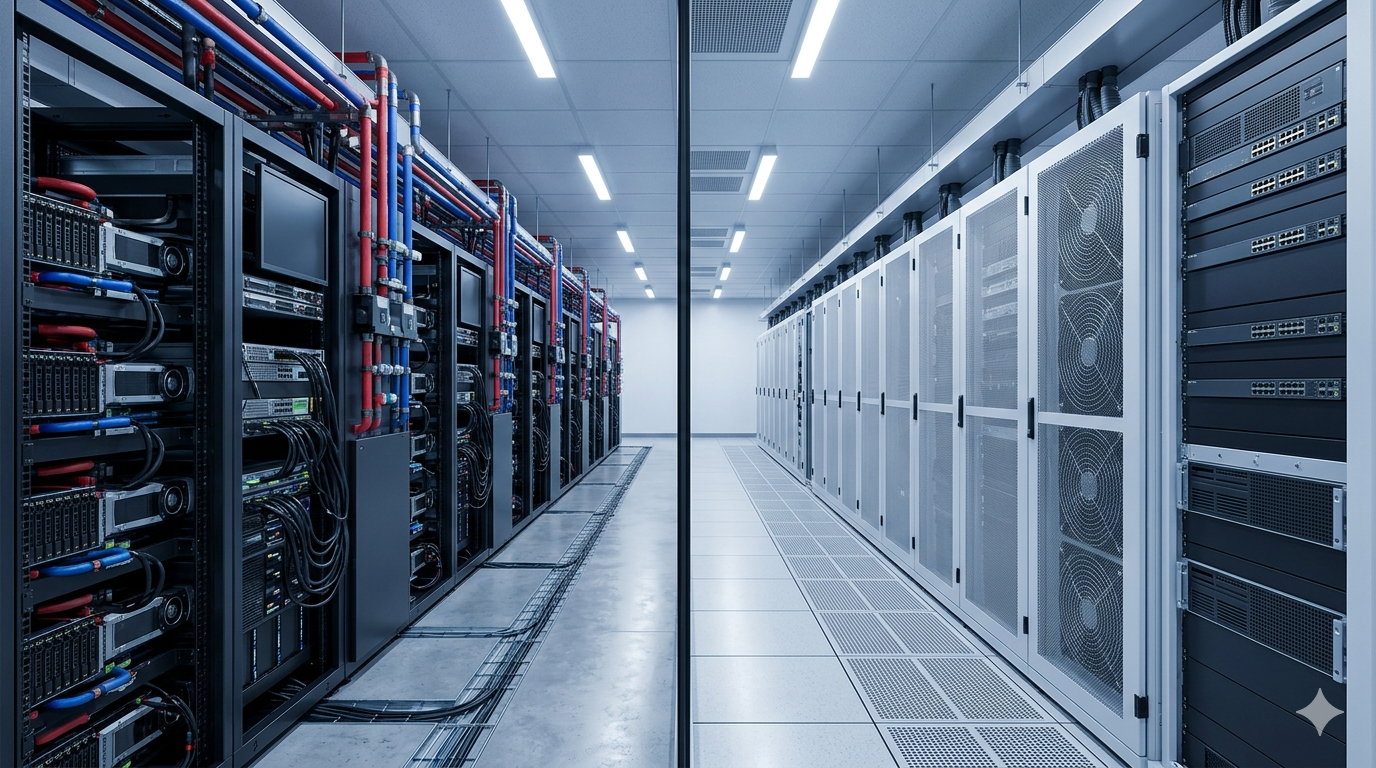
The AI infrastructure buildout has been designed, almost exclusively, around training. That focus made sense in 2023. It does not make sense in 2026. The gigawatt campuses, the 500-megawatt power agreements, the liquid cooling systems for GPU clusters on 24-hour model runs: all of it reflects training requirements. That is, consequently, the wrong infrastructure for what AI workloads are actually becoming.

Inference is, today, the dominant AI compute use case by volume. Every time a user interacts with an AI product, an inference request runs. Autonomous agent actions, API calls, and real-time recommendations all run on inference. The scale of that demand already dwarfs training by volume, by frequency, and by the number of organisations dependent on it. The ratio of inference to training workloads widens with every quarter as AI adoption expands. Crucially, inference and training have fundamentally different infrastructure needs. Most of what the industry has built to date, and most of what is currently under construction, optimises for the wrong one.

Why Training and Inference Are Different Infrastructure Problems

Training workloads are characterised by sustained, high-density compute demand. A large model training run keeps a full GPU cluster at near-maximum utilisation for days or weeks. The thermal output is constant, the power draw is predictable, and operators can optimise the infrastructure for a single, well-defined operating condition. That is, specifically, why training data centers have driven the shift to high-density liquid cooling. The heat flux is too high for air and too consistent for systems managing variable load.

Inference workloads are, by contrast, characterised by bursty, variable demand and strict latency requirements. A user waiting for a response cannot tolerate the multi-second delays that are irrelevant during a multi-day training run. Inference workloads spike unpredictably and drop to near-zero between requests. They require infrastructure that ramps quickly and maintains low latency at variable utilisation levels. The power profile is, moreover, fundamentally different. As we have covered in our analysis of agentic AI creating a power demand profile nobody designed data centers for, the shift from batch training to real-time inference is one of the most consequential changes in AI infrastructure demand and one of the least well-addressed in current facility design.

The Thermal Design Mismatch

Operators design high-density direct-to-chip or immersion cooling systems around consistent heat flux at rack densities reflecting training GPU configurations. Those systems are not, however, optimally suited for the variable heat loads that inference workloads produce. An inference server handling bursty requests generates a thermal profile that cycles between high and low output. That variability strains cooling systems designed for sustained peak load.

The consequence is operational inefficiency. A cooling system sized for training loads but operating at partial utilisation during inference consequently consumes more energy per useful compute unit. A system designed for inference from the start would, in contrast, be more efficient. At gigawatt campus scale, that efficiency gap translates into hundreds of millions of dollars in operating cost over the facility’s lifetime. The difference between sustained peak load design and variable inference load design is, consequently, not marginal. As we have covered in our analysis of how colocation is being redefined by AI workload requirements, the operators who understand these workload-specific infrastructure requirements are building facilities that perform materially better than those who treat all AI compute as equivalent.

The Network Architecture Mismatch

The network fabric inside a training campus optimises for all-to-all communication between GPU nodes within a cluster. Training workloads require tight coupling between compute nodes, high bisectional bandwidth, and low intra-cluster latency. The topology optimises for large, monolithic jobs that occupy the entire cluster.

Inference at scale requires a different network topology. Inference requests are, typically, independent of each other and do not require all-to-all communication patterns. The network bottleneck in inference is, in other words, the connection between the inference server and the user or application generating requests. Low external latency matters more than high internal bisectional bandwidth. The network investment in a training-optimised campus is, consequently, misallocated for inference. Rebuilding it for inference requires not just reconfiguration but, in many cases, physical infrastructure changes that campus designers never anticipated.

Why This Matters for the Next Phase of the Buildout

The industry is beginning to recognise this mismatch. At Data Center World 2026, Ram Nagappan, VP of AI infrastructure at Oracle Cloud Infrastructure, said operators must now design for two different AI patterns. Training and distributed inference each require a distinct infrastructure approach. That framing reflects, notably, growing acknowledgement that the single-purpose training campus model is insufficient for the full range of AI workload requirements. The question is, however, whether that acknowledgement will translate into design changes quickly enough. A significant overhang of training-optimised infrastructure suboptimal for inference is already forming.

The operators best positioned to navigate this build modular, adaptable facilities configurable for both workload types, rather than facilities fully optimised for either. As we have covered in our analysis of how agentic AI is rewriting data center design requirements, the shift toward agentic and real-time AI workloads is accelerating the infrastructure design challenge.

Facilities planned in 2024 and 2025 on training-first assumptions are already facing design obsolescence pressure before they have even opened. The developers who anticipated this are, consequently, building for flexibility from the ground up. Those who did not are building facilities that will require expensive retrofitting to serve the inference-dominant workload mix that is already here, not arriving. As we have covered in our analysis of the inference cost crisis driving enterprises off the cloud, the economics of inference infrastructure are distinct from training, and the gap between them is growing. The data center industry has not yet fully priced that distinction into its design decisions.


[simple-author-box]

More from AI Infrastructure

Arc faults become difficult engineering problems when electrical systems combine high energy, long conductors,

A PUE target can look like a straightforward number on a performance sheet, yet

An inference invoice looks deceptively simple when it shows a GPU-hour, a token rate,

COMPUTE WEEKLY

The briefing that 40,000+ tech leaders read every Monday. Sharp, fast, essential.

Building an AI Startup Without Owning GPUs

Not owning GPUs has become the default, deliberate strategy for building an AI company — not a compromise founders accept reluctantly. H100 rental rates fell 64-75% in fifteen months, a dense ecosystem of neoclouds and inference-as-a-service providers now lets startups skip infrastructure entirely, and credit programs can fund a company’s first year before a founder writes a check
Most Read

A compute node sitting behind a garage door can perform the same basic computational

A project can leave a site without leaving behind the conditions that made the

A commercial operation date can look precise long before the underlying project is capable

A 5 GW AI infrastructure plan can satisfy every conventional site-selection requirement and still

A fire strategy becomes expensive when the building has already decided where walls, equipment,

Disruptor Spotlight

Cerebras Systems

The chip that makes Nvidia nervous. Cerebras’ Wafer Scale Engine is rewriting the rules of AI inference at scale.
Faster
0 x
YoY Revenue
0 x
Transistors
0 T
Market Pulse
MSFT
+1.02%
NVDA
+0.66%
AMZN
-0.078%
AMD
-6.95%
TSMC
-2.98%
Indicative only · Not financial advice
Upcoming Events
SEP
The AI Infrastructure Race (India)
WEBINAR · ONLINE
The AI Infrastructure Race: Won on Power, Land and Trust — Not Capital
MAY
0
AI Infrastructure Summit
DUBAI · IN PERSON
MEA’s premier AI infrastructure event.
JUN
0 0
Compute Forecast Summit
SINGAPORE · IN PERSON
Our flagship APAC event. Early bird open.
Latest Moves
Live
ecolab
Ecolab Deepens Cooling Strategy With $4.75B CoolIT Acquisition
Ecolab is making one of its biggest moves yet into AI infrastructure after completing its $4.75 billion acquisition of liquid cooling specialist CoolIT Systems
Pure DC AVK Europe data center microgrid Dublin 110MW AI infrastructure Ireland 2026
Pure DC and AVK Deploy Europe’s First 110 MW Data Center Microgrid in Dublin
The Pure DC Dublin microgrid has made history as Europe’s first large-scale on-site data center microgrid, launched in partnership with power solutions provider AVK at Pure DC’s campus in Ireland.
Pace Digitek
Pace Digitek Partners With MEGMEET to Expand AI Data Center Power Business
India’s AI infrastructure ecosystem continues to mature as domestic technology manufacturers move beyond traditional telecommunications and industrial markets toward high-growth digital infrastructure opportunities
Follow Compute Forecast
11K followers
1200 followers
Companies to Watch
CW
CoreWeave
Neo Cloud · $19B · IPO Watch
CB
Cerebras Systems
AI Hardware · $4.25B · Pre-IPO
G42
G42
Sovereign AI · Abu Dhabi
H
Humain
Saudi AI · $40B Fund
Latest Podcast
AI Capex, Cloud Margins & the Nuclear Bet
48 MIN · 25 APR 2026

AI Campuses Built for Training Are the Wrong Infrastructure for Inference

The AI infrastructure buildout has been designed, almost exclusively, around training. That focus made sense in 2023. It does not

Share
AI inference infrastructure design mismatch training data center 2026
31
847 SHARES

0
SHARES

[simple-author-box]

More from AI Infrastructure

A compute node sitting behind a garage door can perform the same basic computational

A project can leave a site without leaving behind the conditions that made the

A commercial operation date can look precise long before the underlying project is capable

A 5 GW AI infrastructure plan can satisfy every conventional site-selection requirement and still

COMPUTE WEEKLY

The briefing that 40,000+ tech leaders read every Monday. Sharp, fast, essential.

Great! We’ve received your information.

Global AI Infrastructure Outlook 2026

The briefing that 40,000+ tech leaders read every Monday. Sharp, fast, essential.
Download Free
Most Read

A compute node sitting behind a garage door can perform the same basic computational

A project can leave a site without leaving behind the conditions that made the

A commercial operation date can look precise long before the underlying project is capable

A 5 GW AI infrastructure plan can satisfy every conventional site-selection requirement and still

A fire strategy becomes expensive when the building has already decided where walls, equipment,

Disruptor Spotlight

Cerebras Systems

The chip that makes Nvidia nervous. Cerebras’ Wafer Scale Engine is rewriting the rules of AI inference at scale.
Faster
0 x
YoY Revenue
0 x
Transistors
0 T
Market Pulse
NVDA
$924.60
+2.4%
MSFT
$421.30
+1.1%
AMZN
$192.80
-0.6%
NVDA
$924.60
+2.4%
NVDA
$924.60
+2.4%
Indicative only · Not financial advice
Upcoming Events
MAY
0 0
DCD Global — London
LONDON · IN PERSON
World’s largest DC event. CF is media partner.
MAY
0
AI Infrastructure Summit
DUBAI · IN PERSON
MEA’s premier AI infrastructure event.
JUN
0 0

Compute Forecast Summit

SINGAPORE · IN PERSON
Our flagship APAC event. Early bird open.
Latest Moves
  • Live
Sam Altman
OpenAI appoints new Chief Infrastructure Officer to lead $100B DC programme
27 APR · OPENAI
Sam Altman
OpenAI appoints new Chief Infrastructure Officer to lead $100B DC programme
27 APR · OPENAI
Sam Altman
OpenAI appoints new Chief Infrastructure Officer to lead $100B DC programme
27 APR · OPENAI
Follow Compute Forecast
18.4K followers
12.1K followers
9.3K subscribers
41 episodes
Companies to Watch
CW
CoreWeave
Neo Cloud · $19B · IPO Watch
CB
Cerebras Systems
AI Hardware · $4.25B · Pre-IPO
G42
G42
Sovereign AI · Abu Dhabi
CW
Humain
Saudi AI · $40B Fund
Latest Podcast
AI Capex, Cloud Margins & the Nuclear Bet
48 MIN · 25 APR 2026
Scroll to Top
Seraphinite AcceleratorOptimized by Seraphinite Accelerator
Turns on site high speed to be attractive for people and search engines.