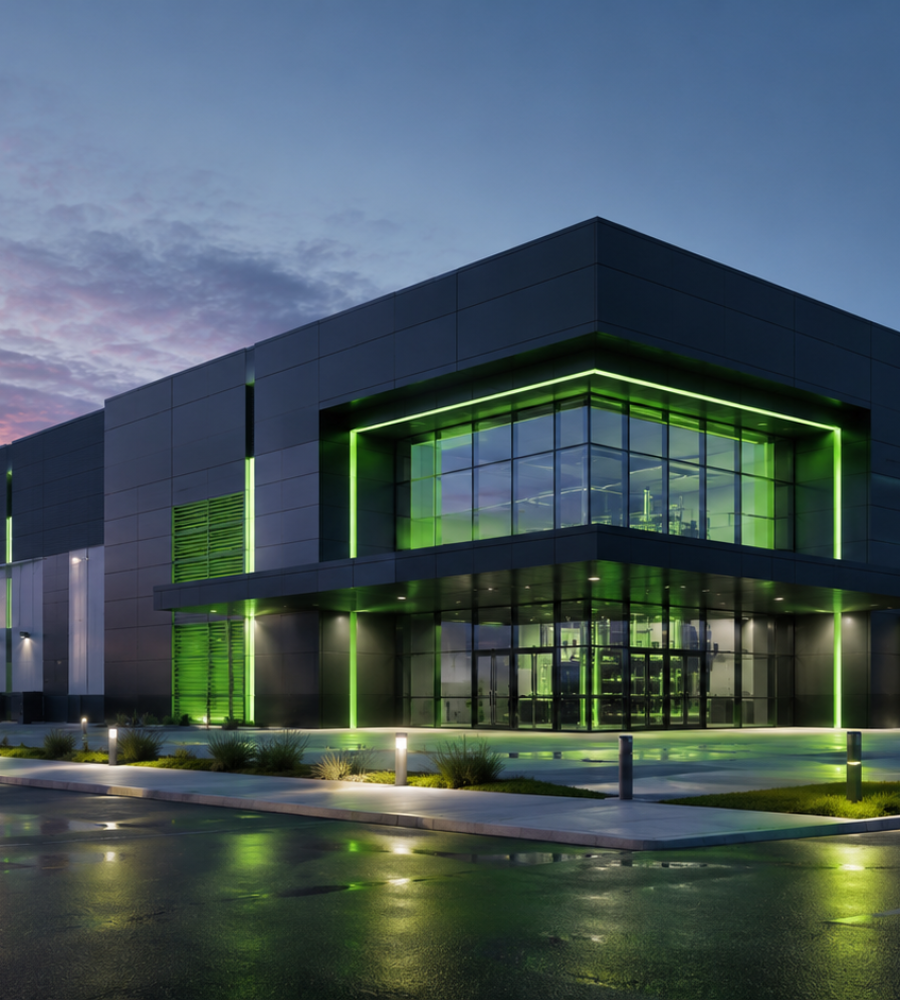
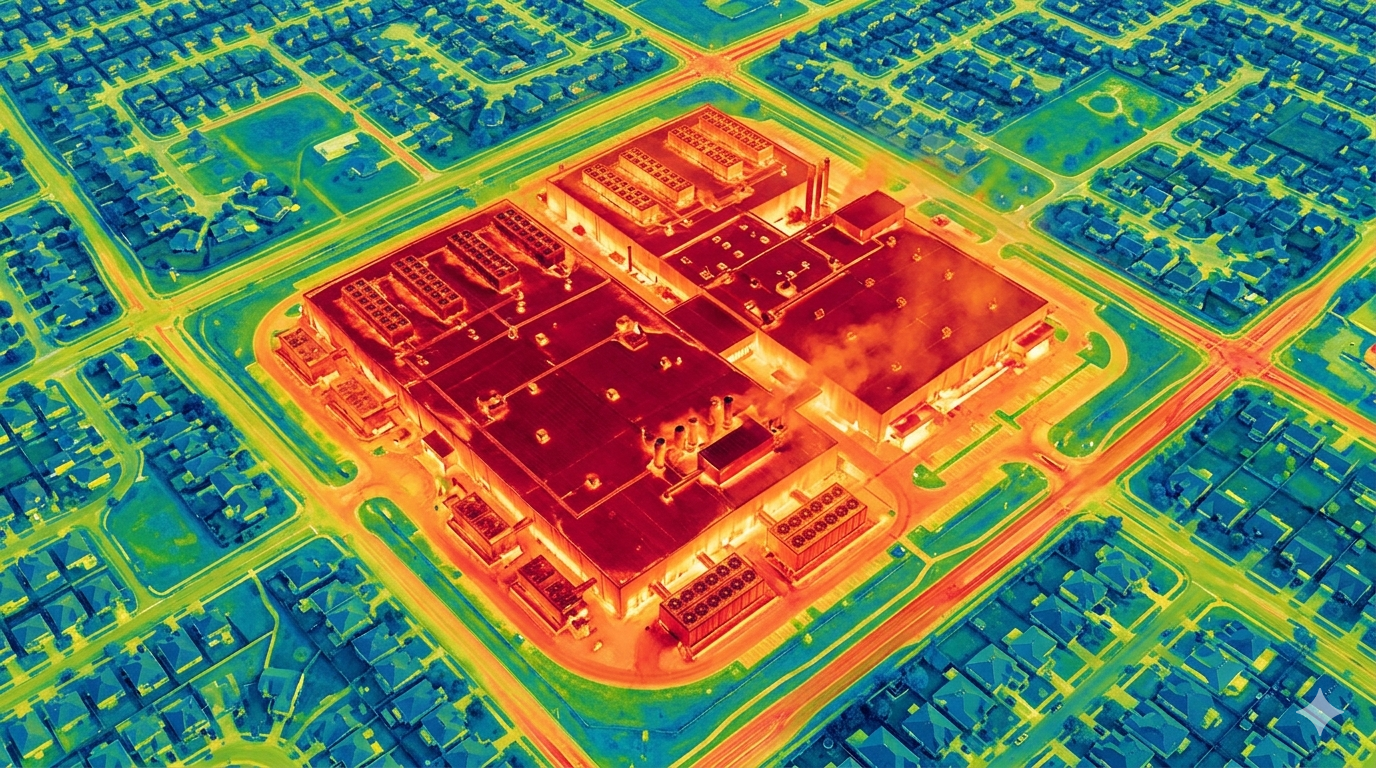
A preprint study published in March 2026 by researchers at the University of Cambridge, Singapore, and Hong Kong has put a number on the data center heat island problem the industry has quietly known about for years. AI hyperscale facilities are raising land surface temperatures in the areas surrounding them by an average of 3.6 degrees Fahrenheit. In the worst recorded cases, that figure reaches 16 degrees. The heat island effect extends up to six miles from the facility. At current data center build rates, the researchers estimate the effect already touches more than 340 million people globally.
The study was picked up in North Carolina two days ago. Rapid data center expansion has made North Carolina one of the most contested build markets in the country. The data center heat island findings arrived, moreover, at precisely the wrong moment for the industry. Communities in North Carolina are already debating electricity rate impacts, water use, and land use decisions tied to data center growth. Heat is now being added to that list. The industry has not responded at any meaningful scale. That silence is becoming its own story.
What the Research Found About the Data Center Heat Island Effect
Andrea Marinoni’s research team at Cambridge’s Earth Observation group analysed 20 years of land surface temperature data from NASA satellites. They mapped that data against the locations of more than 6,000 hyperscale data centers situated away from dense urban areas. The methodology isolated the data center’s thermal contribution from the broader urban heat island effect. The results were striking enough that they attracted significant media attention even before peer review.
Average surface temperatures rose by approximately 2 degrees Celsius after a facility began operations. That rise extended across a radius of roughly six miles from the site. In specific micro-climates, particularly those combining data center density with existing heat stress, the increase reached 9.1 degrees Celsius. The researchers pointed to Bajio in Mexico, Aragon in Spain, and northeastern Brazil. In each location, high data center concentrations have produced serious land temperature increases compared to nearby areas.
Why the Industry’s Response Has Been Inadequate
The standard industry response to environmental criticism focuses on power usage effectiveness, renewable energy commitments, and water recycling programmes. These are real investments and they address real problems. None of them, however, engage with the thermal output problem directly. Heat removed from a data center facility does not disappear. It moves into the surrounding atmosphere or into a water body.
Cooling towers release heat into the air. Dry coolers do the same. Liquid cooling systems that reject heat into rivers or lakes consequently shift the problem from air to water. In every case, therefore, the energy consumed by the facility ultimately becomes heat that affects the surrounding environment. Indeed, the research team noted that the industry’s commitment to ecologically mindful design is not keeping pace with the speed and scale of hyperscale growth.
That assessment is accurate.
The design choices that would materially reduce the thermal impact are technically available. These include district heating integration, waste heat recovery for residential use, and site selection that accounts for local heat stress vulnerability. These approaches are not, however, standard practice. Most remain exceptions pursued by operators in markets with the right regulatory incentives. Planning processes in the United States almost never impose them as requirements. As we have covered in our analysis of the AI industry’s community relations problem, the gap between what the industry says about its environmental commitments and what it delivers is widening. The heat island data is the latest addition to that gap.
The North Carolina Context Is Particularly Sharp
North Carolina’s rapid data center expansion has made it one of the most contested markets in the country for community opposition. The combination of electricity rate concerns, water use, and the scale of proposed development has produced organised local resistance. That resistance is, moreover, increasingly visible in state legislative debates.
The Cambridge study’s findings arrive, specifically, at a moment when state and local officials are actively evaluating whether current permitting processes adequately manage impacts from large data center development.
The data center heat island issue is, in turn, particularly relevant in North Carolina. The state’s climate profile includes hot and humid summers that are already stressing local communities. A 3.6-degree average temperature increase near a large data center campus is not, in other words, an abstract environmental statistic in that context. It is a measurable change in the conditions experienced by people who live within six miles of the facility.
Those people are also, in most cases, the same people being told their electricity rates may increase to support data center grid connection costs. Higher bills and higher temperatures together form a politically combustible combination. The industry has not yet developed a credible response to either. As we have covered in our analysis of land-use sustainability in the era of hyperscale campuses, community opposition at the local level has a track record of translating into state legislative action.
What Operators Need to Do Differently
The heat island problem is not unsolvable. It is, however, only solvable if operators treat it as a design constraint rather than an afterthought. The most effective mitigation is, specifically, waste heat recovery integrated into district heating or industrial processes. Google has deployed this approach at its data center in Hamina, Finland, where waste heat supplies a significant portion of the local district heating network. Microsoft has announced similar commitments in the Netherlands. As we have covered in our analysis of data centers as heat networks, the technology and the case studies already exist. What is missing is the industry’s willingness to treat waste heat recovery as a standard expectation rather than an optional feature.
Greenfield site selection methodology also needs to incorporate local heat stress vulnerability alongside conventional criteria like power access, land cost, and fibre proximity. A site that scores well on infrastructure metrics but sits next to a heat-vulnerable residential community will create problems regardless of facility efficiency.
The data center industry’s site selection algorithms have not, in most cases, been updated to reflect this. That needs to change before regulators force it through the planning process. When change is externally imposed, it takes longer, costs more, and produces outcomes less coherent than what the industry could design for itself. As we have covered in our analysis of how AI data center site selection has changed, the criteria operators use to evaluate sites are being fundamentally restructured by environmental and community pressures. The heat island data adds another dimension that the industry has not yet priced in.