 Skip to content
When AI Facilities Stop Sounding Like Airports
Anyone stepping inside a modern AI facility for the first time usually notices the noise before the hardware. Dense racks filled with accelerated compute systems generate constant mechanical turbulence that forces technicians to raise their voices during routine maintenance tasks. High-speed server fans, containment systems, compressor-assisted cooling equipment, and airflow management architectures create an environment closer to a transportation hub than a precision engineering workspace. Acoustic intensity inside large compute facilities has increased alongside rack density because thermal removal now depends heavily on aggressive air circulation patterns. Copper cold plates are beginning to change that equation by transferring heat directly away from processors without demanding massive volumes of continuous airflow. Infrastructure designers now view acoustic reduction as an operational variable instead of a secondary comfort improvement because quieter facilities can improve reliability, workplace conditions, and deployment flexibility simultaneously.

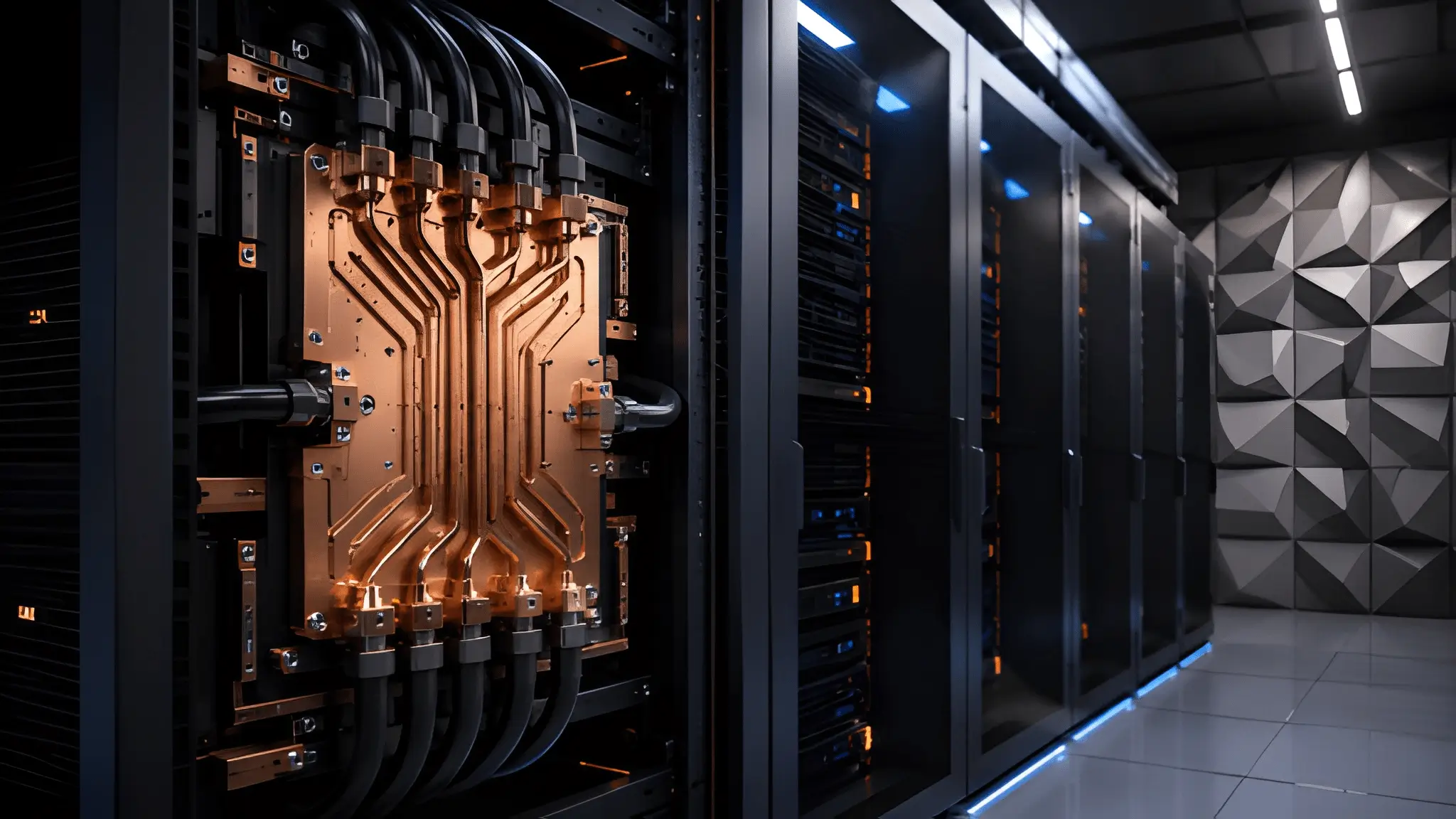
Liquid cooling systems built around copper cold plates remove thermal energy through direct contact with chips instead of forcing air across every heat-generating surface inside a rack. That design shift significantly reduces the dependency on high-RPM fan arrays that traditionally dominate the sound profile of compute environments. Operators have already started redesigning rack layouts around reduced airflow assumptions because liquid-assisted thermal capture changes how heat moves through an entire facility. Lower fan utilization also decreases vibration patterns that travel through floors, enclosures, and structural assemblies during sustained AI workloads. Many facilities still require supporting airflow systems for secondary hardware components, yet the overall acoustic footprint can drop considerably when processors no longer rely exclusively on forced-air cooling. Silence has therefore started emerging as a measurable infrastructure characteristic alongside power usage effectiveness, thermal efficiency, and rack density optimization.
Copper Cold Plates Are Reshaping the Human Side of AI Operations
Technicians working inside hyperscale AI environments spend long periods navigating high-density aisles filled with persistent mechanical noise that creates physical fatigue over extended shifts. Continuous exposure to elevated sound levels can reduce verbal clarity, increase concentration strain, and complicate maintenance coordination during active operations. Copper cold plate deployments may gradually improve these conditions because lower airflow dependency changes the baseline acoustic behavior of compute halls. Reduced fan intensity can create lower-noise operational environments where personnel may experience clearer communication conditions during diagnostics, hardware replacement, and monitoring procedures. Human-centered infrastructure design rarely receives attention within AI scaling discussions because thermal narratives often focus exclusively on wattage, density, and throughput metrics. Quieter infrastructure may support safer operational workflows by improving audible clarity around alarms, verbal coordination, and equipment monitoring inside active facilities.
The psychological dimension of quieter infrastructure deserves equal attention because environmental conditions shape how people interact with technology spaces over time. Loud facilities naturally encourage faster movement, abbreviated communication, and shorter maintenance windows due to sensory fatigue created by constant mechanical pressure. AI infrastructure designed around lower acoustic intensity could support more deliberate operational practices where technicians spend additional time on preventative diagnostics and precision inspections. Industry discussions around liquid-assisted environments often reference reduced ambient mechanical noise compared with airflow-intensive compute halls. Those subtle environmental changes may influence hiring, retention, and workplace satisfaction as AI operations continue expanding globally. Infrastructure engineering has historically prioritized machine optimization first, although quieter thermal architectures increasingly demonstrate that human performance remains part of system efficiency itself.
The Quiet Data Center Could Unlock Urban AI Expansion
Urban AI deployment faces several hidden constraints that extend far beyond electrical capacity and fiber connectivity. Dense metropolitan districts often impose strict requirements around environmental disruption, building integration, and community impact before approving large infrastructure projects. Persistent industrial noise creates friction in mixed-use developments where hospitals, research campuses, universities, and enterprise offices operate close together. Copper cold plates can help reduce reliance on airflow-intensive cooling systems that contribute significantly to the acoustic profile of high-density compute facilities. Reduced dependence on massive air handling systems opens possibilities for quieter infrastructure footprints that integrate more naturally into populated environments. Some urban infrastructure planners may increasingly evaluate lower-noise thermal systems favorably as AI deployments expand closer to populated commercial and research districts.
Architectural flexibility changes significantly when facilities no longer revolve around oversized airflow management systems. Traditional compute halls dedicate enormous physical space to ventilation pathways, containment corridors, and cooling distribution equipment designed primarily around moving air efficiently. Copper cold plates reduce part of that dependence by transferring thermal energy directly from processors into liquid loops with higher heat absorption capacity than air. Quieter operations may therefore accompany more compact infrastructure designs capable of fitting inside urban retrofits and repurposed commercial buildings. Developers exploring distributed AI infrastructure increasingly search for deployment models that coexist with surrounding human activity instead of isolating themselves within industrial zones. Acoustic moderation could become one of the overlooked technical factors enabling that transition over the next decade.

Why Fan Noise Is Becoming an Infrastructure Liability
Airflow-heavy architectures solved previous generations of compute cooling challenges effectively because processor density remained within manageable thermal ranges for large fan ecosystems. AI acceleration has disrupted those assumptions by concentrating extraordinary heat loads into increasingly compact rack environments. Operators now push cooling systems harder than ever as multi-kilowatt servers demand uninterrupted thermal stabilization under sustained workloads. That escalation increases acoustic intensity alongside energy consumption because higher airflow requirements inevitably generate more turbulence and mechanical strain. Copper cold plates address part of this challenge through direct heat capture that reduces reliance on continuously escalating fan speeds. The debate surrounding future AI infrastructure no longer centers exclusively on cooling capacity because environmental side effects have started influencing operational strategy as well.
Noise compliance is receiving greater attention in some regions as communities and zoning authorities examine the environmental impact of expanding AI infrastructure. Municipal zoning frameworks increasingly evaluate industrial sound output during approval processes for large technology developments located near residential or commercial districts. Facilities operating around the clock can create persistent low-frequency noise patterns that generate complaints even when operators meet baseline legal requirements. Copper cold plates support quieter thermal architectures that may help operators navigate tightening environmental standards without sacrificing compute density goals. Some infrastructure firms already include acoustic modeling during early-stage facility planning because surrounding communities now scrutinize operational impact more closely than before. Regulatory pressure alone will not determine cooling strategy, yet quieter infrastructure clearly offers additional flexibility during deployment negotiations.
Copper Cold Plates Could Redefine What “Industrial” Looks Like
Industrial environments traditionally communicate power through visible motion, constant airflow, mechanical vibration, and relentless background noise that signals heavy operational activity. AI infrastructure built around copper cold plates introduces a different visual and sensory identity where thermal precision replaces turbulent environmental intensity. Facilities designed with lower airflow dependency may present calmer operational environments compared with conventional airflow-intensive industrial facilities. Calmer operational spaces could influence architecture, lighting design, workspace planning, and equipment arrangement throughout future compute campuses. Designers increasingly recognize that infrastructure aesthetics shape public acceptance when digital facilities expand into populated regions. The physical experience of AI infrastructure may therefore evolve alongside the technology itself rather than remaining permanently tied to loud mechanical conventions.
Future compute environments may also become visually simpler as cooling systems shift from sprawling air circulation networks toward more localized thermal transfer architectures. Massive fan walls, oversized ducting systems, and expansive ventilation corridors dominate many contemporary facility designs because airflow remains central to thermal management. Copper cold plates reduce the need for part of that infrastructure by moving heat through contained liquid pathways directly attached to processors. Cleaner internal layouts could support modular expansion strategies where facilities scale incrementally without dramatically increasing environmental turbulence. The resulting infrastructure may appear less industrial despite delivering substantially higher computational performance than previous generations. Modern AI facilities increasingly emphasize precision-engineered thermal and power management systems alongside traditional industrial infrastructure design.
AI Infrastructure Is Entering Its Quietest Era Yet
The next phase of AI infrastructure development will likely depend on how effectively operators balance computational intensity with environmental integration across increasingly populated deployment regions. Copper cold plates represent part of that transition because they change how facilities remove heat, manage airflow, and shape operational conditions simultaneously. Reduced acoustic output may soon stand beside efficiency metrics as a competitive infrastructure advantage for operators building next-generation compute campuses. Quieter facilities could improve technician experience, simplify urban deployment discussions, and reduce some environmental friction surrounding large-scale AI expansion. Advanced cooling technology no longer influences only thermal engineering because it increasingly affects architecture, workforce design, and public infrastructure strategy together. Copper cold plates are contributing to infrastructure designs that aim to integrate high-density computing environments more efficiently within surrounding operational and urban ecosystems.












