 Skip to content
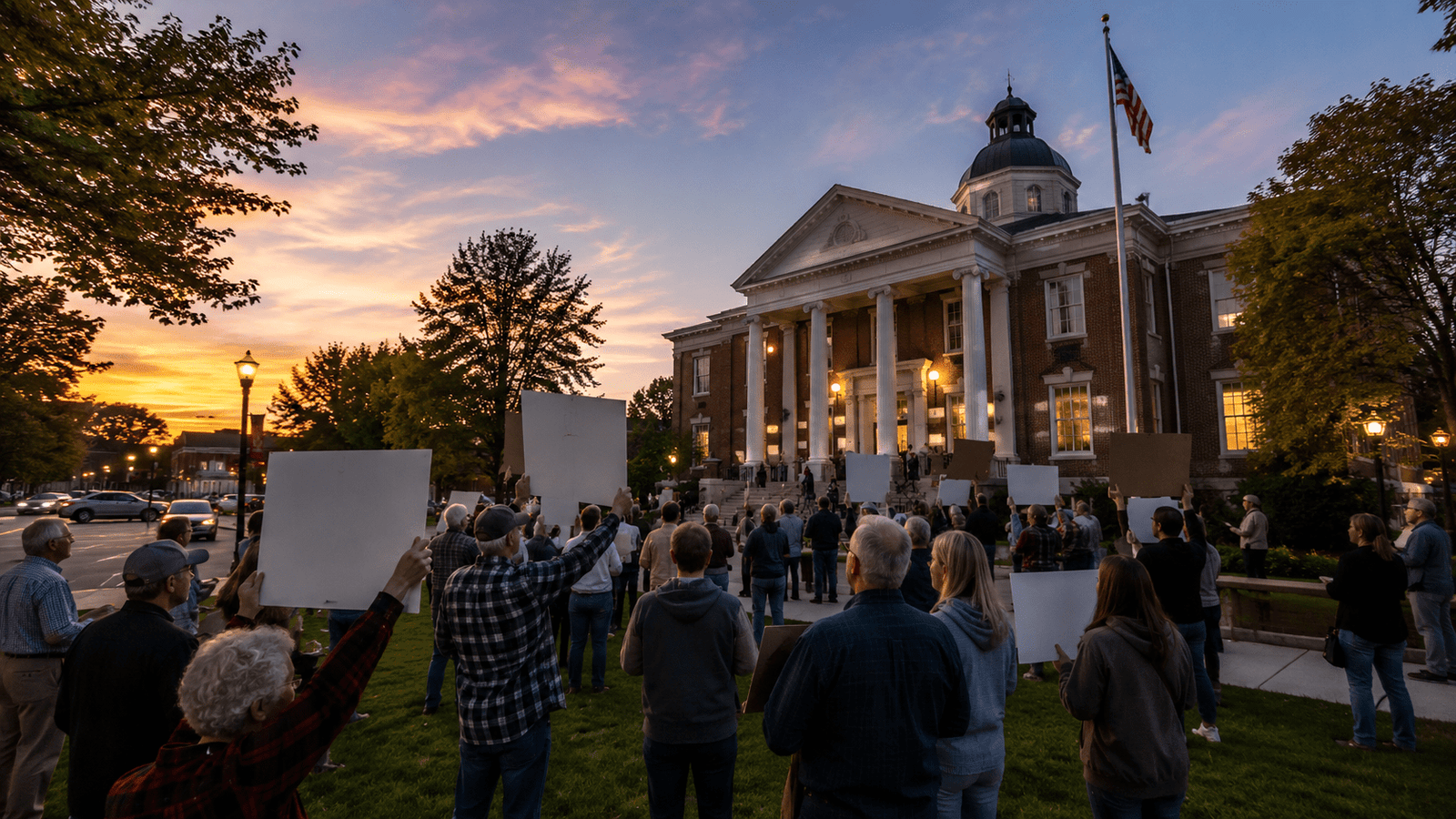
The data center industry spent a decade building the narrative that its facilities were invisible, clean, and economically beneficial to the communities that hosted them. Tax revenues, construction jobs, and local economic activity were the story. Power consumption, water use, environmental impact, and utility rate increases were not. That narrative has collapsed. A Washington Post-Schar School poll published April 15, 2026 found that Virginia voter support for new data centers in their communities had fallen from 69% in 2023 to 35%, a drop of 34 percentage points in three years in the state that hosts the highest concentration of data center infrastructure in the world.

Support for state tax breaks fell from 61% to 37% over the same period. The shift is bipartisan, crosses urban, suburban, and rural boundaries, and shows no signs of reversing as the scale of AI data center development continues to increase faster than the industry’s engagement with the communities bearing its costs.
Virginia is the leading indicator, not the outlier. Data Center Watch recorded 48 data center projects blocked or delayed across the United States in 2025, preventing roughly $156 billion in planned development. MultiState logged 238 state legislative proposals aimed at restricting data center development in 2025, of which 40 passed. Maine passed an 18-month moratorium on large data center builds with bipartisan majorities in both chambers before the governor vetoed it. Utah residents are pursuing a November ballot measure to overturn a 9-gigawatt campus approval. Ohio communities are pushing a statewide initiative to ban data centers drawing more than 25 megawatts. South Dakota passed legislation allowing local governments to regulate or ban data centers outright. The pattern is national, accelerating, and structurally different from the localised planning disputes the industry has managed through conventional permitting and community relations channels for the past decade.
What Communities Are Actually Objecting To
The industry’s instinct is to treat community opposition as a communications problem. If residents only understood the economic benefits, the environmental commitments, the sustainability targets, and the jobs created, they would reach different conclusions. That instinct is wrong, and the polling evidence confirms it. Virginia residents who changed their minds about data centers between 2023 and 2026 did not change their minds because they received less information. They changed their minds because they received more of it, specifically more information about rising electricity bills, more information about water consumption, more information about the land use consequences of multi-gigawatt campuses built 50 feet from residential houses, and more information about the gap between what the industry promised and what communities actually experienced.

As Maine Democratic Representative Amy Roeder put it directly: “We’re getting killed by electric prices. To put a data center that’s going to use up a lot of resources in the middle of this just feels irresponsible.” That statement reflects a specific and concrete grievance about utility rate impacts, not a general opposition to technology or economic development. Communities that welcomed data centers when they were small and largely invisible are now hosting facilities that consume as much electricity as entire counties, draw water from stressed local aquifers, and generate utility rate increases that fall on residential customers who receive none of the tax benefits that data center operators negotiate at the state level.
The community relations problem is not a messaging problem. It is a consequence distribution problem. The benefits flow to states and counties through tax agreements and to shareholders through asset returns. The costs flow to residents through utility bills, water stress, traffic, and land use change. No amount of improved communication resolves that structural mismatch.
What the Industry Is Doing and Why It Is Not Working
The data center industry’s current response to community opposition follows a pattern that has become predictable and demonstrably ineffective. Operators announce community benefit commitments including local hiring, charitable donations, and infrastructure contributions at the point of project announcement. They engage county commissioners and state officials who have economic development incentives to approve projects regardless of community sentiment. They navigate planning processes that were designed for conventional commercial real estate and that typically do not require meaningful community consent as a condition of approval. And they express surprise and concern when the communities adjacent to their facilities organise politically against them after the fact.
As Beckfield noted in CNN’s coverage of the Maine moratorium debate, “It’s harder to buy public support for data centers than it is to buy a power plant.” That observation captures the core failure of the current approach. The industry has treated community engagement as a procurement problem, something to be managed through payments, commitments, and political relationships rather than through genuine engagement with the concerns of the people who will live with the consequences of these facilities for decades. The 57 active grassroots opposition groups operating in Virginia alone, more than any other state, represent an organised political infrastructure that has been built precisely because the industry’s existing approach has not given communities meaningful voice in decisions that significantly affect their lives.
As covered in our analysis of the AI industry’s community relations problem, the gap between the industry’s self-image as a clean and beneficial presence and communities’ lived experience of its impacts is the source of the opposition, not any misunderstanding of economic facts.
What Genuine Community Consent Would Actually Require
The industry does not currently have a model for genuine community consent that scales to the gigawatt campus developments that AI infrastructure requires. Meaningful consent requires genuine alternatives, including the real possibility that a community could say no and have that answer respected. It requires engagement before site selection rather than after planning approval. It requires honest disclosure of utility rate impacts, water consumption projections, and land use consequences rather than economic benefit framing. And it requires mechanisms for communities to capture a direct share of the economic value their infrastructure hosting creates, rather than having that value flow entirely to state governments through tax agreements and to shareholders through asset appreciation.
Some operators are beginning to develop more sophisticated community engagement frameworks. Microsoft has piloted community benefit agreements in some markets that include direct payments to local governments and commitments to community infrastructure investment. Google has engaged with local organisations in some data center markets before site selection rather than after planning approval. These are genuine improvements over the standard industry approach. However, they remain voluntary, inconsistent across markets, and fundamentally inadequate to the scale of community impact that gigawatt-scale AI campus development creates. The trajectory of public opinion on data centers does not suggest that incremental improvements to the existing community relations model will reverse the collapse in public support that Virginia’s polling documents. Reversing that collapse requires structural changes to how the industry relates to host communities, not better messaging about the benefits of infrastructure that communities are already living with.
As covered in our analysis of the gigawatt campus announcement credibility problem, the gap between what the industry promises and what communities experience is not limited to environmental and utility impacts. It extends to the fundamental question of whether host communities have any meaningful voice in decisions that reshape their environments for decades.












