Skip to content
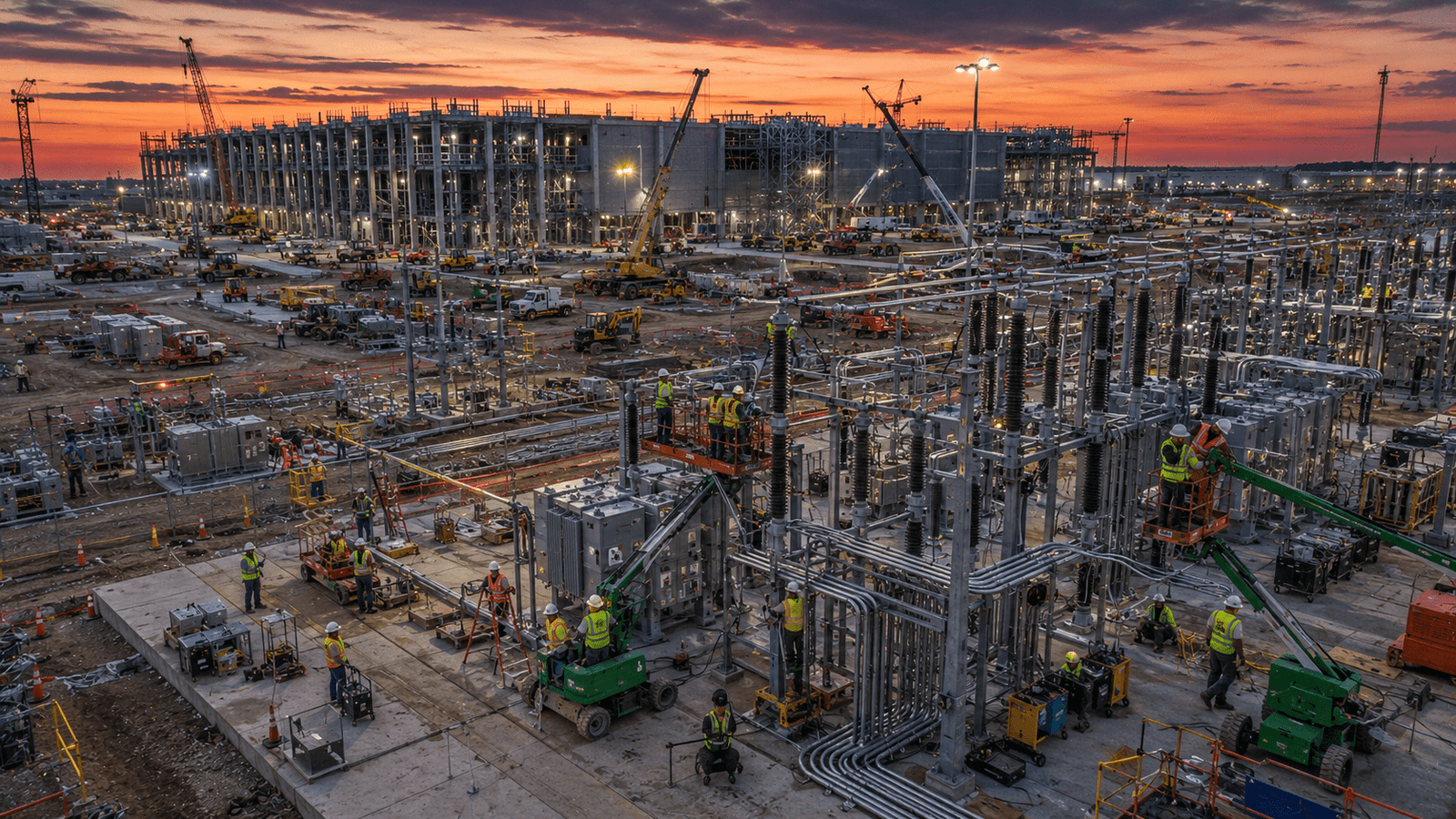
The AI infrastructure buildout has a capital problem, a supply chain problem, a grid interconnection problem, and a community opposition problem. The one that is least discussed and most operationally immediate is a people problem. The data center construction industry faces a projected shortfall of up to 499,000 workers in 2026, according to iRecruit’s Data Center Construction Labor Report. Not 499,000 workers globally. In the United States alone, for a single year. The buildout that Moody’s now projects at $785 billion in hyperscaler capital expenditure for 2026 has to flow through construction sites that do not have the electricians, pipefitters, HVAC technicians, and commissioning engineers to absorb it. Tony Qorri, Vice President of Construction at DataBank, put the industry’s position directly: the second half of 2026 into 2027 will see massive activation across the country, and the industry simply does not have enough qualified workers to meet demand.

Electricians Have Become the Critical Bottleneck
The electrician shortage is the most acute dimension of the crisis because electrical work is not one trade among many on a data center project. Electrical systems account for 45% to 70% of total data center construction costs, according to IBEW estimates cited by Fortune, making electricians the single most critical and most constrained resource in the construction pipeline. Darrell West, senior fellow at the Brookings Center for Technology Innovation, told Fortune that the electrician shortage is quite dire, that those people are in short supply all across the country, and that this has become a leading barrier to data center construction.
Projections suggest more than 300,000 new electricians are needed over the next decade to meet AI-driven demand, against a training pipeline producing far fewer, with nearly 30% of union electricians between the ages of 50 and 70 and approximately 20,000 expected to retire annually. The shortage is structural, not cyclical. Electricians retire faster than apprenticeship programmes produce replacements. Capital commitment cannot accelerate that pipeline.
The Financial Cost of Delays That Capital Cannot Solve
The workforce shortage translates directly into project delays, and the financial cost of those delays is significant enough to change the economics of individual data center investments. A delay in commissioning a typical 60 megawatt data center costs approximately $14.2 million per month in lost revenue, according to iRecruit’s labour market analysis. A hyperscale facility of 500 megawatts or more, delayed by six months because the commissioning team needed to complete another project before starting this one, represents a revenue impact that dwarfs the cost of the electrical labour that could have prevented it.

Turner and Townsend’s 2024 Data Center Cost Index found that construction labour costs across primary North American data center markets rose 8% to 12% year on year, driven almost entirely by skilled trades scarcity. Premium wages attract workers from adjacent projects but do not create new electricians. The market is bidding up the price of a fixed pool of talent rather than expanding that pool.
The commissioning workforce compounds the problem in a specific and underappreciated way. Commissioning engineers verify that every system in a completed data center performs to specification before handover. The commissioning workforce cannot scale as fast as the construction pipeline that feeds it, because commissioning expertise requires years of hands-on experience with high-voltage systems, liquid cooling infrastructure, and advanced controls integration that no accelerated training programme can shortcut. A data center campus can have its structural work completed, its transformers installed, and its cooling systems ready, and still face months of delay waiting for a qualified commissioning team whose calendar is booked across multiple concurrent projects. The commissioning bottleneck is invisible in early-stage project planning and devastating in late-stage project delivery.
The Geographic Constraint That Capital Consistently Underestimates
The workforce crisis has a geographic dimension that makes it harder to solve than a simple supply-demand imbalance would be. Unlike software developers who can work remotely, skilled trades have very low geographic mobility, according to Sander van’t Noordende, CEO of Randstad. An electrician or commissioning engineer must be physically present on-site. When a company builds a new AI data center campus in a secondary market, often because political and regulatory pressure has constrained primary markets, it encounters a local talent pool sized for the industrial activity that existed there before the data center arrived.
Northern Virginia electricians now earn $120,000 or more annually, reflecting a market where data center demand has bid wages to levels that make the region one of the highest-paying construction markets in the country. Secondary markets do not have that wage infrastructure or that talent density. Building a gigawatt data center campus in rural Oklahoma or western Texas requires importing construction labour at significant cost, which reduces the economic case for the secondary market locations that the industry is treating as the solution to its primary market problems.
The Workforce Pipeline Cannot Scale Fast Enough
The industry’s response to the workforce crisis spans apprenticeship programmes, modular construction approaches that reduce on-site labour requirements, community college partnerships, and military veteran pipelines. Google committed $15 million and partnered with the Electrical Training Alliance to expand the qualified electrician pipeline. Siemens committed to training 200,000 electricians and manufacturing experts by 2030. Amazon’s Career Choice program is training employees for data center technician careers. These are genuine investments in the pipeline, but their timeline is measured in years and the delivery problem is measured in months. The crisis is worsening before the investments mature. Dell’Oro Group estimates global data center capex will exceed $400 billion in 2026, and most of that money has to flow through job sites that do not have enough construction workers, electricians, pipefitters, and controls technicians to absorb it.
The industry that is spending extraordinary capital on AI infrastructure is discovering that the binding constraint on how fast that capital converts into operational capacity is not money, not components, and not permits. It is the number of qualified people who can safely and correctly install the electrical infrastructure that makes a data center functional. The workforce gap is the constraint that no earnings call mentions and no capex announcement solves.