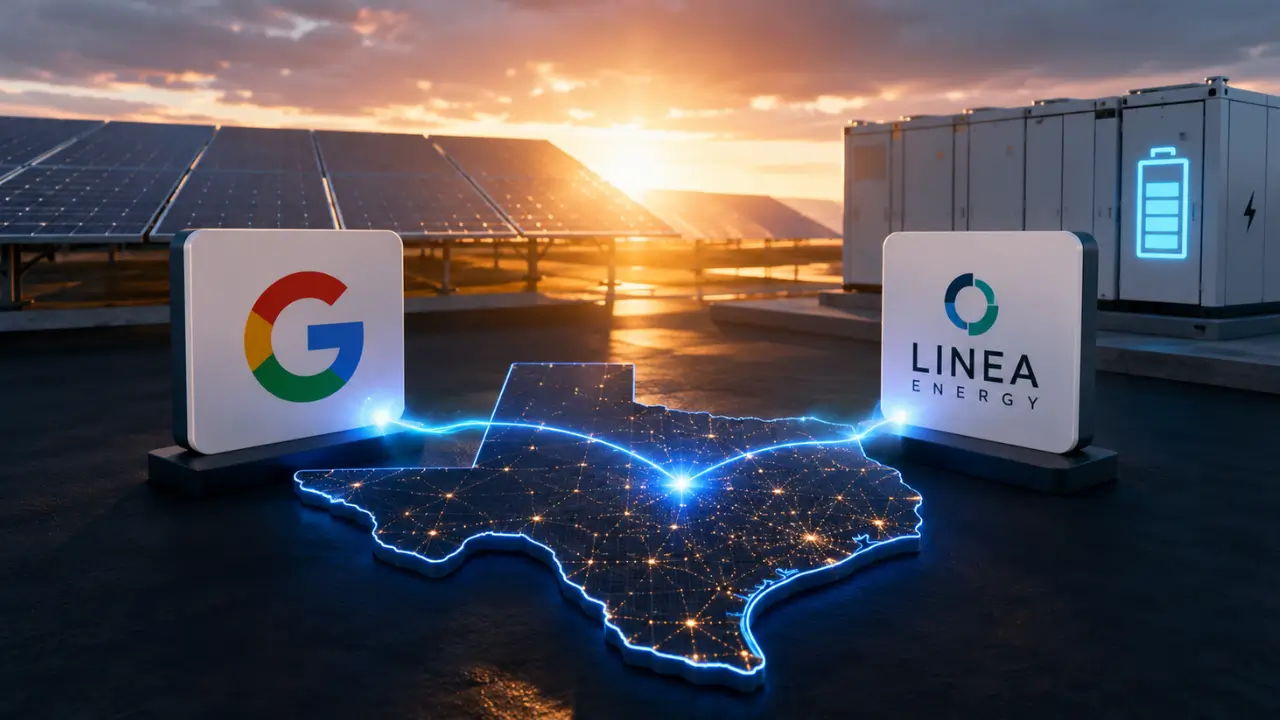
Google has signed another major clean energy agreement in Texas as hyperscalers continue locking down long-term electricity supply for expanding AI and cloud infrastructure. The company announced a 15-year Power Purchase Agreement (PPA) with renewable energy developer Linea Energy for 500 MW of solar power tied directly to its Texas data center operations. The agreement centers around Linea’s upcoming Duffy Solar Project in Matagorda County, reinforcing Texas’ growing position as the energy backbone of the AI economy. The deal also reflects how hyperscalers now view energy procurement as a core infrastructure strategy rather than a sustainability side initiative.
The latest agreement adds to Google’s aggressive clean energy buying activity across the United States. Earlier this year, the company signed a 1 GW solar PPA with TotalEnergies in Texas and a separate 1.2 GW clean energy agreement with Clearway to support data center operations across Missouri, Texas, and West Virginia. These deals collectively show how hyperscalers are racing to secure long-duration power access before AI-driven electricity demand tightens regional grids further. Texas continues attracting the majority of these investments because of its renewable generation scale, flexible market structure, and faster project deployment timelines.
Google Links Renewable Procurement With AI Capacity Expansion
Google’s new agreement will source electricity from Linea Energy’s Duffy Solar Project, which will span 3,526 acres in Matagorda, Texas. The project will operate inside the Electric Reliability Council of Texas (ERCOT) market, the wholesale electricity system serving roughly 90% of Texas’ grid and approximately 26 million customers. Google intends to use the solar generation to support its expanding regional data center footprint as AI workloads intensify infrastructure energy requirements. At the same time, the project introduces additional renewable generation capacity into one of America’s most stressed power markets.
The project also includes a strategic storage component. The Duffy Solar Project is co-located with a 235 MWac battery energy storage system currently under construction, giving the site added operational flexibility during periods of peak electricity demand. Battery integration increasingly matters for hyperscalers seeking more stable renewable supply profiles while reducing exposure to grid volatility. As AI infrastructure expands, companies now prioritize energy resiliency alongside sustainability metrics.
Will Conkling, Director of Energy and Power, Google said, “By collaborating with Linea Energy to bring new low-cost power to the grid, we are helping to ensure the Lone Star State’s energy system remains affordable for local families and businesses.”
Texas Emerges As The Core Battleground For Hyperscale Energy Deals
The agreement highlights how Texas has become the center of America’s AI infrastructure energy race. Major technology firms increasingly prefer ERCOT because of its large renewable generation pipeline, competitive electricity market, and faster interconnection opportunities compared to other regions. However, growing hyperscale activity has also intensified concerns about future grid reliability as electricity demand accelerates faster than infrastructure upgrades. Renewable PPAs now serve both as energy procurement mechanisms and strategic capacity reservations for future compute expansion.
Google’s environmental goals continue shaping these investment decisions. The company aims to reach net-zero emissions across its operations and value chain by 2030 while pursuing its 24/7 carbon-free energy initiative. That strategy focuses on matching electricity consumption with carbon-free energy sources every hour of every day across every operating region. Since 2010, Google has signed more than 170 agreements representing over 23 GW of clean energy generation globally. Consequently, the company now ranks among the world’s largest corporate buyers of renewable electricity.
The new Linea agreement also signals increasing confidence from renewable developers seeking long-term hyperscaler partnerships. Large cloud providers offer stable electricity demand profiles that improve financing conditions for utility-scale renewable projects. Developers now design many new solar and storage assets specifically around future data center demand corridors. This shift continues reshaping how renewable infrastructure gets planned, financed, and deployed across the United States.
Battery Storage Becomes Essential To Modern Data Center Power Strategy
The inclusion of battery storage alongside the Duffy Solar Project reflects a broader transition happening across the data center sector. Hyperscalers no longer pursue renewable generation alone; they increasingly seek dispatchable clean power systems capable of supporting around-the-clock compute operations. Solar paired with battery infrastructure offers greater operational predictability inside volatile energy markets like ERCOT. As a result, storage now moves from optional enhancement to critical infrastructure layer.
Construction on the Duffy Solar Project will begin in the third quarter of 2026. Once operational, the site will contribute additional renewable generation capacity while supporting Google’s expanding AI and cloud operations throughout Texas. The partnership also strengthens Linea Energy’s position within the hyperscale infrastructure ecosystem as competition intensifies among developers serving large technology customers. Cassidy DeLine, Chief Executive Officer of Linea Energy said, “We are pleased to sign this agreement to supply clean energy in Texas to Google, one of the world’s largest buyers of clean power. This transaction highlights Linea’s credibility amongst the largest hyperscalers and the ability to support affordability and grid reliability.”