 Skip to content
On April 20, Amazon announced an additional $5 billion investment in Anthropic alongside a commitment to invest up to $20 billion more tied to commercial milestones. Simultaneously, Anthropic committed to spending more than $100 billion on Amazon Web Services technologies over the next decade and secured up to 5 gigawatts of compute capacity across current and future generations of Amazon’s Trainium custom AI chip family. The deal established the largest cloud infrastructure commitment ever made by a frontier AI lab to a single provider, extending a relationship that began in 2023 and making AWS Anthropic’s primary compute partner for the next ten years. The headline number has already attracted significant attention. The structural implications have not been fully examined.

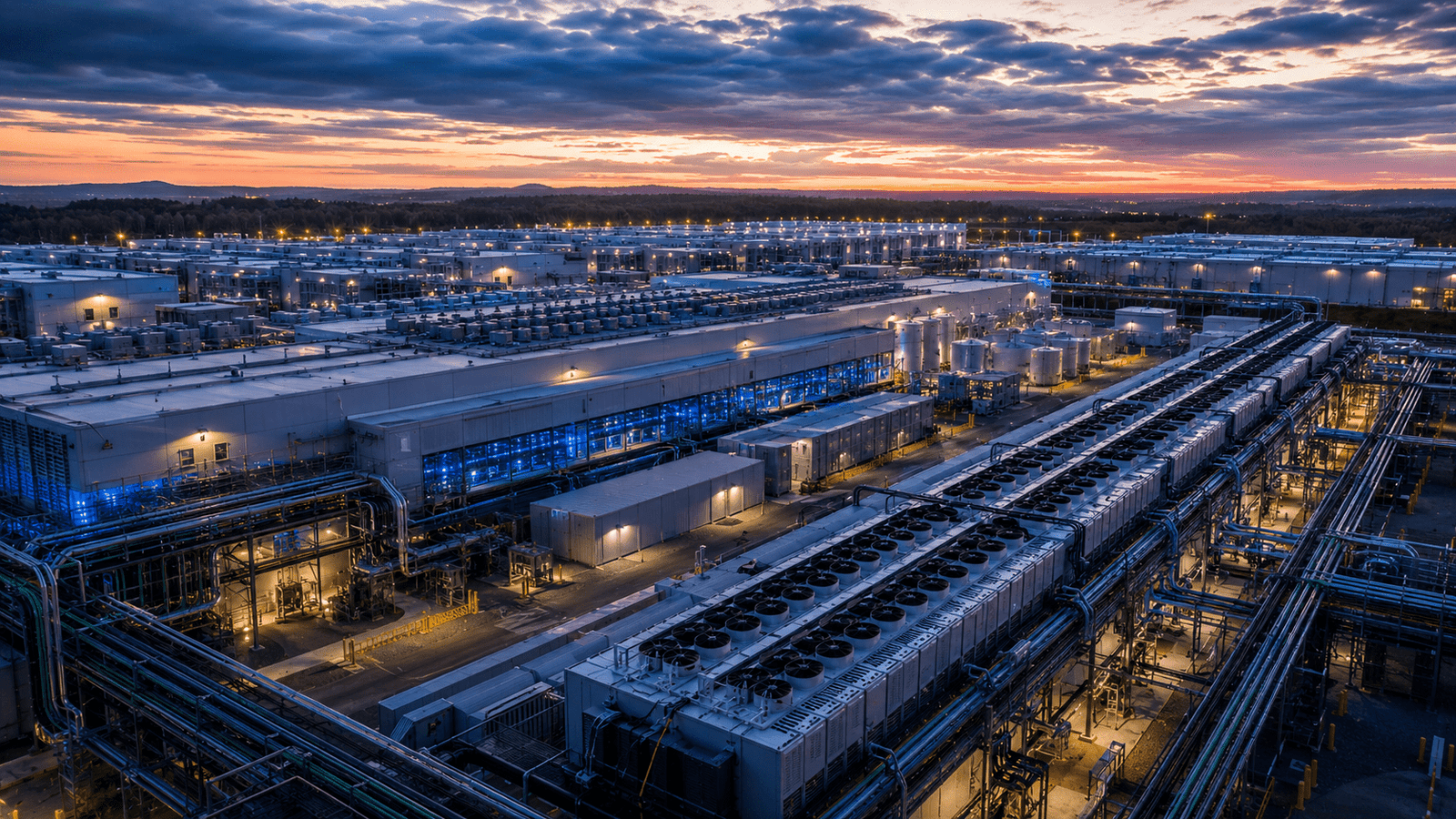
The $100 billion commitment is not primarily about money. Anthropic already had access to capital from its $60 billion valuation and its existing investor relationships. The $100 billion is primarily about supply security. Frontier AI model training requires compute at a scale and at a density that no public cloud provider can casually guarantee. Anthropic has already deployed over 1 million Trainium2 chips at Project Rainier, Amazon’s dedicated Anthropic compute facility, which is one of the world’s largest AI computing clusters. The 10-year commitment gives Amazon the contractual demand signal needed to justify the capital investment required to bring Trainium3, Trainium4, and subsequent generations online on the timelines Anthropic’s model development roadmap requires. The deal is not Anthropic paying for existing capacity. It is Anthropic pre-buying the build-out of capacity that does not yet exist and that will be built specifically because Anthropic has contractually committed to use it.
What the Trainium Bet Means for Nvidia Dependency
The most strategically significant dimension of the Anthropic-AWS deal is the Trainium architecture commitment. Frontier AI training has been dominated by Nvidia GPU infrastructure since the beginning of the deep learning era, and the CUDA software ecosystem that makes Nvidia GPUs the default choice for AI training has been the primary barrier preventing alternative silicon from capturing meaningful frontier training workloads. Anthropic’s 10-year commitment to Trainium2, Trainium3, Trainium4, and subsequent Amazon chip generations is the largest single commitment to non-Nvidia silicon for frontier AI training ever recorded. If the Trainium architecture delivers the performance that Anthropic’s training roadmap requires, the commitment demonstrates at scale that frontier AI labs can build and maintain competitive models without depending on Nvidia’s hardware roadmap, pricing decisions, or supply allocations.
The strategic importance of that demonstration extends well beyond Anthropic and Amazon. Every hyperscaler with a custom silicon programme has been arguing that their proprietary AI chips can serve frontier training workloads as effectively as Nvidia hardware at lower cost and without the supply constraint exposure that GPU procurement creates. The deal has effectively pre-sold the next decade of AWS AI infrastructure capacity at the largest single-customer scale ever recorded, validating Amazon’s Trainium investment thesis in a way that no internal use case could. The precedent it creates for other frontier AI labs evaluating whether to make comparable commitments to Google’s TPU infrastructure, Microsoft’s Maia silicon, or Meta’s MTIA chips could reshape the entire AI chip landscape over the next decade.
The Competitive Implications for Microsoft and Google
The Anthropic-AWS deal arrived three weeks after Microsoft announced a $5 billion investment in Anthropic with a corresponding $30 billion Azure compute commitment from Anthropic. Anthropic named AWS its primary cloud provider in 2023 and its primary training partner in 2024, but has also maintained relationships with Microsoft and Google. The $100 billion AWS commitment dwarfs the $30 billion Azure commitment by a 3:1 ratio in committed spend and by an order of magnitude in contract duration. Microsoft’s relationship with Anthropic remains commercially valuable but is structurally secondary to the AWS relationship in a way that the deal structure makes explicit. Google, which has held a multi-billion dollar Anthropic investment since the company’s founding, has not structured a comparable anchor compute commitment.
The competitive implication is that Amazon has secured the most durable commercial relationship with one of the two most commercially significant frontier AI labs, while Google and Microsoft hold secondary positions in a market where the primary relationship matters significantly for long-term cloud revenue growth. For the AI infrastructure market, the deal signals that frontier AI labs are consolidating their compute procurement around primary provider relationships structured through decade-long commitments rather than spot market purchasing. As a result, the hyperscaler that secures the primary relationship early captures a structural advantage that compounds over the life of the agreement.

What the Deal Structure Says About the Future of AI Lab Finance
The Anthropic-AWS deal is the clearest expression yet of a financing model that has become the dominant mechanism for funding frontier AI development: the hyperscaler-as-financier structure, where the cloud provider provides equity financing in exchange for infrastructure commitments that generate guaranteed cloud revenue exceeding the equity investment by multiples. Amazon invested up to $25 billion in Anthropic and receives $100 billion in committed AWS revenue over the contract period. The return on Amazon’s equity investment is not primarily financial in the conventional sense of dividend income or capital appreciation at exit. It is operational, in the form of guaranteed demand for AWS infrastructure that Amazon would have had to build speculatively without the Anthropic commitment and that justifies Trainium development investment at a scale that no other single customer relationship could underwrite.
This structure has profound implications for the independent compute market that neocloud operators and enterprise infrastructure providers serve. Frontier AI labs have committed portions of their compute capacity to primary hyperscaler relationships under decade-long contracts, removing that compute from the spot market, from colocation procurement channels, and from the demand base that GPU cloud operators built their businesses around. As more frontier labs structure primary hyperscaler relationships, however, the market for independent AI compute increasingly narrows to enterprise customers, sovereign AI programmes, and mid-tier AI developers who either cannot access hyperscaler primary relationships or require sovereignty, compliance, or latency capabilities that standard hyperscaler offerings cannot provide.
As we documented in the neocloud consolidation and what separates the survivors from the casualties, the operators who have built their businesses around serving those differentiated needs are the ones with the most durable positions in the market that the Anthropic-AWS deal is reshaping.












