Why “Carbon Neutral” AI Infrastructure Could Soon Become a Legal Liability
The AI infrastructure race no longer hides behind polished sustainability language because regulators, investors, insurers, and courts now examine how […]


The AI infrastructure race no longer hides behind polished sustainability language because regulators, investors, insurers, and courts now examine how […]
The modern economy spent decades treating infrastructure like a temporary negotiation instead of a civilizational foundation. Governments preferred assets that

Every quarter, the analysts who cover the AI infrastructure market produce detailed models of hyperscaler capex, GPU shipment rates, data

Nvidia reports its fiscal Q1 2027 results tonight after the US market close. Consensus expectations place data center revenue near

Data centers once scaled through repetition because operators could duplicate halls, expand cooling loops, and install standardized racks without altering

Modern computing spent years celebrating visible layers of technology while quietly depending on invisible physical systems that rarely entered mainstream

The AI infrastructure buildout has drawn financing from hyperscaler balance sheets, public equity markets, and private credit at a pace

The AI infrastructure investment narrative has been dominated by the companies building facilities and buying hardware. The hyperscalers committing hundreds

The US electricity market is governed by rules, tariffs, and regulatory frameworks that were developed over decades for a power

Three years ago, CoreWeave was a name that required explanation. Today it has a $99.4 billion revenue backlog, growing 50% quarter on

Artificial intelligence infrastructure no longer expands according to the same geographic logic that shaped earlier cloud computing eras. Operators once

Artificial intelligence infrastructure rarely fails in dramatic ways anymore because operators have spent years hardening power systems, improving redundancy, and

The AI infrastructure investment narrative has been constructed around a story of scarcity. GPUs were scarce. Data center power was

The AI infrastructure buildout has been narrated almost entirely as a capital story. Five hyperscalers committing $700 billion in 2026.

Data center design once relied on environmental assumptions that no longer remain consistent. Historically, operators built large-scale computing infrastructure in
India’s infrastructure identity has historically emerged through visible physical expansion that transformed highways, ports, rail systems, industrial corridors, and urban

Artificial intelligence infrastructure no longer struggles at the same locations that once defined data center risk. Operators spent years preparing

Enterprise AI deployments have a cost problem that is, specifically, not the one that most organisations planned for. The problem

The modern AI economy projects an image of limitless scalability, invisible automation, and uninterrupted computational abundance. Massive language models answer

The neocloud sector was built on a single bet: that enterprises, researchers, and AI developers would pay a premium for

The AI infrastructure buildout has a hardware problem that is not about chips. It is about the industrial equipment that

Artificial intelligence infrastructure no longer expands according to software ambition alone. Power systems now shape the geography of compute growth

A sustainability executive at a major technology company recently described a recurring pattern inside quarterly planning meetings. Product leaders arrived
Europe has spent the better part of three years declaring itself a serious contender in the global AI infrastructure race.

The five largest US hyperscalers — Microsoft, Alphabet, Amazon, Meta, and Oracle — will collectively spend between $660 billion and

Amazon, Google, Microsoft, and Meta are engaged in a coordinated and accelerating effort to reduce their dependency on external suppliers

Large AI systems rarely fail because processors stop working. Infrastructure now struggles more often when traffic arrives at the wrong

Modern servers no longer evolve around processors alone because thermal management has moved directly into the center of hardware architecture

Modern digital infrastructure rarely appears physical to the outside world because cloud computing hides its industrial footprint behind software interfaces

Industrial decline left visible physical marks across manufacturing regions that once powered national economic growth through steel production, assembly operations,

Eighteen months ago, the Model Context Protocol was a 47-page technical specification that Anthropic published on a Tuesday afternoon with

The data center industry has spent a decade building a narrative that its facilities are invisible, clean, and economically beneficial

The narrative around AI infrastructure capacity has focused almost entirely on hyperscalers and the neoclouds that emerged to compete with

The conversation about India’s AI infrastructure has followed a familiar arc for most of the past five years. Large announcements.

Modern computing hardware no longer struggles with performance first because thermal behavior now dictates how systems age, how operators maintain

The global race for artificial intelligence dominance no longer revolves around software talent alone because the center of gravity has

Cloud computing once promised abstraction so complete that infrastructure itself would disappear from strategic conversations. Developers deployed workloads without thinking

For most of the past decade, the global AI infrastructure market operated on a unified foundation. A data center in

The AI infrastructure buildout has generated enormous analysis about capital, power, GPUs, and land. Every constraint that has emerged —

Why SOCs Are Starting to Think Like Markets Security operations no longer resemble quiet monitoring environments where analysts wait for

ESG Starts Before the First Blueprint Infrastructure planning for AI data centers no longer begins with land scouting or cost

The Flywheel Starts Below Ground Rock does not move markets, but the systems built to extract it do. Mining projects

The Ocean Becomes the New Backplane The internet once felt abstract, something that existed in cloud diagrams and data centers,
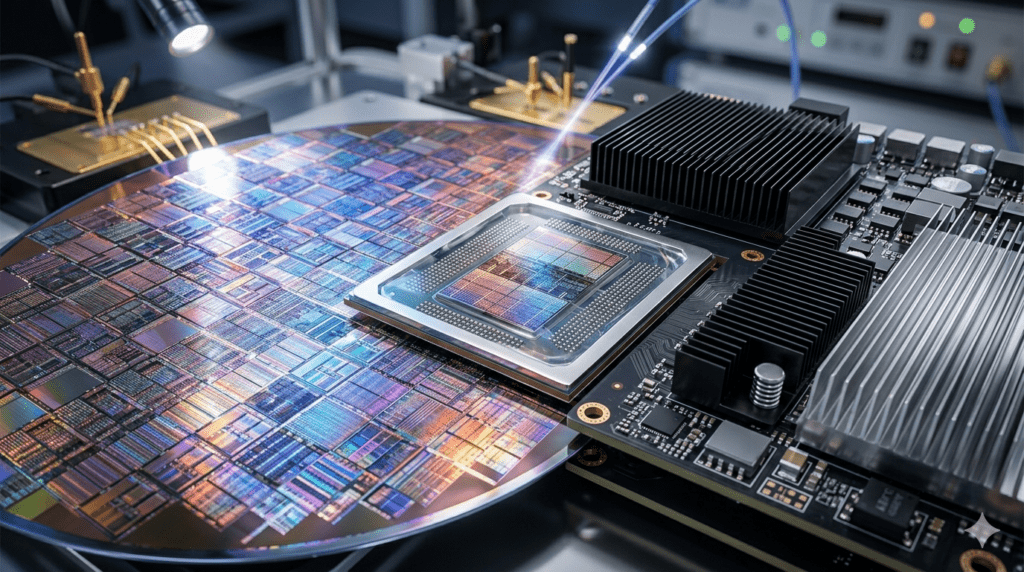
For most of the past decade, custom AI silicon was a Google story. The company began developing its Tensor Processing

Europe has declared its AI ambitions clearly and repeatedly. The European Commission’s AI Continent Action Plan targets tripling EU data
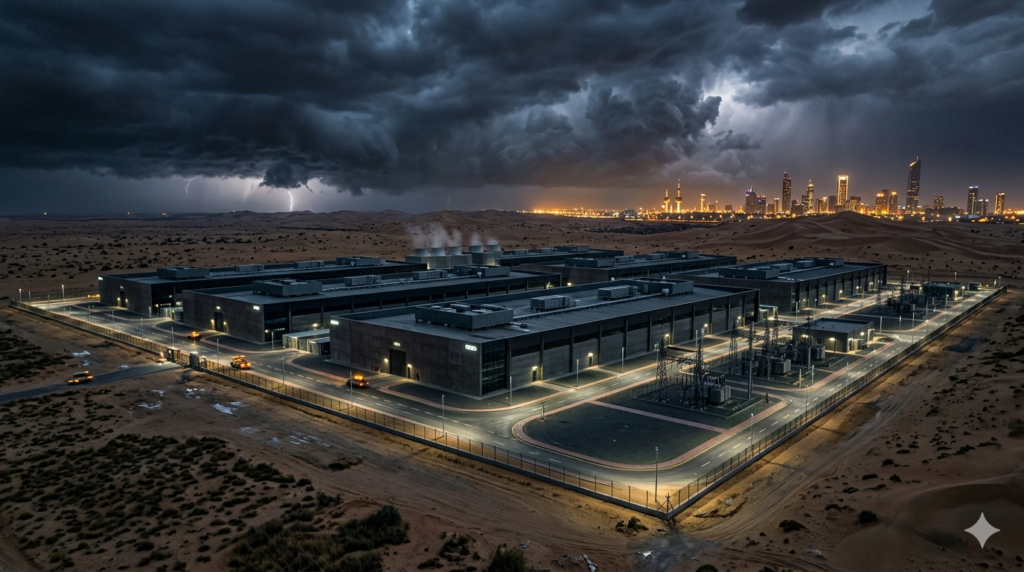
Less than a year ago, the Gulf was being celebrated as the next great frontier for artificial intelligence infrastructure. US

The competition for data center investment has become one of the defining economic development contests of the 2020s. Every level

Electrical systems quietly define spatial decisions, equipment density, and even operational philosophy, yet they rarely take center stage in design

The first signs rarely look dramatic. A quiet patch of land gets fenced, surveyors appear, and heavy equipment begins to

The five largest AI infrastructure operators in the world are each pursuing a fundamentally different power strategy. Microsoft has bet

The five largest technology companies in the world have, collectively, committed more than $650 billion to AI infrastructure in 2026.

Neocloud providers did not emerge from incremental cloud evolution, but from a structural imbalance between AI demand and available compute

When Infrastructure Starts Demanding Reactor-Level Protection The first time a system fails at scale, it rarely fails quietly. It cascades,

Integrated resource planning is, specifically, the process through which regulated utilities determine how much generation capacity they need, when they

The numbers that define the AI infrastructure buildout are, by now, familiar. Microsoft committed $80 billion to data center investment

The promise of clean infrastructure feels reassuring when seen through glossy sustainability reports and carbon-neutral claims. Engineers speak in terms
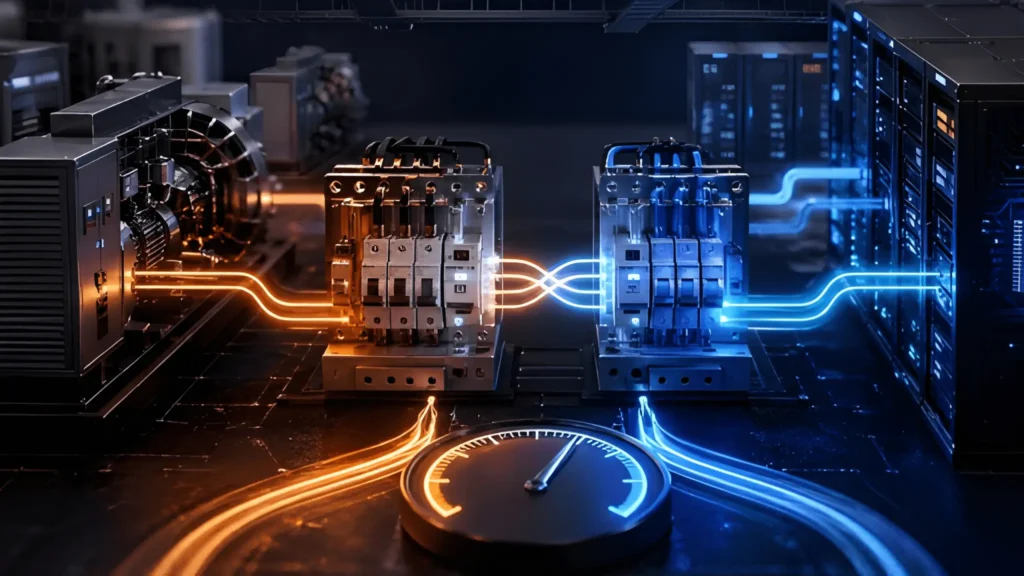
Infrastructure has evolved toward higher density and tighter operational tolerances without equivalent evolution in switching expectations. Legacy assumptions treated short

The first phase of AI infrastructure geography was determined by power and connectivity. Data centers concentrated in markets with access

Turning Up the Heat: Why Cooler Isn’t Always Better Thermal systems evolved around a simple premise that colder always meant

The colocation data center model has been remarkably durable. For three decades, the business logic was simple and consistently proven.

The Map Has Flipped: Energy Now Picks the Winners The first shift does not announce itself loudly, yet it reshapes

The grid has started to behave less like a utility pipeline and more like a dynamic system with its own

The way investors evaluate data centers has changed quietly but fundamentally. Capacity once acted as the shorthand for value, with

The AI infrastructure buildout has generated enormous analysis about hyperscalers, data center developers, GPU manufacturers, and cooling technology vendors. The

The AI infrastructure buildout has produced a category of project that did not exist five years ago: the gigawatt campus.

Insurance has always lagged the assets it covers. New technologies create new risk profiles, and the actuarial models that underwriters

The AI infrastructure market entered 2026 with a widely held assumption. Capital would remain broadly distributed. Neoclouds would carve out

The current wave of artificial intelligence feels decisive, yet it rests on a narrow interpretation of intelligence. Systems generate text,

The industry often treats intelligence as a property that emerges directly from scale, as if larger models automatically produce deeper

For most of the past decade, AI infrastructure was a private sector story. Hyperscalers built it. Venture capital funded the

The original neocloud proposition was simple. Hyperscalers could not build GPU capacity fast enough to meet the demand that generative

The shift did not begin with a headline moment or a disruptive announcement. It emerged quietly through design decisions, route

Physical limitations remain deeply embedded in every cloud interaction, even when abstracted through software-defined interfaces. Latency, throughput, and hardware contention

Data center infrastructure has been designed around a specific mental model of how AI works. A user submits a request.

The American power sector spent two decades in near-stagnation. Electricity demand barely grew between 2005 and 2022. Efficiency gains from

Direct-to-chip liquid cooling has moved from a niche solution for specialised high-performance computing environments into one of the most consequential

Nothing appears broken from the outside, yet a large share of data center expansion never even reaches the stage where

Scale Breaks Before It Sustains The promise of large-scale energy systems has always rested on efficiency through size, yet real-world

The neocloud sector entered 2026 carrying a narrative that had sustained it through two years of aggressive growth: that purpose-built

The architecture of modern computing rests on an assumption that no longer holds steady under pressure. Silicon arrives fixed, optimized

The architecture of modern cloud environments has shifted faster than the systems designed to control them, creating a gap that

For most of the past decade, immersion cooling occupied a peculiar position in data center planning conversations. Everyone agreed the

The term “data center” describes a building. It carries connotations of storage, retrieval, and general-purpose computing that no longer capture

Racks once served as inert structures that merely held servers, switches, and cables in predictable arrangements. That model collapses under

The narrative around hyperscale infrastructure often leans on a simple assumption that bigger systems naturally deliver better sustainability outcomes, yet

Power has replaced compute as the primary constraint on AI infrastructure expansion. The hyperscalers understood this shift before most of

The AI infrastructure buildout has dominated the industry conversation for three years. New campuses, new power agreements, new cooling architectures,

Sovereignty has increasingly extended from policy language into infrastructure design considerations, influencing how data centres operate in a fragmented digital

The performance narrative in AI infrastructure has shifted in a way that fundamentally alters how systems behave under real workloads,

The AI infrastructure buildout is routinely described as a story about technology companies and their capital expenditure commitments. Amazon, Microsoft,

The United States has dominated AI infrastructure investment since the current buildout cycle began. Northern Virginia remains the largest data

NeoCloud, as an emerging architectural pattern rather than a formally standardized industry category, has moved beyond the era where training

Something changed in enterprise AI budgets in 2025 and the change has accelerated into 2026. The monthly cloud bill arrived,

The numbers are so large they have become almost abstract. Amazon plans to spend $200 billion in capital expenditure in

When Infrastructure Started Following Borders, Not Traffic The global cloud evolved on the assumption that geography would gradually lose relevance

When Climate Stops Being the Deciding Factor The geography of compute once followed temperature maps with near mechanical predictability, as

The infrastructure beneath AI systems is being significantly strained by increasing legal and compliance requirements, not the weight of data

The money that is building the AI infrastructure of the next decade does not come from a single source. Hyperscalers

Go-Live Is Where AI Becomes Unpredictable Deployment does not extend training conditions, it replaces them with an environment that behaves

The SMR AI data center power narrative has been building for two years, and the announcements have come thick and

For the past three years, the data center industry organised itself around a single dominant workload profile. AI training defined

The AI infrastructure buildout is the largest peacetime investment project in human history. That phrase is not a headline. It

Colocation once operated as a clearly bounded layer where infrastructure ownership and workload intent aligned with high visibility and operational

For most of the past decade, the global data center map looked predictable. North America dominated. Western Europe followed. Singapore

For most of the past two decades, sovereign wealth funds occupied a predictable position in the global infrastructure investment landscape.

Tecto Data Centers Brazil expansion plans include a $2 billion investment through 2028, targeting the construction of five new data

For most of the commercial internet era, data center site selection followed a logic that the industry understood well and

A new constraint has quietly taken control of AI infrastructure, and it does not come from compute scarcity or capital

The architectural center of gravity in modern data centers has shifted from the perimeter to the deep interior where massive

Colocation has operated for three decades as a relatively stable business model built around a straightforward value proposition. Operators build

The relationship between data centers and the electricity grid has always involved a degree of financial complexity that site selection

India’s digital infrastructure market has entered a phase that no established playbook fully anticipates. Across the United States and Europe,

Modern metropolises no longer define their silhouettes solely by residential high-rises or commercial centers. Windowless, monolithic structures of hyperscale data

Submarine cables carry more than ninety-five percent of international internet traffic. Yet they rarely feature in mainstream discussions about digital

Thermal management in data centers has never been a static discipline. Each generation of compute hardware has introduced new heat

Grid interconnection has historically occupied a narrow corner of data center development planning. Facilities engineers and energy consultants managed it

The modern data center no longer exists as a passive consumer of electricity but increasingly operates as an active participant

Cloud infrastructure no longer behaves like a static utility that teams provision and forget, as its role now aligns directly

The idea of a single, unified data center has started to dissolve under the pressure of modern compute demands, where

The narrative around AI infrastructure once revolved almost entirely around compute, where GPUs defined the ceiling of innovation and scale.

AI infrastructure no longer scales along a single axis of compute or power, as the constraint landscape has shifted toward

Cloud computing established its dominance by separating software from hardware through layers of abstraction that simplified deployment and scaling. Developers

The race to scale artificial intelligence infrastructure has triggered a wave of innovation across compute architectures and cooling systems, yet

A silent architectural shift is unfolding beneath the surface of modern AI infrastructure, where centralized GPU clusters increasingly face scaling

The Paradox at the Core: GenAI as Both Load Multiplier and Load Manager Generative AI does not enter infrastructure ecosystems

The race to scale artificial intelligence has moved far beyond silicon and software, yet the constraint shaping its future remains

The logic that once governed digital security has begun to fragment under the pressure of distributed compute and continuously moving

The architecture of modern computing no longer evolves through simple scaling or incremental abstraction, as a deeper structural shift now

Electricity no longer struggles at the point of generation, yet it consistently encounters friction within the networks designed to deliver

Energy optimization conversations in data centers often revolve around advanced cooling technologies, yet the underlying physics of heat movement receives

The physics of heat has quietly become the dominant force shaping the future of computing, and that shift now begins

Modern AI systems no longer operate in episodic bursts that align with traditional enterprise workloads, because their training and inference

Co-located renewable energy projects have emerged as a practical response to this challenge by combining multiple renewable technologies within a

Modern data centers now move staggering volumes of internal traffic as artificial intelligence reshapes computing infrastructure. Training clusters distribute workloads

Expanding cloud platforms, artificial intelligence clusters, and distributed telecommunications networks require enormous quantities of electrical and structural materials that support

Thermal management now sits at the center of modern data center design as computing density rises across artificial intelligence, machine

Power generation technologies, grid infrastructure, and electrification systems depend on heavy electrical hardware that requires complex manufacturing ecosystems and long

Facilities originally optimized for airflow management now encounter thermal conditions that expose the limits of traditional cooling design. Hardware generations

Artificial intelligence infrastructure no longer behaves like conventional computing environments, and this divergence has created a widening structural gap between

Autonomous machines increasingly rely on continuous streams of data, computation, and communication to function safely within complex environments. Robotics platforms,

Artificial intelligence infrastructure is entering a phase where responsiveness begins to outweigh raw training scale as the primary architectural priority,

Semiconductor megafabs increasingly act as anchor loads within regional electricity systems because they demand continuous, ultra‑stable and large‑scale power that

The thermal management systems inside modern data centers no longer operate quietly in the background of computing infrastructure. Artificial intelligence

Electric power systems across the world are encountering a structural shift as digital infrastructure becomes one of the most energy-intensive

Artificial intelligence computing continues to push semiconductor hardware toward unprecedented thermal densities, forcing engineers to reconsider how heat moves through

Ocean infrastructure is entering a new phase where computing systems no longer remain confined to terrestrial facilities. Coastal waters increasingly

Digital infrastructure now operates in an environment where computation never pauses and electrical reliability shapes the boundaries of technological progress.

Digital culture often describes the cloud as something intangible, a seamless layer of software that floats above everyday life. That

The Invisible Infrastructure Behind Artificial Intelligence Artificial intelligence often appears to users as a seamless layer of digital capability, yet

Modern AI applications demand more than just raw computational power; they require instantaneous decision-making and minimal delay between input and

Modern fluid‑based infrastructure, including immersion cooling ecosystems, demands a redefinition of resilience that transcends simple uptime metrics. Immersion environments must

Digital infrastructure is no longer constrained to conventional landscapes. As urban density intensifies and environmental sensitivities rise, data centers are

Artificial intelligence has introduced an unprecedented electricity load to power grids once designed for predictably slow demand growth. Modern data

The era of climate volatility has exposed the vulnerability of energy infrastructure once designed primarily for efficiency and cost optimization;

Data centers rank among the world’s most critical infrastructure assets. They power digital economies, cloud computing, artificial intelligence, and enterprise
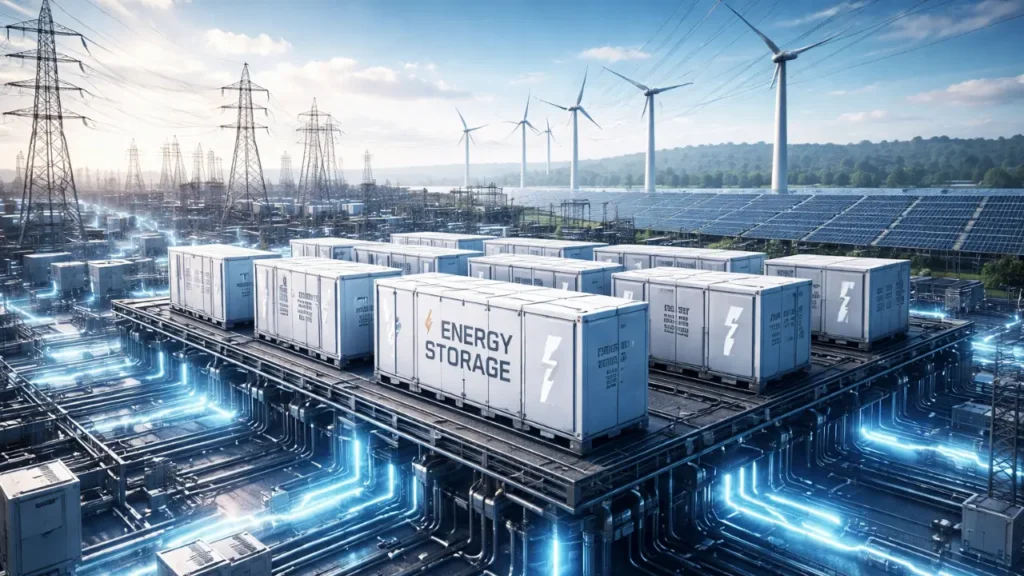
The modern power grid is undergoing transformation at a pace that was once considered radical only in theory, where the

I. Rethinking the Bigger-Is-Better Narrative Over the past decade, artificial intelligence has advanced under a dominant narrative of bigger, faster,

Colocation data centers are central to the global digital economy, and the shift toward clean energy colocation data centers is
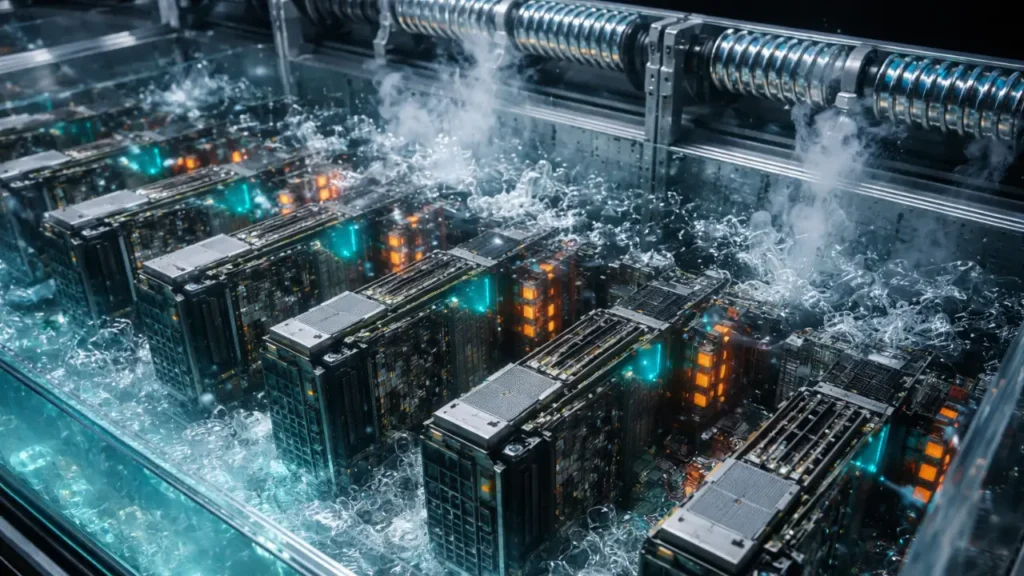
Modern compute systems confront a rising imperative: neither chips nor racks willingly endure the heat generated by escalating workload complexity

The Myth of the Infinite Cloud Grounded Cloud Computing challenges the notion of cloud as a limitless, abstract resource, emphasizing
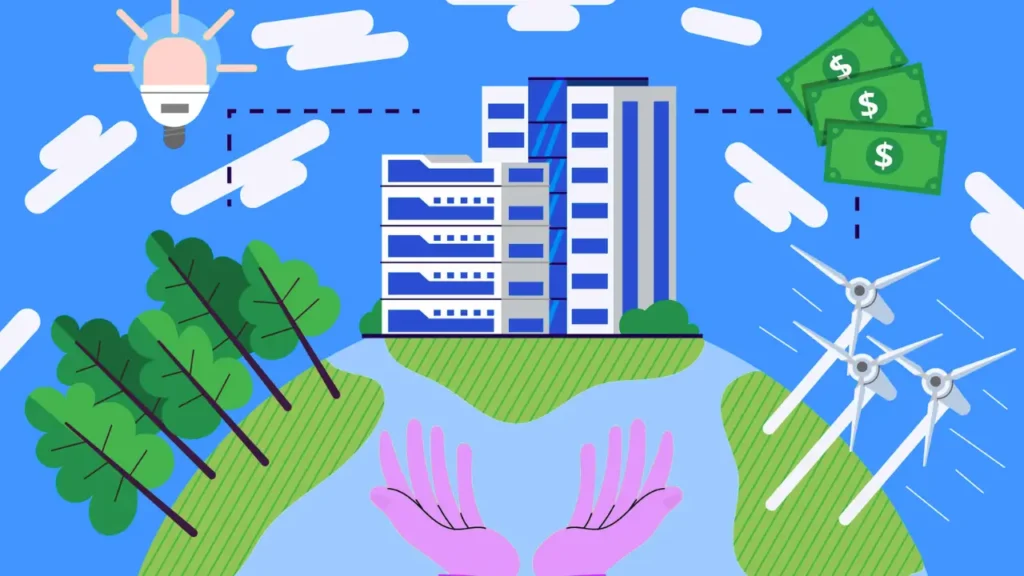
Major technology companies have set ambitious renewable energy goals and often claim to operate with “100 percent renewable energy.” On

AI is exploding economies worldwide, but its hidden hunger: for energy, water, and raw compute power, is devouring the planet.

Asia at the Intersection of AI Expansion and Climate Constraint Asia is the center of gravity for both global digital
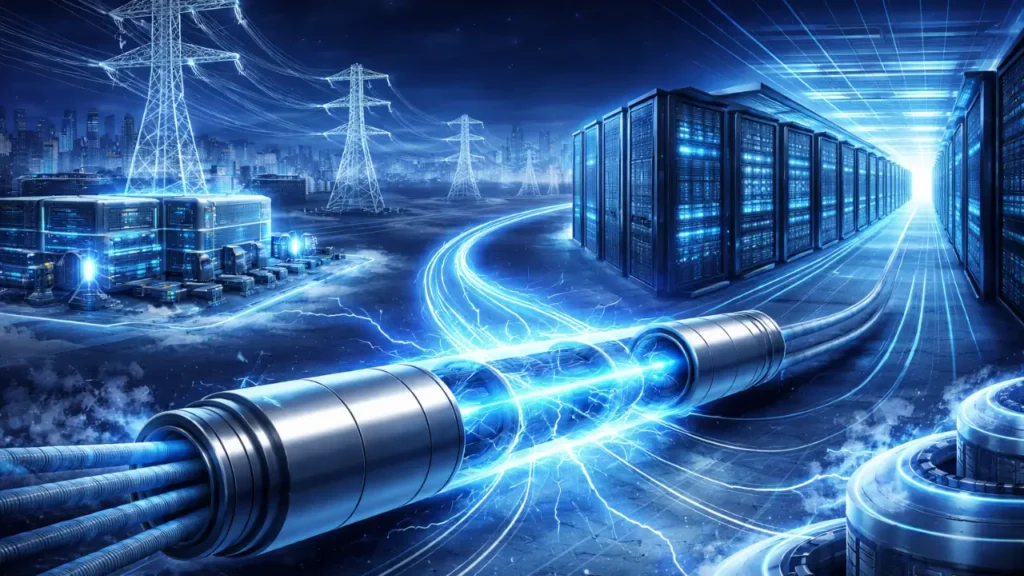
As the world’s power systems face rapidly growing demand from the electrification of transport and the rise of AI-driven data

Neocloud reframes what cloud should be by stripping away the traditional gravity that pins workloads to fixed infrastructures. In this

The data center of 2035 will not resemble the rigid, manually supervised facilities that defined the early cloud era, because

The rise of digital infrastructure, especially hyperscale and AI-intensive data centers, has coincided with an increasingly acute global water crisis,

The Physical AI Inflection Point The global technological landscape is moving from a digital-centric paradigm to one defined by Physical

Executive Summary The rapid maturation of generative artificial intelligence and the rise of large language models have transformed the physical

Edge computing and distributed infrastructure are rewriting the rules of modern compute deployment, forcing engineers to rethink every assumption about

The first sign that infrastructure has matured is not scale, but patience. In the world of neoclouds, architects no longer

The Thermal Crisis of the Artificial Intelligence Era The rapid transition from traditional cloud computing to the era of generative

The Dawn of Purpose-Built Clouds The digital landscape of the 21st century has transformed how nations perceive sovereignty, not just

The era of passive power infrastructure is giving way to AI driven autonomous electrical grid decision making, a shift that

Executive Summary The year 2026 marks a critical point for data center Real Estate Investment Trusts (REITs). The industry is

Reimagining Data Center Operations Modern digital environments have grown far more complex than in earlier decades. Hybrid clouds, containerized workloads,

The pace of AI workload expansion is remarkable. This exponential growth places unprecedented demands on global electricity systems. In 2024,

Data centers once symbolized order, symmetry, and predictability, yet the next generation of compute already bends those assumptions at the

Artificial intelligence has transformed the data center from a digital facility into a high-demand energy node that requires sustained electrical

The future of AI infrastructure no longer echoes only with the mechanical rush of air coursing through rigid server aisles,

The future of infrastructure rarely unfolds inside server racks; it takes shape inside conference rooms, sprint rituals, and strategic offsites

The concept of sustainable intelligence goes beyond building high-performance algorithms. It signals a structural shift in global technology. Artificial intelligence

The steady pulse of data centres now blends into urban life like passing trains and illuminated skylines, yet their hidden

AI’s rapid expansion has triggered an unprecedented infrastructure investment supercycle. Analysts estimate up to $3 trillion in capital expenditure will

The emergence of the neocloud ecosystem represents the most significant structural shift in digital infrastructure since the commercialization of public

The ground beneath our cities tells a quiet story of extraction, exhaustion, and relentless expansion, yet it also holds the

The era of data center design where cooling was an afterthought has ended; cooling now drives the very blueprint of

The global technological landscape is currently defined by a profound dichotomy. Artificial intelligence demonstrates an unprecedented ability to optimize human

We are entering what is often called the “Age of Electricity.” This era is defined not only by the decarbonisation

The moment a data center crosses a certain threshold of compute density, it stops behaving like a traditional digital facility

The era of AI data centers has transformed thermal management into a critical design decision. Engineers and operators now evaluate

The Compute-Carbon Paradox The global advancement of artificial intelligence (AI) has triggered a profound structural shift in energy demand. As

The global expansion of digital infrastructure is now colliding with physical limits. Land scarcity is intensifying. Power grids are reaching

The industrialization of artificial intelligence marks a major turning point in global computing history. This transition moves the industry from

Artificial intelligence now supports much of our global economic infrastructure. Consequently, the electricity requirements of hyperscale data centers are undergoing

The data center industry is undergoing a fundamental shift in how development logic is conceptualized as infrastructure-driven data center expansion
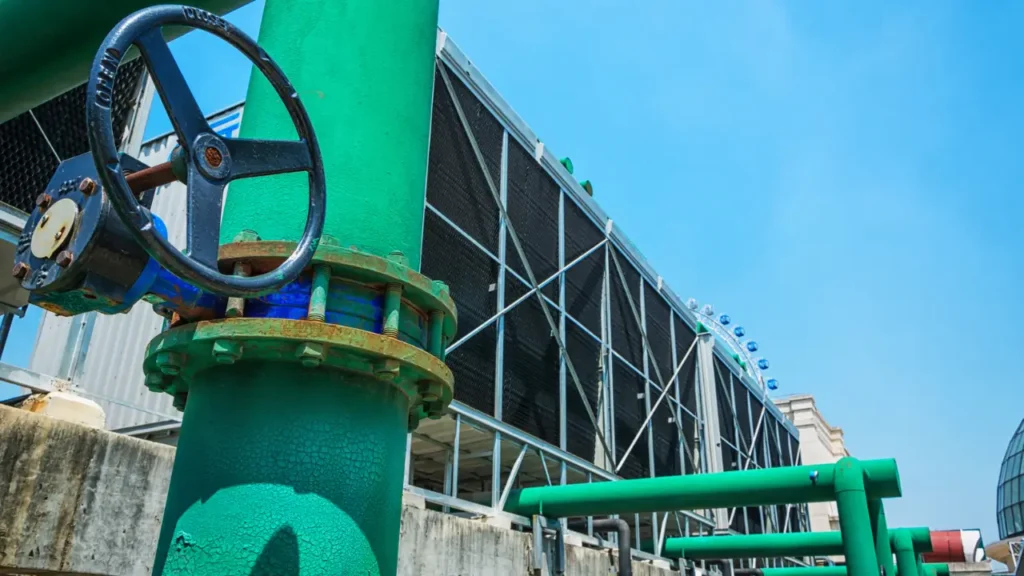
1. Executive Summary The transition toward water-neutral thermal management is fundamentally changing how the industry handles global server heat. As

The modern supply chain has entered a period of structural transformation shaped by technological intelligence and ecological accountability. AI-driven sustainable

In enterprise IT strategy discussions, the Monolithic Architectures vs. Modular Futures debate has come to define choices about scalability, resilience

The rapid expansion of large-scale model training and inference has transformed data centers into some of the most energy-intensive industrial