Artificial intelligence infrastructure rarely fails in dramatic ways anymore because operators have spent years hardening power systems, improving redundancy, and stabilizing network orchestration across large-scale compute environments. Modern facilities instead lose money through slower and quieter forms of degradation that remain hidden beneath acceptable operating thresholds for long periods of time. Thermal instability now sits near the center of that invisible erosion because heat no longer behaves like a secondary engineering concern inside dense AI environments. Accelerated compute density, sustained inference demand, and continuous workload variability have turned thermal behavior into a persistent operational pressure shaping every layer of infrastructure economics. Most facilities still measure temperature as a compliance metric instead of treating it as a live financial variable capable of influencing efficiency, maintenance behavior, and long-term asset reliability. The industry therefore continues absorbing compounding thermal losses that rarely trigger alarms but steadily weaken infrastructure performance across entire deployment lifecycles.
Large language models intensified this challenge because AI racks operate differently from traditional enterprise compute systems that relied on predictable workload distribution and relatively stable power consumption patterns. High-density accelerators generate rapid thermal spikes, localized airflow turbulence, and uneven cooling pressure across tightly packed infrastructure rows. Facilities originally designed around stable server utilization now struggle to manage continuous thermal oscillation created by AI training clusters and inference-heavy deployments. Small increases in rack inlet temperature can quietly shift fan behavior, alter cooling efficiency, and increase component stress without ever causing visible service interruptions. Financial exposure therefore accumulates gradually through power inefficiency, inconsistent throughput behavior, shortened hardware stability, and rising operational intervention requirements. Infrastructure teams increasingly recognize that thermal predictability may determine long-term AI economics more than raw processing capability alone.
The Silent Tax Hidden Inside Every Hot Rack
AI facilities often continue operating normally even while thermal imbalance slowly reduces operational efficiency across multiple infrastructure layers at the same time. Localized hotspots inside racks can alter airflow behavior enough to increase fan utilization, disrupt cooling symmetry, and trigger unnecessary mechanical response cycles throughout adjacent systems. Engineers may never classify these conditions as failures because workloads continue processing and uptime metrics remain technically stable during the entire degradation period. Financial leakage nevertheless develops through rising energy overhead, unstable thermal distribution, and increasing maintenance sensitivity around heavily utilized hardware clusters. The facility therefore absorbs operational penalties continuously without recognizing heat behavior as the underlying economic driver behind those losses. Thermal inefficiency essentially behaves like an invisible infrastructure tax that compounds silently inside environments already operating near thermal limits.
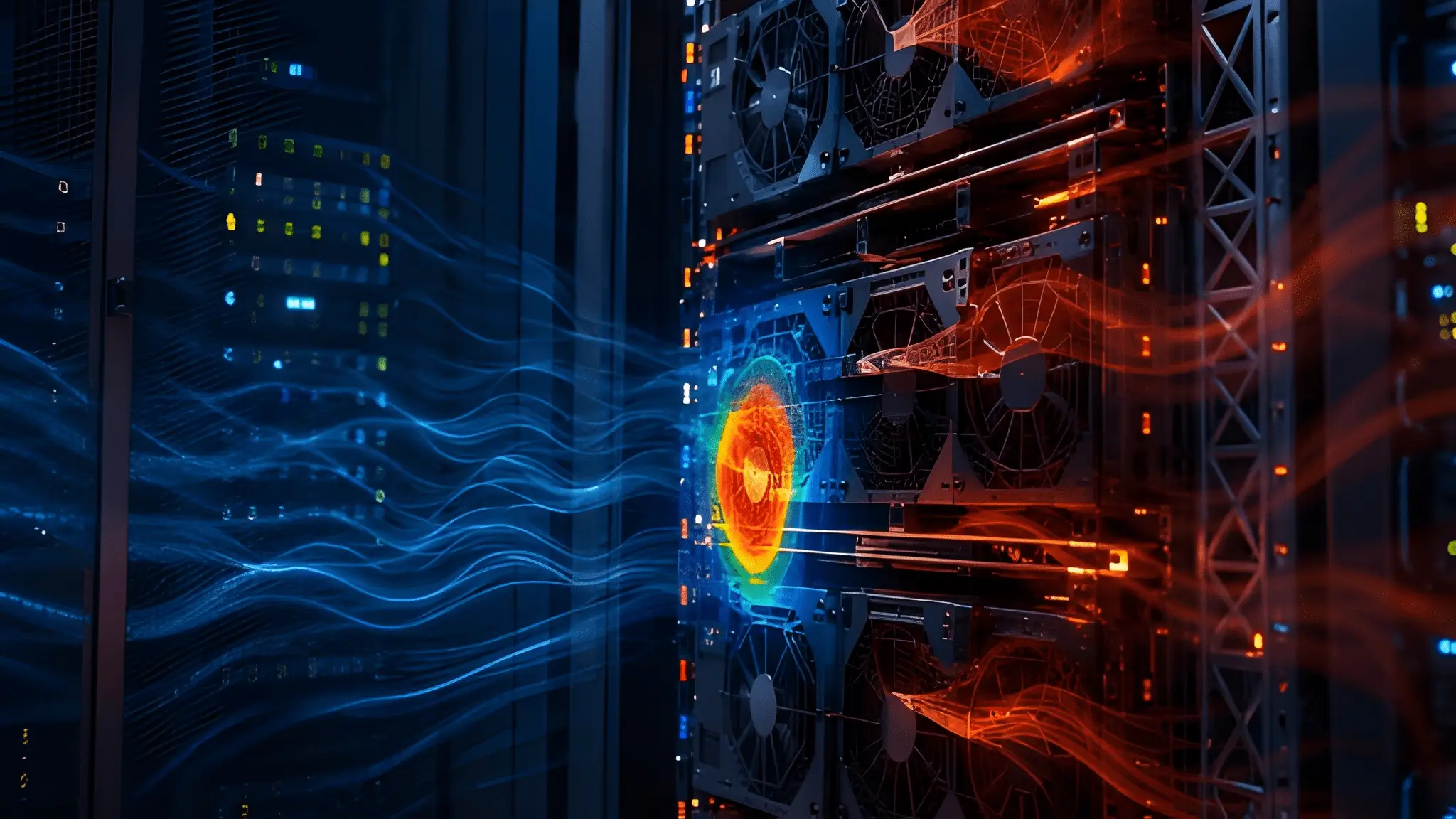
Cooling systems also lose efficiency when thermal gradients fluctuate unpredictably between neighboring racks inside dense AI environments. Traditional airflow planning assumed relatively balanced heat generation patterns that allowed cooling systems to maintain stable environmental conditions throughout the data hall. Modern accelerator deployments instead create dynamic heat pockets that force cooling equipment into constant adjustment cycles across containment zones and airflow corridors. Mechanical systems respond by increasing fan speed, altering chilled water behavior, or redistributing cooling pressure across affected infrastructure sections. These adjustments consume additional power while simultaneously increasing wear across cooling equipment that was never optimized for continuously shifting thermal conditions. Operational costs therefore rise gradually even though facility dashboards may still report acceptable environmental compliance levels.
AI workloads magnify small thermal inefficiencies into operational drag
Accelerator clusters amplify thermal sensitivity because GPUs maintain extremely dense processing activity across sustained computational cycles that generate concentrated heat loads inside confined infrastructure footprints. Even slight airflow obstruction or imperfect cooling distribution can produce uneven thermal behavior capable of affecting workload consistency across interconnected systems. Training workloads may continue functioning while individual accelerators throttle intermittently due to localized thermal pressure invisible to broader monitoring systems. Throughput inconsistency then spreads subtly through the cluster because synchronized compute environments depend heavily on stable performance across all participating nodes. Small thermal variations therefore create operational drag that compounds over time through slower processing consistency, inefficient workload balancing, and increasing infrastructure intervention requirements. Facilities absorb those penalties gradually because the systems continue operating without triggering catastrophic alarms or visible service disruptions.
Maintenance cycles also become more complicated when thermal instability persists across long deployment periods without clear detection thresholds. Hardware exposed to sustained temperature fluctuation experiences different aging behavior compared to components operating within stable environmental conditions over the same period. Engineers may replace fans, connectors, or accelerators more frequently without immediately identifying uneven thermal exposure as the root operational driver behind those interventions. Procurement forecasting then becomes harder because infrastructure degradation patterns stop aligning with traditional lifecycle assumptions used during capacity planning models. Thermal inconsistency therefore introduces hidden unpredictability into maintenance operations that slowly weakens deployment efficiency across the entire facility ecosystem. AI infrastructure no longer loses value only through outages because operational instability itself now carries meaningful financial consequences.
AI Factories Are Losing Money in Places Nobody Is Monitoring
Most monitoring systems still focus heavily on average environmental conditions instead of tracking micro-level thermal behavior developing between densely packed accelerator clusters. Rack-level telemetry may show acceptable inlet temperatures even while localized hotspots form around cable congestion points, airflow obstructions, or uneven coolant distribution zones. Operators therefore receive a misleading sense of thermal stability because broad environmental metrics often conceal highly unstable conditions developing inside smaller infrastructure pockets. AI systems worsen this visibility problem because workload intensity can shift rapidly across clusters depending on model behavior, inference demand, and orchestration patterns. Heat distribution consequently changes faster than many facilities can monitor with precision using conventional thermal management frameworks. Infrastructure economics begin deteriorating quietly inside those observational gaps long before operational dashboards reflect meaningful warning signs.
Thermal drift also develops across row-level infrastructure in ways that remain difficult to identify through traditional monitoring architecture. Certain racks may experience persistent cooling imbalance caused by airflow recirculation, containment leakage, or uneven pressure behavior inside high-density deployments. Adjacent infrastructure zones can therefore operate under entirely different thermal conditions despite sharing identical hardware configurations and workload profiles. The facility may continue treating those environments as operationally equivalent while actual performance efficiency diverges gradually over time. Cooling systems then compensate unevenly across the environment, creating inefficient mechanical behavior that spreads energy overhead throughout the broader infrastructure footprint. Financial losses emerge not from catastrophic overheating events but from persistent operational inefficiency hidden inside poorly observed thermal variations.
Hidden thermal imbalance steadily erodes infrastructure economics
AI infrastructure economics depend heavily on predictability because operators model capacity planning, maintenance cycles, and asset utilization around assumptions of relatively stable system behavior. Thermal inconsistency weakens those assumptions by introducing operational variability that affects workload scheduling, hardware reliability, and cooling efficiency simultaneously across multiple infrastructure layers. Facilities may deploy additional cooling capacity as a precautionary measure even when only specific thermal zones require correction. This approach increases operational expenditure while failing to address the localized airflow dynamics actually driving the instability. Overprovisioning therefore becomes a defensive response to limited thermal visibility rather than a strategically optimized infrastructure decision. Capital efficiency declines gradually because facilities compensate broadly for problems developing narrowly inside specific environmental conditions.
Thermal inefficiency further complicates operational forecasting because unnoticed environmental instability often distorts performance analytics across AI deployments. Engineers may attribute throughput inconsistency or rising energy usage to software optimization challenges instead of recognizing underlying thermal behavior shaping those outcomes. Decision-making then shifts toward workload restructuring, orchestration tuning, or additional hardware deployment while the environmental root cause remains unresolved. Facilities consequently spend more capital addressing symptoms instead of correcting airflow, containment, or cooling distribution problems creating the instability. AI infrastructure economics therefore weaken through layers of misdiagnosed inefficiency that accumulate across long operational periods. Modern facilities increasingly require thermal observability systems capable of identifying subtle environmental drift before it reshapes infrastructure behavior at a larger scale.
Why Thermal Drift Is Becoming an Investor-Level Risk
Financial models surrounding AI infrastructure increasingly depend on assumptions about deployment stability, operational continuity, and predictable hardware performance across long investment cycles. Thermal drift weakens those assumptions because fluctuating environmental conditions introduce uncertainty into the physical behavior of compute infrastructure over time. Facilities may initially deliver expected throughput and efficiency targets while hidden thermal imbalance slowly reshapes cooling performance, hardware stability, and maintenance frequency beneath the surface. Investors evaluating long-duration infrastructure projects therefore face operational variability that traditional forecasting frameworks often fail to incorporate accurately. Predictable thermal conditions matter because infrastructure economics depend heavily on consistent utilization behavior across large-scale deployments running continuously under dense compute pressure. Thermal inconsistency transforms environmental engineering into a direct financial forecasting concern rather than a narrow facilities management issue.
AI deployments also compress the margin for environmental instability because modern accelerators operate within tightly balanced thermal envelopes that influence sustained performance behavior. Minor cooling irregularities may not interrupt workloads immediately, yet they can gradually affect accelerator consistency, memory stability, and cluster synchronization across training environments. Performance predictability therefore becomes harder to maintain over long operational periods even when infrastructure technically remains online and fully utilized. Financial stakeholders increasingly examine whether facilities can sustain operational consistency instead of merely delivering peak benchmark capability during controlled deployment phases. Asset valuation consequently shifts toward infrastructure environments capable of maintaining stable thermal conditions across changing workload patterns and sustained utilization cycles. Long-term infrastructure confidence now depends heavily on environmental discipline supporting predictable compute behavior at scale.
Thermal volatility changes how infrastructure value gets measured
Traditional infrastructure valuation models often prioritized compute density, power availability, and geographic scalability while treating cooling systems as supporting operational layers rather than strategic financial assets. AI environments changed that equation because thermal management now directly shapes deployment reliability, operational continuity, and long-term infrastructure efficiency. Facilities capable of maintaining stable thermal conditions under fluctuating workload intensity may preserve asset performance longer than environments optimized purely for maximum rack density. Financial markets increasingly recognize that thermal predictability influences operational resilience in ways that directly affect infrastructure profitability and long-term capital recovery assumptions. Environmental stability therefore begins functioning as an indicator of infrastructure maturity rather than simply a measure of engineering competence. Thermal behavior now shapes the commercial credibility of large-scale AI deployment strategies across the broader infrastructure sector.
Deployment timelines also become more financially sensitive when thermal instability introduces uncertainty into scaling projections and operational expansion plans. Operators may secure power capacity and hardware availability successfully while still facing deployment delays caused by airflow redesigns, cooling retrofits, or containment inefficiencies discovered during implementation stages. These thermal complications can alter expansion economics significantly because infrastructure scaling depends on synchronized execution across power, cooling, and compute deployment layers simultaneously. Investment assumptions built around linear infrastructure expansion therefore become vulnerable when thermal behavior disrupts deployment predictability at larger scale. Facilities that manage thermal stability effectively gain operational flexibility because they can scale compute environments without triggering unpredictable environmental side effects across adjacent infrastructure systems. AI infrastructure valuation increasingly reflects the ability to sustain stable operational conditions during continuous scaling activity rather than simply the ability to deploy additional hardware quickly.
The Real Cost of Heat Starts After the Server Survives
Most infrastructure discussions still frame heat as a catastrophic failure risk even though modern AI systems more commonly experience gradual operational degradation caused by prolonged thermal exposure. Servers may continue functioning normally for long periods while elevated environmental stress slowly affects voltage stability, memory consistency, connector integrity, and component responsiveness across densely utilized systems. Operators therefore miss the broader financial implications because the infrastructure technically survives despite steadily losing operational efficiency underneath acceptable performance thresholds. Thermal exposure changes how hardware behaves over time rather than simply determining whether systems remain operational during isolated overheating events. AI environments intensify this issue because accelerators maintain sustained processing intensity across continuous workload cycles that expose components to prolonged thermal stress without meaningful recovery intervals. Infrastructure economics consequently weaken through cumulative performance instability rather than dramatic hardware collapse.
Cooling systems can unintentionally mask these long-tail effects because aggressive thermal compensation often prevents visible service interruptions while allowing deeper efficiency problems to develop gradually. Increased fan utilization, higher coolant circulation intensity, and persistent airflow adjustments help maintain acceptable operating conditions temporarily across affected infrastructure zones. Those interventions however increase mechanical strain across cooling equipment while also raising power consumption throughout the facility environment. Operational costs therefore climb continuously even though the compute systems appear stable from a conventional uptime perspective. Infrastructure teams frequently discover the broader consequences only after maintenance frequency rises, component reliability weakens, or workload consistency begins deteriorating across previously stable clusters. The real economic impact of heat often emerges long after the infrastructure avoided outright failure.
Thermal stress degrades operational efficiency before hardware fails
AI infrastructure depends heavily on synchronized performance consistency because distributed workloads rely on predictable behavior across large accelerator clusters processing tasks simultaneously. Sustained thermal pressure can introduce subtle timing irregularities, intermittent throttling behavior, and inconsistent workload responsiveness that slowly reduce cluster efficiency over extended operational periods. These disruptions rarely appear dramatic enough to classify as failures, yet they steadily reduce effective compute utilization across the broader deployment environment. Facilities may therefore consume equivalent power and cooling resources while extracting lower operational value from the same physical infrastructure footprint. Efficiency loss becomes especially difficult to identify because the degradation develops gradually through countless small performance inconsistencies instead of obvious service interruptions. Financial damage accumulates through reduced infrastructure quality rather than visible infrastructure collapse.
Thermal exposure also complicates refresh planning because infrastructure aging behavior becomes less predictable when environmental conditions vary significantly across racks, rows, or clusters over time. Certain systems may maintain stable operational performance while adjacent hardware exposed to different airflow patterns experiences accelerated degradation despite sharing identical deployment timelines. Asset replacement strategies therefore become harder to standardize because thermal inconsistency disrupts the uniform lifecycle assumptions supporting traditional infrastructure planning models. Facilities may replace hardware prematurely as a precautionary measure simply to avoid unpredictable operational instability developing later in the deployment cycle. Capital recovery strategies weaken because infrastructure longevity no longer aligns cleanly with expected operational timelines originally used during investment planning. AI infrastructure increasingly requires thermal discipline not merely to prevent failure but to preserve consistent operational value throughout the entire asset lifecycle.
AI Infrastructure Is Entering the Era of Thermal Debt
Operators focused heavily on securing power availability, accelerator supply, and deployment speed because competitive pressure rewarded rapid scaling above long-term environmental precision. Facilities therefore adopted temporary cooling adaptations, uneven airflow compromises, and dense rack configurations that solved immediate deployment constraints while introducing persistent thermal inefficiencies into the infrastructure foundation. These shortcuts often appeared financially reasonable during early expansion phases because workloads continued operating and service continuity remained stable across the environment. Long-term operational pressure however accumulates gradually when unresolved thermal imbalance becomes embedded inside the physical architecture of the facility itself. AI infrastructure increasingly carries thermal debt in the same way poorly maintained software platforms accumulate technical debt across prolonged operational cycles.
Thermal debt becomes especially dangerous because environmental inefficiencies compound across interconnected infrastructure systems instead of remaining isolated within individual racks or cooling units. Improper containment design may alter airflow pressure across adjacent rows, forcing cooling equipment into unstable operating behavior throughout larger deployment zones. Temporary liquid cooling adaptations can also create uneven thermal distribution patterns when facilities integrate high-density accelerator clusters into environments originally designed for lower heat loads. Mechanical systems then operate under continuous adjustment pressure while infrastructure teams deploy incremental fixes that address symptoms rather than correcting the underlying environmental architecture. Operational complexity rises steadily because every new deployment layer interacts with previously unresolved thermal conditions already embedded inside the facility ecosystem. The infrastructure therefore becomes progressively harder to stabilize efficiently as compute density continues increasing over time.
Thermal debt compounds across the entire facility lifecycle
Environmental instability rarely remains static because sustained thermal imbalance gradually influences maintenance planning, cooling efficiency, hardware reliability, and deployment scalability simultaneously across long operational timelines. Facilities carrying unresolved thermal inefficiencies often require increasingly aggressive intervention strategies just to preserve stable operational conditions during future expansion phases. Cooling retrofits become more complicated, airflow redesigns become more disruptive, and infrastructure modifications become more expensive because earlier deployment shortcuts limited environmental flexibility across the broader facility architecture. Thermal debt therefore behaves like a cumulative operational burden that reshapes future infrastructure decisions long after the original deployment choices occurred. Financial exposure expands progressively because every subsequent scaling decision must compensate for preexisting environmental limitations embedded within the infrastructure ecosystem. AI facilities increasingly discover that unresolved thermal compromise restricts long-term scalability more than power availability or hardware procurement constraints.
Operational teams also face growing forecasting difficulty when thermal debt introduces unpredictable environmental behavior across continuously evolving compute environments. Facilities may struggle to model future cooling requirements accurately because legacy airflow patterns interact unpredictably with new accelerator deployments and changing workload distributions. Infrastructure planning therefore becomes reactive instead of strategic because thermal instability weakens confidence in long-term deployment assumptions and environmental performance projections. Teams often compensate conservatively by overengineering cooling capacity or limiting rack density to preserve operational stability during uncertain conditions. Those defensive measures protect reliability temporarily while simultaneously reducing infrastructure efficiency and increasing capital expenditure pressure across future deployment cycles. Thermal debt ultimately transforms environmental compromise into a persistent financial liability shaping the entire operational trajectory of AI infrastructure environments.
Every Uneven Temperature Curve Creates Invisible Compute Waste
AI infrastructure rarely extracts equal performance from every accelerator inside a deployment because thermal conditions often vary significantly between racks, rows, and localized containment zones. Some systems operate within highly stable environmental conditions while adjacent hardware experiences intermittent thermal pressure caused by airflow turbulence, recirculation pockets, or uneven cooling distribution. Facilities may technically deploy identical compute hardware across those environments, yet the infrastructure delivers inconsistent operational efficiency depending on local thermal behavior surrounding each cluster. Accelerator synchronization becomes harder to maintain because temperature-sensitive systems adjust fan behavior, power management, and workload responsiveness dynamically during sustained computational activity. Effective compute utilization therefore declines gradually as thermal imbalance prevents infrastructure from sustaining uniform processing behavior across the broader deployment ecosystem. AI facilities quietly lose usable computational value long before infrastructure metrics classify those conditions as operational problems.
Distributed AI workloads magnify this inefficiency because large-scale training environments depend heavily on synchronized throughput consistency between interconnected accelerators processing shared computational tasks simultaneously. A single thermally unstable cluster can introduce timing irregularities that reduce overall workload efficiency even when the remaining infrastructure operates normally. Operators may continue supplying equivalent power, cooling resources, and orchestration capacity while extracting lower effective performance from the same compute environment due to thermal inconsistency alone. Those losses rarely appear directly inside traditional monitoring dashboards because infrastructure utilization metrics often fail to capture subtle environmental performance degradation developing across distributed systems. Financial leakage therefore accumulates through underperforming infrastructure capacity that technically remains active yet fails to deliver fully optimized computational output. Thermal imbalance effectively converts portions of installed compute infrastructure into invisible operational waste.
Uneven cooling behavior distorts infrastructure optimization strategies
Facilities frequently optimize around average thermal conditions even though AI environments behave according to localized airflow dynamics and rapidly shifting heat concentration patterns. Broad environmental metrics may indicate acceptable operational stability while smaller infrastructure pockets experience persistent thermal oscillation that alters compute efficiency across specific deployment zones. Infrastructure teams responding to these inconsistencies often redistribute workloads conservatively to avoid concentrated thermal pressure inside affected racks or containment sections. That strategy protects operational continuity temporarily, yet it also reduces the effective density and utilization efficiency of the broader compute environment. Facilities consequently maintain unused thermal headroom across portions of the infrastructure simply to compensate for environmental instability developing elsewhere in the deployment. Compute optimization therefore becomes constrained not by hardware capability but by inconsistent thermal behavior across the facility architecture.
Thermal imbalance also interferes with predictive orchestration systems designed to maximize workload efficiency across hyperscale AI deployments. Modern scheduling platforms increasingly depend on assumptions about stable infrastructure behavior when distributing workloads dynamically between clusters, accelerators, and regional compute zones. Environmental inconsistency weakens those assumptions because thermal pressure can shift operational performance unpredictably between physically adjacent systems over relatively short periods. Scheduling decisions therefore become less reliable as orchestration platforms struggle to account for constantly changing environmental conditions affecting hardware responsiveness. Infrastructure operators may compensate manually through conservative deployment policies that prioritize operational stability over maximum compute efficiency. AI facilities consequently sacrifice portions of their theoretical computational capacity because uneven thermal behavior prevents infrastructure from sustaining consistent large-scale optimization conditions.
Why Thermal Predictability Is Becoming More Valuable Than Peak Performance
The AI industry spent years prioritizing maximum computational capability because competitive pressure rewarded higher throughput, faster model training, and denser accelerator deployment across hyperscale infrastructure environments. Operational reality however increasingly shows that unstable infrastructure often undermines theoretical performance advantages during sustained real-world deployment conditions. Facilities capable of maintaining consistent thermal behavior across fluctuating workloads may deliver stronger long-term operational efficiency than environments optimized purely for short-duration benchmark performance. Stable environmental conditions support predictable accelerator behavior, smoother orchestration performance, and more reliable workload synchronization throughout distributed compute systems. Infrastructure economics therefore begin favoring operational consistency because predictable performance creates fewer maintenance disruptions, lower efficiency losses, and more reliable deployment scalability over time. Thermal predictability increasingly functions as an infrastructure multiplier shaping the practical value extracted from AI compute investments.
AI deployments also depend heavily on sustained operational continuity because modern inference systems and training environments often run continuously across globally distributed infrastructure ecosystems. Facilities experiencing frequent thermal fluctuation may preserve technical uptime while still introducing subtle instability that weakens workload consistency and operational confidence across interconnected systems. Engineers then spend increasing amounts of time managing environmental variability instead of focusing on optimization, deployment expansion, or infrastructure innovation initiatives. Stable thermal environments reduce that operational friction because infrastructure behaves more predictably under changing computational pressure and evolving workload distribution patterns. Long-term efficiency therefore emerges not from maximizing isolated performance peaks but from sustaining dependable operational behavior across extended deployment cycles. Thermal consistency ultimately improves the economic quality of compute infrastructure rather than simply protecting hardware from overheating events.
Predictable thermal conditions improve infrastructure scalability
Infrastructure scaling becomes substantially easier when facilities can forecast environmental behavior accurately during future deployment expansion phases. Stable thermal conditions allow operators to model cooling requirements, airflow adjustments, and rack density planning with greater confidence because infrastructure behavior remains relatively predictable across changing operational conditions. Facilities experiencing persistent thermal inconsistency instead face uncertainty whenever new accelerator clusters, workload distributions, or containment modifications enter the environment. Scaling decisions therefore become slower and more conservative because environmental unpredictability increases the operational risk associated with dense compute expansion. Predictable thermal ecosystems create strategic flexibility by allowing infrastructure operators to scale confidently without triggering cascading cooling instability throughout adjacent deployment zones. AI infrastructure growth increasingly depends on thermal reliability supporting repeatable deployment outcomes at larger scale.
Thermal predictability also strengthens infrastructure longevity because stable environmental conditions reduce uneven component stress across compute systems operating continuously under sustained utilization pressure. Facilities maintaining balanced thermal behavior often experience more consistent hardware aging patterns, smoother maintenance forecasting, and fewer operational anomalies developing unexpectedly across deployment lifecycles. Asset management consequently becomes more reliable because infrastructure performance aligns more closely with planned operational assumptions and projected refresh timelines. Financial planning benefits significantly from that stability because operators can forecast infrastructure behavior with greater confidence across long-duration deployment horizons. AI environments increasingly reward thermal discipline because operational predictability now carries direct economic value across maintenance planning, infrastructure scaling, and long-term asset utilization strategies. Stable heat management therefore becomes a foundational requirement for sustainable AI infrastructure economics rather than a secondary engineering objective.
The Wiser AI Leaders May Be the Ones That Master Heat
The next phase of AI infrastructure competition may depend less on who deploys the most compute capacity and more on who sustains the most operationally stable compute environments over long deployment horizons. Facilities already possess enormous processing capability, advanced accelerators, and expanding power infrastructure across global deployment ecosystems. Environmental stability however increasingly determines whether that compute infrastructure can operate efficiently, predictably, and economically under continuous workload pressure. Thermal inconsistency quietly weakens infrastructure value because operational inefficiency compounds gradually across maintenance behavior, cooling overhead, workload synchronization, and asset longevity simultaneously. AI infrastructure therefore faces a strategic transition where heat management evolves from a supporting engineering function into a defining operational capability shaping long-term competitiveness. Facilities capable of mastering thermal behavior may ultimately extract substantially greater value from equivalent compute infrastructure than environments focused solely on expanding raw processing density.
Infrastructure leaders entering the next decade will likely focus less on building the loudest compute environments and more on sustaining the most thermally disciplined operational ecosystems at scale. Stable environmental behavior supports stronger utilization efficiency, smoother deployment forecasting, and more predictable infrastructure economics across increasingly dense AI environments operating continuously around the clock. Thermal debt, hidden compute waste, and environmental inconsistency already influence operational outcomes inside modern infrastructure deployments even when facilities continue meeting conventional uptime expectations. The industry therefore faces a structural shift where long-term infrastructure quality depends heavily on how precisely facilities manage airflow behavior, cooling adaptation, and environmental predictability throughout evolving compute architectures. AI infrastructure no longer loses value only through failure because operational instability itself now carries meaningful financial consequences across the full lifecycle of deployed systems.