Skip to content
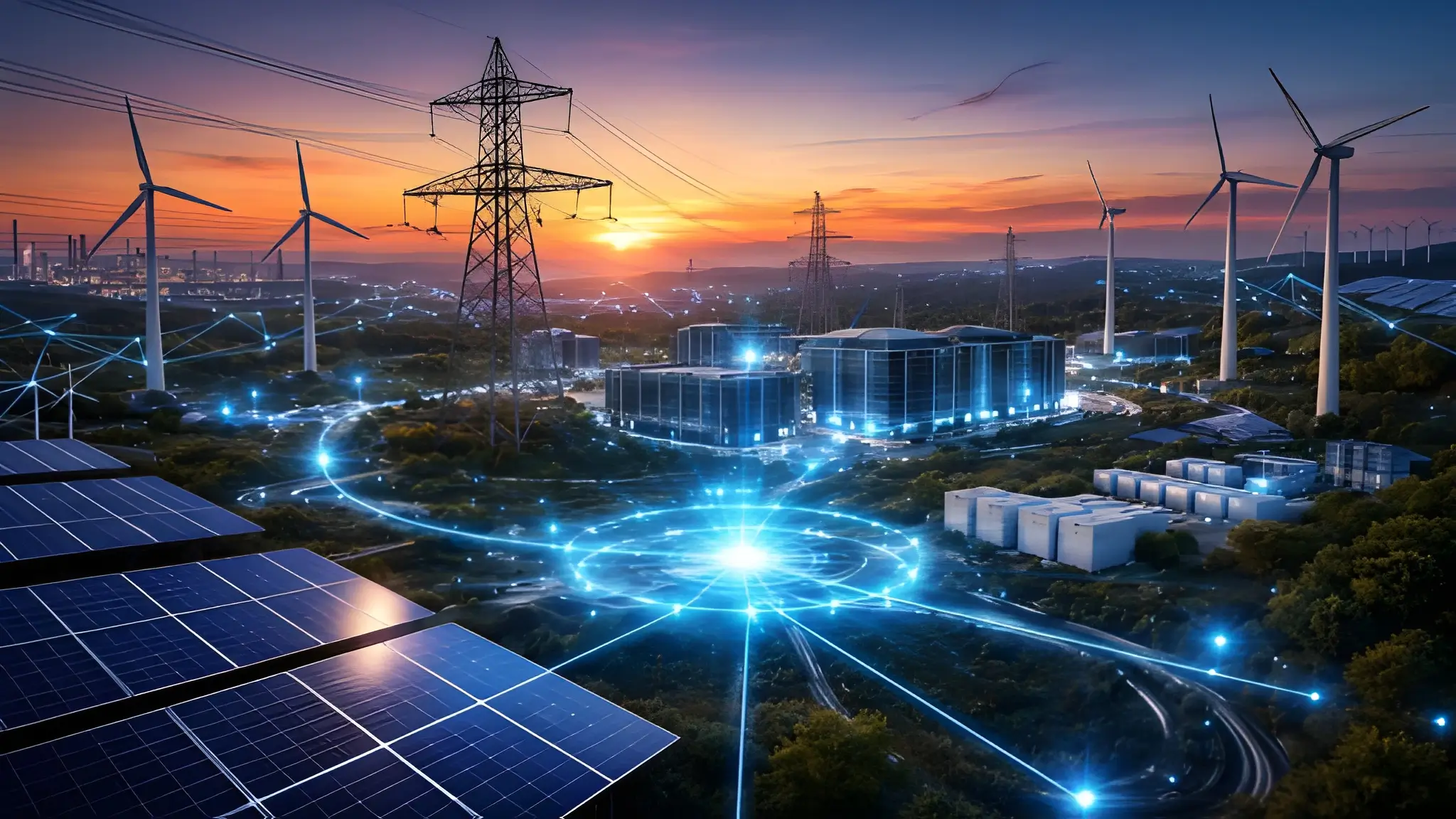
The modern data center no longer exists as a passive consumer of electricity but increasingly operates as an active participant in the energy ecosystem. Operators now navigate a landscape where compute demand grows faster than traditional power infrastructure can adapt, forcing a strategic shift toward direct energy involvement. This transformation does not emerge from ambition alone but from constraints imposed by grid limitations, interconnection delays, and unpredictable energy access. Infrastructure providers who once focused purely on uptime now evaluate land, energy, and transmission as a unified system that determines deployment feasibility. Strategic decisions increasingly revolve around securing power before designing compute capacity, reversing long-standing industry logic. The result is a structural convergence where data centers begin to resemble power infrastructure companies in both function and influence.

Energy constraints have begun to dictate where and how digital infrastructure expands, shaping global compute distribution in subtle but powerful ways. Developers no longer assume that grid access will align with project timelines, which introduces a new layer of complexity into planning cycles. Power availability now determines not only site selection but also the pace at which capacity can come online, creating uneven growth patterns across regions. Organizations that secure early access to energy infrastructure gain a decisive advantage in deploying next-generation workloads. This shift places energy strategy at the core of infrastructure development rather than at its periphery. The data center industry now operates within a framework where electrons and compute capacity evolve together rather than independently.
Owning Megawatts, Not Just Managing Load
From Consumption Optimization to Generation Control
Data center operators once optimized workloads to reduce power consumption, focusing on efficiency metrics that aligned with cost and sustainability goals. That paradigm now appears insufficient in a world where access to energy itself has become uncertain and constrained. Organizations increasingly pursue direct ownership of generation assets, including renewable installations and gas-based systems, to secure long-term operational stability. This transition reflects a recognition that controlling supply offers more strategic value than optimizing demand alone. Ownership enables operators to bypass grid bottlenecks that delay expansion and limit scalability. The shift marks a fundamental redefinition of infrastructure strategy where energy generation becomes inseparable from compute deployment.
The move toward owning megawatts introduces new operational responsibilities that extend beyond traditional data center expertise. Operators must now evaluate fuel sourcing, generation reliability, and long-term maintenance considerations as part of their infrastructure planning. These responsibilities require a deeper integration of engineering disciplines that were previously external to data center operations. Ownership also provides greater predictability in energy costs and availability, which supports more stable capacity planning. Companies that adopt this model reduce exposure to external disruptions that can affect grid-supplied electricity. The result is a more controlled and resilient infrastructure environment where energy becomes a managed asset rather than a variable input.

Autonomy Through Energy Independence
Control over energy generation introduces a new dimension of autonomy that reshapes how data centers operate and expand. Operators who depend solely on utilities must align with external timelines, regulatory processes, and infrastructure limitations that can delay deployment. Direct ownership of energy assets reduces this dependency and allows organizations to move at a pace aligned with their own growth strategies. This autonomy extends beyond speed and into reliability, as operators can design systems tailored to specific workload requirements. The ability to control energy inputs directly influences performance consistency and operational predictability. Power ownership thus becomes a central lever in defining infrastructure control.
Infrastructure autonomy also enhances strategic flexibility in responding to emerging compute demands. Operators can reallocate energy resources dynamically across workloads without waiting for external approvals or capacity upgrades. This capability proves critical in environments where demand patterns shift rapidly due to advancements in artificial intelligence and high-performance computing. Energy independence supports experimentation with new deployment models that would otherwise face constraints under traditional utility frameworks. The integration of generation assets into infrastructure planning enables more precise alignment between energy supply and compute demand. This alignment strengthens the ability to scale efficiently without compromising reliability.
Diversification as a Strategic Imperative
The concept of managing energy at a single-site level is increasingly evolving toward multi-asset, multi-region energy coordination strategies that span different geographies and resource types. Operators now treat energy resources as diversified portfolios that include solar installations, gas generation, and battery storage systems. This diversification reduces reliance on any single energy source and enhances resilience against localized disruptions. Portfolio management allows operators to balance cost, availability, and sustainability objectives across their entire infrastructure footprint. The approach introduces financial and operational strategies that resemble those used in energy markets rather than traditional IT operations. Data center organizations increasingly adopt these models to maintain stability in an uncertain energy landscape.
Managing energy as a portfolio requires sophisticated coordination across geographically distributed assets. Operators must evaluate regional differences in resource availability, regulatory environments, and transmission constraints. These factors influence how energy assets are deployed and integrated into the broader infrastructure strategy. Coordinated energy decision-making across multiple assets enables more efficient allocation of resources based on real-time conditions and long-term projections. The shift also introduces new roles focused on energy trading, procurement, and risk management within data center organizations. This evolution reflects a broader transformation where infrastructure management intersects with energy market dynamics.
Substation Control Is Becoming a Strategic Advantage
The Hidden Lever of Scaling Infrastructure
Substations have emerged as critical control points in the expansion of data center infrastructure, influencing how quickly new capacity can be deployed. Operators are beginning to explore co-development or closer coordination with substation infrastructure to improve access to power distribution networks in constrained regions. This control reduces reliance on utility timelines that often delay infrastructure projects due to permitting and construction constraints. Substations serve as gateways between generation and consumption, making them strategic assets in managing energy flow. Partnership or early involvement in substation development can provide additional coordination advantages beyond standard power procurement arrangements. The ability to influence substation capacity directly impacts how effectively operators can scale their facilities.
Control over substations also enhances the ability to optimize energy distribution within and across data center campuses. Operators can design systems that allocate power more efficiently based on workload demands and operational priorities. This capability reduces inefficiencies that arise from rigid utility-controlled distribution frameworks. Closer coordination with substation infrastructure can support improved alignment in voltage regulation, redundancy configurations, and load distribution strategies. These technical advantages translate into improved performance and reliability across infrastructure deployments. The strategic importance of substations continues to grow as data centers expand in both scale and complexity.
Transmission Access Becomes a Competitive Barrier
Infrastructure Beyond the Fence Line
Transmission infrastructure has moved from a background consideration to a defining factor in data center deployment strategy. Operators now face a reality where securing access to transmission capacity determines whether a project can move forward at all. Grid congestion and interconnection queues create delays that extend far beyond typical construction timelines. Organizations that secure transmission rights early gain a structural advantage that cannot be easily replicated by competitors. This dynamic introduces a new layer of competition that extends beyond land and capital into energy logistics. Transmission access now functions as a gatekeeper that controls who can scale compute infrastructure effectively.
The importance of transmission extends into long-term planning where future capacity must align with evolving workload requirements. Operators increasingly engage with transmission developers and regulators to secure pathways for energy delivery before committing to site development. This proactive approach reflects a shift toward integrated infrastructure planning that includes generation, transmission, and compute as interconnected elements. Transmission constraints influence geographic expansion strategies, pushing operators toward regions with available capacity or favorable regulatory environments. These decisions shape the global distribution of data centers in ways that were previously driven by latency and connectivity alone. Transmission access now defines not just where infrastructure exists but where it can grow.
Power Engineering Moves Into Core Data Center Design
From Support Function to Architectural Foundation
Power engineering has transitioned from a supporting discipline into a central component of data center design, influencing decisions at every stage of development. Traditional approaches treated electrical systems as necessary infrastructure that followed compute architecture rather than shaping it. This hierarchy has reversed as energy constraints and complexity demand deeper integration between power systems and compute design. Engineers now collaborate across disciplines to ensure that electrical infrastructure aligns with workload requirements and scalability goals. This integration results in facilities where power distribution, cooling, and compute density are designed as a cohesive system. Power engineering thus becomes a defining factor in the overall architecture of modern data centers.
Design considerations now include advanced electrical configurations that support high-density workloads such as artificial intelligence and machine learning. These workloads require consistent and reliable power delivery that exceeds the capabilities of legacy infrastructure models. Engineers must account for rapid fluctuations in demand and design systems that can respond without compromising stability. This requirement drives innovation in power distribution units, switchgear, and redundancy strategies. The complexity of these systems reflects the growing importance of electrical engineering expertise within data center organizations. As a result, power engineering evolves into a discipline that directly shapes performance outcomes.
From Transactions to Co-Development Models
The relationship between data centers and utilities has undergone a significant transformation, shifting from transactional interactions to collaborative partnerships. Operators no longer engage utilities solely as service providers but increasingly as strategic partners in infrastructure development. Joint ventures emerge as a model that aligns incentives between both parties, enabling faster deployment of energy assets. These partnerships often involve shared investment in generation, transmission, and distribution infrastructure. The collaborative approach reduces risks associated with large-scale projects and accelerates timelines that would otherwise face delays. This evolution reflects a deeper integration between the energy and data center sectors.
Joint ventures also enable more innovative approaches to energy management and infrastructure design. Utilities bring expertise in grid operations and regulatory frameworks, while data center operators contribute insights into workload demands and scalability requirements. This combination creates opportunities for tailored solutions that address specific challenges in deploying high-density compute environments. Partnerships facilitate the development of infrastructure that aligns closely with both energy availability and compute needs. The shift toward co-development models introduces new dynamics in how projects are planned and executed. These collaborations redefine the boundaries between energy providers and infrastructure operators.
Energy Commitments Are Locking Long-Term Infrastructure Decisions
Planning Horizons Extend Across Decades
Energy commitments now extend far beyond traditional planning cycles, influencing infrastructure decisions that span decades rather than years. Operators must secure land, power, and interconnection agreements simultaneously, creating a complex web of dependencies. These commitments often involve long-term agreements that fix certain parameters of infrastructure deployment early in the planning process. This approach reduces uncertainty but also limits flexibility in adapting to future changes in technology or demand. Organizations must carefully evaluate these trade-offs when making decisions that will shape their infrastructure for decades. The long-term nature of energy commitments introduces a new dimension of strategic planning.
The implications of these commitments extend into financial and operational domains where predictability becomes a critical factor. Long-term agreements provide stability in energy costs and availability, supporting more accurate forecasting and investment planning. However, they also require operators to anticipate future trends in compute demand and technology evolution. This challenge necessitates a deeper understanding of both energy markets and technological trajectories. Decisions made at the outset of a project now carry consequences that extend far into the future. Energy commitments thus become foundational elements that define the trajectory of data center infrastructure.
Power Sequencing Is Reshaping Deployment Phasing
Infrastructure Built Around Energy Availability
Deployment strategies for data centers increasingly revolve around the sequencing of power availability rather than the completion of physical infrastructure. Operators must align construction timelines with phased energy delivery, creating a staggered approach to capacity deployment. This sequencing reflects the reality that energy infrastructure often develops in stages rather than as a single completed system. Facilities may come online in phases that correspond to incremental increases in available power. This approach allows operators to begin operations earlier while continuing to expand capacity over time. Power sequencing thus becomes a central element in infrastructure planning.
The phased nature of deployment introduces new complexities in managing operations and scaling workloads. Operators must ensure that each phase integrates seamlessly with existing systems while maintaining performance and reliability. This requirement demands careful coordination between construction, engineering, and operational teams. Sequencing also influences how workloads are distributed across infrastructure, requiring dynamic allocation based on available capacity. The ability to adapt to phased deployment becomes a critical capability for organizations operating in constrained energy environments. Power sequencing reshapes not only how facilities are built but how they function over time.
Generation Proximity Is Rewriting Redundancy Models
Rethinking Resilience Through Location
Proximity to energy generation sources introduces new possibilities for designing redundancy and resilience within data center infrastructure. Traditional models relied on grid-based redundancy where multiple utility feeds ensured continuous operation. The shift toward localized generation changes this dynamic by enabling more direct control over energy sources. Operators can design systems that leverage proximity to enhance reliability and reduce transmission-related vulnerabilities. This approach redefines how redundancy is conceptualized within infrastructure design. Generation proximity thus becomes a key factor in determining resilience strategies.
Localized generation also enables more efficient failover mechanisms that respond quickly to disruptions. Operators can implement systems that switch between energy sources without relying on external grid conditions. This capability enhances operational stability and reduces the risk of downtime caused by transmission failures. Proximity to generation supports more predictable performance by minimizing the variables associated with long-distance energy delivery. The integration of generation assets into infrastructure design reflects a broader trend toward self-sufficient systems. These developments reshape the principles that guide redundancy and resilience in modern data centers.
Beyond Uptime Assurance
Energy storage systems have evolved from their traditional role as backup solutions into dynamic tools that influence operational and financial strategies. Batteries now support functions such as load shaping, peak shaving, and energy arbitrage, extending their value beyond emergency scenarios. Operators can store energy during periods of low demand and deploy it when demand increases, optimizing both cost and performance. This capability introduces a level of flexibility that was not previously available in data center operations. Storage systems thus become active participants in managing energy resources rather than passive safeguards. The transition reflects a broader shift toward integrated energy management within infrastructure.
The use of storage as a market instrument also introduces new opportunities for revenue generation and cost optimization. Operators can participate in energy markets by providing services such as frequency regulation and demand response. These activities create additional value streams that complement traditional data center operations. The integration of storage systems requires sophisticated control mechanisms that balance operational needs with market opportunities. This complexity underscores the growing intersection between energy management and infrastructure strategy. Storage systems now play a central role in shaping how data centers interact with the broader energy ecosystem.
A New Class of Infrastructure Professionals
The evolving role of energy within data center operations has created demand for specialized expertise that extends beyond traditional IT and engineering roles. Organizations now seek professionals with backgrounds in power engineering, grid management, and energy markets to support their infrastructure strategies. This shift reflects the increasing complexity of managing energy assets alongside compute resources. Teams must integrate knowledge from multiple disciplines to navigate challenges related to generation, transmission, and storage. The workforce transformation introduces new roles that redefine how data centers operate and scale. Energy expertise becomes a critical component of organizational capability.
Recruitment strategies now prioritize skills that align with the integration of energy and compute systems. Operators invest in training and development programs to build internal capabilities in energy management and engineering. This approach ensures that organizations can effectively manage their growing portfolio of energy assets. The presence of energy specialists within teams enhances decision-making and supports more sophisticated infrastructure planning. Collaboration between traditional IT professionals and energy experts creates a more holistic approach to operations. The talent shift reflects a broader transformation in the identity of data center organizations.
Energy Control Is Redefining Who Gets to Scale
Access Determines Expansion
The ability to scale data center infrastructure now depends heavily on access to energy resources rather than purely on technical capabilities. Organizations that secure long-term energy access can expand their operations more effectively than those that rely on uncertain grid availability. This dynamic creates a competitive landscape where energy control becomes a defining factor in growth. Operators must navigate complex processes to secure generation capacity, transmission access, and regulatory approvals. These challenges introduce barriers that limit who can participate in large-scale infrastructure development. Energy access thus becomes a critical determinant of success in the data center industry.
The implications of this shift extend into market dynamics where competition increasingly revolves around energy strategy. Companies that invest early in securing energy resources gain advantages that compound over time. These advantages influence not only expansion but also the ability to attract high-demand workloads. Energy control enables more predictable scaling, which supports long-term planning and investment. The relationship between energy access and infrastructure growth continues to strengthen as demand for compute increases. This evolution reshapes the competitive landscape in ways that extend beyond traditional technological considerations.
The Convergence of Electrons and Compute
The identity of data centers has shifted from passive infrastructure supporting digital services to active systems that shape how energy and compute interact at scale. Operators now engage directly with energy generation, transmission, and storage, integrating these elements into a unified operational framework. This transformation reflects a broader realignment where compute capacity cannot exist independently of energy strategy. Infrastructure decisions now emerge from a combined evaluation of electrical and computational requirements rather than isolated considerations. The boundaries that once separated energy providers from data center operators continue to blur as both domains converge. This convergence defines a new class of infrastructure entities that operate across both physical and digital systems.
Energy ownership and control have introduced a level of strategic depth that reshapes how infrastructure evolves over time. Operators must now consider long-term energy availability as a foundational element of their growth strategies. This requirement drives a more integrated approach to planning where every decision reflects both immediate operational needs and future scalability. The convergence of electrons and compute creates systems that operate with greater autonomy and resilience. Organizations that adapt to this model position themselves to navigate the complexities of an energy-constrained environment. The evolution continues to redefine what it means to build and operate data center infrastructure.
The interplay between energy and compute introduces new opportunities for innovation that extend beyond traditional infrastructure boundaries. Operators can design systems that optimize both energy usage and computational performance in ways that were not previously possible. This capability supports the development of more efficient and adaptable infrastructure that responds to changing demands. The integration of energy systems into data center operations enables more precise control over performance and reliability. These advancements reflect a broader shift toward infrastructure that operates as an interconnected ecosystem rather than a collection of isolated components. The convergence continues to drive new approaches to designing and managing large-scale systems.
The transformation also influences how infrastructure is perceived within the broader economic and technological landscape. Data centers now play a role in energy systems that extends beyond consumption, contributing to grid stability and energy market dynamics. This role positions them as active participants in shaping the future of energy infrastructure. The integration of compute and energy creates new pathways for collaboration between industries that were previously distinct. These collaborations support the development of solutions that address both technological and environmental challenges. The evolving role of data centers reflects a broader trend toward convergence across multiple domains.
Strategic priorities continue to evolve as operators navigate the complexities of integrating energy and compute systems. Decisions now require a deeper understanding of both energy markets and technological advancements, creating a more interdisciplinary approach to infrastructure management. Organizations must balance competing demands related to performance, sustainability, and scalability while maintaining operational stability. This balance drives innovation in how infrastructure is designed, deployed, and managed. The convergence of electrons and compute introduces new challenges that require thoughtful and coordinated responses. These challenges shape the future trajectory of data center development.
The trajectory of this transformation suggests that the distinction between energy infrastructure and data center infrastructure will continue to diminish. Operators will increasingly function as hybrid entities that manage both energy resources and computational capacity. This evolution reflects a fundamental shift in how infrastructure supports digital and physical systems. The convergence creates opportunities for more efficient and resilient systems that align with the demands of a rapidly evolving technological landscape. As this transformation progresses, the role of data centers will expand beyond traditional boundaries into new areas of influence. The future of infrastructure lies in the seamless integration of electrons and compute.