 Skip to content
When Infrastructure Starts Demanding Reactor-Level Protection
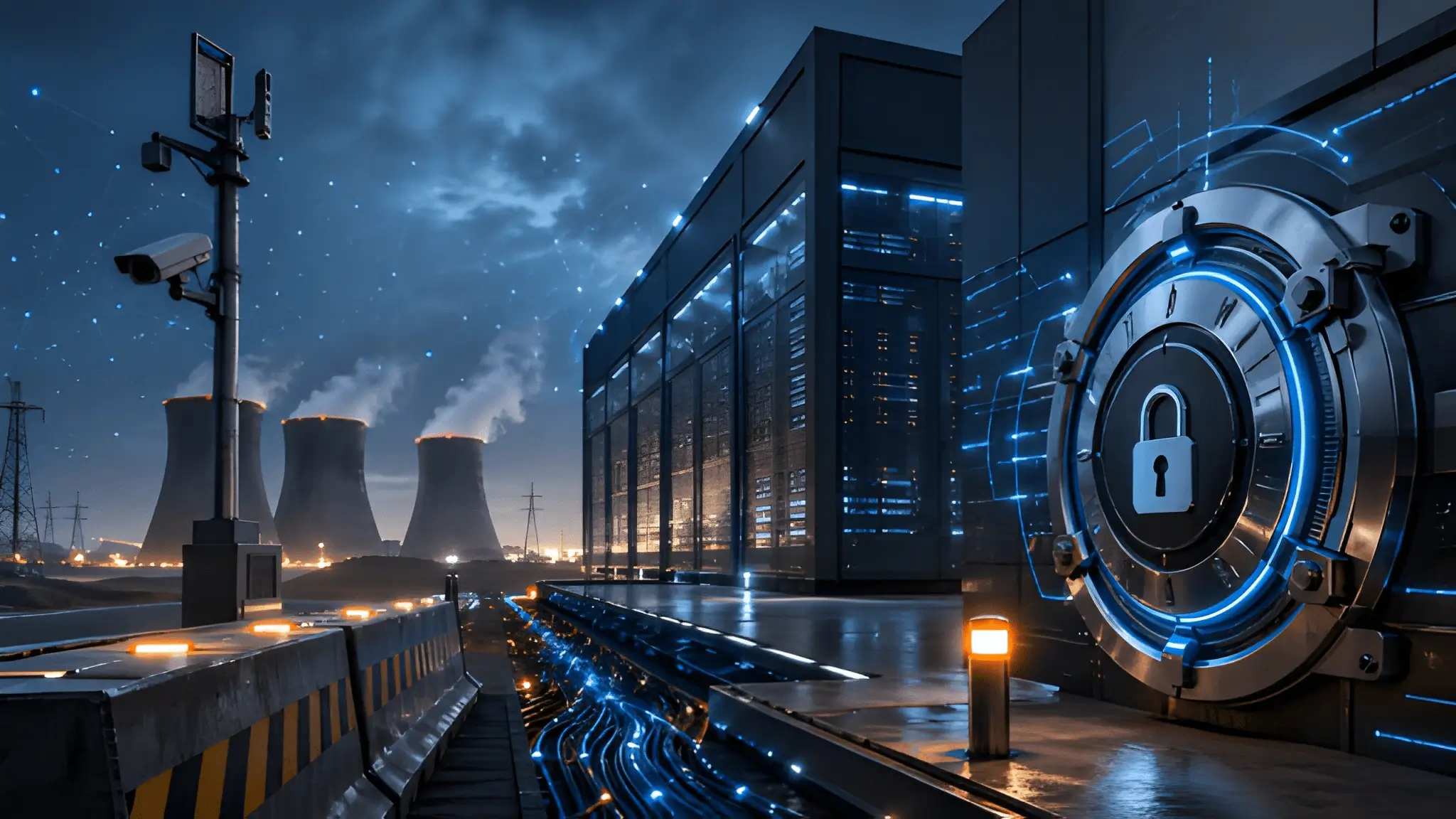
The first time a system fails at scale, it rarely fails quietly. It cascades, exposes dependencies, and reveals how much complexity sat hidden beneath normal operations. AI infrastructure now sits at that exact threshold, where failure carries consequences that extend far beyond service disruption. Facilities that train and serve large-scale models increasingly resemble critical infrastructure in both operational intensity and systemic importance. Compute clusters operate continuously under sustained load, drawing power densities that challenge traditional design assumptions. Cooling systems, energy feeds, and network fabrics no longer act as support layers but as integral components of system viability. The distinction between digital service and physical infrastructure continues to dissolve as AI workloads scale.

The comparison to nuclear facilities does not arise from dramatic analogy but from structural similarity. Nuclear plants operate under the assumption that failure cannot remain local, and AI data centers now approach that same reality. A compromised model serving environment can propagate errors across financial systems, healthcare tools, or public information channels. High-density compute amplifies both performance and risk, making localized faults more likely to spread through tightly coupled systems. Infrastructure design must therefore anticipate systemic impact rather than isolated failure. Engineers increasingly confront scenarios where resilience defines operational viability rather than optional robustness. The shift demands a different mindset, one rooted in consequence-aware design.
Convergence of Physical and Digital Risk Layers
Physical scale reinforces this transformation in risk perception. AI clusters require specialized hardware configurations that concentrate computational power within confined spaces. These environments generate thermal, electrical, and operational conditions that push infrastructure into high-stress regimes. Cooling loops, power distribution units, and networking layers operate near their design limits under sustained workloads. Small deviations in any subsystem can trigger disproportionate downstream effects. This coupling between subsystems mirrors the interdependencies seen in reactor environments.
The system behaves as a whole rather than as a collection of independent parts.This transformation places AI infrastructure within the same conceptual category as other high-consequence systems. The comparison does not imply identical risk profiles but highlights shared design imperatives. Both domains demand proactive risk mitigation, layered defenses, and failure-aware engineering practices. The cost of underestimating complexity grows with system scale and integration. AI data centers now occupy a position where infrastructure decisions carry systemic implications. That reality drives the need for security thinking that extends beyond conventional IT frameworks.

Escalation of Consequence Across Digital Systems
AI systems increasingly influence decisions that affect real-world outcomes, creating a direct link between infrastructure reliability and societal impact. Model outputs can shape financial transactions, medical diagnostics, and operational logistics in ways that amplify the importance of system integrity. Infrastructure failures no longer remain confined to internal service degradation. Instead, they can propagate through dependent systems and introduce broader instability. This interconnectedness elevates the importance of maintaining continuous, predictable operation. Engineering teams must consider downstream effects when designing infrastructure components. The system boundary expands beyond the facility itself.
The scale of computation further amplifies this dynamic. Training large models requires sustained coordination across thousands of processing units, each dependent on synchronized operation. Interruptions can introduce inconsistencies that affect model performance and reliability. Serving environments must maintain consistent latency profiles to ensure predictable application behavior. These requirements create tight coupling between compute, storage, and networking layers. Any disruption in one layer can cascade through the entire system. The infrastructure behaves as an integrated organism rather than a modular assembly.
The role of infrastructure architects evolves in response to these demands. They must integrate considerations that span hardware design, energy systems, and operational workflows. Security cannot remain a separate layer applied after system deployment. Instead, it must inform design decisions from the outset. This integration ensures that resilience emerges as a property of the system rather than an add-on feature. The shift requires collaboration across traditionally separate domains. Cross-disciplinary expertise becomes a critical asset.
Convergence of Physical and Digital Risk Layers
The integration of physical infrastructure with digital systems creates a unified risk surface that challenges traditional security models. AI data centers rely on tightly coupled interactions between hardware, software, and environmental controls. Each layer introduces potential vulnerabilities that can interact in unexpected ways. Attack vectors now extend beyond network intrusion to include manipulation of physical systems. Cooling infrastructure, for example, can influence computational stability directly. This convergence requires a holistic approach to risk assessment.
The complexity of these interactions challenges conventional incident response strategies. Isolating the source of a disruption becomes more difficult when multiple layers interact simultaneously. Response teams must consider both physical and digital factors when diagnosing issues. This complexity increases the time required to restore normal operations. Proactive measures become more valuable than reactive responses. Designing systems that can tolerate and contain disruptions reduces the need for rapid intervention.
This convergence of risk layers underscores the need for integrated security frameworks. AI data centers must adopt approaches that consider the full spectrum of potential vulnerabilities. Lessons from other high-reliability industries provide valuable guidance. These domains have long addressed the challenges of managing interconnected systems under high-stress conditions. Applying similar principles to AI infrastructure can enhance resilience. The goal remains to prevent localized issues from escalating into systemic failures.
Designing for Failure, Not Just Performance
Performance once defined success in data center design, but that metric alone no longer captures the realities of AI infrastructure. Systems now operate under sustained stress conditions where peak throughput matters less than consistent survivability under disruption. Failure does not arrive as a rare anomaly but as an expected condition that must be managed. Engineers who design only for optimal performance often discover fragility under real-world workloads. AI environments demand architectures that assume components will fail and continue operating regardless. This shift mirrors principles long embedded in nuclear system design, where resilience takes precedence over efficiency. The infrastructure must remain stable even when multiple subsystems degrade simultaneously.
Redundancy forms the first layer of this failure-oriented design philosophy. AI data centers increasingly deploy parallel systems across compute, networking, and power layers to ensure continuity. Redundant pathways allow workloads to reroute dynamically when disruptions occur. This approach reduces the likelihood of single points of failure affecting overall system operation. However, redundancy alone does not guarantee resilience if dependencies remain tightly coupled. Engineers must design systems that can isolate faults rather than propagate them. Effective redundancy therefore requires thoughtful separation of critical components. The goal remains uninterrupted operation under unpredictable conditions.
Fail-Safe Architectures in Compute Environments
Fail-safe mechanisms extend beyond redundancy by defining how systems behave when failure occurs. In nuclear environments, systems default to safe states that minimize risk. AI infrastructure must adopt similar principles to prevent cascading disruptions. When a component fails, the system should degrade gracefully rather than collapse abruptly. This requires predefined response strategies embedded within system architecture. Automated controls must detect anomalies and initiate corrective actions without human intervention. The speed of these responses determines whether failures remain contained. Designing for controlled degradation reduces systemic vulnerability.
Designing for failure ultimately changes how success is measured. Systems must demonstrate stability under adverse conditions rather than peak performance under ideal circumstances. This shift influences investment decisions, architectural choices, and operational priorities. AI data centers that embrace this approach position themselves to handle increasing complexity. The cost of implementing such systems may appear high initially, but the cost of failure remains significantly greater. Infrastructure must therefore reflect a long-term perspective on reliability. The transition toward failure-aware design marks a critical evolution in AI infrastructure.
Redundancy Without Coupling
Redundancy often introduces complexity that can undermine its intended purpose if not implemented carefully. Systems that duplicate components without addressing interdependencies risk creating hidden points of failure. AI data centers must ensure that redundant systems operate independently to provide true resilience. Isolation between redundant components prevents faults from spreading across parallel systems. This design principle requires careful mapping of dependencies across infrastructure layers. Engineers must identify where shared resources could introduce risk. Effective redundancy depends on eliminating these shared vulnerabilities.
Network architecture illustrates the importance of this approach. Multiple network paths can provide resilience only if they remain logically and physically independent. Shared switches or routing configurations can create bottlenecks that compromise redundancy. AI workloads rely heavily on network performance for synchronization and data transfer. Disruptions in network infrastructure can therefore have widespread impact. Designing independent network pathways reduces the risk of systemic failure. This approach requires additional planning and resources but enhances overall stability. The concept of redundancy without coupling extends across all infrastructure layers. It emphasizes the need for independence rather than duplication alone. AI data centers that adopt this approach reduce the likelihood of cascading failures. The design requires detailed understanding of system interactions. Engineers must continuously evaluate and refine these architectures. The outcome is a system capable of maintaining operation despite multiple simultaneous disruptions.
Fail-Safe Architectures in Compute Environments
Fail-safe design ensures that systems transition to controlled states during failure conditions. In AI data centers, this principle applies to both hardware and software components. Compute nodes must detect anomalies and adjust operation accordingly. Automatic shutdown or throttling mechanisms can prevent damage under extreme conditions. These responses must occur rapidly to minimize impact. The design of such mechanisms requires integration across system layers. Engineers must ensure that responses remain consistent and predictable.
Software orchestration systems play a critical role in implementing fail-safe behavior. These systems manage workload distribution across compute clusters. When a node fails, orchestration tools must reassign tasks seamlessly. This process requires real-time monitoring and decision-making capabilities. Delays in response can lead to performance degradation or system instability. Robust orchestration ensures continuity of operation under failure conditions. The integration of fail-safe principles into software layers enhances overall resilience. Communication between system components must support fail-safe behavior. Reliable signaling ensures that components can coordinate responses to anomalies. Loss of communication can hinder effective response and exacerbate failure conditions. AI data centers must implement robust communication protocols across infrastructure layers. These protocols must remain operational even under degraded conditions. Redundancy in communication pathways enhances reliability. Effective coordination supports controlled system behavior during disruptions.
Fail-safe architectures contribute to a broader strategy of controlled operation under uncertainty. They ensure that systems respond predictably to disruptions. This predictability reduces the risk of cascading failures. AI data centers that implement these principles enhance their ability to manage complex workloads. The integration of fail-safe design across infrastructure layers strengthens overall system resilience. It reflects a proactive approach to managing risk in high-density environments.
Stress Testing for Extreme Scenarios
Stress testing provides insight into how systems behave under conditions that exceed normal operational parameters. AI data centers must extend testing beyond typical workloads to include extreme scenarios. These scenarios may involve simultaneous failures across multiple infrastructure layers. Simulating such conditions reveals hidden dependencies and vulnerabilities. Engineers gain a deeper understanding of system behavior under stress. This knowledge informs improvements in design and operation.
Scenario design plays a critical role in effective stress testing. Engineers must identify potential failure modes and construct realistic simulations. These scenarios should reflect both technical and environmental factors. Power disruptions, cooling failures, and network congestion represent common stressors. Combining these factors creates complex scenarios that challenge system resilience. The goal remains to uncover weaknesses before they impact production environments. Comprehensive scenario design enhances the value of stress testing.
Stress testing ultimately strengthens the ability of AI data centers to operate under uncertainty. It provides a proactive means of identifying and addressing vulnerabilities. Systems that undergo rigorous testing demonstrate greater resilience in production environments. The process aligns with principles observed in other high-reliability industries. Continuous improvement remains a key objective. AI infrastructure must evolve to meet the challenges of increasing scale and complexity.
Zero Trust, But for the Entire Facility
Security models built around trust boundaries no longer hold under the conditions AI infrastructure operates in today. Systems expand across physical sites, cloud layers, and specialized hardware clusters that interact continuously. Any implicit trust between components introduces risk that can be exploited under coordinated attack scenarios. Zero Trust principles emerged in software and network security, yet AI data centers now require that same philosophy across the entire facility. Every interaction between systems, devices, and operators must be verified continuously. Identity, integrity, and intent must be validated at each layer without exception. This approach replaces perimeter assumptions with continuous scrutiny.
Applying Zero Trust at facility scale introduces new complexity. Physical infrastructure components such as cooling controllers, power management units, and network switches often rely on legacy communication protocols. These systems were not originally designed with modern authentication models in mind. Integrating Zero Trust principles into these environments requires both architectural adaptation and protocol translation. Engineers must retrofit identity verification mechanisms into systems that were built for operational efficiency rather than security. This integration must occur without disrupting performance or stability. The challenge lies in balancing security with operational continuity.
Device identity becomes a foundational requirement under this model. Every component within the data center must possess a verifiable identity that can be authenticated in real time. This includes compute nodes, sensors, control systems, and even peripheral devices. Identity management systems must scale to handle thousands of endpoints operating simultaneously. Compromised or unverified devices must be isolated immediately to prevent lateral movement. Continuous verification ensures that trust does not persist beyond each interaction. The system must treat every request as potentially hostile until proven otherwise.
Extending Zero Trust to Operational Technology
Extending Zero Trust across the entire facility transforms how security integrates with infrastructure. It shifts the focus from defending boundaries to verifying interactions. AI data centers must adopt this approach to address the expanding threat surface. The complexity of implementation requires careful planning and execution. Security must become an inherent property of system design rather than an external layer. This transformation aligns with broader trends in critical infrastructure protection. The result is a more resilient and adaptive security posture.
Identity replaces location as the primary determinant of trust within Zero Trust architectures. In AI data centers, this principle extends beyond users to include machines and infrastructure components. Each entity must present verifiable credentials before interacting with other systems. Identity frameworks must support dynamic environments where components frequently scale up or down. This requirement introduces challenges in maintaining accurate and up-to-date identity records. Engineers must implement systems that can adapt to rapid changes in infrastructure composition. Reliable identity management underpins the effectiveness of Zero Trust.
Auditability becomes a critical aspect of identity management. Systems must maintain detailed records of authentication events and access requests. These records support forensic analysis in the event of a security incident. Engineers must ensure that logging mechanisms capture sufficient detail without overwhelming storage systems. Secure storage of audit logs prevents tampering and unauthorized access. Analysis tools can help identify patterns that indicate potential threats. Auditability enhances both security and accountability. The emphasis on identity transforms how AI data centers approach access control. Trust must be earned continuously through verification rather than assumed based on location or role. This approach aligns with the dynamic nature of modern infrastructure. Identity systems must evolve alongside infrastructure to remain effective. Continuous improvement ensures that security measures keep pace with emerging threats. The result is a more robust and adaptable security framework.
Continuous Verification Across Infrastructure Layers
Continuous verification ensures that trust remains dynamic rather than static. In AI data centers, this principle applies to every interaction between systems and components. Verification processes must operate in real time to maintain security integrity. Systems must evaluate identity, context, and behavior before granting access. This approach reduces the risk of unauthorized activity. Continuous verification forms a core component of Zero Trust architecture. It ensures that trust does not persist beyond each interaction.
Integration across infrastructure layers ensures comprehensive coverage. Verification systems must interact with compute, network, and operational components. This integration requires standardized interfaces and protocols. Engineers must design systems that facilitate seamless communication between layers. Consistent verification across layers prevents gaps in security coverage. The approach ensures that all components adhere to the same security standards. Integration strengthens the overall defense strategy.
Continuous verification transforms security into an ongoing process rather than a one-time event. It reflects the dynamic nature of modern AI infrastructure. Systems must adapt to changing conditions and emerging threats. This adaptability enhances resilience and reduces vulnerability. AI data centers that implement continuous verification achieve a higher level of security maturity. The approach aligns with the broader shift toward proactive risk management. It represents a critical step in securing complex infrastructure environments.
The Cooling Layer No One Is Securing Enough
Heat defines the operational boundary of modern AI infrastructure more than any other physical constraint. Compute density continues to rise, and thermal output scales alongside it in ways that stress conventional cooling assumptions. Cooling systems now operate as critical enablers of performance rather than background utilities. Despite this central role, security attention rarely extends deeply into the cooling layer. Many facilities treat cooling as an engineering problem rather than a security surface. This gap creates opportunities for disruption that do not require direct access to compute systems. The infrastructure remains vulnerable where thermodynamics and control systems intersect.
Liquid cooling has accelerated this shift in risk exposure. Direct-to-chip and immersion cooling systems introduce fluid dynamics into environments that previously relied on air. These systems depend on precise flow rates, temperature thresholds, and pressure controls to function correctly. Control interfaces manage these variables through software layers that can be accessed and manipulated. A compromised control system can alter cooling behavior in subtle ways that degrade performance over time. Unlike abrupt failures, these degradations can remain undetected until damage accumulates. The attack surface expands through interfaces that were not originally designed with adversarial conditions in mind.
Control Systems as Hidden Attack Vectors
Cooling infrastructure also introduces dependencies that complicate resilience. Pumps, valves, and heat exchangers rely on continuous coordination to maintain stable operation. Disruption in one component can propagate through the entire cooling loop. AI workloads amplify this sensitivity because they generate consistent and intense heat output. Even minor deviations in cooling performance can lead to thermal throttling or hardware stress. Attackers targeting these systems can exploit this sensitivity to induce instability. The result may not be immediate failure but gradual degradation of system reliability.
Recognizing cooling as a security-critical layer changes how infrastructure is designed and managed. It requires a shift from reactive maintenance to proactive protection. Engineers must integrate security considerations into cooling system design from the outset. This includes secure control interfaces, robust monitoring, and restricted access. The goal remains to prevent disruptions that can compromise system stability. As AI workloads continue to scale, the importance of securing the cooling layer will only increase. The infrastructure must evolve to address this emerging risk surface.
Thermal Instability as a Security Outcome
Thermal instability represents a subtle yet impactful form of system disruption. AI workloads generate consistent heat that requires precise management to maintain stability. Disruptions in cooling can introduce fluctuations that affect hardware performance. These fluctuations may not immediately trigger alarms but can degrade system efficiency over time. Attackers can exploit this characteristic to create persistent instability. The result is a gradual erosion of system reliability. Thermal instability becomes a tool for indirect disruption.
Detecting thermal instability requires detailed analysis of sensor data. Engineers must monitor temperature trends across multiple points within the data center. Sudden spikes may indicate acute issues, while gradual increases suggest underlying problems. Distinguishing between natural variations and malicious interference requires contextual understanding. Integration with workload data can provide additional insights. This correlation helps identify whether thermal changes align with expected system behavior. Accurate detection supports effective response.
Resilience against thermal instability requires robust system design. Redundant cooling pathways and fail-safe mechanisms provide protection against disruptions. These features allow systems to maintain operation even when primary cooling systems encounter issues. Engineers must design these systems to respond dynamically to changing conditions. Flexibility enhances the ability to manage unexpected scenarios. The goal remains to prevent localized issues from affecting the entire system. Resilient design reduces vulnerability.
Securing Fluid Infrastructure in High-Density Environments
Understanding thermal instability as a security outcome shifts how organizations approach risk management. It highlights the importance of protecting infrastructure layers that influence system behavior indirectly. Security strategies must account for these indirect pathways. AI data centers must integrate thermal considerations into their broader security frameworks. This integration ensures comprehensive protection against diverse threats. The cooling layer becomes an essential component of overall resilience. Its security directly impacts system stability.
Fluid-based cooling systems introduce unique challenges that differ from traditional air-based approaches. These systems rely on the movement and management of liquids to dissipate heat effectively. The physical properties of fluids require precise control to maintain optimal performance. Any disruption in flow or composition can affect cooling efficiency. Attackers may target these systems by manipulating control parameters or introducing contaminants. Such actions can compromise system integrity. Securing fluid infrastructure becomes a critical priority.
Securing fluid infrastructure requires a multidisciplinary approach that integrates engineering, security, and operations. Each domain contributes to maintaining system integrity. Continuous evaluation ensures that protections remain effective as technologies evolve. AI data centers must prioritize this layer alongside other critical systems. The complexity of fluid-based cooling demands careful attention. Protecting these systems supports overall infrastructure resilience.
Energy Systems as the First Line of Defense
Power does not just run AI infrastructure, it defines its stability envelope under stress. Every compute cycle, memory operation, and network transfer depends on continuous and predictable energy delivery. Interruptions or fluctuations can introduce inconsistencies that propagate across tightly coupled systems. AI data centers therefore cannot treat energy as a background utility. It functions as the first control layer that determines whether systems remain operational under adverse conditions. Security thinking must begin at the point where power enters the facility. Infrastructure resilience depends on how well that entry point is protected and managed.
On-site power architectures increasingly reflect this reality. Facilities deploy multiple energy sources to reduce reliance on a single external supply. These may include grid connections, backup generators, and localized energy systems. Each source introduces its own operational and security considerations. Coordinating these sources requires sophisticated control systems that manage load distribution. Compromise of these control systems can disrupt the balance between energy inputs. Engineers must therefore secure both the sources and the mechanisms that coordinate them.
Viewing energy systems as a security layer changes how infrastructure is designed. It requires integrating resilience into the architecture from the outset. Engineers must consider how power systems interact with compute, cooling, and network layers. Security measures must extend to every component involved in energy delivery. This holistic approach reduces the likelihood of disruptions escalating into system-wide failures. AI data centers must adopt this perspective to manage increasing complexity. Energy becomes both a resource and a line of defense.
Microgrids and Distributed Energy Resilience
Microgrid architectures provide a framework for localized energy control within AI data centers. These systems allow facilities to operate independently from external grids when necessary. By integrating multiple energy sources, microgrids enhance resilience against external disruptions. They can balance load dynamically based on available resources. This flexibility supports continuous operation under varying conditions. Engineers must design microgrids to respond quickly to changes in supply and demand. The effectiveness of these systems depends on precise coordination.
Distributed energy resources introduce both benefits and challenges. Solar arrays, fuel-based generators, and storage systems contribute to energy diversity. This diversity reduces reliance on any single source. However, each resource must integrate into a unified control system. Complexity increases as more components are added to the network. Engineers must ensure that control systems can manage this complexity without introducing vulnerabilities. Secure integration remains a critical requirement.
Microgrids represent a shift toward decentralized energy management. They provide AI data centers with greater control over power systems. This control enhances resilience but requires careful implementation. Engineers must address both technical and security challenges. The integration of distributed resources must align with overall infrastructure design. Effective microgrid systems strengthen the energy layer as a defensive component. They contribute to the broader goal of infrastructure resilience.
Securing Power Distribution and Control Layers
Power distribution systems form the backbone of energy delivery within AI data centers. These systems route electricity from sources to compute and cooling infrastructure. Their reliability determines whether systems receive consistent power. Distribution networks must handle high loads without introducing instability. Engineers must design these systems to operate under continuous stress. Security measures must protect both physical and digital aspects of distribution. The integrity of these systems directly impacts overall operation.
Switchgear and distribution units represent critical components within this layer. These devices control the flow of electricity across the facility. Unauthorized manipulation can disrupt power delivery or damage equipment. Engineers must secure access to these components through both physical and digital controls. Monitoring systems must track their status continuously. Anomalies in operation may indicate potential issues. Early detection supports timely intervention.
Physical security remains essential for protecting power infrastructure. Access to distribution systems must be restricted to authorized personnel. Surveillance systems can deter unauthorized activity. Engineers must design facilities to minimize exposure of critical components. Physical barriers and controlled entry points enhance security. Coordination between physical and digital security measures provides comprehensive protection. The combination reduces the risk of disruption.
Energy as an Operational Signal for Threat Detection
Energy consumption patterns provide valuable insights into system behavior. AI workloads generate distinct power usage profiles based on their computational characteristics. Deviations from these patterns may indicate anomalies within the system. Engineers can use energy data as a signal for detecting potential threats. This approach complements traditional monitoring methods. Integrating energy analytics enhances situational awareness. It provides an additional layer of insight into system health.
Correlating energy data with other telemetry streams improves detection accuracy. Engineers can compare power usage with workload activity and thermal conditions. Inconsistencies between these data points may reveal underlying issues. For example, unexpected power spikes without corresponding workload changes may indicate abnormal behavior. This correlation supports early identification of potential threats. Integrated analytics enable more informed decision-making. The approach strengthens monitoring capabilities.
Using energy as an operational signal expands the toolkit available for securing AI data centers. It leverages existing infrastructure data to provide additional insights. This approach reflects the interconnected nature of modern systems. Engineers must integrate energy analytics into broader security strategies. The result is a more comprehensive understanding of system behavior. Energy data becomes a valuable asset in detecting and mitigating threats. It strengthens the overall resilience of infrastructure.
Air-Gapped Thinking in an Always-Connected World
Constant connectivity defines modern AI infrastructure, yet it also expands the pathways through which disruption can travel. Systems exchange data across clusters, regions, and external networks in real time, creating tightly coupled dependencies. This architecture optimizes performance but reduces isolation, making it easier for faults or attacks to propagate. Air-gapped systems once provided a clear boundary against such risks by physically separating critical environments. AI data centers cannot fully replicate that model, but they can adopt its underlying principles. Isolation must evolve from a binary condition into a dynamic capability. The goal is not complete disconnection but controlled interaction.
Reintroducing isolation begins with redefining trust boundaries. AI workloads vary in sensitivity, and not all processes require the same level of exposure. Engineers must classify workloads based on risk and design isolation layers accordingly. High-risk workloads may require restricted communication pathways and controlled data exchange mechanisms. These controls limit the potential for lateral movement within the infrastructure. Isolation becomes a tool for containing risk rather than eliminating connectivity. This approach balances operational efficiency with security requirements.
Logical Isolation in Shared Infrastructure
Virtualization technologies enable flexible isolation without sacrificing scalability. Containers and virtual machines can create logical boundaries within shared physical infrastructure. These boundaries must enforce strict separation of resources and communication channels. Misconfiguration can weaken isolation and expose systems to risk. Engineers must implement policies that govern how workloads interact across boundaries. Continuous validation ensures that isolation remains intact as systems evolve. Effective virtualization supports dynamic and scalable isolation strategies.
Air-gapped thinking encourages a shift toward intentional connectivity. AI data centers must design systems that connect only when necessary and under controlled conditions. This mindset reduces unnecessary exposure and limits potential attack vectors. Engineers must evaluate each connection based on its necessity and risk. The resulting architecture prioritizes security without compromising functionality. Isolation becomes an active design choice rather than a static configuration. This approach enhances resilience in complex environments.
High-risk workloads require enhanced isolation to prevent potential impact on broader infrastructure. These workloads may involve sensitive data or critical operations that demand additional protection. Engineers must identify such workloads and apply appropriate isolation measures. These measures may include dedicated hardware, restricted network access, and enhanced monitoring. Isolation reduces the likelihood of compromise affecting other systems. It provides a controlled environment for managing risk. The approach ensures that high-risk activities remain contained.
Isolation Strategies for High-Risk Workloads
Dedicated infrastructure can provide strong isolation for critical workloads. By separating these workloads from shared environments, engineers reduce exposure to potential threats. Dedicated systems must still integrate with broader infrastructure for data exchange. Controlled connectivity ensures that interactions remain secure. Engineers must balance isolation with operational requirements. Effective design supports both objectives. Dedicated infrastructure enhances security for high-risk workloads.
Enhanced monitoring plays a critical role in managing isolated environments. Engineers must track system behavior closely to detect anomalies. High-risk workloads may exhibit patterns that differ from standard operations. Monitoring tools must adapt to these patterns to provide accurate insights. Real-time analysis supports rapid response to potential issues. Continuous monitoring ensures that isolation remains effective. It provides visibility into system behavior.
Isolation strategies for high-risk workloads strengthen the overall security posture of AI data centers. They provide targeted protection where it is most needed. Engineers must design these strategies with both security and operational considerations in mind. Continuous evaluation ensures that measures remain effective. The approach supports the safe operation of critical workloads. It aligns with the broader goal of resilient infrastructure. Isolation remains a key component of security strategy.
From Perimeter Security to Deep Infrastructure Hardening
Perimeter defenses once defined the outer boundary of data center security, but that model no longer holds under current conditions. AI infrastructure operates across distributed systems where threats can originate internally as easily as externally. Firewalls and access gates still matter, yet they no longer provide sufficient protection on their own. Security must now extend into every layer of the infrastructure stack. Engineers must assume that adversaries can bypass perimeter controls. This assumption shifts focus toward strengthening internal systems. The objective becomes limiting damage even after initial compromise.
Deep infrastructure hardening requires embedding security into system architecture rather than layering it on afterward. Compute, storage, networking, and operational systems must all incorporate defensive mechanisms. Each component must resist unauthorized access and detect anomalies in real time. Hardening efforts must address both software vulnerabilities and physical weaknesses. Engineers must design systems that remain secure under continuous stress. This approach reduces the likelihood of cascading failures. It ensures that individual components contribute to overall resilience.
Patch management also forms a key component of hardening strategies. Systems must receive updates that address known vulnerabilities. Delays in applying patches can expose infrastructure to exploitation. However, updates must be tested thoroughly to avoid introducing instability. Engineers must balance the urgency of patching with operational reliability. Structured processes help manage this balance effectively. Consistent patch management reduces exposure to known threats. Deep infrastructure hardening transforms security into a pervasive attribute of system design. It ensures that every layer contributes to defense rather than relying on outer boundaries. AI data centers must adopt this approach to manage complex and evolving threats. Engineers must continuously refine hardening strategies as systems scale. The process requires ongoing attention and adaptation. The result is a more resilient infrastructure capable of withstanding diverse challenges. Security becomes an inherent property rather than an external feature.
Eliminating Single Points of Failure
Single points of failure represent vulnerabilities that can disrupt entire systems. AI data centers must identify and eliminate these weaknesses. Redundant systems provide alternative pathways for operation. Engineers must ensure that redundancy does not introduce new dependencies. Independence between systems remains essential. Effective design prevents localized issues from escalating. Eliminating single points of failure enhances resilience.
Dependency mapping supports the identification of potential vulnerabilities. Engineers must understand how components interact within the infrastructure. This understanding reveals where failures could propagate. Visualization tools can assist in mapping these relationships. Detailed analysis informs design improvements. Continuous updates ensure that maps remain accurate. Dependency mapping provides a foundation for resilience planning.
Redundancy strategies must extend across all infrastructure layers. Compute, storage, network, and power systems require backup components. Engineers must design these systems to operate independently. Shared resources can undermine redundancy if not managed carefully. Isolation between redundant systems prevents cascading failures. Effective redundancy supports continuous operation. It aligns with broader resilience objectives.
Why AI Expands the Threat Surface Faster Than We Can Secure It
Eliminating single points of failure requires a comprehensive approach that integrates design, testing, and operations. Engineers must address vulnerabilities across all layers of infrastructure. Continuous evaluation ensures that systems remain resilient. AI data centers must prioritize this objective to maintain stability. The approach reduces the impact of potential disruptions. It supports long-term reliability. Resilient systems form the foundation of secure infrastructure. AI infrastructure grows through layers that multiply complexity rather than replace it. Each new model, framework, and hardware generation introduces additional interfaces and dependencies. These additions expand the attack surface in ways that are difficult to track comprehensively. Security measures often lag behind this expansion due to the pace of innovation. Engineers must secure not only existing systems but also rapidly evolving components. The result is a widening gap between capability and protection. Managing this gap becomes a central challenge.
Software ecosystems contribute significantly to this expansion. AI development relies on a diverse set of libraries, frameworks, and tools. Each component introduces potential vulnerabilities. Dependencies between components create pathways for exploitation. Engineers must manage these dependencies carefully to reduce risk. Regular updates and validation help mitigate vulnerabilities. The complexity of software ecosystems requires continuous attention. Human factors also contribute to the expanding threat surface. Engineers and operators interact with systems in ways that can introduce vulnerabilities. Misconfigurations and errors can create opportunities for exploitation. Training and clear procedures help mitigate these risks. Organizations must prioritize human-centered security practices. Awareness reduces the likelihood of mistakes. Human factors remain a key consideration.
The rapid expansion of AI infrastructure requires a proactive approach to security. Engineers must anticipate vulnerabilities before they emerge. Continuous monitoring and adaptation support this effort. Collaboration across teams enhances visibility into risks. AI data centers must integrate security into every stage of development and operation. The goal remains to manage complexity without compromising protection. Addressing the expanding threat surface becomes essential for resilience.
The Sustainability-Security Tradeoff No One Talks About
Efforts to improve efficiency often introduce design decisions that carry unintended security implications. AI data centers pursue energy efficiency and resource optimization to manage operational costs and environmental impact. These initiatives influence cooling strategies, power systems, and facility design. While they improve sustainability, they can also create new vulnerabilities. Engineers must evaluate these tradeoffs carefully. Efficiency must not compromise security. Balancing these objectives requires deliberate design.
Water-efficient cooling systems illustrate this tradeoff clearly. Techniques that reduce water usage may rely on more complex control systems. These systems introduce additional interfaces that require protection. Increased complexity can expand the attack surface. Engineers must secure these systems without reducing efficiency gains. Monitoring and control become more critical in these environments. The balance between sustainability and security must be maintained.
Balancing sustainability and security requires integrated thinking. Engineers must consider both objectives simultaneously rather than independently. Tradeoffs must be evaluated in the context of overall system performance. Continuous monitoring ensures that both goals are achieved. AI data centers must adopt holistic design approaches. The intersection of sustainability and security defines modern infrastructure challenges. Effective balance supports long-term resilience.
Human Error: The Most Underrated Risk Layer
Technology often receives the most attention in security discussions, yet human factors continue to play a significant role in system vulnerability. Engineers, operators, and administrators interact with infrastructure in ways that can introduce risk. Errors in configuration, maintenance, or operation can create vulnerabilities that attackers may exploit. These errors often arise from complexity and time pressure rather than negligence. AI data centers must address human factors as a core component of security. Training and processes must align with system demands. Human reliability becomes a critical layer of defense.
Complex systems increase the likelihood of mistakes. AI infrastructure involves multiple layers of hardware, software, and operational processes. Navigating this complexity requires specialized knowledge and attention to detail. Engineers must manage configurations across diverse systems. Even minor errors can have significant consequences. Clear documentation and standardized procedures help reduce risk. Consistency supports accurate execution of tasks.
Access management represents a key area where human factors influence security. Personnel must have appropriate levels of access to perform their roles. Excessive access increases the risk of misuse or accidental changes. Engineers must implement least-privilege principles to limit exposure. Regular audits ensure that access remains appropriate. Monitoring can detect unusual activity that may indicate issues. Effective access management reduces risk. Addressing human error requires a comprehensive approach that integrates training, processes, and system design. Engineers must design systems that reduce the likelihood of mistakes. Automation can assist by handling repetitive tasks. However, human oversight remains essential. AI data centers must prioritize human factors alongside technical measures. This integration strengthens overall security. Human reliability becomes a key component of resilient infrastructure.
Compliance Isn’t Catching Up And That’s a Problem
Regulatory frameworks often evolve more slowly than technological innovation, creating gaps in coverage. AI infrastructure expands rapidly, introducing new risks that existing regulations may not address. Compliance requirements may focus on traditional IT systems rather than high-density AI environments. This mismatch leaves organizations navigating complex risk landscapes without clear guidance. Engineers must interpret and adapt regulations to fit modern infrastructure. The absence of specific standards creates uncertainty. Bridging this gap becomes a critical challenge.
Global variation in regulations adds complexity to compliance efforts. AI data centers often operate across multiple jurisdictions with differing requirements. Engineers must ensure that systems meet diverse regulatory expectations. This process requires coordination and careful planning. Inconsistent standards can create gaps in security coverage. Organizations must adopt internal frameworks to address these inconsistencies. Unified approaches support effective compliance. Auditing processes must adapt to the unique characteristics of AI infrastructure. Traditional audits may not capture the full scope of risks. Engineers must develop methods that evaluate both physical and digital components. Comprehensive audits provide a clearer view of system security. Continuous auditing supports ongoing compliance. Real-time monitoring can complement traditional methods. Enhanced auditing improves risk management.
Compliance challenges highlight the need for proactive security strategies. Organizations must not rely solely on regulatory requirements to guide security efforts. Engineers must implement measures that address current and emerging risks. Continuous evaluation ensures that systems remain secure. AI data centers must lead in defining best practices. The goal remains to protect infrastructure effectively. Compliance becomes one component of a broader strategy.
Building for Extremes: Climate Risk Meets Cyber Risk
Environmental conditions increasingly influence the design and operation of AI data centers. Facilities must withstand temperature fluctuations, extreme weather, and other environmental factors. These conditions can disrupt infrastructure and create vulnerabilities. Engineers must design systems that remain operational under diverse scenarios. Climate resilience becomes a critical aspect of infrastructure planning. The interaction between environmental and cyber risks adds complexity. Systems must address both simultaneously.
Cooling systems must adapt to changing environmental conditions. External temperatures can affect their efficiency and stability. Engineers must design systems that maintain performance under varying conditions. Redundancy and flexibility support resilience. Monitoring provides insights into system behavior. Adaptive controls can adjust operation dynamically. Effective design ensures consistent performance.
Power systems must also account for environmental factors. External disruptions can affect energy supply and distribution. Engineers must design systems that maintain stability during such events. Backup systems and storage provide continuity. Coordination between components ensures reliable operation. Environmental resilience supports overall system stability. It reduces the impact of external disruptions.
Cyber Exploitation During Physical Disruption
Cyber risks can exploit vulnerabilities introduced by environmental conditions. Disruptions in infrastructure can create opportunities for attack. Engineers must anticipate how these factors interact. Integrated security strategies address both dimensions. Monitoring systems must detect anomalies across layers. Coordinated response ensures effective mitigation. Understanding these interactions enhances resilience.
Facility design must incorporate protections against environmental threats. Structural elements must withstand physical stress. Location and layout influence exposure to risk. Engineers must evaluate these factors during planning. Protective measures reduce vulnerability. Design decisions support long-term stability. Infrastructure must remain operational under diverse conditions.
Building for extremes requires a holistic approach that integrates environmental and cyber considerations. Engineers must design systems that adapt to changing conditions. Continuous evaluation ensures that protections remain effective. AI data centers must prioritize resilience in all aspects of design. The interaction between risks defines modern challenges. Effective planning supports reliable operation. Resilient infrastructure ensures continuity.
The Future Runs on Secure, Sustainable Infrastructure
AI infrastructure now operates at a scale and complexity that demands a fundamental shift in how systems are designed and secured. The convergence of compute density, energy demand, and environmental constraints has created a new class of critical infrastructure. Traditional approaches to security and efficiency no longer address the realities of these environments. Engineers must integrate resilience into every layer of system design. This integration ensures that infrastructure can withstand both technical and external challenges. Security and sustainability must align to support long-term operation. The future depends on this alignment.
The integration of security across physical and digital layers defines modern infrastructure challenges. AI data centers must address risks that span multiple domains simultaneously. Engineers must design systems that account for these interactions. Holistic approaches provide comprehensive protection. Continuous evaluation ensures that systems remain effective. Collaboration across disciplines supports this effort. Integrated strategies enhance resilience.
The future of AI depends on infrastructure that can support growth without compromising stability or security. Engineers must design systems that adapt to evolving challenges. Continuous improvement ensures that infrastructure remains effective. AI data centers must lead in adopting advanced security and resilience practices. The integration of these principles defines the next phase of infrastructure development. Secure and sustainable systems will underpin technological progress. The path forward requires deliberate and informed design.












