Skip to content
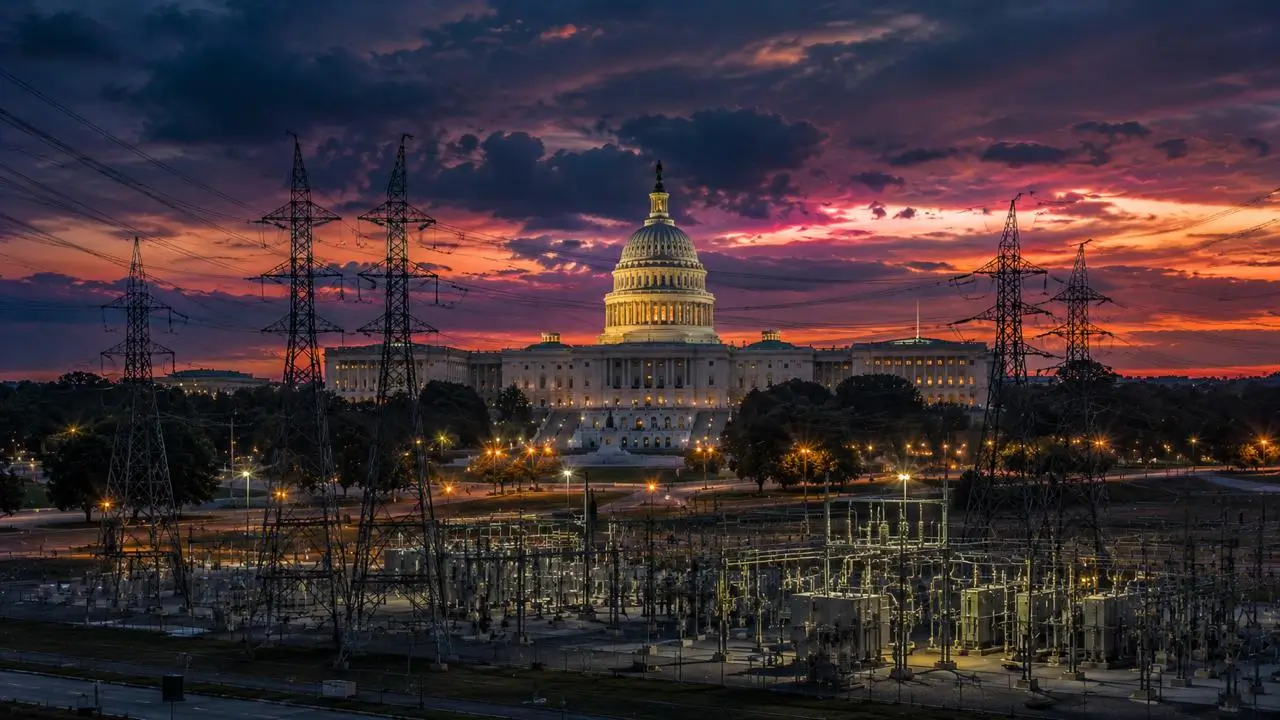
The US electricity market is governed by rules, tariffs, and regulatory frameworks that were developed over decades for a power system that nobody designed to serve 100-megawatt data centers drawing continuous high-density loads 24 hours a day, 365 days a year. The wholesale electricity market rules that PJM administers were written for a power system where large industrial loads were predictable, distributed across many geographic and temporal patterns, and grew at rates that gave grid operators years to plan the generation and transmission infrastructure needed to serve them. AI data centers violate all three of those assumptions. They concentrate massive new load in specific geographic markets where existing transmission capacity is already constrained. They grow at rates that can take a grid from adequate supply to critical shortage within 18 months. And they draw power profiles, the synchronised load surges of training clusters and the continuous sustained loads of inference serving, that transmission and distribution infrastructure designed for conventional industrial load patterns was not engineered to handle efficiently.

The recognition that the US electricity market’s rules, tariffs, and regulatory frameworks are inadequate for the AI data center era has produced the most concentrated period of electricity market policy activity since the deregulation wave of the 1990s. FERC directed PJM to create transparent rules for co-locating AI data centers with generating facilities in its December 18, 2025 order, addressing specific concerns about whether PJM’s existing tariff appropriately governed co-location arrangements where data centers connect directly to on-site generation rather than drawing power from the shared transmission grid. More than 190 state-level bills addressing data center energy use were introduced in 2025 alone, spanning electricity costs, operating restrictions, environmental protection, and tax policy. The White House convened a Ratepayer Protection Pledge in March 2026 that major technology companies, including Amazon, Google, Meta, Microsoft, OpenAI, Oracle, and xAI, signed committing to cover the costs of new generation required for their data centers. Each of these actions is individually significant. Together, they describe a regulatory environment that is rewriting the cost allocation, interconnection, and market design frameworks that govern how AI infrastructure accesses the electricity grid, and the rewrites will change AI infrastructure economics as fundamentally as the GPU supply shortage changed hardware economics in 2023.
The reform process is also not operating in a vacuum. The Monitoring Analytics Q1 2026 state of the market report, which confirmed that data center load growth is the primary cause of a 76% wholesale price spike hitting 67 million Americans, has given the reform effort a quantified cost basis that it previously lacked. Before the Q1 2026 Monitoring Analytics report, the cost allocation debate was largely theoretical — the impact was real but not aggregated into a number that any stakeholder could point to as the definitive accounting of what the current framework costs ratepayers. The $13 billion in added costs that data center load projections have contributed to the last two PJM capacity auctions is that accounting. It is the number that will anchor the next phase of the reform debate, and the operators and investors who understand its implications for the regulatory trajectory are better positioned than those who are treating the reform discussion as background policy noise.
The Co-Location Order That Created a New Regulatory Category
FERC’s December 2025 order directing PJM to establish rules for co-location of data centers with generating facilities is the most technically significant electricity market regulatory action of the AI infrastructure era to date. Co-location, in the electricity market context, means connecting a large data center directly to a generating facility at the same site, allowing the data center to take power from the generator before it enters the transmission grid rather than drawing power from the shared grid through a standard transmission service arrangement. Co-location offers data centers three strategic advantages: faster interconnection, because the data center does not need to queue for transmission system interconnection and can be connected on the generating facility’s timeline rather than the grid operator’s queue; lower transmission costs, because power that never enters the transmission system does not pay transmission charges; and greater power certainty, because the data center has a dedicated generating source rather than depending on the shared grid.

FERC Chair Laura Swett stated that the commission was working to ensure the timely and orderly interconnection of large loads while also ensuring that families and small businesses do not foot the bill for the grid upgrades needed to support large consumers. The tension embedded in that statement captures the fundamental challenge of the co-location regulatory question. Co-location can benefit ratepayers by keeping large data center loads off the transmission system and therefore avoiding the transmission upgrade costs that would otherwise be socialised across all ratepayers. But co-location can also harm ratepayers by allowing large loads to access generation capacity that would otherwise be available to serve the shared grid, reducing reliability and increasing costs for everyone connected to the system. The FERC order directs PJM to develop tariff rules that capture the ratepayer protection benefits of co-location while avoiding the reliability risks, and the tariff language that PJM develops will become the model that other regional grid operators follow. The regulatory framework being written for PJM is not just a PJM policy. It is the template for how AI data center co-location works across the entire US electricity market.
The Reliability Backstop Auction That Will Force Data Centers to Pay for Power
Beyond the co-location order, PJM is developing a reliability backstop auction mechanism that would require large data center loads to fund new generation capacity directly rather than relying on the existing capacity market to provide the resources needed to serve their load. The backstop auction is the most commercially significant regulatory development in the AI infrastructure energy market because it directly addresses the cost allocation problem that Monitoring Analytics identified in its Q1 2026 state of the market report: data center load additions are contributing disproportionately to capacity market costs that are distributed across all ratepayers rather than being recovered from the data centers whose load necessitated them.
The backstop auction mechanism requires large loads that want to connect to the grid to either bring their own new generation resources, fund the procurement of new generation through the backstop auction, or wait for interconnection until existing capacity is adequate to serve them without reliability risks. That requirement, if implemented as Monitoring Analytics recommended, fundamentally changes the economics of grid-connected AI data center development. Under the current framework, a data center can secure a grid interconnection agreement, receive capacity market resources funded by all ratepayers, and begin operations without directly funding the generation capacity needed to serve its load. Under the backstop auction framework, the data center must either fund that generation directly or demonstrate that existing capacity is adequate. The commercial implication is significant: data centers that were financially viable under the current cost allocation framework may not be viable under a direct cost causation framework, because the true cost of the power they require is substantially higher than what they pay under the current market design.
The Ratepayer Protection Pledge and Its Limitations
The White House Ratepayer Protection Pledge signed by major technology companies in March 2026 represents the industry’s attempt to shape the policy outcome of the electricity market reform debate before regulators impose more prescriptive requirements. The pledge commits signatories to cover the costs of new generation required for their data centers under a build, bring, or buy framework that treats on-site generation, power purchase agreements, and grid market purchases as equivalent approaches to meeting the cost causation obligation. The Milken Institute’s analysis of the pledge notes that the build, bring, or buy framework treats the three options as equivalent, but they are not. A data center that builds its own on-site generation eliminates its dependence on the shared grid and bears the full cost of the generation it uses. A data center that buys power from the grid through a long-term PPA reduces its grid dependence but does not eliminate it. A data center that simply purchases capacity market resources through grid market mechanisms is doing what the current framework already allows, and describing that as ratepayer protection is not meaningfully different from the status quo.
The pledge’s voluntary and non-binding nature is its most significant limitation. Technology companies that signed the pledge retain the ability to define what it means to comply through the regulatory engagement process, and the definitions they advocate in FERC and state PUC proceedings will be shaped by their financial interests rather than by the ratepayer protection objectives the pledge nominally serves. The regulatory process that translates the pledge’s principles into enforceable tariff obligations is where the real policy battle will be fought, and the outcome of that battle will determine whether the pledge produces genuine ratepayer relief or simply provides political cover for the continuation of a cost allocation framework that Monitoring Analytics has documented is adding billions in costs to residential and business electricity bills.
The State Legislative Wave That Is Creating a Patchwork
While the federal regulatory process at FERC and PJM works through its institutional timelines, state legislatures are creating a rapidly expanding patchwork of data center electricity regulations that vary significantly by state, creating regulatory complexity for data center operators whose facilities span multiple state jurisdictions. More than 190 state-level bills addressing data center energy use were introduced in 2025, and the bills that have advanced through committees in Oregon, Texas, Arizona, Florida, and Ohio represent a range of approaches to cost allocation, ratepayer protection, water use, and operating requirements that share no common framework.
Florida’s SB 484, which requires data centers consuming at least 50 megawatts at peak to bear full infrastructure costs, is the most comprehensive state-level cost allocation legislation enacted to date. Ohio’s AEP Ohio large load rate class, requiring data centers to cover 85% of their connection costs, is a utility-initiated approach that does not require legislation. Maryland’s Office of People’s Counsel has filed a FERC complaint arguing that transmission upgrades serving out-of-state AI data centers should not be allocated to Maryland ratepayers. The legislative divergence across states creates a data center development environment where the cost structure, regulatory obligations, and community relationship requirements vary enormously by jurisdiction, and operators who develop facilities across multiple states must navigate regulatory frameworks that share no common standard. Our analysis of the AI data center site selection criteria being rewritten identified the regulatory environment as an increasingly significant site selection variable. The state legislative divergence is creating the conditions where regulatory risk is as important as power cost and land availability in determining where AI infrastructure is economically viable.
The FERC National Framework That Could Supersede State Action
The most consequential long-term regulatory development is FERC’s Advanced Notice of Proposed Rulemaking on large-load interconnection, designated RM26-4-000, which could establish a national framework for how large loads including AI data centers access the transmission grid that supersedes state-level approaches in the areas of federal jurisdiction. The Data Center Coalition, representing the largest hyperscalers and data center operators, submitted comments to a Senate hearing in February 2025 advocating for FERC authority to override state-level permitting for AI infrastructure projects deemed to be in the national interest. That advocacy reflects the industry’s recognition that a national federal framework, even one with more stringent cost allocation requirements, is preferable to 50 different state regulatory environments whose political trajectories are becoming increasingly unpredictable.
A national large-load interconnection framework under FERC authority would create consistent cost causation rules, interconnection queue standards, and co-location tariff requirements across all regional transmission organisations and independent system operators. It would replace the current patchwork of state public utility commission proceedings with a single federal standard that data center operators could plan around with greater certainty. The tradeoff is that a federal framework would also foreclose the state-level regulatory variability that has allowed data center operators to seek the most favourable regulatory environments for their facilities. A federal standard that requires all data centers above a threshold to demonstrate own-generation adequacy before interconnection, regardless of which state they are located in, would eliminate the arbitrage between states with stringent cost allocation requirements and states that have not yet enacted such requirements. That arbitrage is currently one of the factors driving data center development toward markets with less developed regulatory frameworks, and its elimination would change the geographic distribution of AI infrastructure investment in ways that the current state-level reform process alone cannot produce.
The Behind-the-Meter Debate That Will Define Co-Location Policy
The most technically contested question in the electricity market reform debate is how regulators should treat behind-the-meter generation for AI data centers that install on-site power generation and use it to serve their loads without drawing from the shared transmission grid. Behind-the-meter generation offers data centers the fastest path to power in constrained markets, because it bypasses the grid interconnection queue entirely. It also creates a specific regulatory question that FERC, state utility commissions, and grid operators are actively debating: should a data center that generates its own power continue to pay transmission charges and capacity market costs for the grid reliability services it continues to benefit from, even when it is primarily serving its own load from its own generation?
PJM proposed a 50-megawatt threshold in February 2026 that would limit the use of behind-the-meter netting for large loads on its grid. Behind-the-meter netting allows a data center to offset its grid consumption with its on-site generation for the purpose of calculating transmission charges, reducing or eliminating its transmission cost obligations. PJM’s proposal would cap that netting benefit at 50 megawatts, requiring data centers above that threshold to pay transmission charges on their full load regardless of how much on-site generation they have installed. The practical effect is to limit the economic benefit of the behind-the-meter strategy for the largest data center loads, which are precisely the loads whose grid impact is most significant from a reliability perspective.
The Nuclear Co-Location Question That Complicates Everything
The most politically and commercially complex dimension of the co-location regulatory debate involves nuclear power plants. Several major hyperscalers have announced plans to co-locate AI data centers directly with nuclear generating facilities, taking power directly from the plant before it enters the transmission grid. Microsoft’s agreement with Constellation Energy to restart Three Mile Island Unit 1, Oracle’s plans for a nuclear-powered data center campus, and Amazon’s co-location agreements with nuclear facilities in Pennsylvania are all structured around the co-location model that FERC’s December 2025 order directed PJM to create rules for. The nuclear co-location model is attractive to hyperscalers because nuclear power provides firm, 24/7 carbon-free generation that matches AI data center load profiles far better than intermittent renewables. It is concerning to grid operators and other ratepayers because nuclear plants that co-locate with large data centers reduce the generation available to serve the shared grid, potentially increasing reliability risks and capacity market costs for everyone else connected to the system.
The tariff rules that PJM develops for nuclear co-location will determine whether the nuclear co-location model is economically viable at the scale that hyperscalers are planning, or whether the costs assigned to co-located data centers for the reliability services they continue to receive from the shared grid make the economics unfeasible. That determination will ripple through every nuclear plant in the PJM footprint that hyperscalers are evaluating as a potential co-location partner, and it will shape the investment case for nuclear power in AI infrastructure development more broadly. The nuclear co-location question is not just a PJM tariff issue. It is a national energy policy question that connects the future of nuclear power in the US electricity mix to the infrastructure requirements of the AI economy.
The 13-State Political Coalition That Is Reshaping the Regulatory Environment
PJM’s 13-state footprint creates a unique political dynamic in the electricity market reform debate. The governors of all 13 PJM states, spanning both Republican and Democratic administrations across the ideological and geographic spectrum of American politics, signed a joint Statement of Principles regarding PJM in January 2026, calling for action on affordability and reliability concerns in the region. That bipartisan, multi-state coalition calling for PJM reform is the political foundation for the most significant regulatory changes to the wholesale electricity market in decades, and its existence reflects how visible and politically potent the AI data center grid impact has become across a region that encompasses 67 million Americans.
The joint statement was not a partisan document. Pennsylvania’s Democratic Governor Josh Shapiro, who threatened to withdraw Pennsylvania from PJM entirely if prices kept climbing, signed it alongside Republican governors from Ohio, Indiana, and Kentucky. The coalition’s unity reflects the fact that the grid impact of AI data center development crosses ideological lines in the same way that the community opposition to data center development crosses ideological lines. Residential ratepayers do not sort by party when their electricity bills increase. Utilities do not align with political parties when grid reliability is at risk. The 13-governor coalition created political space for FERC to act more aggressively than it might otherwise have, and for PJM to implement reforms that individual states could not compel unilaterally. The political coalition is the most important structural factor in the AI infrastructure electricity market reform story that the technical regulatory analysis consistently underweights.
The Federal-State Jurisdiction Question That Will Be Litigated
The electricity market reform debate has a jurisdictional complexity that neither FERC’s federal authority nor state utility commission authority can resolve independently. Wholesale electricity markets, including the capacity markets and energy markets that determine how much AI data centers pay for grid power, are under FERC’s exclusive jurisdiction. Retail electricity rates, including the distribution charges and utility service costs that residential customers pay, are under state utility commission jurisdiction. The cost allocation problem that AI data center load additions are creating sits at the intersection of both: the wholesale market cost increases that flow from data center load additions are federally regulated, but the retail rate increases that pass those wholesale costs to residential customers are governed by state regulators.
That jurisdictional split creates a specific legal and political dynamic where FERC can reform the wholesale market to require data centers to pay more of their infrastructure costs at the wholesale level, but cannot directly mandate how state utility commissions handle the residual rate design questions that determine how those wholesale cost changes flow through to retail customers. States that want to require data centers to pay their full infrastructure costs, as Florida’s SB 484 does, are acting in the retail jurisdiction where they have authority. States that want to prevent their ratepayers from bearing wholesale market costs attributable to data centers in other states, as Maryland’s Office of People’s Counsel has argued, are trying to influence outcomes in the federal wholesale market jurisdiction where state authority is more limited. Navigating the jurisdictional complexity is where the lawyers for both the hyperscalers and the consumer advocates will spend the next several years, and the jurisdictional outcomes will determine which reform proposals produce genuine ratepayer relief and which get litigated out of existence before they can take effect.
What the Reform Trajectory Means for AI Infrastructure Investment
The electricity market reform trajectory that is emerging from FERC, PJM, state legislatures, and the White House collectively describes a future regulatory environment that is materially more demanding for AI data center development than the current one. Cost causation requirements that assign grid infrastructure costs to the loads that necessitate them will increase the all-in cost of grid-connected AI data center development. Co-location frameworks that require data centers to bring their own generation will change the development model for new facilities and increase the capital requirements for projects that currently rely on grid power. State-level regulations will create geographic variation in regulatory cost structures that adds complexity to multi-jurisdiction development programmes.
Those changes create both risks and opportunities for the operators and investors planning AI infrastructure development over the next five years. The risk is straightforward: facilities that were financially viable under the current regulatory framework may not be viable under the reformed framework, and the capital structures and return assumptions embedded in current development plans will need revision. The opportunity is equally clear: the operators and investors who understand the direction of regulatory travel earliest, who design their facilities and their capital structures around the reformed framework rather than the current one, and who participate constructively in the regulatory process to shape the implementation of the reformed framework will have strategic advantages over those who continue to plan on the assumption that the current regulatory environment will persist. Our earlier analysis of the PJM power price spike driven by data center demand quantified the immediate cost implications of the current framework’s inadequacy. The regulatory reforms that are responding to those implications will be the defining environmental factor for AI infrastructure investment over the next five years, and the investors and operators who engage with them seriously are building positions that will prove far more durable than those who treat the regulatory reform as background noise to the more exciting story of GPU procurement and model development.
Regulatory Engagement as a Strategic Investment
The operators who are navigating the reform trajectory most effectively are treating electricity market regulatory engagement as a strategic function rather than a compliance function. Participating in FERC proceedings, submitting comments on PJM tariff revisions, engaging with state PUC proceedings on data center rate design, and building relationships with the governors and regulators who are shaping the reform agenda are all forms of infrastructure investment that do not appear on a capital expenditure schedule but that determine the cost structure and development optionality of every facility in the pipeline. The hyperscalers who signed the Ratepayer Protection Pledge did so partly because voluntary commitment on their terms is better than mandatory requirement on regulators’ terms. That calculation is correct as far as it goes, but it underestimates the speed at which the regulatory environment is moving. The $785 billion in 2026 hyperscaler capex that Moody’s confirmed this week is being deployed into a regulatory environment that is changing faster than most of that capital’s investment theses anticipated. The operators and investors who update their regulatory assumptions at the same pace as their capex commitments will navigate the next phase of the AI infrastructure buildout with materially better outcomes than those who do not.
The Mispricing That Will Correct
The US electricity market reform is not a story with a definitive ending. It is a multi-decade process of adapting a regulatory framework designed for a 20th century power system to the demands of a 21st century AI economy. The pace of AI infrastructure investment is compressing the timeline of that adaptation in ways that regulatory institutions were not designed to handle, and the gap between the speed of AI infrastructure deployment and the speed of regulatory reform is where the most significant AI infrastructure risks are being created. The operators and investors who close that gap, by designing for the reformed regulatory environment rather than the current one and by participating in shaping what that environment becomes, are building the most durable positions in the AI infrastructure market. The ones who treat the regulatory reform as an external constraint to be managed rather than a strategic variable to be shaped will find themselves on the wrong side of decisions that are being made right now in FERC dockets, PJM stakeholder processes, and state legislative chambers that most of the AI infrastructure investment community is not paying sufficient attention to.