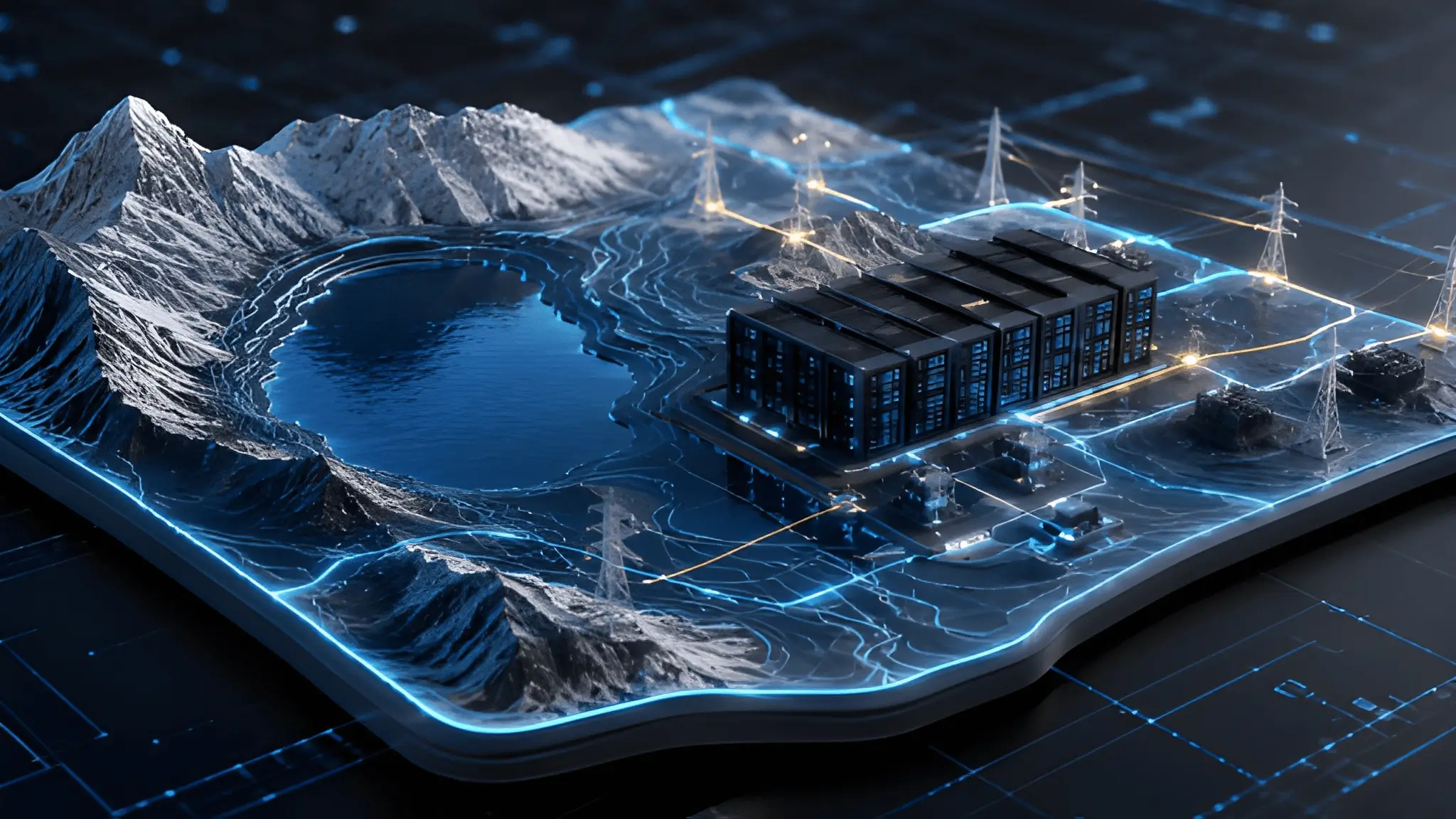
Artificial intelligence infrastructure no longer expands according to the same geographic logic that shaped earlier cloud computing eras. Operators once prioritized fiber access, inexpensive land, tax structures, and utility availability when selecting hyperscale deployment regions across the United States. Thermal volatility now pressures those assumptions because AI workloads generate sustained heat densities that conventional site-selection formulas struggle to absorb efficiently. Hardware clusters increasingly operate under environmental stress conditions that directly affect cooling behavior, equipment reliability, and long-term infrastructure economics across large deployments. Climate behavior therefore moves closer to the center of infrastructure planning conversations even when companies avoid discussing environmental exposure publicly. Northern Nevada and the Lake Tahoe region now sit inside that transition because their geography presents a combination of elevation, seasonal moderation, atmospheric stability, and operational separation from coastal congestion.
The emerging Tahoe-Reno corridor does not resemble traditional technology expansion zones that developed around dense metropolitan centers during earlier computing cycles. Mountain-adjacent infrastructure corridors increasingly attract attention because AI systems operate under higher sustained thermal loads than many earlier enterprise computing environments. GPU-intensive clusters maintain continuous thermal pressure that compounds across thousands of densely packed accelerators running simultaneously for prolonged periods. Mechanical systems therefore face constant load balancing challenges that intensify in regions with unstable heat behavior or prolonged atmospheric extremes. Operators increasingly examine terrain conditions, seasonal weather behavior, and environmental reliability alongside fiber redundancy and electrical interconnection planning. The Tahoe basin and neighboring Nevada high desert provide an example of how geography and environmental conditions may increasingly influence future infrastructure planning decisions.
Infrastructure migration toward northern Nevada already reflects broader changes taking place across American hyperscale development patterns. The Tahoe Reno Industrial Center expanded rapidly because western operators needed operational distance from California congestion while still maintaining low-latency connectivity to West Coast demand corridors. AI acceleration intensified that movement because large deployments now require enormous physical footprints, power flexibility, and environmental resilience that urban environments increasingly struggle to support consistently. Mountain-adjacent geographies create different operational considerations because they can provide comparatively moderated environmental conditions across annual cycles. Seasonal airflow variation, lower humidity behavior, and elevated terrain conditions influence thermal management strategies in ways that conventional commercial real estate discussions rarely capture properly. The result is a broader infrastructure planning approach where climate stability becomes one of several factors influencing long-term operational reliability.
The Sierra Climate Advantage Nobody Modeled Properly
Mountain Airflow Patterns Create Infrastructure Conditions Traditional Models Often Ignore
Elevation reshapes thermal behavior across infrastructure environments
The Sierra Nevada mountain system produces atmospheric behavior that differs substantially from conventional lowland industrial regions where hyperscale infrastructure traditionally concentrated during earlier cloud expansion cycles. Air movement across elevated terrain behaves more dynamically because cooler nocturnal airflow descends through mountain corridors while daytime thermal accumulation disperses differently across higher-altitude landscapes. Data center cooling systems can benefit from more stable atmospheric conditions because moderated ambient temperatures may reduce abrupt cooling fluctuations across large computing environments. Traditional site-selection frameworks often prioritized power availability, connectivity, and tax structures because earlier enterprise workloads generally produced lower sustained thermal density. AI infrastructure changes that equation because GPU systems maintain relentless operating temperatures that amplify the importance of stable environmental behavior throughout the year. Mountain regions therefore introduce environmental variables that may receive greater attention within modern infrastructure planning models.
Tahoe’s regional climate also behaves differently from hotter desert environments that experience prolonged thermal stagnation during summer operating windows. Northern Nevada’s high desert geography combines lower humidity characteristics with seasonal airflow circulation patterns influenced by surrounding mountain terrain. Cooling systems benefit from these conditions because lower atmospheric moisture changes heat transfer efficiency across large-scale mechanical environments. Hardware systems additionally experience less exposure to corrosive humidity accumulation that can gradually affect electrical reliability inside sensitive computing infrastructure. Operators historically focused more heavily on electricity pricing and tax treatment than atmospheric moisture behavior because earlier workloads tolerated wider environmental inconsistency without major operational penalties. AI deployments increasingly expose the limitations of those older assumptions because thermal density now interacts directly with environmental volatility across massive hardware clusters.
Seasonal moderation changes operational consistency across annual cycles
Lake Tahoe’s surrounding geography can experience more moderated seasonal temperature behavior than several hotter hyperscale deployment regions across the American Southwest. Environmental consistency matters because AI infrastructure operates continuously under sustained computational load instead of fluctuating according to conventional enterprise traffic patterns. Facilities may benefit from regions where seasonal shifts occur more gradually because stable environmental conditions can support more predictable cooling operations. The Sierra environment reduces some of those abrupt transitions because elevation and regional air circulation moderate temperature accumulation differently across annual cycles. Stable environmental behavior improves predictability across cooling operations, airflow engineering, and thermal balancing systems that support dense accelerator deployments. Operators may therefore value atmospheric consistency increasingly because infrastructure economics now depend heavily on uninterrupted compute efficiency across extended operational windows.
Environmental predictability may influence maintenance cycles and long-term operational planning across AI deployments. High-density compute environments experience persistent thermal stress that compounds gradually through repetitive heat exposure over long operational periods. Mountain climates may help moderate portions of that cumulative burden because cooler environmental conditions can reduce periods of elevated thermal stress. Cooling systems therefore operate under steadier environmental assumptions rather than reacting continuously to volatile external conditions that disrupt thermal equilibrium. Geographic moderation becomes economically meaningful because operational consistency directly influences maintenance scheduling, energy balancing, and infrastructure replacement planning across hyperscale facilities. Tahoe’s environmental profile may therefore reflect broader interest in how climate conditions could influence future AI infrastructure planning.
Why Altitude Could Become AI Infrastructure’s New Competitive Edge
Higher-Elevation Deployments Introduce New Operational Dynamics For AI Systems
Elevated terrain changes hardware stress patterns over time
Altitude increasingly matters because AI hardware behaves differently under continuous thermal saturation than traditional enterprise computing systems operated during earlier infrastructure generations. Accelerated compute clusters generate concentrated heat loads across tightly packed environments where thermal imbalance spreads rapidly between interconnected hardware systems. Higher-elevation geographies can provide cooler atmospheric conditions that may help moderate sustained thermal exposure across long operational cycles. Mountain air typically contains lower moisture density, which influences heat dissipation behavior differently from humid lowland environments where thermal buildup often lingers more aggressively. Operators increasingly evaluate altitude as one environmental variable that may influence long-duration infrastructure operations.. Tahoe and neighboring Nevada regions sit inside that discussion because their terrain profile introduces atmospheric conditions increasingly relevant to GPU-intensive computing ecosystems.
Higher elevations may also improve long-term operational predictability because they reduce exposure to certain climate patterns affecting lower-altitude metropolitan infrastructure corridors. Urban heat concentration, stagnant summer air behavior, and prolonged humidity retention create cumulative environmental pressure across conventional hyperscale markets during extended operating periods. Elevated terrain disperses heat differently because atmospheric circulation changes more dynamically across mountain-influenced environments than dense urban basins surrounded by retained thermal buildup. AI infrastructure increasingly requires stable environmental assumptions because modern accelerators operate near extremely high thermal thresholds continuously rather than intermittently. Small atmospheric advantages therefore scale significantly when facilities manage thousands of synchronized high-performance systems across uninterrupted computational workloads. Altitude consequently evolves from a secondary geographic detail into a direct operational consideration within future infrastructure planning models.
Thermal stability increasingly shapes infrastructure economics
AI economics depend heavily on maintaining consistent computational throughput without introducing environmental instability that disrupts cooling efficiency or hardware performance across large deployments. Infrastructure operators traditionally focused on reducing immediate operating costs through tax structures, electricity contracts, and construction incentives because earlier computing workloads generated less concentrated thermal intensity. AI systems increase attention toward environmental stability because cooling continuity and thermal management consistency can affect long-duration deployment operations. Higher-elevation regions may provide operational consistency advantages that extend beyond conventional discussions focused only on cooling costs. Stable atmospheric behavior supports steadier thermal management conditions that reduce abrupt performance fluctuations inside hyperscale computing environments. Mountain-adjacent infrastructure corridors consequently gain relevance because environmental conditions may support long-term operational stability.
The Tahoe-Reno corridor already demonstrates how altitude intersects with broader infrastructure decentralization trends developing across the western United States. Operators seek enough distance from California congestion to expand physically while still maintaining efficient connectivity into major digital demand corridors across the West Coast. Higher-elevation Nevada environments satisfy portions of both requirements because they combine operational separation with relatively favorable environmental consistency across annual cycles. Geography therefore becomes multifunctional because terrain conditions simultaneously influence latency resilience, cooling predictability, atmospheric moderation, and infrastructure scalability. Future AI corridors may increasingly emerge around these layered environmental advantages instead of clustering purely around historical technology centers shaped during earlier internet eras. Tahoe’s evolving position inside western infrastructure conversations reflects that broader geographic transition already underway across the American AI landscape.
AI Corridors Are Moving Toward “Weather Stability,” Not Just Connectivity
Climate Predictability Is Becoming A Strategic Infrastructure Variable
Stable weather behavior now matters as much as fiber access
Connectivity once dominated every major infrastructure conversation because cloud computing depended heavily on reducing latency between urban demand centers and centralized server deployments. AI infrastructure still depends heavily on dense fiber interconnection, while environmental predictability increasingly influences operational reliability across many deployment strategies. GPU-intensive facilities generate sustained thermal pressure that amplifies the consequences of atmospheric instability over long operating periods. Extreme seasonal fluctuation forces cooling systems into constant recalibration cycles that increase mechanical stress across thermal management environments. Operators increasingly recognize that stable weather patterns reduce infrastructure turbulence in ways traditional site-selection formulas never fully captured. Tahoe and neighboring Nevada regions attract attention partly because their climate behavior remains comparatively predictable across broader annual operating windows.
Environmental predictability affects infrastructure planning far beyond simple temperature management because atmospheric stability shapes multiple operational layers simultaneously inside AI facilities. Sudden humidity shifts influence airflow behavior, while abrupt thermal spikes alter cooling equilibrium across densely packed accelerator environments. Wildfire smoke intrusion can also complicate filtration systems and air handling performance across facilities operating near atmospheric thresholds. Stable mountain climates reduce portions of those risks because seasonal transitions often occur more gradually than in heavily urbanized or climatically volatile regions. Operators therefore increasingly examine long-range weather consistency instead of focusing solely on average annual conditions during early planning cycles. AI corridor development may increasingly consider regions capable of delivering sustained environmental reliability alongside strong network interconnection.
Infrastructure resilience increasingly depends on environmental continuity
Hyperscale AI deployments operate differently from conventional enterprise facilities because accelerator clusters rarely experience meaningful idle periods once active training and inference systems begin scaling. Continuous workload saturation means environmental inconsistency compounds more aggressively across infrastructure environments than during earlier computing generations. Facilities exposed to unstable weather patterns must constantly compensate through intensified mechanical balancing, thermal redistribution, and infrastructure redundancy cycles. Environmental continuity therefore becomes strategically valuable because it reduces the frequency of operational disruption events that gradually erode efficiency over time. Tahoe’s surrounding geography introduces a comparatively moderated atmospheric profile that may support steadier infrastructure performance across extended annual operating cycles. Mountain-adjacent environments therefore attract interest because they may provide comparatively stable environmental conditions across long-duration compute ecosystems.
The broader western United States already reflects this transition toward weather-aware infrastructure expansion patterns. Traditional hyperscale corridors concentrated heavily around metropolitan growth regions where population density and internet traffic created natural expansion incentives during earlier cloud eras. AI systems alter those priorities because sustained computational density rewards environmental stability even when facilities operate farther from dense urban centers. Operators now balance connectivity requirements against climate resilience considerations that influence infrastructure reliability over multi-year operational horizons. The Tahoe-Reno region fits that emerging logic because it provides relative proximity to California demand while maintaining geographic and atmospheric separation from coastal congestion pressures. Future AI corridor development may place greater emphasis on weather continuity alongside connectivity and power infrastructure considerations.
Tahoe’s Geography May Be More Valuable Than Its Tax Incentives
Terrain Intelligence Increasingly Shapes AI Infrastructure Decisions
Natural positioning creates layered operational advantages
Tax incentives historically dominated economic development discussions surrounding hyperscale infrastructure because operators sought regions capable of minimizing construction costs and long-term operating expenses. AI infrastructure introduces additional environmental pressures that reduce the relative importance of purely financial incentives within broader site-selection calculations. Tahoe’s surrounding geography offers layered operational characteristics that influence resilience, thermal behavior, and infrastructure continuity simultaneously across large deployment environments. Mountain positioning moderates atmospheric conditions while northern Nevada’s terrain separation reduces portions of the congestion pressure affecting coastal infrastructure ecosystems. Operators increasingly evaluate these geographic variables because environmental continuity now interacts directly with hardware reliability and cooling system stability across AI facilities. Natural terrain therefore becomes an active operational asset rather than a passive background characteristic within infrastructure planning models.
The region’s geographic positioning also creates strategic separation from several risks affecting denser urban infrastructure corridors across the western United States. Coastal metropolitan regions face mounting pressure from land scarcity, grid congestion, atmospheric heat accumulation, and expanding infrastructure saturation across growing digital economies. Mountain-adjacent Nevada environments provide greater operational spacing while still maintaining practical proximity to California network demand and engineering ecosystems. Geographic balance matters because AI infrastructure increasingly requires both physical scale and environmental flexibility unavailable inside many mature urban corridors. Terrain conditions additionally shape airflow behavior, thermal accumulation patterns, and seasonal environmental moderation across large operational campuses. Tahoe’s geography therefore gains importance because it delivers multiple infrastructure advantages simultaneously without depending exclusively on incentive-driven expansion logic.
Environmental balance may outweigh traditional economic incentives
Infrastructure economics increasingly depend on operational predictability rather than solely on upfront financial efficiency because AI deployments maintain continuous thermal and electrical intensity throughout their operating lifecycles. Regions with stable environmental conditions reduce portions of the uncertainty surrounding cooling performance, maintenance scheduling, and hardware degradation over extended deployment periods. Operators therefore examine terrain intelligence more closely because environmental resilience directly affects long-duration infrastructure economics in ways traditional accounting models often overlook. Tahoe’s regional geography combines elevated terrain, moderated climate behavior, and comparatively lower-density infrastructure surroundings within a single operational corridor. These characteristics may ultimately prove more valuable than temporary tax advantages because they influence infrastructure continuity over far longer timelines. Geography consequently evolves into a strategic infrastructure variable capable of shaping future deployment economics directly.
Wildfire exposure also illustrates why geographic nuance increasingly matters within AI infrastructure discussions surrounding western expansion. Public conversations often treat wildfire risk as a binary condition even though terrain positioning, prevailing airflow patterns, and regional environmental structure influence exposure behavior substantially across different mountain-adjacent regions. Operators therefore study localized environmental patterns carefully because atmospheric intrusion, smoke pathways, and emergency continuity planning all affect infrastructure reliability over time. Tahoe’s surrounding geography provides a more nuanced environmental profile than simplistic western climate narratives often suggest. Infrastructure planning increasingly depends on understanding these layered geographic realities instead of relying purely on generalized regional assumptions. The emerging Tahoe corridor may therefore represent a broader shift toward terrain-informed infrastructure strategy throughout the evolving AI economy.
The New Site-Selection Metric Nobody Talks About: Seasonal Compute Consistency
AI Facilities Increasingly Depend On Predictable Environmental Rhythms
Stable annual operating conditions improve computational continuity
Seasonal environmental consistency may become a more visible consideration influencing future AI infrastructure geography across the United States. Traditional data center planning focused heavily on annual averages because earlier workloads tolerated moderate environmental fluctuation without substantially affecting operational performance. AI systems behave differently because dense accelerator clusters maintain continuous thermal saturation that magnifies the operational impact of environmental instability across prolonged deployment cycles. Facilities operating inside regions with abrupt seasonal transitions face repeated cooling recalibration pressure throughout the year. Environmental variability therefore introduces additional operational complexity that compounds gradually across maintenance cycles, airflow balancing systems, and hardware performance management environments. Tahoe’s regional climate attracts attention partly because seasonal shifts remain comparatively moderated across extended annual operating windows.
Seasonal predictability influences infrastructure continuity because cooling systems perform most efficiently when environmental assumptions remain relatively stable over long periods. Abrupt atmospheric fluctuation forces operators to compensate constantly through intensified thermal balancing procedures that increase mechanical wear and operational uncertainty. AI deployments amplify those challenges because GPU environments sustain concentrated heat density continuously rather than fluctuating according to traditional enterprise traffic behavior. Operators therefore increasingly examine seasonal environmental rhythm instead of evaluating climate only through simplistic temperature averages or isolated weather snapshots. Consistent environmental behavior can support steadier cooling and operational conditions across long-duration compute cycles. Geographic regions capable of delivering that stability may consequently gain strategic relevance within future AI expansion planning frameworks.
Compute reliability increasingly aligns with climate moderation
Hardware reliability depends heavily on maintaining stable environmental conditions because repeated thermal stress gradually affects system behavior across extended operational timelines. AI infrastructure intensifies this relationship because modern accelerator clusters operate under persistent electrical and thermal pressure that rarely declines meaningfully during active deployment periods. Seasonal moderation reduces portions of that cumulative burden because facilities experience fewer abrupt environmental transitions requiring aggressive mechanical correction cycles. Tahoe’s surrounding climate demonstrates why moderated mountain environments may become increasingly attractive for future infrastructure development across the American West. Environmental steadiness supports operational continuity in ways broader public infrastructure discussions often underestimate significantly. Operators increasingly evaluate how climate moderation may support long-term operational stability across hyperscale AI environments.
The concept of seasonal compute consistency also reflects a larger transition occurring throughout AI infrastructure strategy globally. Earlier cloud eras prioritized proximity to internet population centers because conventional workloads depended primarily on bandwidth access and rapid content distribution. AI deployments now reward environmental resilience because computational density creates continuous thermal exposure that amplifies infrastructure fragility over time. Stable climates therefore become economically meaningful because they support uninterrupted hardware performance and reduce environmental correction overhead across large facilities. Mountain-adjacent corridors like Tahoe illustrate how geography increasingly shapes infrastructure continuity at a foundational operational level. Future site-selection models may therefore treat seasonal environmental consistency as a core computational variable rather than a secondary environmental detail.
Could Mountain Regions Become AI’s Next Infrastructure Safe Zones?
Elevated Geographies Are Emerging As Climate Risk Buffers
Lower-density mountain corridors reduce infrastructure exposure concentration
AI infrastructure expansion increasingly collides with climate volatility because many traditional hyperscale regions now experience growing environmental instability across annual operating cycles. Coastal heat accumulation, prolonged drought behavior, urban thermal retention, and seasonal atmospheric extremes create compounding operational pressure throughout densely concentrated infrastructure ecosystems. Mountain regions offer a different geographic profile because elevated terrain disperses environmental stress differently across lower-density landscapes. Infrastructure operators therefore examine mountain-adjacent corridors not as isolated rural alternatives but as potential resilience zones capable of buffering portions of broader climate volatility. Tahoe and neighboring Nevada regions sit inside that evolving conversation because they combine moderated environmental behavior with operational separation from heavily saturated metropolitan infrastructure networks. Geographic dispersion consequently becomes part of infrastructure resilience strategy rather than merely a real estate expansion mechanism.
Lower-density mountain environments also reduce several cascading risks that intensify inside major urban infrastructure clusters during environmental disruption events. Large metropolitan corridors often contain tightly interconnected utility systems where thermal stress, grid pressure, transportation congestion, and emergency response complexity overlap simultaneously during extreme conditions. AI facilities operating within geographically dispersed regions gain greater operational insulation because environmental disruptions spread less aggressively across surrounding infrastructure ecosystems. Tahoe’s regional positioning supports that separation because northern Nevada offers substantial physical expansion space without immediate dependence on densely urbanized operational frameworks. Infrastructure resilience increasingly depends on reducing correlated exposure rather than merely strengthening individual facilities against isolated risks. Mountain corridors may increasingly attract infrastructure interest because lower-density environments can provide operational separation from heavily concentrated urban regions.
Climate buffering may redefine future infrastructure geography
The concept of climate-buffered infrastructure reflects broader shifts occurring throughout hyperscale deployment planning across the United States. Operators previously concentrated facilities aggressively around major metropolitan demand hubs because conventional internet services benefited from immediate geographic proximity to dense population centers. AI systems increasingly alter that logic because compute-intensive workloads depend more heavily on operational continuity, environmental moderation, and infrastructure resilience across sustained operating periods. Mountain geographies can provide some of those characteristics because elevated climates may moderate seasonal heat accumulation while lower-density surroundings reduce concentrated infrastructure exposure. Tahoe’s surrounding region therefore represents more than a regional development story because it illustrates how future AI geography may reorganize around environmental durability itself. Terrain intelligence consequently moves closer to the center of infrastructure strategy across the evolving compute economy.
Wildfire risk still complicates portions of the western mountain infrastructure narrative, yet operators increasingly evaluate those risks through detailed geographic analysis rather than broad regional assumptions. Environmental resilience depends heavily on localized terrain behavior, atmospheric movement patterns, emergency access conditions, and regional operational redundancy planning. Mountain regions differ substantially from one another because elevation profiles, prevailing wind behavior, and vegetation distribution shape exposure conditions unevenly across western geographies. Tahoe’s surrounding infrastructure corridors therefore require nuanced evaluation instead of simplistic categorization within generalized climate discussions. AI infrastructure planning increasingly rewards regions capable of balancing environmental moderation with manageable operational risk exposure over long deployment timelines. Mountain-adjacent safe zones may consequently emerge through selective geographic optimization rather than through indiscriminate expansion into elevated terrain broadly.
The Tahoe-Reno Shift Is Redefining What “Proximity to Silicon Valley” Means
Operational Distance Is Replacing Traditional Urban Dependence
Latency resilience matters more than office adjacency
Silicon Valley proximity once depended heavily on physical access because earlier technology ecosystems revolved around concentrated office campuses, dense engineering communities, and centralized commercial infrastructure networks. AI infrastructure changes that relationship because modern compute ecosystems prioritize latency resilience, operational continuity, and environmental scalability more aggressively than corporate headquarters access. Tahoe and northern Nevada regions maintain practical network connectivity to California demand corridors without inheriting the same levels of urban infrastructure congestion affecting coastal deployment environments. Geographic proximity increasingly reflects operational infrastructure considerations alongside traditional commercial and real estate factors. AI systems increasingly require stable infrastructure ecosystems capable of supporting sustained computational intensity over long deployment horizons. The Tahoe-Reno corridor fits that transition because it balances West Coast connectivity with greater environmental and operational separation from coastal saturation pressures.
Latency resilience also depends on maintaining uninterrupted operational continuity rather than simply minimizing physical distance between users and computing resources. AI workloads generate enormous data movement and synchronization demands that require stable infrastructure performance across geographically distributed environments. Operators therefore seek regions capable of maintaining consistent operational conditions without exposing facilities to excessive environmental volatility or urban infrastructure bottlenecks. Northern Nevada supports portions of that strategy because it provides enough separation from California congestion while still remaining close enough for practical low-latency network integration across western digital corridors. Infrastructure geography increasingly reflects this balancing act between connectivity and resilience instead of clustering exclusively around traditional metropolitan centers. Tahoe’s surrounding region consequently becomes relevant because it demonstrates how operational distance may replace conventional urban dependency models across future AI deployments.
Decentralized infrastructure ecosystems now define expansion strategy
AI infrastructure decentralization differs fundamentally from earlier cloud expansion because operators no longer optimize purely around urban demand concentration. Compute-intensive systems require enormous physical infrastructure support layers including electrical flexibility, environmental stability, thermal management scalability, and geographic redundancy across distributed operating environments. Dense coastal markets increasingly struggle to accommodate those requirements efficiently because land limitations, grid congestion, and environmental pressure intensify simultaneously across mature metropolitan regions. Tahoe and neighboring Nevada corridors provide an alternative infrastructure geometry because they allow physical expansion without severing operational connectivity to California’s broader technology ecosystem. Geography therefore becomes strategically modular rather than centrally concentrated across evolving AI deployment patterns. Infrastructure planning increasingly considers distributing computational capacity across multiple regions rather than concentrating expansion entirely within saturated urban hubs.
This decentralized logic also changes how operators evaluate regional infrastructure ecosystems surrounding emerging AI corridors throughout the western United States. Earlier hyperscale expansion often followed population growth because internet traffic density naturally aligned with metropolitan concentration during the rise of large-scale cloud computing. AI deployments reward different variables because computational intensity magnifies the importance of environmental moderation and operational predictability across long-duration infrastructure cycles. Tahoe’s regional positioning therefore matters less because of direct urban integration and more because of strategic environmental adjacency to major West Coast demand systems. Operational distance becomes economically valuable when it reduces exposure to congestion while preserving resilient connectivity into broader digital ecosystems. The Tahoe-Reno shift consequently previews how future AI geography may decentralize around environmental functionality instead of traditional technology clustering logic.
Tahoe’s Emerging Role Isn’t Urban Expansion
Geography Is Becoming A Foundational Layer Of AI Infrastructure Strategy
Future AI corridors may emerge around natural optimization zones
The next generation of AI infrastructure may place greater emphasis on environmental suitability alongside the metropolitan expansion patterns that shaped earlier digital economies. Traditional hyperscale growth often followed urban density because cloud services depended primarily on population concentration and commercial internet demand during earlier deployment eras. AI systems increasingly prioritize stable operating environments because continuous accelerator workloads amplify the consequences of thermal instability and environmental inconsistency across infrastructure ecosystems. Tahoe’s surrounding geography presents an example of how naturally moderated environments could influence future corridor development across the United States. Operators now evaluate terrain behavior, atmospheric continuity, and climate resilience with greater seriousness because those variables affect long-term computational reliability directly. Geographic and environmental conditions may become more significant components within infrastructure planning decisions.
Environmental positioning also changes how infrastructure ecosystems interact with surrounding landscapes over long operational timelines. Dense urban deployments often intensify local environmental stress because concentrated heat generation compounds existing metropolitan thermal accumulation patterns continuously. Mountain-adjacent infrastructure corridors distribute those pressures differently because elevated terrain and lower-density surroundings alter atmospheric behavior across broader regional environments. Tahoe’s geographic profile therefore offers operational characteristics that extend beyond simplistic cooling narratives frequently repeated within public infrastructure discussions. Operators increasingly seek regions capable of sustaining stable environmental equilibrium across decades rather than maximizing short-term expansion efficiency alone. Infrastructure geography consequently shifts toward long-duration environmental compatibility as AI deployments continue scaling across larger physical footprints.
Terrain-first infrastructure strategy reflects a broader transition
Terrain-first planning reflects broader structural changes unfolding across the global AI economy because computational intensity increasingly interacts with physical geography at foundational operational levels. Earlier computing eras treated geography primarily as a logistical framework supporting digital connectivity and utility access across expanding internet ecosystems. AI systems reverse portions of that assumption because environmental behavior now directly influences thermal management stability, hardware longevity, and infrastructure continuity across sustained compute environments. Tahoe’s evolving relevance therefore stems from how its geography aligns with emerging operational priorities surrounding resilience and environmental moderation. Operators increasingly study natural airflow behavior, seasonal consistency, and atmospheric predictability as integrated infrastructure variables rather than peripheral environmental observations. Future AI corridors may increasingly consider terrain and environmental conditions alongside connectivity and metropolitan infrastructure access.
The Tahoe-Reno region additionally illustrates how infrastructure strategy increasingly separates computational expansion from traditional assumptions surrounding urban economic growth. AI facilities require extensive physical infrastructure support yet increasingly depend on environmental optimization instead of dense office ecosystems or metropolitan commercial clustering. Geography therefore shapes deployment logic more directly because stable environmental conditions contribute to operational continuity over multi-decade infrastructure lifecycles. Mountain-adjacent regions may consequently gain strategic relevance even when they lack the urban characteristics historically associated with major technology expansion corridors. Tahoe’s emerging infrastructure role centers on environmental positioning rather than city-scale commercial growth or corporate campus development. That distinction may ultimately define how future AI geography reorganizes across climate-sensitive infrastructure environments throughout the United States.
Why AI Infrastructure Is Quietly Following America’s Cooler Microclimates
Microclimate Hunting Is Reshaping Hyperscale Expansion Logic
Operators increasingly search for naturally moderated environments
AI infrastructure development increasingly considers environmental conditions alongside expansion into major metropolitan growth corridors. Earlier cloud expansion rewarded regions capable of delivering connectivity, utility access, and commercial scale because conventional workloads tolerated broader environmental variability without immediate operational consequences. AI systems behave differently because sustained accelerator density amplifies thermal instability across every layer of infrastructure operations over prolonged deployment cycles. Operators therefore examine localized climate behavior more carefully because even subtle environmental moderation can influence long-duration compute reliability across large-scale facilities. Operators increasingly examine cooler regional climates because stable atmospheric conditions can support more predictable cooling operations throughout the year. Tahoe’s surrounding geography increasingly fits that emerging infrastructure logic because its elevated terrain creates a comparatively moderated operating environment across annual cycles.
Localized environmental analysis reflects growing recognition that climate conditions can vary significantly within the same broader geographic region. Two locations separated by relatively short physical distances may experience completely different airflow behavior, thermal retention patterns, atmospheric moisture conditions, and seasonal stability profiles across annual operating windows. AI infrastructure planning therefore moves beyond generalized regional climate assumptions toward highly localized environmental analysis capable of identifying naturally favorable operating conditions. Tahoe and northern Nevada benefit from this shift because their mountain-influenced geography produces atmospheric behavior distinct from hotter lowland regions surrounding much of the American Southwest. Operators increasingly treat those localized differences as operational infrastructure variables rather than background environmental details. Geographic nuance consequently becomes strategically valuable inside future hyperscale deployment planning models.
Cooler operating environments support infrastructure continuity
Environmental moderation matters because AI systems maintain sustained thermal pressure that compounds gradually across infrastructure ecosystems during continuous operation. Cooling systems perform most effectively when external atmospheric conditions remain relatively stable instead of fluctuating aggressively across seasons or prolonged heat events. Cooler operating environments may reduce periods of elevated thermal accumulation that place additional pressure on cooling systems. Hardware reliability additionally benefits from steadier environmental behavior because repeated exposure to abrupt atmospheric shifts increases cumulative infrastructure strain over time. Operators therefore increasingly value regions capable of delivering stable annual operating environments even when those locations sit farther from traditional urban technology centers. Tahoe’s evolving infrastructure relevance reflects this broader movement toward climate-aware compute geography throughout the United States.
The search for cooler microclimates additionally intersects with larger concerns surrounding long-term infrastructure scalability across climate-sensitive regions. Traditional hyperscale markets increasingly face operational pressure from urban heat accumulation, expanding energy competition, infrastructure congestion, and volatile environmental behavior across prolonged annual cycles. AI deployments magnify those vulnerabilities because compute-intensive systems depend on uninterrupted thermal stability throughout continuous operational periods. Mountain-adjacent microclimates provide portions of that stability because elevated terrain naturally moderates atmospheric conditions differently from dense urban basins exposed to sustained thermal retention. Operators consequently examine cooler environmental zones not as niche alternatives but as foundational infrastructure opportunities capable of supporting future computational growth sustainably. Localized environmental planning may become a more visible factor shaping future American AI infrastructure expansion.
Lake Tahoe May Preview the Future Geography of AI Infrastructure
Environmental Intelligence Could Reshape The Next Infrastructure Era
AI corridors may increasingly form around climate resilience
Lake Tahoe’s growing relevance within infrastructure conversations may ultimately reflect a much larger transition occurring across the global AI economy. Earlier digital infrastructure eras prioritized urban concentration because internet services depended primarily on direct proximity to population centers, corporate offices, and commercial exchange networks. AI systems increasingly reward different geographic characteristics because sustained computational intensity exposes the operational limits of environmentally unstable infrastructure regions over long deployment timelines. Climate resilience therefore emerges as a strategic infrastructure layer because environmental continuity directly affects thermal management stability, hardware durability, and operational predictability throughout hyperscale ecosystems. Tahoe’s surrounding geography offers an early example of how naturally moderated environments could influence future corridor development across climate-sensitive computing markets. Infrastructure geography consequently shifts toward environmental intelligence rather than relying exclusively on traditional technology market logic.
The Tahoe-Reno corridor demonstrates how geography itself increasingly functions as operational infrastructure within AI deployment planning frameworks. Elevated terrain moderates atmospheric behavior while regional separation from coastal congestion reduces portions of the operational pressure affecting saturated metropolitan infrastructure ecosystems. Operators increasingly value those characteristics because AI deployments require stable environmental assumptions capable of supporting uninterrupted compute intensity over extended periods. Traditional site-selection variables such as tax treatment and utility access still matter substantially, yet environmental continuity now shapes infrastructure economics more directly than during earlier cloud expansion eras. Tahoe’s evolving infrastructure role therefore stems less from promotional regional narratives and more from broader structural changes unfolding throughout AI deployment strategy globally. Geography becomes computationally relevant when environmental stability affects operational performance continuously across large-scale accelerator ecosystems.
Future infrastructure strategy may prioritize terrain intelligence
Terrain intelligence may become one of the defining characteristics separating next-generation AI corridors from earlier hyperscale development regions across the United States. Operators increasingly examine airflow behavior, seasonal consistency, thermal moderation patterns, atmospheric predictability, and geographic risk dispersion simultaneously during infrastructure planning cycles. These variables interact directly with cooling efficiency, hardware longevity, and operational continuity throughout dense compute environments operating under sustained thermal saturation. Tahoe’s surrounding geography illustrates how natural environmental positioning could support future infrastructure resilience more effectively than purely urban expansion-oriented deployment strategies. Infrastructure planning therefore evolves into a multidisciplinary environmental exercise where terrain conditions influence long-duration computational performance directly. AI systems increasingly transform geography from a logistical concern into a foundational operational variable across modern infrastructure ecosystems.
The broader implications extend far beyond northern Nevada because climate-sensitive infrastructure planning may gradually reshape digital geography across multiple regions throughout North America. Cooler mountain corridors, elevated high-desert environments, and naturally moderated microclimates could attract increasing infrastructure attention as AI deployments continue scaling computational intensity aggressively over time. Operators may distribute infrastructure more strategically across environmentally stable zones instead of concentrating expansion inside historically dominant metropolitan hubs facing mounting climate pressure. Tahoe’s emergence therefore matters because it previews how future AI infrastructure could organize itself around resilience, environmental predictability, and terrain optimization rather than solely around urban concentration or legacy technology clustering patterns. The next generation of AI corridors may ultimately follow the geography of climate stability more closely than the geography of traditional commercial expansion. Lake Tahoe simply happens to offer one of the clearest early signals that this transition has already begun across the evolving infrastructure economy.