
Why 200 kW Racks Make Liquid Cooling a Compelling Financial Choice
As compute performance accelerates, the data center industry is reaching a clear economic tipping point. For decades, traditional cooling approaches […]


As compute performance accelerates, the data center industry is reaching a clear economic tipping point. For decades, traditional cooling approaches […]

This year shaping up to be turning point for data center sustainability. Across the globe, regulators, investors, and local communities

Energy risk is increasingly discussed in the future tense, framed around projections of climate volatility, grid modernization, and long-term decarbonization

For decades, cooling ranked as a secondary engineering problem. Power shaped data center design. Cooling followed. That hierarchy has collapsed.
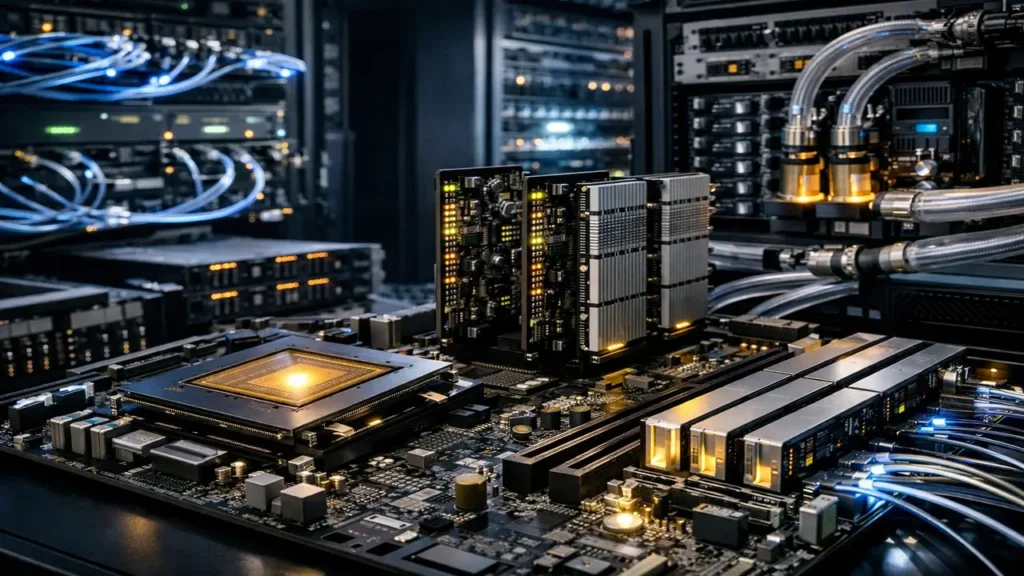
Why data center design, network patterns, and scalability are the real battlefronts in AI infrastructure
AI’s Invisible Backbone
Executives often describe artificial intelligence as a triumph of software. Boardroom discussions focus on models, use cases, and accelerator roadmaps. This framing suggests that smarter algorithms alone will determine competitive advantage.
In practice, a different reality is emerging. The most consequential changes supporting AI expansion are unfolding inside data centers. Power delivery, cooling capacity, physical layout, and system interconnection increasingly determine whether organizations can deploy AI reliably and at scale.
As AI shifts from experimentation to production, infrastructure no longer operates in the background. It shapes cost, performance, and time-to-market. Organizations that treat infrastructure as a strategic asset gain operational leverage. Those that overlook it encounter delays, budget overruns, and stalled deployments.

Schneider Electric Launches AI Platform Resource Advisor+ Schneider Electric has launched Resource Advisor+, an AI energy and sustainability intelligence platform

Structural Reorientation of Power Systems Electric power infrastructure is undergoing a structural reorientation as decentralized energy systems reshape how electricity

The collision between digital acceleration and physical infrastructure has become one of the defining tensions of modern industrial systems. The

The Systemic Imperative for Circularity in the Digital Age The global economy is moving away from the traditional “take-make-waste” model

Kubernetes is the de facto standard for orchestrating containerized applications in modern infrastructure. Originally developed at Google and now stewarded

Industry Leaders Urge Adoption of New Technologies for a Smarter Grid The global power sector is at a critical juncture.

Vertiv is expanding its modular infrastructure strategy as artificial intelligence workloads reshape global data centre design priorities. The company positions

The Software Boundary That Defines NeoClouds A new class of infrastructure providers has emerged alongside accelerated computing demand, yet not

Data centers are entering unfamiliar territory. What once operated as predictable environments built around steady enterprise workloads now run at the edge of physical feasibility. Artificial intelligence has reshaped the hardware landscape and driven power densities to levels that strain every layer of infrastructure. Modern AI racks consume ten to thirty times more power than systems deployed only a decade ago. As a result, heat now defines performance limits, reliability thresholds, and operating costs.
This shift has elevated thermal design from a supporting function to a strategic priority. Cooling decisions influence facility layout, hardware selection, maintenance planning, and long-term scalability. Against this backdrop, carbon nanotubes are moving from abstract research into practical consideration. Their ability to address persistent thermal bottlenecks places them firmly in discussions about how future data centers will operate.

Quantum computing tends to live in the future tense, framed around expectations that quantum bits will unlock transformative gains in

The Invisible Cost Behind the Cloud Data centers rarely appear in conversations about water scarcity, though their growing scale increasingly

Artificial intelligence is no longer confined to data centers. Advances in Edge AI are empowering devices to process and analyze

Hybrid compute neocloud architecture has emerged as a defining trend in global cloud infrastructure, reflecting a structural transition rather than declining demand or technological stagnation. After more than a decade of hyperscale expansion, enterprises now confront architectural constraints shaped by regulation, latency, energy availability, and capital discipline. These forces increasingly define what industry analysts describe as Cloud 3.0. The term does not denote a replacement for public cloud platforms. Rather, it signals a redistribution of compute across multiple environments operating under unified control frameworks.
Industry surveys consistently show that most large enterprises now operate hybrid or multi-cloud environments rather than relying on a single provider. This shift reflects deliberate design, not transitional hesitation. Moreover, cloud strategies increasingly respond to geopolitical boundaries, data residency requirements, and application-level performance demands.

Daewoo Engineering & Construction has accelerated its strategic repositioning toward digital infrastructure as demand for AI-driven compute capacity continues to

When Optimism Meets Arithmetic Solar panels spread across rooftops, electric vehicles glide through city streets, and corporate sustainability reports grow

Cloud infrastructure felt abstract, distant from the silicon humming inside servers. Today, that distance has collapsed. Engineers now design cloud

Downtime rarely arrives as catastrophe first; it begins as friction. For global digital infrastructure, that friction carries financial, operational, and

Renewable ammonia offtake agreement links India and Europe As global energy markets pivot toward low-carbon molecules, a long-term renewable ammonia

Enterprise adoption of artificial intelligence continues to accelerate across global data center environments. As AI workloads shift from pilot programs

When Electricity Became the Bottleneck Electricity once followed demand quietly, expanding in measured steps as cities grew, factories multiplied, and

In earlier eras of computing, heat remained a manageable byproduct. Today, it sets the boundaries of deployment. Data centers now

Industry 5.0 represents a significant paradigm shift. Rather than focusing solely on automation and efficiency, it places stronger emphasis on
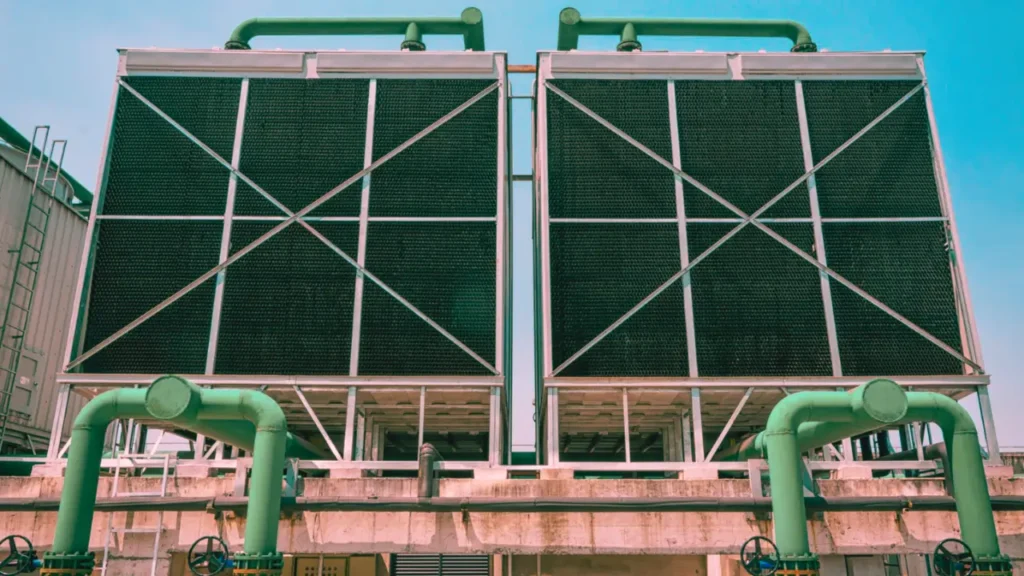
High-density AI computing is reshaping data center priorities. As a result, power delivery, interconnects, and cooling now operate as a

A Strategic Grid Reinforcement for Southern Nairobi Kenya power reliability entered a new phase this week as a critical high-voltage

When Heat Becomes the Headline At first, the warning signs arrive quietly. A rack hums louder than expected. A temperature

When the Cloud Touches the Ground The cloud rarely announces itself. It hums behind office walls, flickers through fiber lines

When Clean Ambitions Meet Physical Laws The modern power grid rarely attracts attention when it performs as expected. Lights remain

Neat numbers have always reassured engineers, investors, and policymakers. FLOPS scale upward, utilization charts glow green, and throughput curves rise
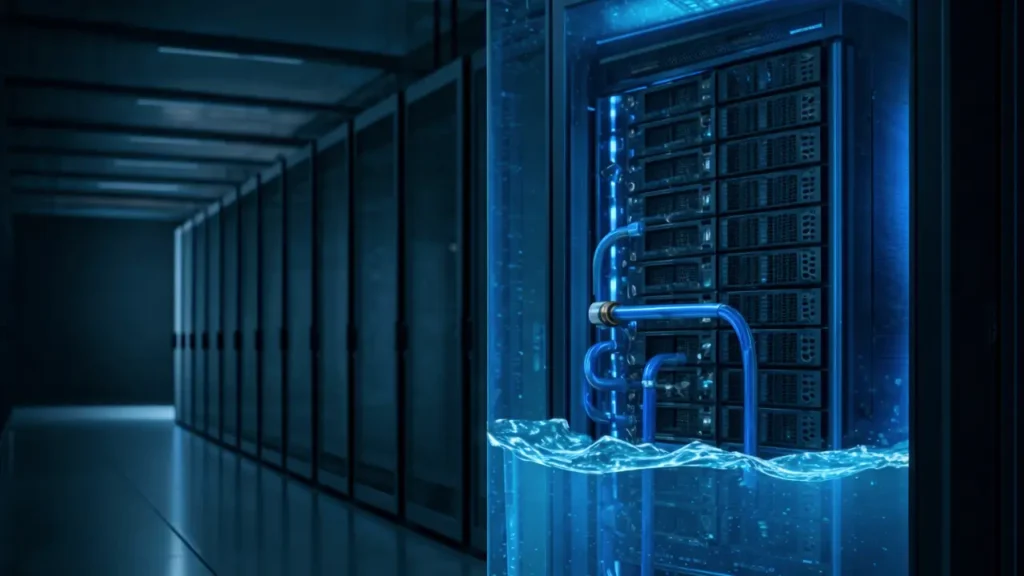
Design Intent vs Operational Reality in Liquid-Cooled Environments
The first diagrams of a liquid-cooled data hall rarely look dramatic. Clean lines show chilled fluid gliding through cold plates, pumps humming at optimal curves, and heat exiting the system with mathematical grace. On paper, everything behaves. In operation, things negotiate. That tension defines design intent vs operational reality in liquid-cooled environments, a phrase that increasingly frames how engineers, operators, and policymakers discuss modern thermal infrastructure. The divergence does not imply failure. Instead, it reflects how real facilities absorb human decisions, regional constraints, and evolving compute loads that no early-stage schematic fully anticipates.
Liquid cooling has moved from experimental promise to operational necessity as high-density computing reshapes global infrastructure. Hyperscale campuses, colocation providers, and enterprise facilities now treat fluid-based heat removal as a baseline option rather than an exotic upgrade. Designs often follow guidance from organizations such as ASHRAE and collaborative frameworks like the Open Compute Project.

Industry Momentum Shapes Strategic Direction Global demand for advanced computing infrastructure continues to accelerate as artificial intelligence workloads reshape data

Why data center power capacity is locked far ahead of demand At first glance, the practice appears inefficient. Across global

Cloud infrastructure is no longer spreading evenly across the globe. Instead, it is gathering momentum in specific places, often very

The gray areas WUE data centers are becoming harder to ignore as artificial intelligence reshapes the digital economy. Water Usage

The infrastructure that powers artificial intelligence now ranks among the most valuable real estate in modern computing. Graphics Processing Units

Economic growth has historically carried an electrical shadow. As economies expanded, electricity demand followed closely, driven by industrial output, urbanization, and rising household consumption. That linkage is now under pressure. Power grids across advanced and emerging economies face congestion, aging infrastructure, and localized capacity constraints, even as digital and economic activity continues to accelerate.
The central question confronting policymakers, utilities, and infrastructure planners is whether sustainability can reduce grid stress without constraining growth. The issue is no longer defined by energy scarcity alone. It is increasingly shaped by energy intensity, load flexibility, and system efficiency.
This blog studies whether economic and digital growth can be decoupled from electricity demand growth, and under what conditions that separation holds.

When the world’s largest asset manager highlights the growing link between artificial intelligence and sustainability, it is not making a

Artificial intelligence, digital twins, and adaptive cooling are reshaping the future of data centers, according to a new report from

“We were told that the internet erases identity, but the opposite is true.” MIT’s Joy Buolamwini warned us of this. For decades, technology promised neutrality: data would be fair, algorithms unbiased, and AI corrective of human inequities. That promise is now unraveling. AI shapes hiring, healthcare, credit, and policing. It absorbs societal biases instead of erasing them. Training data reflects historical discrimination, gender inequality, and economic exclusion. Entire populations, especially in the Global South, remain underrepresented. Algorithms trained on these distortions do not fix them; they amplify them. The consequences are real. Facial recognition misidentifies darker-skinned faces. Hiring tools disadvantage women. Healthcare models misdiagnose non-Western patients. Credit systems quietly exclude marginalized communities. The danger grows because algorithmic decisions appear neutral and often remain invisible.
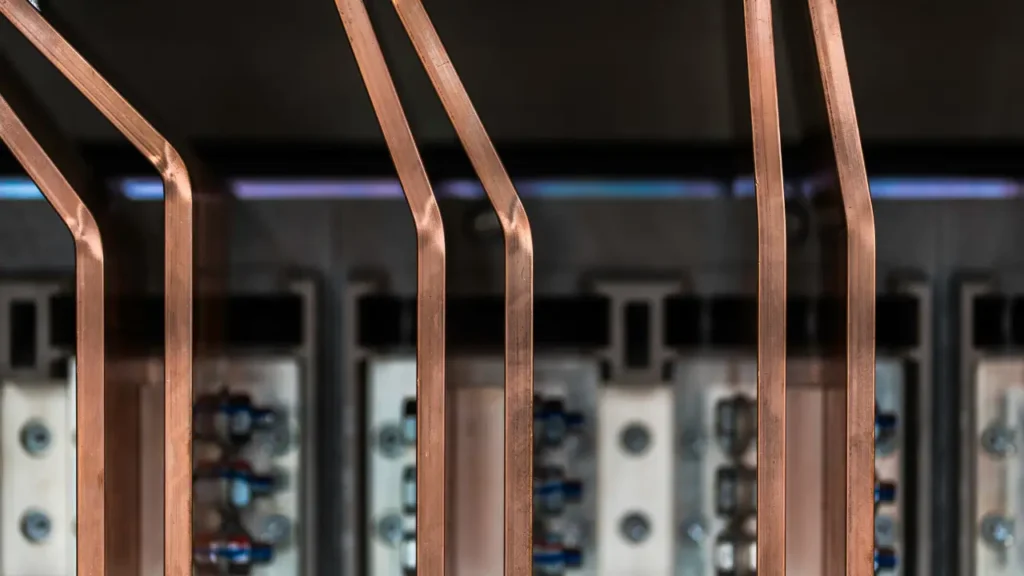
The sheer scale of the AI data center boom represents a once-in-a-generation opportunity for data center builders. Worldwide, around £2.2 trillion will be spent on AI data centers between now and 2029. However, the unprecedented scale of demand and the speed at which AI infrastructure must come online to meet the moment presents a huge challenge. AI is not only changing the size of the facilities being built, but also how and where they’re delivered. Increasingly, off-site manufacturing of vertically integrated modular electrical rooms is emerging as an essential tool in helping OEMs meet the scale of demand at speed.
The AI Boom is Here, and It’s Bigger Than Anyone Could Have Imagined
In 2025, the global market capacity of data centers was approximately 59 GW, with Goldman Sachs Research estimating that there will be around 122 GW of data center capacity online by the end of 2030.

Electricity has quietly become the dominant variable shaping modern thermal infrastructure. As compute densities climb and conventional air cooling approaches

Arm Holdings has reorganized its operations to establish a dedicated Physical AI unit, marking a structural shift as robotics gains

Cloud cost models once appeared deceptively simple. Compare compute prices, estimate usage, and assume efficiency gains would smooth out long-term

The artificial intelligence industry is undergoing a quiet but consequential recalibration. After years of celebrating ever-larger models with expanding parameter

Electricity demand is no longer spreading outward, it is stacking inward. Across major cities and industrial zones, power consumption is

Modern Data Centers Designed for Replacement in a Compressed Digital Era For decades, modern data centers designed for replacement stood

Serverless architectures, most commonly Function-as-a-Service (FaaS), remain one of cloud computing’s key productivity and cost drivers. Event-triggered execution, automatic scaling

A green label at handover no longer guarantees real sustainability in daily operation. Sustainability claims in the built environment are becoming harder to validate through static labels alone. Buildings certified as energy-efficient at completion often exhibit materially different performance once occupants begin using them, systems connect to live energy networks, and facilities operate under real-world stress. This growing divergence between certified intent and operational reality is reshaping how regulators, industry bodies, and operators measure, report, and govern sustainability across global infrastructure markets, accelerating interest in adaptive infrastructure performance models as an alternative to static validation.
Efficiency is no longer a fixed attribute assigned at commissioning. Operational conditions shape efficiency through load variability, climate volatility, system integration, and human behavior. As energy systems become more dynamic and digitally interconnected, the limitations of one-time efficiency certifications are increasingly visible, particularly in high-demand environments such as data center campuses, healthcare facilities, industrial parks, and dense urban developments.

The debate over AI-generated harmful and explicit content has intensified following the controversy around Elon Musk’s chatbot, Grok. The incident

Battery storage is reshaping data center sustainability as operators contend with rising energy demand, green mandates, and the shift toward

DayOne Data Centers has raised more than $2 billion to advance its Europe-Asia expansion, strengthening its position as global demand

The artificial intelligence revolution is rewriting the rules of infrastructure engineering. Yet beneath the sophisticated algorithms and breakthrough neural architectures

AI is driving unprecedented demand for compute, and data centers are struggling to keep pace without straining power grids and

The New Front Line of Data Center Competition Land has re-emerged as one of the most decisive variables in global
The future of AI infrastructure is being shaped by a quiet but consequential split: training versus inference.
Training large models demands massive, power-dense campuses, often located in remote, energy-rich regions. Inference workloads- the engines behind real-time applications, pull infrastructure in the opposite direction, toward users, networks, and urban demand centers. This divergence is giving rise to two distinct data center archetypes, each with its own requirements for power, cooling, and siting.
As inference begins to overtake training as the dominant AI workload, hyperscalers are being forced to rethink their infrastructure strategies, balancing scale, speed, and resilience under mounting energy constraints.

Immersion Cooling Hardware Design at the Server Level For decades, enterprise server hardware evolved around a single, largely unquestioned assumption:
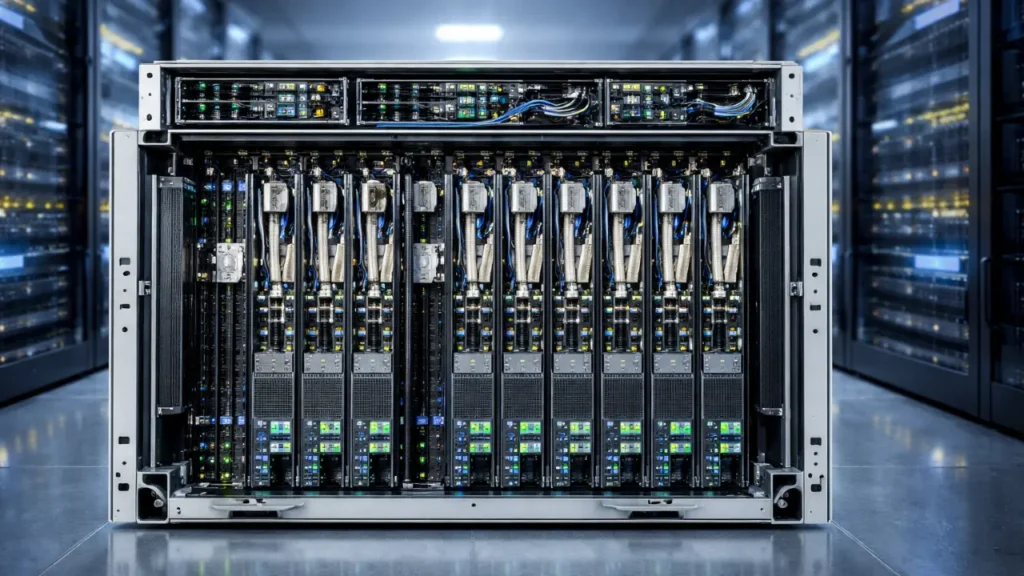
Supermicro expands SuperBlade portfolio with high-density platforms Supermicro Inc. has introduced a new high-density SuperBlade system designed for performance- and

Why AI-driven energy storage systems are moving to the center of grid planning has become increasingly clear as renewable energy

Decentralized AI is steadily moving from a technical concept to a serious challenge to how data ownership works today. As

Cloud computing was built on the premise of scale. A small number of hyperscale providers established centralized platforms capable of

Tuba has joined the NVIDIA Inception Program, marking a strategic step in its expansion within the healthcare artificial intelligence sector.

The AI data center boom is driving a sharp rise in electricity demand and pushing utilities to restart aging, inefficient

Goldman Sachs Research has predicted a 160% surge in data center power demand by 2030. This is just one indication of how AI is poised to reshape future data centers.
What other profound impacts will AI have on cloud and data center infrastructure?
I caught up with Vance Peterson, who is a Global Solution Architect at Schneider Electric, and he gave me his take on the shifting AI landscape. For the past 20 years, Vance has seen and driven transformative changes in technology, from the rise of virtualization to the current shift towards decentralized, high-performance compute clusters. Now, he helps global clients navigate complex challenges around sustainability, reliability, and resilience in the age of AI. Here’s what he had to say…
AI Clusters Deployment: the Challenges

The environmental challenge of AI-scale infrastructure The rapid expansion of artificial intelligence has reshaped global digital infrastructure. Training large models

Every time you ask an artificial intelligence system a question- whether it is crafting an email or analyzing medical imaging-

Water the era of AI being pushed into the spotlight as global growth accelerates. Artificial intelligence is re shaping industries,

The Nvidia Groq inference licensing deal has begun with Nvidia entering a non-exclusive licensing arrangement with AI chip startup Groq.

Artificial intelligence, particularly large-scale model training and inference, does not behave like traditional industrial demand. It does not peak in

A structural departure from regional cloud design
Cloud without regions is emerging as a defining architectural shift in Neo Cloud design, challenging the long-standing practice of organizing cloud infrastructure around fixed geographic boundaries. For more than a decade, regional segmentation has shaped how compute, storage, and networking are deployed and consumed. Neo Cloud topology increasingly moves away from these rigid regional constructs, redistributing resources across a location-aware but region-agnostic fabric that prioritizes latency, resilience, and workload behavior over predefined geographic zones.
Neo Cloud platforms are increasingly moving away from region-centric design. Instead of treating geography as a primary organizing principle, Neo Cloud topology distributes compute, storage, and networking as location-agnostic resources. Workloads are placed based on latency tolerance, data gravity, power availability, and interconnect proximity rather than predefined regional borders.

Reducing carbon impact of short-lifecycle compute hardware has emerged as a defining sustainability challenge for modern digital infrastructure. As artificial

VivoPower International PLC, a B Corp-certified sustainable energy solutions company, is making a strategic pivot toward AI computing infrastructure in
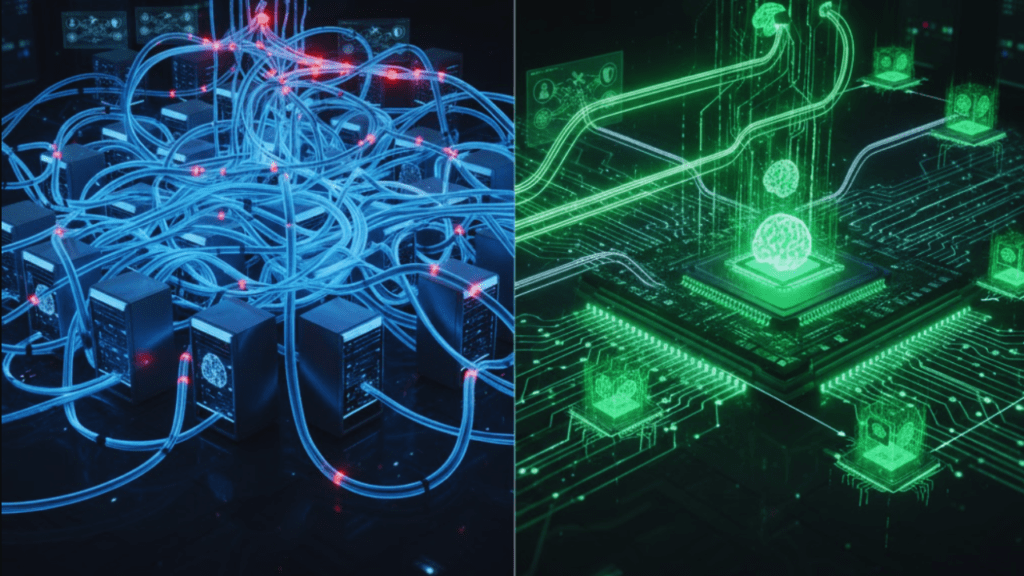
Most AI infrastructure still rests on an assumption that no longer holds. It assumes intelligence lives inside a single, oversized

Heat has emerged as the defining sustainability constraint for modern digital infrastructure, surpassing power availability as the primary limiting factor.

Accenture and Snowflake are making a calculated bet on where enterprise AI is headed. It has less to do with

Advances in physical AI, computer vision, edge computing, and electromechanical design are enabling machines to operate in open-ended, real-world environments

Yann LeCun, one of the most influential figures in artificial intelligence research, has launched a new startup that aims to

The expansion of always-on digital infrastructure has introduced a structural sustainability challenge that persists regardless of utilization levels. Across global

Hyperscale cloud architecture has been guided by a consistent set of assumptions. Massive resource pooling, statistical multiplexing, and deliberate overprovisioning

Across global data center markets, capacity expansion is often framed in terms of land availability, power access, cooling efficiency, and compute density. Yet behind these visible constraints, a quieter and increasingly consequential limitation is taking shape inside the white space itself. Interconnection density, the concentration of cabling, cross-connects, and internal network pathways is emerging as a structural bottleneck that directly influences scalability, reliability, and long-term operational flexibility.
As workloads grow more distributed and east-west traffic becomes dominant, internal connectivity has shifted from a secondary design consideration to a primary architectural determinant. Traditional assumptions that interconnection can scale linearly alongside racks and power are being challenged by physical limits, operational complexity, and signal integrity constraints. In many modern facilities, network density is no longer keeping pace with compute density, creating friction points that are difficult and expensive to resolve post-deployment.

The emergence of Neo Cloud represents a fundamental rethinking of how digital platforms are conceived, built, and operated. At the center of this shift is a departure from infrastructure-first thinking that has long defined traditional cloud models. Instead of beginning with standardized compute, storage, and networking abstractions, Neo Cloud design starts with workloads themselves. This workload-centric philosophy treats application behavior, performance sensitivity, scaling patterns, and operational dependencies as the primary design inputs, reshaping platform architecture from the inside out.
For a long span of time, cloud platforms evolved around generalized infrastructure pools. Virtual machines, shared storage tiers, and abstracted networks formed a universal substrate intended to support a wide range of applications. While this approach enabled rapid adoption and elastic scaling, it also introduced inefficiencies and mismatches between workload requirements and underlying platform behavior. Latency-sensitive applications, stateful services, burst-heavy workloads, and predictable steady-state systems were often forced into the same infrastructure molds, with optimization handled later through tuning, overprovisioning, or architectural compromises.

For decades, data center reliability has been framed through the language of redundancy. Power paths were duplicated, cooling systems mirrored,

SKF has announced the addition of six newly decarbonized manufacturing facilities to its global operations, marking another measurable milestone in

Setting the Context Across mature and emerging digital markets, physical constraints are becoming as influential as technical requirements in shaping

AI workloads are changing the thermal profile of data centres faster than air cooling can adapt. What worked for conventional

The Growing Case for AI Data Centers in Space We are observing AI data centers in space emerge as a

We are tracking developments suggesting that Nvidia GeForce GPU production cuts may influence global graphics card availability in early 2026.

Global Sustainability Standards Fragmentation Takes Shape
It is increasingly shaping how multinational organizations interpret, manage, and disclose sustainability performance. What was once a broadly aligned global reporting environment is now characterized by parallel frameworks, overlapping regulations, and region-specific interpretations. This fragmentation has emerged as a structural condition rather than a transitional phase, influencing how sustainability data is produced, assessed, and understood across markets.
The challenge is not the presence of sustainability standards themselves, but the growing lack of alignment between them. As jurisdictions introduce or refine frameworks to meet local priorities, organizations operating across borders must navigate multiple definitions of materiality, scope, and disclosure quality simultaneously.
How Global Sustainability Standards Began to Diverge
The “fragmentation of sustainability standards” did not occur overnight. Instead, it has been shaped by regional priorities, regulatory cultures, and economic structures that influence how sustainability is defined and measured.

The surge of excitement around artificial intelligence is now spilling into one of tech’s most ambitious frontiers: humanoid robotics. But behind the glossy demos and soaring valuations, investors are beginning to sound a note of caution. According to a recent report from CB Insights, many venture-backed humanoid robotics startups are running far ahead of what today’s technology, and economics can realistically support.
The concern isn’t about AI losing momentum. Quite the opposite. Data from KPMG and PitchBook shows that AI continues to dominate global venture capital flows, accounting for more than half of all investments this year. What’s changing is- “where” inside the AI ecosystem that capital is flowing and how speculative some of those bets may be becoming.
CB Insights data indicates that investor attention is rapidly pivoting toward industrial humanoid robotics. Last quarter alone, the sector recorded 17 deals, making it the most active investment category during that period.

If you peek inside today’s most advanced AI systems, you won’t find a single monolithic brain working overtime. Instead, you’ll

Defining the Landscape Across industries, sustainability has moved from ambition to obligation. Organizations now operate in environments shaped by regulatory

Defining the Environment As digital infrastructure expands globally, identifying viable locations for large-scale facilities has become increasingly complex. Data center

Why Grid Congestion Is Emerging as a Defining Pressure on Digital Infrastructure Grid congestion is now reshaping digital infrastructure planning

Opening Context Data center standardization breakdown has emerged as a defining structural shift in global digital infrastructure development. For years,
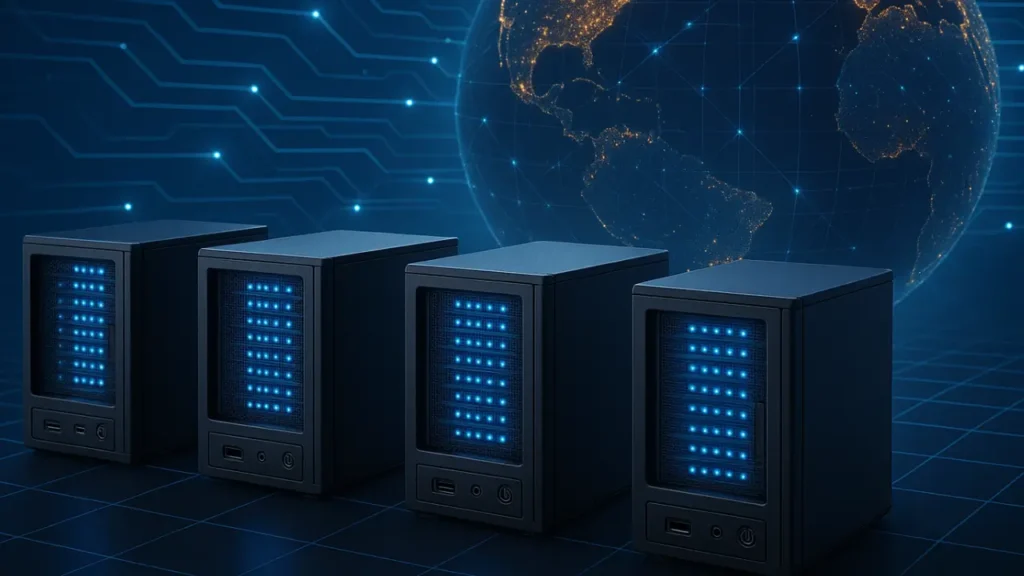
The Rise of Micro Data Centers
The rise of micro data centers marks a shift in how digital infrastructure is deployed, managed, and scaled. Organizations are seeing a transition away from fully centralized compute footprints toward smaller, modular, and highly localized environments. These compact facilities support the growing demand for rapid data processing across distributed ecosystems. They enable enterprises to position compute power closer to users, applications, and devices. As a result, they shape new architectural patterns and operational models across industries.
Why Micro Data Centers Are Reshaping Deployment Models
The expansion of connected systems, remote work, and real-time applications has influenced how organizations design infrastructure strategies. Micro data centers offer a controlled and self-contained environment capable of supporting essential workloads.

A New Chapter for Billion-Parameter Edge Models Billion-Parameter Edge Models are becoming central to discussions about on-device intelligence as organizations

We are closely tracking the rapid evolution of generative AI capabilities, and the introduction of the GPT-5.2 model marks a

Space Data Centers Gain New Momentum as SpaceX Signals Public Offering We are observing a pivotal shift in global digital

Understanding Heat Reuse 2.0 in AI Infrastructure Heat Reuse 2.0 describes an approach where data center operators convert AI cluster

Introduction: Understanding the Green Neo Cloud Challenge
The discussion around whether a green neo cloud is achievable has intensified as organizations deploy increasingly dense compute architectures to support artificial intelligence, high-performance workloads, and latency-sensitive applications. The question reflects a core tension: next-generation cloud environments depend on concentrated GPU clusters and high-throughput fabrics, yet these same systems elevate energy consumption and thermal output.
This article examines the operational realities surrounding the sustainability profile of neo cloud environments and explores whether the model can align with long-term environmental objectives.
Defining the Neo Cloud Model and Its Sustainability Context
What Makes Neo Cloud Architectures Distinct?
Neo cloud architectures emphasize proximity, density, and accelerated compute. Unlike traditional hyperscale models that distribute workloads across wide geographic regions, a neo cloud setup aims to bring GPU clusters closer to enterprise, telecom, and AI deployment zones. This approach supports lower latency, higher availability, and more efficient data movement for AI models and inference operations.

Cooling, power delivery, and deployment speed are now defining how quickly AI capacity can realistically come online. Against that backdrop,
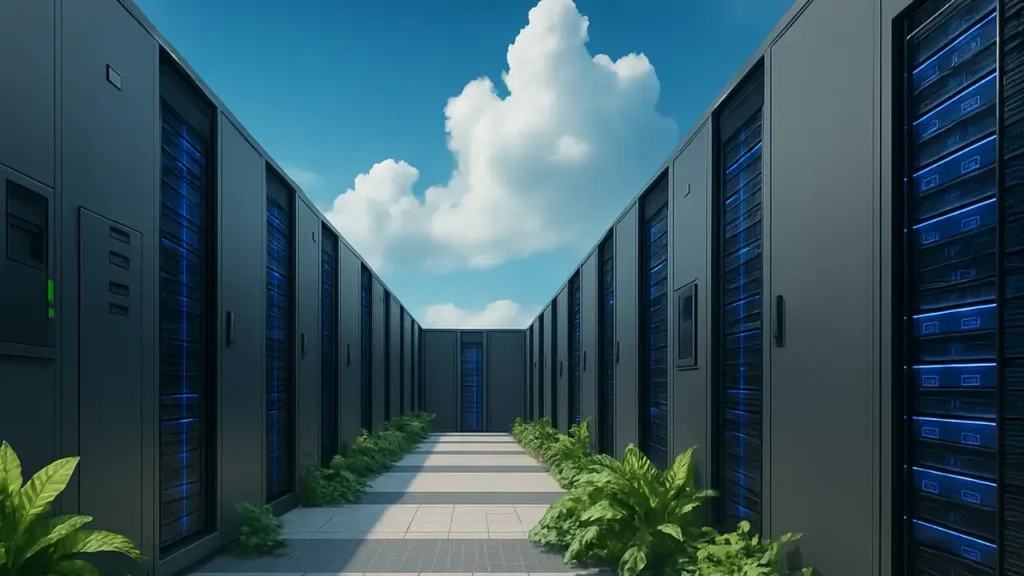
The rapid expansion of high-densityGPU clusters is reshaping how operators plan, manage, and control energy across facilities. As workloads scale, the AI data center energy strategy becomes central to infrastructure design, operational reliability, and sustainability metrics. This shift is driven by the unique characteristics of AI training and inference workloads, which differ significantly from conventional compute patterns.
This article examines how GPU intensive operations are influencing power demands, why the energy paradigm is changing, and what frameworks operators are adopting to align workloads with available power capacity.
Why GPUs Are Reshaping the AI Data Center Energy Strategy
Rising GPU Power Density and Compute Demand
As governments and regulated enterprises push to expand their use of artificial intelligence, they are confronting a reality: operating AI at scale requires infrastructure most organizations cannot build fast enough on their own. Advanced chips, high-speed networking, extensive data storage, specialized software platforms, and strict security controls form the backbone of modern AI environments. Developing all of this internally demands heavy upfront investment and prolonged procurement and licensing processes that often stretch timelines into years and add layers of complexity beyond most organizations’ tolerance.
To remove that friction, AWS has introduced “AWS AI Factories,” a new approach that delivers dedicated, high-performance AWS AI infrastructure directly into customers’ own data centers. Rather than running AI workloads exclusively in shared hyperscale cloud locations, enterprises and governments can now operate what functions like a private AWS Region on-premises, fully managed by AWS but physically located within their facilities to support sovereignty, compliance, and security requirements.
Global Sustainability Standards Fragmentation Takes Shape
It is increasingly shaping how multinational organizations interpret, manage, and disclose sustainability performance. What was once a broadly aligned global reporting environment is now characterized by parallel frameworks, overlapping regulations, and region-specific interpretations. This fragmentation has emerged as a structural condition rather than a transitional phase, influencing how sustainability data is produced, assessed, and understood across markets.
The challenge is not the presence of sustainability standards themselves, but the growing lack of alignment between them. As jurisdictions introduce or refine frameworks to meet local priorities, organizations operating across borders must navigate multiple definitions of materiality, scope, and disclosure quality simultaneously.
How Global Sustainability Standards Began to Diverge
The “fragmentation of sustainability standards” did not occur overnight. Instead, it has been shaped by regional priorities, regulatory cultures, and economic structures that influence how sustainability is defined and measured.

Why is the automotive industry suddenly poised for a massive financial commitment to robotics, despite their decades-long presence? Roshan Batheri

Designed by Freepik Nvidia is framing the current evolution of artificial intelligence as more than an incremental upgrade. CEO Jensen

As AI grows more powerful, its environmental cost grows alongside it. The computing required to train and run modern models is immense, and much of it remains concentrated in energy-hungry data centres. Against this backdrop, a shift is underway: intelligence is moving away from those distant hubs and closer to the places where data is created.
This transition, known as Green AI Edge Computing, reimagines how AI can expand without deepening its carbon footprint.
Centralised infrastructure consumes significant power for both computation and cooling, yet many real-world applications, such as autonomous vehicles and patient monitoring, need immediate, reliable responses that long-distance data transfers struggle to deliver. Edge computing tackles both the performance and sustainability pressures by processing information directly on local devices and sensors. This reduces the energy spent on data transmission, cuts latency, and enables the real-time decision-making modern systems demand. In a world where speed and environmental responsibility increasingly align, this marks a practical evolution in how AI operates.

For decades, AI has been a disembodied mind: powerful, fast, and utterly confined. But intelligence without a body is a limited thing.
Today, that limitation is dissolving. Machines are gaining the ability to see, touch, move, and respond. This is Physical AI, and it may redefine what intelligence means.
The transformation is subtle at first- robot dogs inspecting power plants, autonomous forklifts navigating warehouses, drones monitoring crops, exoskeletons assisting workers, surgical robots collaborating with doctors. But if we look beyond, the boundary between digital intelligence and physical capability is narrowing.
AWS calls this the beginning of “intelligence embodied” and the implications stretch far beyond robotics.
Upgrade to the Elite plan at ($35.99/month) to unlock premium Compute Forecast content and continue reading.
View Elite plan
Upgrade to the Executive plan at ($65.99/month) for access to enterprise-level content, premium podcast, and executive insights.
View Executive plan