
The gray areas WUE data centers are becoming harder to ignore as artificial intelligence reshapes the digital economy. Water Usage Effectiveness, or WUE, was created to simplify how the industry talks about water efficiency. Today, however, intensifying AI workloads and rising cooling demands are testing the limits of that simplicity. What looks efficient on paper often masks trade-offs that directly affect communities, utilities, and the climate. As a result, the industry now treats WUE less as a solution and more as a starting point.
Across the sector, companies set sustainability targets, publish progress reports, and compare performance. Yet beneath those numbers lies a more complex story about water, energy, geography, and timing. That complexity defines the gray areas of WUE in data centers.
What the Metric Actually Measures
WUE measures how much water a data center uses relative to the energy consumed by its IT equipment. Operators calculate it by dividing total annual water withdrawal in liters by IT energy use in kilowatt-hours. Lower values indicate greater efficiency.
At first glance, the metric works. Industry averages sit near 1.8 liters per kilowatt-hour, while leaders such as Meta report figures as low as 0.24. Sustainability reports and media coverage frequently highlight these numbers.
However, that simplicity carries a cost. WUE tracks only on-site water withdrawal. It ignores the water required to generate electricity. In regions where power production consumes large volumes of water, WUE can significantly overstate efficiency.
Why Cooling Keeps WUE in the Spotlight
Cooling sits at the intersection of water and energy. Servers generate enormous heat, and operators must manage that heat around the clock. For decades, the industry has favored evaporative cooling because it delivers high efficiency.
Wet-bulb temperatures, which account for evaporation, often run 5 to 10 degrees Celsius lower than dry air temperatures. That gap reduces reliance on compressors and chillers, cuts power demand, and boosts efficiency.
Yet evaporative cooling depends on water. As AI increases server density, operators lean more heavily on these systems. WUE captures the local water withdrawal, but it fails to show the electricity or emissions that operators may have avoided.
This gap marks the point where the gray areas of WUE in data centers begin to surface.
Energy Trade-Offs Complicate WUE Optimization
When operators aggressively optimize WUE, energy efficiency can suffer. Air-based and mechanical cooling systems use little or no water, but they require far more electricity. Power plants must still generate that electricity.
In water-scarce regions, policymakers often encourage dry cooling. However, grids powered by coal, gas, or nuclear energy still consume large volumes of water upstream—water that never appears in WUE calculations.
Power Usage Effectiveness (PUE) captures energy efficiency but ignores water entirely. Viewed separately, the two metrics often pull operators in opposite directions. Lowering WUE can raise PUE, and vice versa.
To manage this tension, many operators deploy hybrid cooling systems. These systems switch modes seasonally, relying on evaporative cooling when conditions allow and mechanical cooling during extreme heat or humidity. This approach reduces annual water use while limiting energy penalties, yet a single WUE number hides these nuances.
AI Workloads Push WUE to Its Limits
Artificial intelligence has changed the cooling equation. High-performance computing and AI training clusters generate far more heat than traditional enterprise servers. As power density rises, cooling strategies face unprecedented strain.
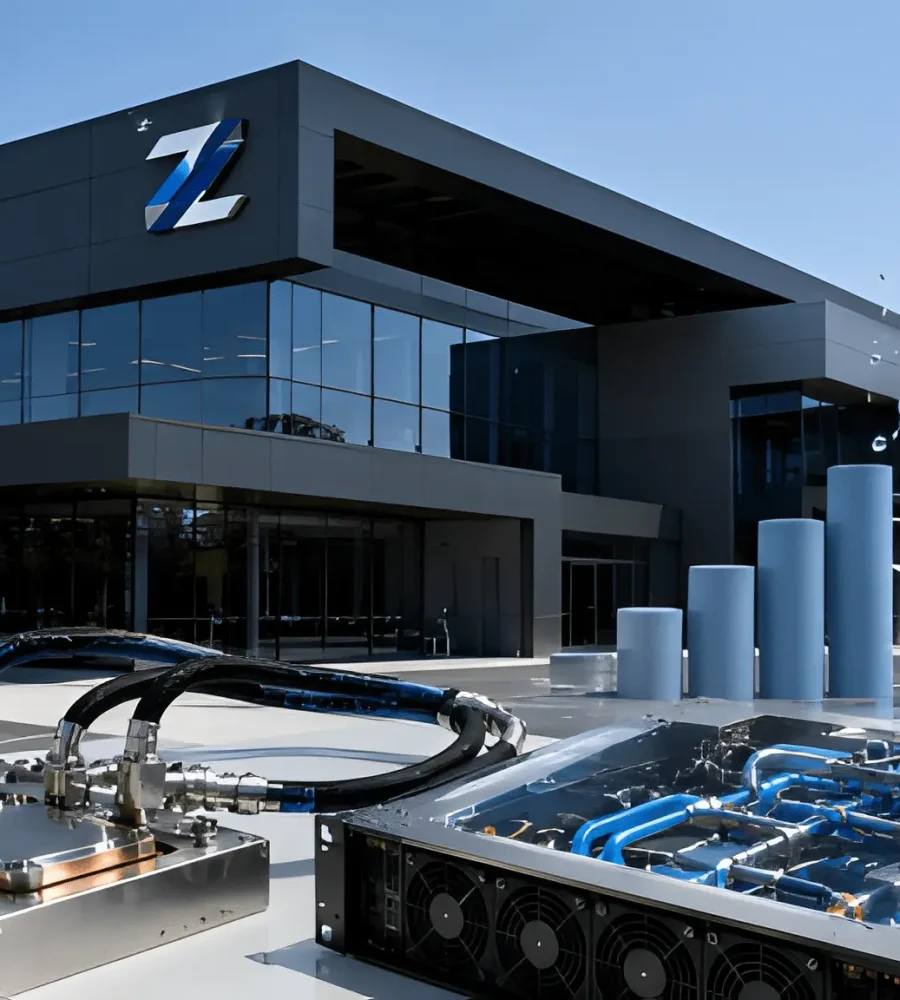
Operators now deploy advanced methods such as direct-to-chip and immersion cooling. These systems can cut water use by up to 95 percent, but they demand precise thermal control and often increase electricity consumption. Without careful design, gains in WUE can trigger sharp increases in PUE.
For this reason, blanket mandates for low WUE often backfire. In humid or tropical climates, dry cooling performs poorly. Energy use rises, emissions increase, and the grid absorbs the impact.
Local Water Stress Exposes WUE’s Blind Spots
One of the strongest critiques of WUE lies in how it treats all water equally. Potable water, recycled wastewater, harvested rainwater, and industrial runoff all receive the same score.
A data center that uses treated wastewater in a water-rich region earns no advantage over one that draws drinking water from a drought-stressed basin. Annual averages further distort reality, since facilities often consume the most water during the hottest months—precisely when communities face the greatest strain.
In regions such as parts of India, Australia, and the U.S. Southwest, this disconnect has fueled public backlash. Headlines focus on raw WUE values while ignoring local conditions.
Geography matters. Cooler climates can achieve near-zero WUE through air cooling. Hot regions may justify wet systems when non-potable water remains abundant. WUE, however, fails to distinguish between these scenarios.
New Metrics Look Beyond WUE
Because of these limitations, the industry is exploring alternatives. Frameworks such as WUE+ incorporate upstream water use from electricity generation, regional scarcity, and reuse rates. Other approaches adjust traditional WUE based on local stress indicators.
These models often reveal a different reality. In many cases, electricity generation consumes far more water than on-site cooling. Fossil fuel power plants, in particular, carry heavy water footprints.
By widening the lens, the gray areas of WUE in data centers come into sharper focus. Decisions that once appeared sustainable now demand reconsideration.
Operational Changes Deliver Real Gains
Even within existing designs, operators continue to find improvements. Cooling towers require periodic bleed-off to remove concentrated salts, and operators historically discharged that water.
Today, many facilities reclaim it using pretreatment methods such as reverse osmosis. These upgrades save millions of liters annually without compromising performance.
Microsoft has gone further. Since 2024, the company has launched several zero-water data centers that eliminate evaporation entirely. Mechanical cooling raises PUE modestly, but the water savings prove substantial, especially in stressed regions.
Innovation Extends From Chips to Campuses
Hardware innovation is reshaping cooling strategies. Chip designers now allow higher operating temperatures, with supply air reaching up to 32 degrees Celsius. Chillers run less often, refrigerant use declines, and embodied carbon drops.
Circular approaches also gain traction. Operators partner with factories to access wastewater, reuse treated agricultural runoff, and capture excess heat to warm nearby buildings or greenhouses.
Site selection has become strategic. Proximity to renewable energy and opportunities for heat reuse now influence location decisions. In Asia-Pacific, where data center growth accelerates, designers adapt facilities to monsoon cycles and stormwater capture.
Transparency has followed. Companies expand audited reporting, add local context, and slowly rebuild public trust.
Why the Gray Areas of WUE in Data Centers Matter
WUE still plays a valuable role. It forces an industry once obsessed with energy to confront water use. On its own, however, it tells only part of the story.
The gray areas of WUE in data centers reveal where single metrics fall short and where better decisions emerge. As AI accelerates demand for compute, nuance will matter more than ever. True sustainability will depend not on isolated numbers, but on systems thinking that respects local realities while supporting a global digital future.