As artificial intelligence infrastructure pushes power densities into uncharted territory, cooling has emerged as one of the most critical bottlenecks facing data center operators. ZutaCore Ltd. is betting that eliminating water from the equation could become a defining advantage in the next phase of AI infrastructure buildouts. The company announced today that it has secured $100 million in Series C funding to expand global deployments of its waterless liquid cooling platform. The investment arrives at a time when hyperscalers, cloud providers and enterprise operators are searching for cooling technologies capable of supporting increasingly power-hungry AI processors without adding pressure to energy and water resources.
The rapid rise of AI workloads has transformed data center design priorities. Modern accelerator platforms consume significantly more power than previous generations, forcing operators to rethink how they remove heat from densely packed server environments. Traditional air cooling systems struggle to keep pace with these thermal demands. Water-based cooling solutions offer greater efficiency, but they introduce operational complexity, infrastructure requirements and growing scrutiny over water consumption. ZutaCore has positioned itself at the center of this shift through a direct-to-chip, two-phase liquid cooling architecture designed to cool advanced processors without consuming water. The company says its approach can reduce cooling-related energy consumption by approximately 50% compared with conventional cooling methods while supporting higher processor power levels.
How HyperCool Uses Two-Phase Cooling
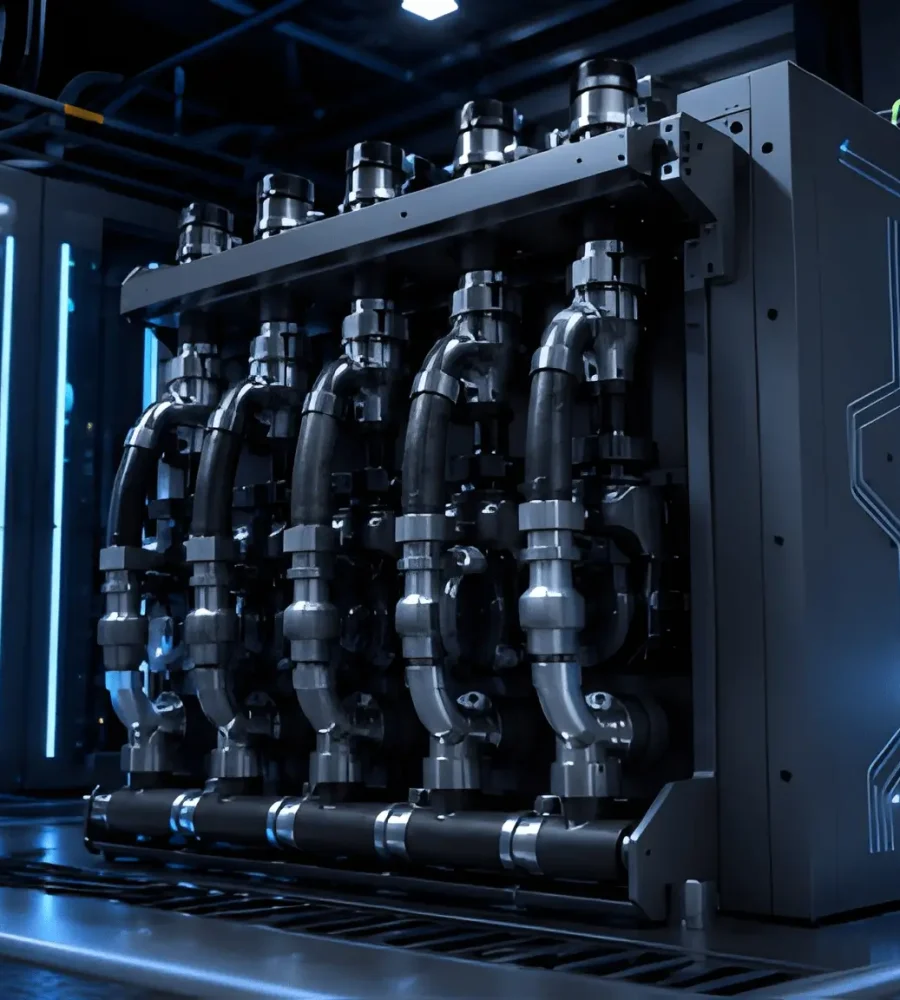
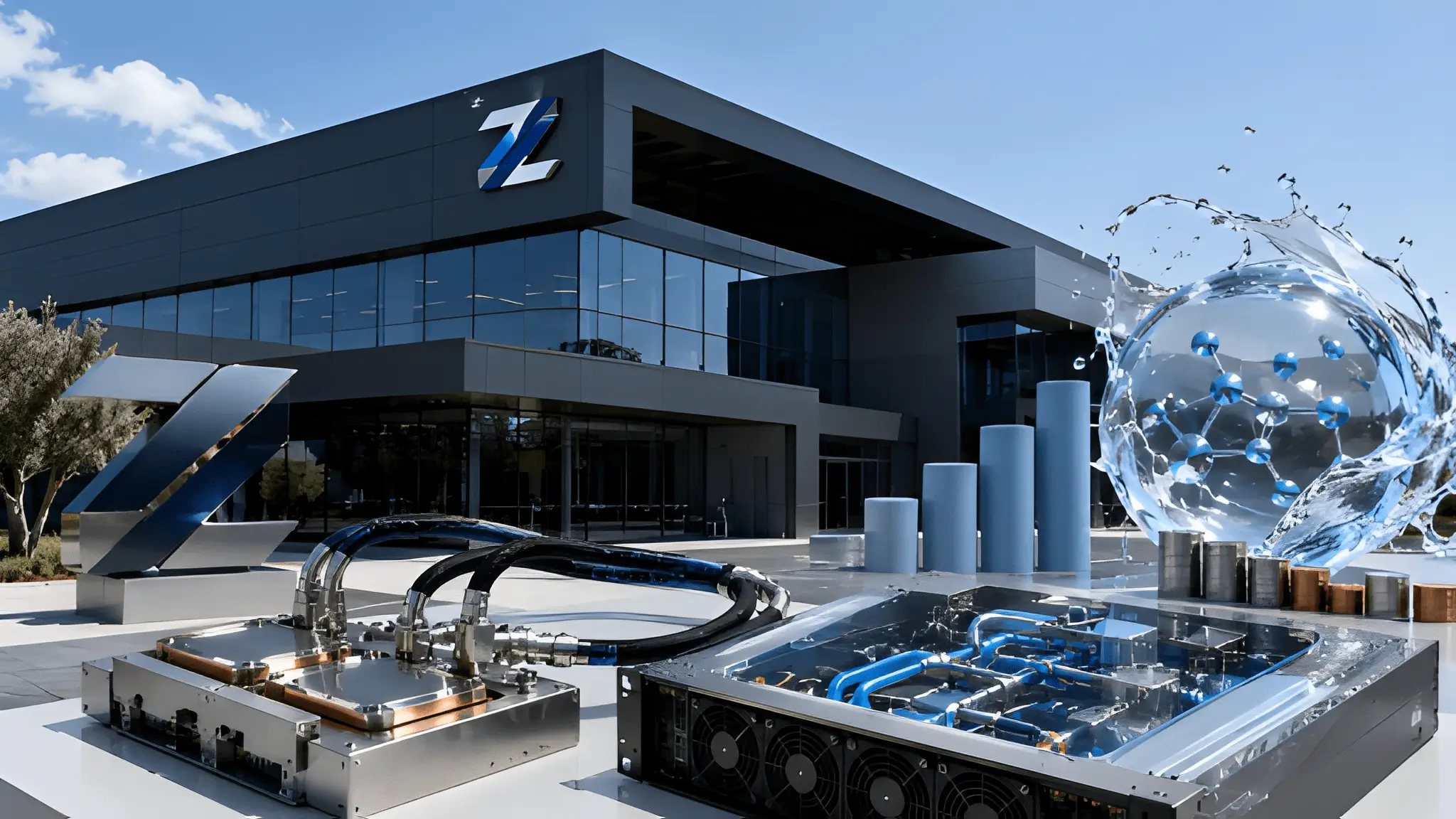
At the core of the company’s strategy is HyperCool, a sealed, closed-loop cooling system that uses a dielectric fluid rather than water. The technology transfers heat directly from processors through specially designed cold plates installed on top of the chips. Unlike conventional liquid cooling systems that circulate liquid continuously, ZutaCore’s platform leverages two-phase cooling. The dielectric fluid boils directly at the processor surface, absorbing heat as it changes phase from liquid to vapor. The vapor then travels to a coolant distribution unit, where it condenses and returns to the system for reuse.
The closed-loop design addresses one of the long-standing concerns associated with liquid cooling inside data centers. Because the dielectric fluid is nonconductive and remains contained within a sealed environment, accidental leaks do not create the same risk of electrical damage that operators typically associate with water-based cooling systems. The company’s cold plate technology supports processors from major chip vendors, including Intel, Advanced Micro Devices and Nvidia. One of the strongest arguments behind ZutaCore’s platform centers on sustainability and resource management.
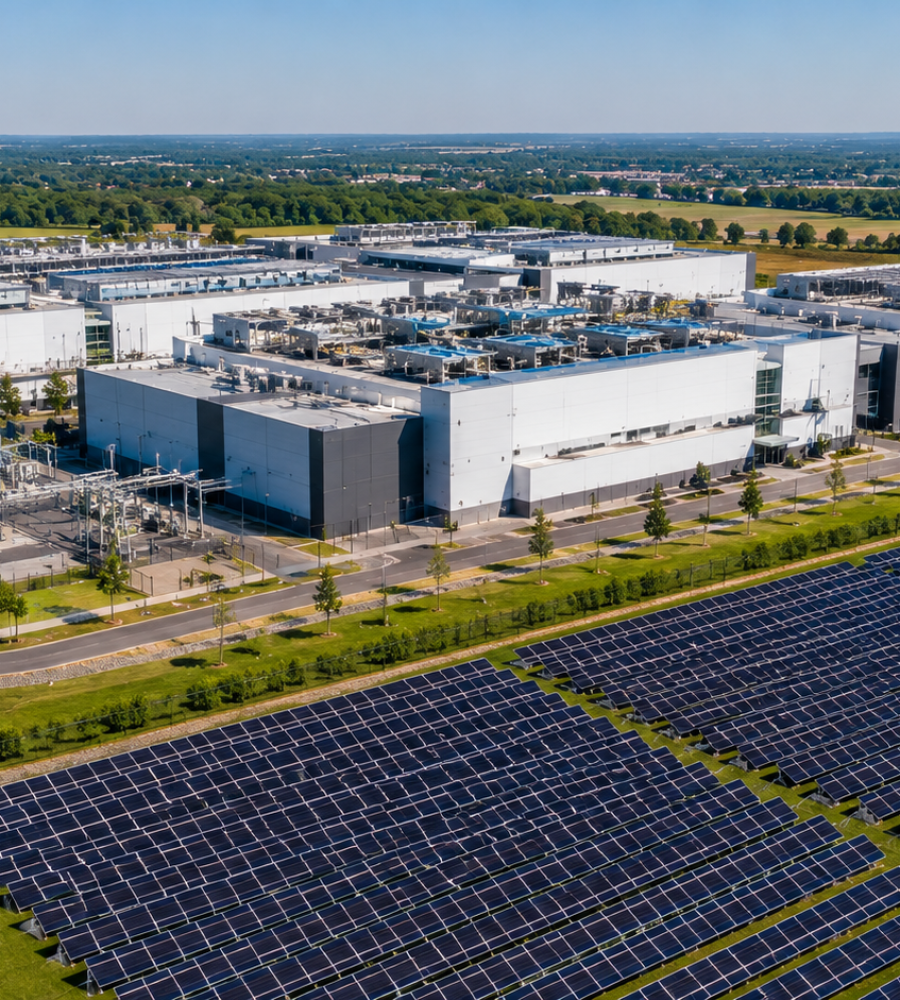
Many large-scale facilities continue to depend on evaporative cooling systems that consume substantial volumes of water each year. As data center construction expands into regions facing water constraints, regulators and local communities have increased scrutiny of infrastructure projects that place additional demands on limited water supplies. ZutaCore’s technology removes water consumption from the cooling process entirely. The company also says the system can integrate into existing server environments, allowing operators to retrofit current infrastructure rather than build entirely new facilities around specialized cooling architectures. That flexibility could become increasingly important as enterprises seek faster ways to deploy AI capacity without undertaking large-scale facility redesigns.
Designed for Next-Generation AI Processors
The cooling requirements of emerging AI systems continue to rise alongside advances in chip performance. ZutaCore says its platform is engineered to support next-generation AI and high-performance computing processors consuming more than 4,000 watts. Those thermal loads exceed the practical limits of traditional air cooling and push the boundaries of many single-phase liquid cooling solutions. As rack densities move into multimegawatt territory, cooling infrastructure is becoming a strategic component of AI deployment rather than a supporting utility. Consequently, technologies capable of managing extreme thermal loads while maintaining operational efficiency are attracting increasing interest across the industry.
The company has expanded its technology portfolio as demand for AI infrastructure continues to grow. Recently, ZutaCore introduced its OmniTherm cold plate designed for Nvidia’s RTX PRO 6000 Blackwell Server Edition. The solution brings two-phase cooling to a single-slot PCIe form factor, targeting both enterprise environments and AI cloud deployments. To support customer validation and deployment planning, the company has also developed a 2-megawatt end-of-row emulation platform at its Israel facility. The environment allows customers to test cooling performance and deployment scenarios at scale before implementing systems in production environments. According to ZutaCore, the company has completed more than 75 deployments across North America, Europe and Asia, reflecting growing adoption of advanced liquid cooling technologies as AI infrastructure expands globally.
Funding Targets Global Growth and Commercial Scale
The newly raised capital will support several strategic initiatives, including global commercialization efforts, expanded research and development programs, leadership growth and support for large-scale megawatt-class deployments. The Series C round attracted participation from major industrial and technology investors, including Mitsubishi Electric, Carrier Ventures and Samsung Venture Investment Corporation. Additional investors also joined the financing round. Goldman Sachs served as the exclusive placement agent for the transaction. Commenting on the funding announcement, Chairman and Chief Executive Erez Freibach said, “$100 million of funding reflects strong validation from leading global partners and growing demand for our technology. AI is fundamentally reshaping data center infrastructure and traditional approaches are no longer sufficient.”
The AI industry has spent the past several years focused on processors, networking and power availability. Cooling now occupies an equally important position in the infrastructure stack. As processor power consumption continues to climb, operators face mounting pressure to balance performance, energy efficiency and sustainability. ZutaCore’s latest funding round signals growing investor confidence that waterless cooling could play a significant role in supporting the next generation of AI infrastructure. The company now enters its next growth phase with fresh capital, expanding deployments and a technology platform aimed directly at one of the most pressing challenges facing modern data centers.