As GPU densities climb and thermal thresholds tighten, infrastructure vendors now face pressure to prove long-term operational viability instead of relying on theoretical performance claims. Nautilus Data Technologies is positioning itself directly inside that transition with fresh validation results tied to its EcoCore Facility Cooling Distribution Unit (FCD). The company says its latest testing confirms the platform can support NVIDIA’s upcoming Vera Rubin systems as well as GPU deployments expected through 2028.
Nautilus conducted an extensive performance validation program under operating conditions designed to replicate real-world AI deployments. The company tested the EcoCore FCD across varying pressure, flow, and temperature conditions commonly associated with large-scale accelerated computing environments. Results exceeded the company’s previously published specifications, signaling that the platform can sustain workloads well beyond current mainstream AI infrastructure requirements. That outcome arrives at a critical moment as operators evaluate whether today’s cooling investments will survive the next GPU replacement cycle.
EcoCore FCD Surpasses Thermal Performance Targets
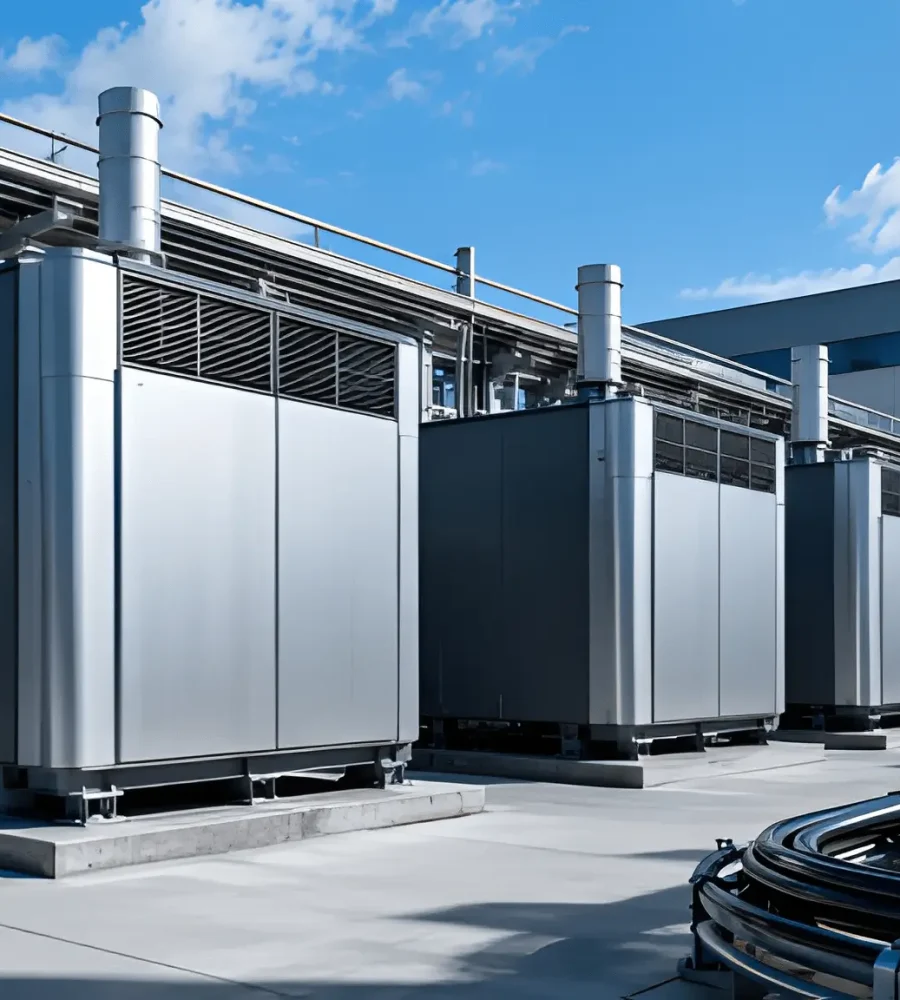
According to Nautilus, the EcoCore FCD achieved a rated cooling capacity of 3.2 MW per unit while demonstrating performance above 4.1 MW during N-mode dual-pump operation. The platform also delivered an Approach Temperature Difference (ATD) as low as 2°C, which the company describes as one of the tightest margins currently available in the sector. That low ATD becomes strategically important because NVIDIA’s Vera Rubin architecture is expected to operate with facility water supply temperatures reaching 45°C. Older GPU generations typically required supply temperatures closer to the 25°C to 30°C range.
The testing also validated pressure support between 2.5 and 4.5 bar throughout the technical cooling loop, aligning with NVIDIA DGX infrastructure specifications. Flow rates exceeded 5,000 liters per minute in dual-pump configurations, giving operators more flexibility when scaling large AI deployments across multiple racks and clusters. Nautilus additionally stated that the EcoCore FCD already supports compatibility targets tied to GPU platforms scheduled for 2027 and 2028 deployment cycles. That forward-looking compatibility may appeal to operators attempting to avoid expensive cooling retrofits within only a few years of construction.
“These results don’t surprise us; they confirm what our engineering and operations teams have known for years. When you’ve designed, deployed, and operated liquid cooling infrastructure under real production load for over half a million hours, you build an intuition for performance that no simulation can replicate. This testing simply puts objective numbers behind that experience.” Agustin Roca, Vice President of Product, Nautilus Data Technologies
Vera Rubin Readiness Reshapes Cooling Economics
The transition toward warm-water cooling compatibility is becoming one of the most consequential infrastructure shifts in AI data center design. NVIDIA’s Vera Rubin roadmap pushes operators toward higher supply water temperatures, fundamentally changing how facilities source and distribute cooling capacity. Nautilus believes its 2°C ATD advantage allows operators to use warmer facility water without sacrificing GPU thermal compliance. That opens the door to broader adoption of free cooling strategies across hyperscale and enterprise AI environments.
The company says the EcoCore FCD can operate using multiple water sourcing approaches, including natural bodies of water, municipal systems, closed-loop chiller plants, and hybrid configurations. Nautilus has already validated the platform in open-loop seawater deployments alongside conventional closed-loop environments. Consequently, operators building AI campuses today may gain more flexibility in site selection and utility planning as future GPU requirements continue escalating. That flexibility could become increasingly valuable in regions facing power and water infrastructure constraints.
Operational Experience Becomes Competitive Advantage
While many cooling vendors continue emphasizing simulation-led engineering, Nautilus is leaning heavily on operational runtime data as a differentiator. The company says the EcoCore FCD has accumulated more than 650,000 unit-hours of runtime across multiple production deployments and three generations of infrastructure refinement. Those deployments include infrastructure supporting one of the industry’s emerging GPU manufacturers. The accumulated runtime data gives Nautilus a growing operational dataset tied directly to live production behavior rather than lab-only validation environments.
Nautilus also highlighted the organizational structure behind the product’s development cycle. The same engineering teams responsible for designing the EcoCore FCD reportedly manage operational escalations inside production facilities. That operational feedback loop influences areas such as alarm prioritization, control logic optimization, pressure management, and failure response handling. The company argues that this continuous refinement process creates compounding advantages that competitors cannot easily replicate through software modeling alone.
AI Infrastructure Buyers Shift Toward Long-Term Survivability
The broader significance of Nautilus’ announcement extends beyond individual thermal benchmarks. AI infrastructure buyers increasingly want assurance that cooling systems deployed today will remain compatible with GPU generations arriving several years later. Rapid AI hardware evolution is shortening infrastructure planning windows, forcing operators to evaluate survivability across both power delivery and thermal management systems. Cooling infrastructure that cannot adapt to future temperature profiles may become stranded capital much sooner than expected.
Nautilus is attempting to position the EcoCore FCD as infrastructure designed around lifecycle resilience rather than short-term performance marketing. The company’s emphasis on warm-water compatibility, operational runtime data, and future GPU roadmap alignment reflects how the AI infrastructure market itself is evolving. Buyers now prioritize operational continuity, scalability, and retrofit avoidance as much as raw cooling performance. As AI clusters continue expanding toward higher rack densities and more aggressive thermal envelopes, those priorities will likely define the next phase of liquid cooling competition.