 Skip to content
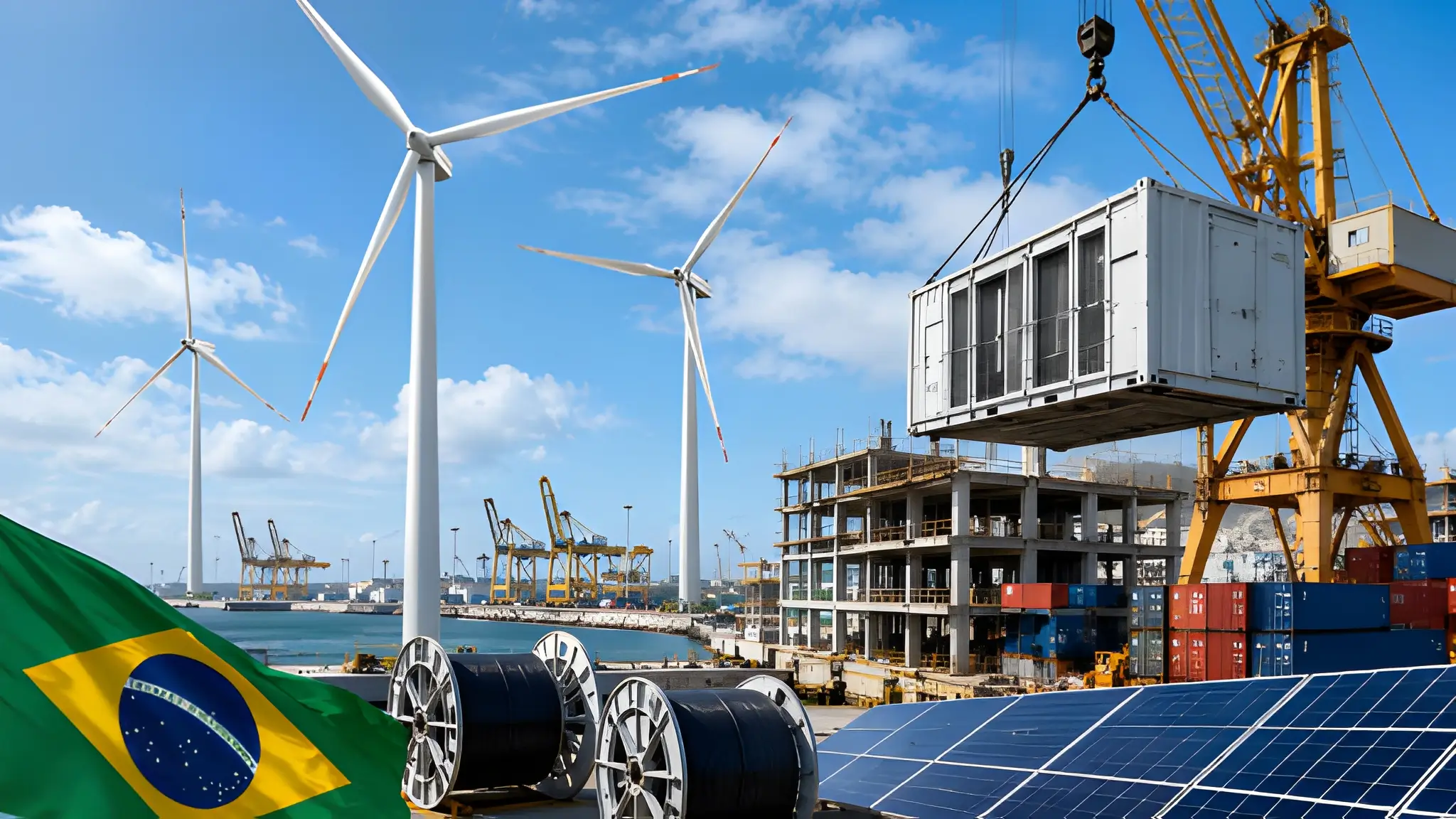
Brazil is no longer positioning itself as an alternative market for hyperscale infrastructure. It is becoming a frontline geography in the global competition for renewable-powered artificial intelligence capacity. Omnia, the digital infrastructure platform backed by Patria Investments, signed a 20-year renewable energy agreement worth $2 billion with Casa dos Ventos to supply a hyperscale data center linked to ByteDance in Brazil.

The project sits inside the Pecém port complex in Ceará state and already ranks among the most ambitious digital infrastructure developments underway in Latin America. Current estimates place the broader investment tied to the campus near 200 billion reais ($39.9 billion), signaling how aggressively capital is now flowing toward AI infrastructure ecosystems with abundant renewable energy. Construction began in January, while first operations are expected to launch during the third quarter of 2027. Omnia plans phased expansions through 2029 as compute demand continues rising globally.
The agreement also reflects a major strategic shift reshaping hyperscale development worldwide. Data center operators increasingly treat long-duration renewable energy access as core infrastructure rather than a procurement layer added later. Energy certainty now carries the same strategic weight as fiber routes, land control, and geopolitical positioning.
Dedicated Wind Assets Will Power The Ceará Data Center
Casa dos Ventos will supply renewable power from the 630-megawatt Ibiapaba wind complex alongside the Dom Inocêncio wind farm located in Piauí state. The structure uses a self-production model that gives Omnia an ownership position inside the generation assets themselves, although both companies declined to disclose the exact stake involved. That model gives hyperscale operators tighter operational alignment with energy producers while reducing exposure to future electricity volatility.
The ByteDance-linked facility was first reported by Reuters in 2025, when early plans outlined an initial 300MW deployment capable of scaling toward 900MW over time. Those numbers place the project within a growing class of AI-oriented campuses designed around utility-scale energy integration from day one. Instead of retrofitting sustainability into existing infrastructure, developers are now designing energy ecosystems alongside compute infrastructure simultaneously.
That approach is rapidly becoming standard among next-generation hyperscale operators. AI workloads continue pushing electricity demand higher across every major market, forcing infrastructure companies to secure long-term energy positions earlier in the development cycle. Consequently, renewable procurement agreements increasingly resemble strategic infrastructure partnerships rather than conventional utility contracts.

Brazil Gains Momentum As A Renewable Compute Hub
For Brazil, the Omnia agreement represents more than a single hyperscale win. The country is steadily emerging as a viable destination for large-scale AI infrastructure because of its renewable energy capacity, expanding industrial base, and improving connectivity landscape. Markets with scalable clean power resources now hold structural advantages as hyperscalers search for locations capable of supporting future AI density requirements.
Casa dos Ventos already maintains one of the region’s largest renewable portfolios, with roughly 33.4GW across wind and solar assets in operation and development. Around 12GW of that capacity sits inside a joint venture with TotalEnergies. The ByteDance-linked agreement now stands as the largest single-client power contract in Casa dos Ventos’ history.
The company plans to add another 2.1GW of generation capacity while investing nearly 11 billion reais into expansion efforts tied to future demand. Those numbers underline how hyperscale data centers increasingly function as anchor customers for renewable developers. Long-term contracted demand from AI campuses gives energy providers enough visibility to finance massive generation projects that might otherwise face investment uncertainty.
AI Infrastructure And Energy Markets Are Converging
The Omnia-Casa dos Ventos partnership highlights a broader transformation underway inside digital infrastructure economics. AI infrastructure is no longer just a technology story. It is becoming deeply intertwined with energy strategy, industrial policy, and capital allocation across emerging markets.
Large-scale compute deployments now influence electricity planning at national levels. Utilities and renewable developers increasingly view hyperscale campuses as long-duration industrial customers capable of underwriting multi-billion-dollar clean energy investments. That relationship changes how power infrastructure gets financed, expanded, and prioritized across growth markets.
Investors are also paying attention to the convergence taking shape around three dominant themes: artificial intelligence expansion, renewable transition infrastructure, and emerging-market digital growth. Projects that successfully combine all three are beginning to attract outsized institutional interest because they sit directly at the intersection of future compute demand and energy security.
Brazil’s Next Challenge Extends Beyond Renewable Supply
Brazil’s renewable advantage alone will not guarantee long-term leadership in AI infrastructure. Scaling hyperscale development requires grid modernization, permitting efficiency, transmission expansion, and environmental governance capable of handling accelerated industrial growth. Those systems must evolve alongside demand if the country wants to compete with established global infrastructure markets.
Still, the Omnia agreement offers one of the clearest indicators yet that renewable-rich economies may gain strategic leverage in the next era of AI infrastructure development. Countries capable of pairing abundant clean power with scalable industrial execution could emerge as critical foundations for future global compute capacity.
The Brazil market now appears determined to compete for that role aggressively.












