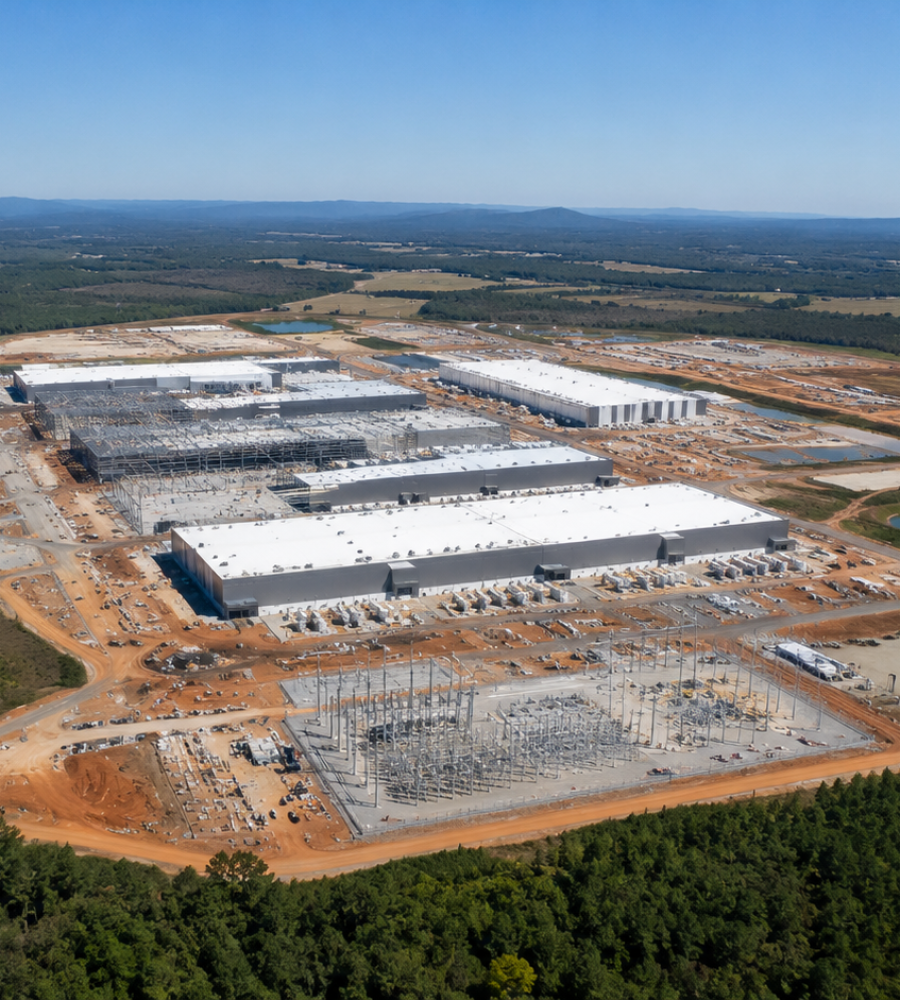
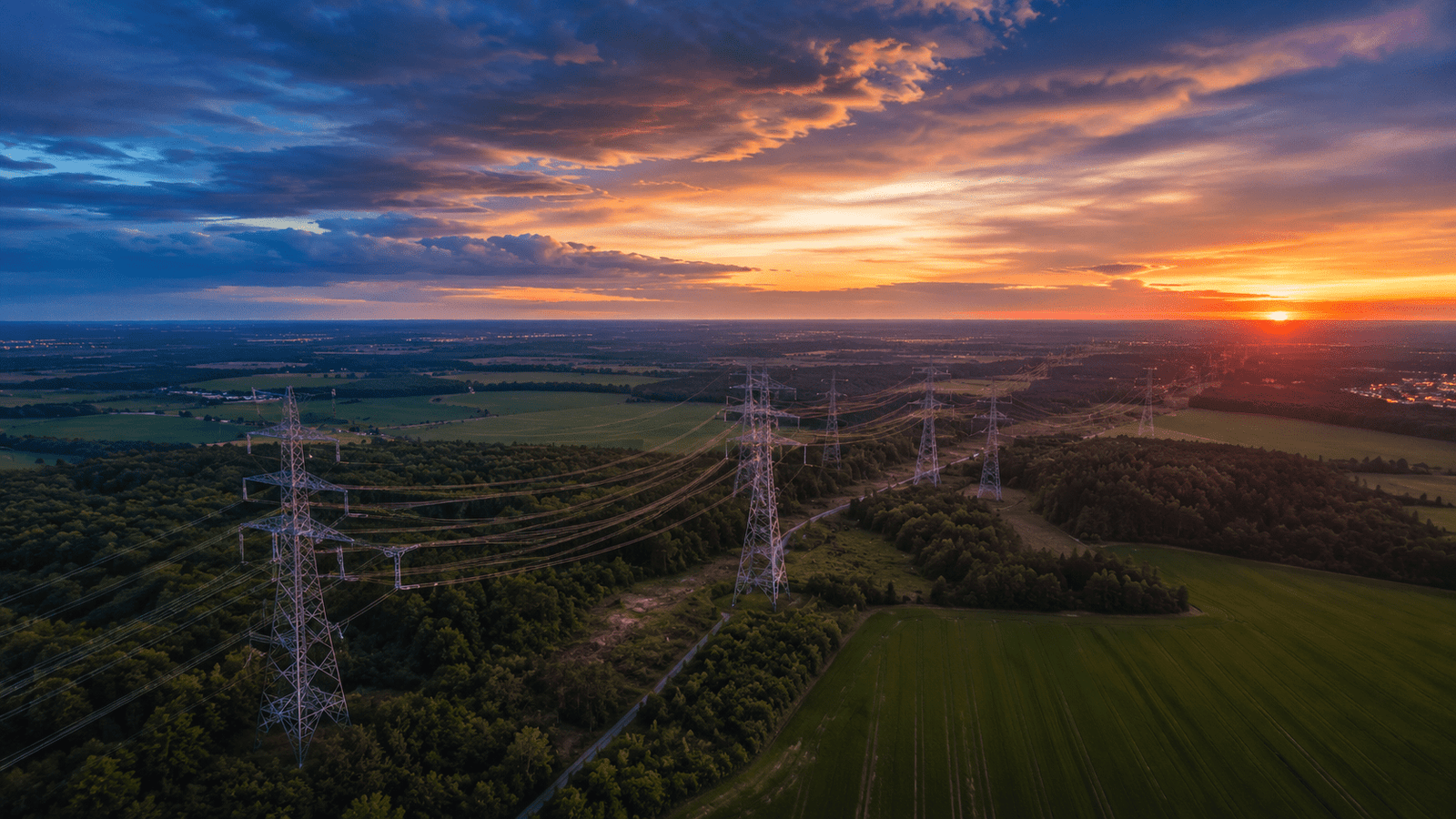
Europe has spent the better part of three years declaring itself a serious contender in the global AI infrastructure race. The announcements have, notably, been substantial. Microsoft committed $3 billion to data center development across multiple European markets. Google, Amazon, and a wave of neoclouds including Nscale, Nebius, and CoreWeave have all announced major European deployments. The European Commission has positioned digital sovereignty and AI infrastructure as strategic priorities. Governments from Spain to Finland have offered incentives, streamlined planning approvals, and positioned themselves as destinations for hyperscaler capital.
The Grid Constraint Europe Did Not Prepare For
The grid, however, did not get the memo.
Denmark’s Energinet froze all new data center grid connections in March 2026 after the interconnection queue reached 60 gigawatts. That is nearly nine times the country’s peak electricity demand. Ireland’s grid operator has been managing data center connection constraints since 2021, implementing policies that effectively halted new large-load connections in the Dublin region. The Netherlands imposed a moratorium on new data center connections in Amsterdam years earlier. Germany’s grid expansion approvals are moving faster than they were, but interconnection timelines in primary markets still extend well beyond what AI infrastructure deployment schedules require. Spain’s 90 billion euro AI data center buildout ambitions are running into land and grid disputes that have already drawn AWS and Microsoft into legal territory.
Europe is, in other words, building AI ambitions on a grid that was never designed for them. Grid operators are not upgrading infrastructure fast enough, and in many markets they are now actively refusing connections to the projects those ambitions require.
This is, however, not a temporary bottleneck. It is a structural mismatch between the pace of AI infrastructure investment and the pace of grid modernisation, and the gap is, notably, widening with each quarter. The investment cycle runs in months. The grid infrastructure cycle runs in years. Those two clocks are, consequently, not synchronising.
How the Mismatch Developed
Understanding why Europe’s grid cannot keep up with its AI ambitions requires, consequently, understanding how the mismatch developed in the first place. The short answer is that nobody planned for this. The longer answer involves three overlapping failures that have been compounding since 2022.
The Forecasting Failure
European grid operators work on planning horizons of five to ten years. Their demand forecasts, which inform investment decisions, generation procurement, and transmission planning, were built on historical consumption trends that assumed gradual, predictable growth. The AI infrastructure buildout violated every assumption embedded in those forecasts.
A single hyperscale AI campus consuming 500 megawatts represents more load growth than a medium-sized European city adds in a decade. When ten such campuses arrive in the same national grid area within three years, planning frameworks governing transmission investment cannot respond at the required pace. Generation adequacy processes back up alongside them. Interconnection processing backs up. Queues form. Freezes follow. The institutional machinery of European grid governance, which runs on regulatory timelines measured in years, met an investment cycle running on timescales measured in months. The result was gridlock, in every sense.
That forecasting failure was not unique to Europe. US grid operators made the same mistakes. What makes Europe’s situation distinct is the institutional complexity that makes correction slower. The US has a fragmented but relatively fast-moving regulatory landscape. Europe has multiple national grid operators and multiple regulatory bodies. A supranational policy layer in the European Commission adds further complexity. Energy market rules were designed, specifically, for a generation mix and demand profile that no longer exists. Changing any of those frameworks requires coordination across jurisdictions that move at fundamentally different speeds.
The Interconnection Queue Problem
The interconnection queue is where the mismatch between AI infrastructure demand and grid capacity becomes most visible. Across primary European markets, the queue of projects awaiting grid connections contains far more capacity than the grid can physically absorb on any near-term timeline. Denmark’s 60 gigawatt queue is the most extreme example, but it is not an outlier. It is the most visible point on a curve that runs through every major European data center market.
The queue problem has a specific structural cause that goes beyond simple capacity shortage. Interconnection queues in Europe are filled not just with projects that will be built. Speculative applications from developers who have not yet secured financing, planning permission, or customers take up significant space too. Those speculative applications consume queue position and grid capacity reservation without delivering actual load. They also, notably, inflate the queue statistics that regulators use to justify connection freezes. A self-reinforcing cycle forms: speculative demand produces policy responses that harm committed development. They also make it harder for grid operators to plan accurately. The difference between a committed project and a speculative one is not always visible from the interconnection application.
Our coverage of the interconnection queue as AI infrastructure’s biggest bottleneck covers this dynamic in detail. Queue position has, in turn, become a proxy for market access in constrained European markets — the queue is now a strategic weapon as much as a planning tool, and the operators who secured positions early are using them to lock competitors out of constrained markets.
The Investment Timing Gap
The third component of the mismatch is a timing gap between when utilities need to make grid investment decisions and when the revenue certainty that justifies those decisions becomes visible.
Transmission infrastructure has a development timeline of ten to fifteen years from planning to energisation. The AI infrastructure boom that made a 500-megawatt data center campus a plausible proposition in a Nordic market did not exist ten years ago. The forecasting models that grid operators used in 2015 and 2016 had no category for this demand type. It was not an oversight. It was, rather, a reasonable extrapolation from the data that existed at the time. The transmission lines, substations, and generation capacity that such campuses require were not planned for, because no planner had reason to anticipate them.
That timing gap cannot be closed by faster permitting or more ambitious policy alone. It is a physical problem as much as a regulatory one, and physical problems yield to physical timelines regardless of political urgency.
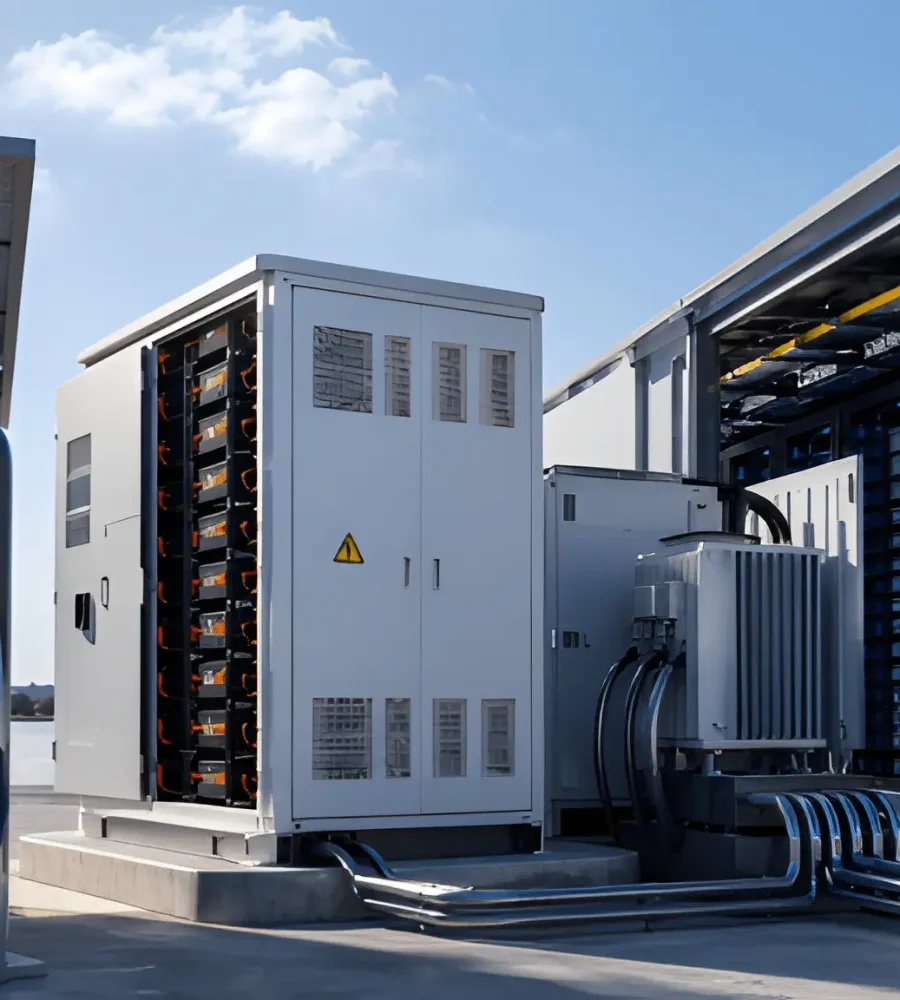
Physical infrastructure takes physical time to build. That is not a policy failure. It is, however, a constraint that policy cannot wish away. Transformers have eighteen-month to three-year lead times. High-voltage cable has a global order backlog that runs to 2028 and beyond in some categories. Substation equipment that is standard on large industrial connections is, in many markets, simply not available on the timescales that data center developers require. The $650 billion in AI infrastructure commitments that hyperscalers made in 2026 is running into a supply chain that was dimensioned for a fraction of that demand — a dynamic examined at length in our analysis of what those commitments actually mean for the grid and the supply chain.
Market by Market: Where the Grid Is Actually Failing
The aggregate picture of Europe’s grid constraint understates the complexity because the constraint manifests differently in different markets. Understanding where Europe’s grid is actually failing, and why, requires looking at each major market on its own terms.
Denmark: The Most Visible Failure
Denmark’s situation is the most acute because it became public in the most dramatic way. Energinet’s freeze on new data center grid connections is, in practice, an admission of a planning framework failure. Denmark’s grid planning system did not anticipate or manage the scale of demand that its own successful data center attraction policy generated. That 60 gigawatt queue figure is, consequently, not primarily a measure of committed projects. It is, rather, a measure of speculative demand. The system had no mechanism to filter it.
The freeze has had immediate competitive consequences, and those consequences are not theoretical. Google’s global director of data center public affairs stated publicly that grid connection uncertainty triggers an immediate reorientation to alternative markets. That statement is not a negotiating position. It is a description of how site selection actually works, and it applies equally to every other hyperscaler evaluating European markets on the same timescales. When a market cannot confirm grid availability on a planning horizon that aligns with hyperscaler deployment schedules, the projects go elsewhere. The projects that do not get announced are invisible in the data but real in their competitive impact.
Denmark’s challenge now is not simply to lift the freeze. It is, rather, to design a grid connection framework that can allocate scarce interconnection capacity to committed projects while discouraging speculative queue-filling. Generation capacity also needs to expand on a timeline that can serve the committed pipeline. All of this must happen, consequently, without disrupting the queue position that existing committed projects have already secured.
Ireland: The Longest-Running Constraint
Ireland’s data center grid constraint predates Denmark’s by several years, making it the most instructive case study of what a prolonged mismatch between AI infrastructure demand and grid capacity actually looks like in practice. Dublin became one of Europe’s largest data center clusters through the early 2020s, attracting hyperscaler investment at a pace that its grid was structurally unable to support. By 2021, EirGrid and ESB Networks were processing new large-load connection requests against a backdrop of generation adequacy concerns. Expanding the connected load base was, consequently, genuinely risky from a system reliability standpoint.
The Irish response was more structured than Denmark’s freeze, and it provides, notably, a useful template for other European markets now facing the same pressure. Ireland’s Commission for Regulation of Utilities implemented a connection policy rather than a blanket moratorium. Applicants must demonstrate that their projects would not worsen generation adequacy and would contribute to the system’s ability to accommodate renewable energy. Specific demand flexibility requirements must also be met. That framework is more defensible than a freeze. It has, however, also had the practical effect of making new large-load connections in the Dublin region extremely difficult for projects that cannot demonstrate genuine system benefit.
Ireland’s situation raises a question every European grid operator facing AI infrastructure demand pressure will eventually have to answer. At what point does the grid’s obligation to serve new load give way to its obligation to maintain system reliability for existing customers? Ireland has, in effect, answered that question by creating a framework that prioritises system reliability over connection speed.
Germany: Faster But Still Not Fast Enough
Germany’s grid expansion situation is more nuanced than Denmark or Ireland because the German grid is genuinely large, has significant existing industrial load management experience, and has been investing in transmission expansion at a pace that reflects the urgency of the energy transition. The German grid expansion approvals represent real progress. They do not, however, resolve the fundamental timing mismatch between AI infrastructure deployment schedules and transmission construction timelines.
Germany’s more specific challenge is geographic. AI infrastructure projects that are most attractive from a grid perspective are not always in the most attractive locations for data center development. Proximity to existing high-voltage transmission with available capacity does not, in turn, always align with proximity to labour, fibre, and planning-permissive environments. Industrial zones in eastern Germany have available grid capacity but face challenges around fiber connectivity, skilled labour, and construction supply chains. Markets closest to hyperscaler customer concentrations in western Germany face, however, the most acute grid constraints.
Germany’s grid situation is, consequently, a constraint that money and policy intent alone cannot quickly resolve. The physical infrastructure required to connect large AI campuses in constrained western German markets is not built, not planned, or not available on the required timescales. That is not a funding problem. It is, rather, a timeline problem.
The Nordic Markets: A Narrowing Window
The Nordic markets, specifically Norway, Sweden, and Finland, have been positioned as the grid-advantaged alternative to constrained primary European markets. Hydroelectric baseload, geothermal capacity in Iceland, and cold climate cooling advantages have made the Nordics attractive for AI infrastructure projects. Competitive power prices add further weight to that case. Projects that can tolerate the latency implications of distance from major European population centres find the Nordic offer, consequently, compelling.
That window is, however, narrowing faster than Nordic grid investment programmes are expanding. Norway’s Narvik data center development, where Nscale is building one of the country’s largest AI infrastructure investments, is representative of the broader Nordic dynamic. The grid capacity that made Narvik attractive was real and available when the project was conceived. The scale of development that projects like Narvik represent is, in turn, beginning to stress the Nordic grid’s capacity. Accommodating new large-load connections without significant transmission investment is, consequently, no longer straightforward.
Sweden’s grid operator has been managing a growing queue of data center connection requests in regions where existing transmission capacity is limited. The areas with the most attractive renewable energy profiles are, in several cases, also the areas where transmission capacity to major load centres is most constrained. Finland’s grid is, however, more accommodating, partly because development has been less concentrated. The Nordics remain the most grid-advantaged major European data center destination. That advantage is, however, being consumed faster than the grid investment required to maintain it.
Why Policy Is Not Closing the Gap
The European policy response to the grid constraint problem has been energetic. The European Commission has accelerated permitting reform for energy infrastructure. Individual member states have created fast-track processes for strategic infrastructure projects. The clean energy transition is channelling significant investment into renewable generation capacity. None of it is closing the gap fast enough.
The Permitting Reform Paradox
Permitting reform is the most commonly cited policy lever for accelerating grid infrastructure deployment, and it is genuinely important. It runs into a specific problem in the context of AI infrastructure demand, however. The projects that most need faster permitting are often the ones that face the most organised opposition. Community resistance to large data center campuses — covered in depth in our piece on how the data center industry is losing the public consent battle — does not go away because permitting timelines are shortened. It intensifies when communities feel that acceleration is being used to bypass their concerns.
The permitting reform paradox is that the markets where AI infrastructure demand is highest are often the ones where community opposition is most organised. Simplified permitting in those markets creates, in turn, the most political friction. Streamlining the process does not streamline the politics. It often, rather, intensifies them. Denmark’s freeze was, in part, a response to the political pressure created by the scale of data center development that its previous permissive environment had enabled. Faster permitting does not resolve the underlying political economy problem.
The Renewable Energy Timing Problem
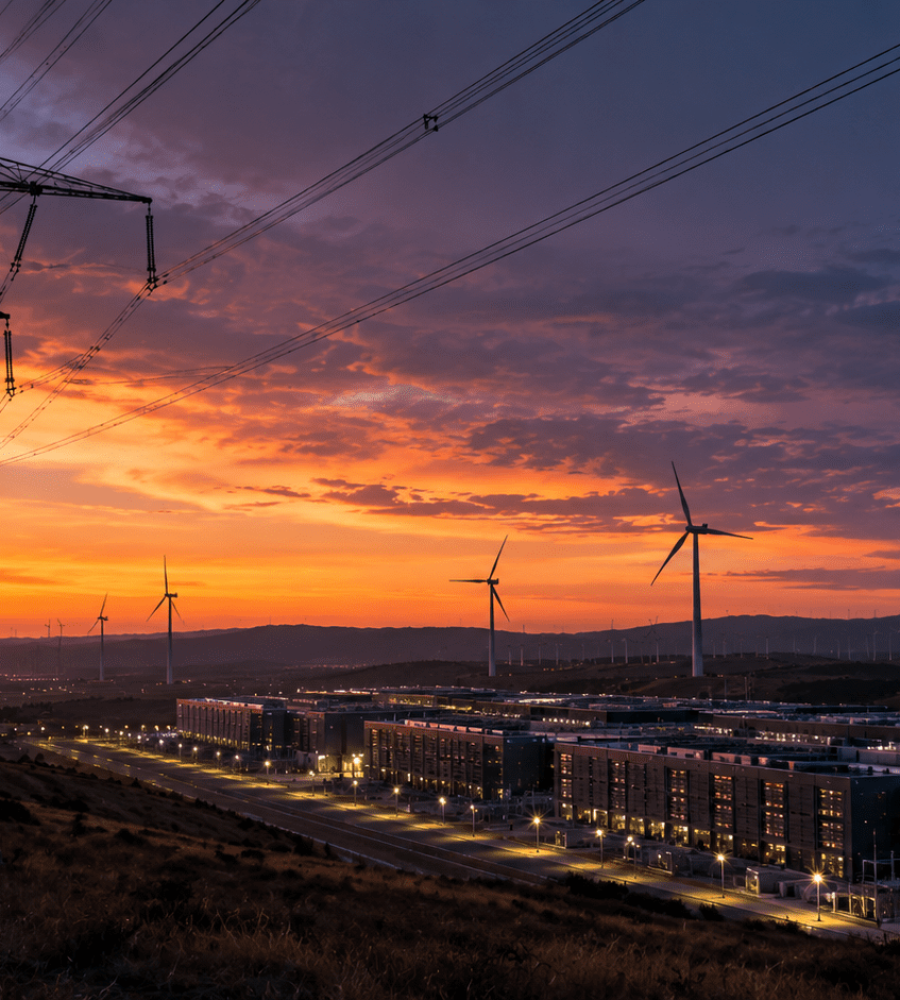
Europe’s clean energy transition is generating significant new generation capacity. Offshore wind is being built at scale across the North Sea. Solar is expanding rapidly across southern and central Europe. That capacity addition is, in principle, exactly what AI infrastructure requires: large-scale, low-carbon generation.
The problem is timing and firmness. Renewable energy is intermittent. AI data centers require always-on power. The gap between renewable generation and always-on AI load requires either storage at a scale that does not yet exist commercially, or dispatchable backup generation. That backup is typically gas-fired. The political tension between Europe’s decarbonisation commitments and gas-backed behind-the-meter generation is one of the most consequential unresolved questions in European AI infrastructure policy. AI infrastructure practically requires one. European climate commitments resist the other.
The grid that renewable energy creates is, also, structurally different from the grid that AI infrastructure requires. Renewable generation is variable and weather-dependent. AI data center load is, by contrast, flat, constant, and highly predictable. Those two profiles do not naturally complement each other without a storage layer that does not yet exist at commercial scale. Adding renewable capacity does not automatically add the transmission capacity to deliver it where AI infrastructure needs it. The energy transition and the AI infrastructure buildout are, consequently, competing for the same transmission upgrade budget and the same construction resources in many European markets.
The Coordination Problem
Perhaps the most fundamental reason European policy is not closing the grid gap is the coordination problem inherent in European energy governance. Member states primarily control energy policy. National grid operators make grid investment decisions under national regulatory frameworks. Global companies make AI infrastructure investment decisions on timescales that span regulatory cycles. The European Commission can set direction and targets. It cannot force Germany to build a transmission line faster or compel a Danish grid operator to process interconnection applications more quickly.
That coordination problem is not, however, unique to Europe. It is more acute here than in most other major AI infrastructure markets, specifically because the fragmentation of European energy governance is structural rather than incidental. Solving it requires either a level of supranational coordination that member states have historically resisted, or a convergence of national regulatory responses. Both paths are slow and politically fraught. And neither resolves the immediate constraint that operators building in 2026 and 2027 are facing right now.
What Happens If the Gap Does Not Close
The competitive implications of Europe’s grid constraint are already visible in site selection decisions. They will become more consequential as the constraint deepens.
The Investment Redirection Risk
The most immediate risk is investment redirection. Hyperscalers and neoclouds making site selection decisions in 2026 and 2027 are evaluating European markets against alternatives in the Middle East, Southeast Asia, and increasingly South America. Grid constraints in those markets are less acute. Government support is, also, often more direct and faster to deploy. The investment that does not come to Europe because of grid constraints does not show up in any European statistic. There is no dataset that tracks the projects that were assessed, found grid-constrained, and redirected elsewhere. The absence is invisible.
That invisibility makes the constraint politically underappreciated. European governments see the data center investment that does arrive and treat it, specifically, as evidence that their policies are working. They do not see the investment that went to Saudi Arabia, Malaysia, or Brazil instead because the grid could not support it on a competitive timeline. The counterfactual is unknowable but real, and it is accumulating with every site selection cycle.
The Sovereign AI Risk
There is a specific European strategic risk embedded in the grid constraint that goes beyond simple investment competition. Europe has made digital sovereignty a central policy objective. The argument for European AI infrastructure is not purely economic. It is also about ensuring that European data and AI models are not entirely dependent on infrastructure in the United States. Jurisdictions with different data protection standards are, specifically, a concern that European policymakers raise consistently when discussing digital sovereignty.
That sovereignty argument requires European AI infrastructure to actually exist at scale. A grid constraint that limits the scale of AI infrastructure that can be built in Europe is, consequently, not just an economic problem. It is a strategic problem that undermines the policy objective that European governments have made central to their digital agenda. Our coverage of whether Europe’s AI race is already structurally uneven captured this tension directly — the structural disadvantage is accumulating faster than policy is responding.
The Behind-the-Meter Escape Valve and Its Limits
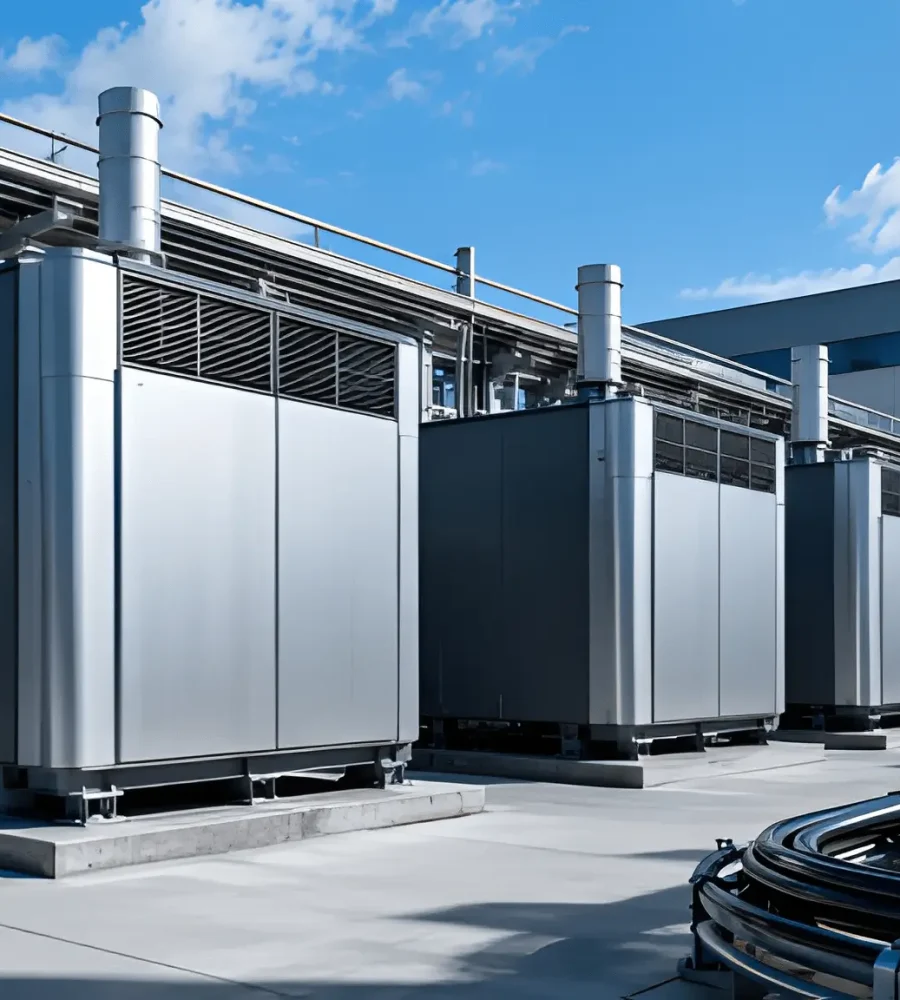
The practical response that many AI infrastructure developers are pursuing in grid-constrained European markets is behind-the-meter generation, the same approach that is reshaping US infrastructure development. If the grid cannot provide a connection on a competitive timeline, build your own generation on site.
Behind-the-meter generation works as an escape valve where the regulatory environment permits large-scale on-site generation. Fuel supply availability and a planning framework faster than the interconnection framework are also, specifically, required. Where those conditions align, operators are already moving in this direction. Several European markets, notably Germany and the Netherlands, at least partially meet those conditions. Others do not. European environmental regulation is, in many cases, more restrictive than its US equivalent for large-scale gas-fired on-site generation. Planning frameworks for large industrial generators vary significantly across member states.
There is also a second-order problem with behind-the-meter generation at scale in Europe. When large loads go behind the meter, they stop contributing to the shared costs of the transmission and distribution system. Those costs then fall more heavily on remaining grid customers. Political friction is, notably, already building in markets where data center development has been contested on energy price grounds. The shift of large loads to behind-the-meter generation adds another layer to that friction, and could eventually produce regulatory responses limiting the practice.
The Competitive Divergence Within Europe
The grid constraint is not uniform across Europe, which means it is creating competitive divergence between European markets that will reshape the geography of European AI infrastructure over the next five years. Markets that have invested ahead of demand in grid capacity, or that have geographic advantages in generation availability, are pulling ahead of constrained primary markets. The Nordics are taking data center investment that would otherwise go to Western Europe. Portugal’s Start Campus site at Sines secured its 1.2 gigawatt grid permit before the queue of competing projects made such permits difficult to obtain. It is, consequently, attracting investment from Nscale and Microsoft that reflects the scarcity value of that grid access.
Grid Access Is Becoming a Structural Competitive Advantage
That competitive divergence within Europe is not necessarily bad for Europe overall. Investment going to Norway or Portugal rather than Ireland or the Netherlands is still European investment. It may, however, be bad for the specific national AI ambitions of markets that are losing investment to grid-advantaged alternatives. Grid access is, consequently, becoming a form of structural competitive advantage that compounds over time. The markets that secured grid capacity early are using it to attract anchor tenants that make future grid investment easier to justify. It is a compounding advantage, and it is moving faster than the grid modernisation programmes that constrained markets have announced. It is a dynamic examined at length in our long read on how Europe’s AI infrastructure race is being lost market by market — and the conclusion there still holds.
Europe’s grid constraint is not a problem that will resolve itself. It is a structural mismatch that is deepening as AI infrastructure demand accelerates and grid investment timelines remain what they have always been. The markets that close the gap faster through regulatory reform will, therefore, attract the AI infrastructure investment that defines the next decade of digital competitiveness. The ones that do not will watch it go elsewhere, quietly and permanently.
The Infrastructure Gap Has a Human Cost Too
The grid constraint debate in Europe tends to focus on investment flows and competitive positioning. Those dimensions matter. There is, however, a less frequently acknowledged dimension that is, ultimately, more consequential for the long-term political sustainability of AI infrastructure development in Europe.
Grid constraints do not affect all stakeholders equally. When a grid operator freezes new connections or implements restrictive connection policies, the large operators with existing connections and established relationships maintain their position. Those barriers fall, however, on new entrants and on smaller operators. European companies and institutions that want to access AI infrastructure without routing their data through US-based hyperscalers face them too.
European AI companies building on domestic cloud infrastructure face, consequently, a direct constraint. The grid conditions slowing hyperscaler investment are, in turn, limiting the infrastructure those companies need to compete globally. The sovereignty argument for European AI infrastructure is, specifically, strongest when that infrastructure is actually available and competitively priced. A grid constraint that limits supply and raises effective power costs is, in turn, a constraint on European AI competitiveness that goes well beyond the investment statistics.
That is, ultimately, why the grid problem is not simply an infrastructure story. It is an industrial policy story. Europe’s ability to develop and deploy AI at scale depends on the grid catching up to the ambition. Keeping sensitive data on European infrastructure and building AI companies that compete globally rather than consuming US-built platforms depends on it too. The timeline for that catchup is, right now, not encouraging.