 Skip to content
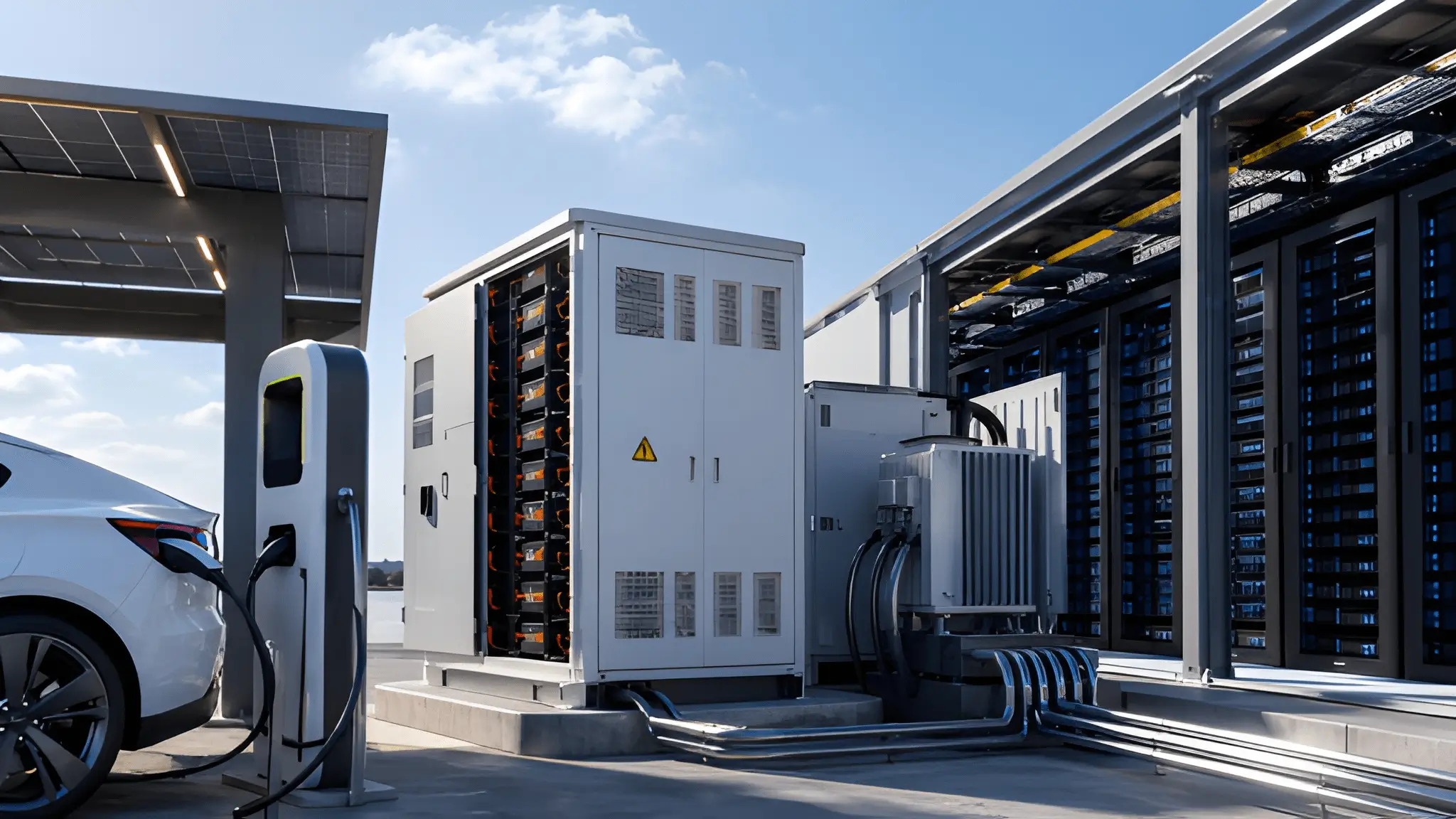
Electric Era is taking the battery systems originally designed for EV fast-charging stations and repositioning them for one of AI infrastructure’s biggest problems: power constraints. The Seattle startup announced CoPower, a new capacity-as-a-service platform that deploys behind-the-meter battery systems for edge data centers struggling to secure enough electricity from utilities. Instead of waiting years for grid upgrades, operators can use battery-backed infrastructure to temporarily push facilities beyond their existing interconnection limits.

The move places Electric Era directly into the expanding market of infrastructure companies racing to unlock faster data center deployment. AI demand continues to reshape energy planning globally, while developers increasingly search for alternatives to delayed utility expansions and overloaded transmission systems. CoPower enters that market with a strategy focused less on generating electricity and more on intelligently buffering it during peak compute spikes. The company believes that approach gives operators a faster path toward monetizing AI workloads without oversizing grid connections.
CoPower Targets Edge Data Centers Facing Grid Constraints
CoPower operates through a subscription model in which Electric Era installs, owns, and manages battery infrastructure at customer sites. The company handles development, permitting, utility interconnection, transformers, power conversion systems, and long-term operations through its proprietary energy management software. That structure allows data center developers to add usable power capacity without directly owning the underlying battery systems.
Unlike several infrastructure competitors pursuing natural gas turbines, fuel cells, or experimental nuclear concepts, Electric Era positions batteries as a complementary layer rather than a standalone generation source. “Fundamentally batteries aren’t an energy source; they’re an energy buffer,” said CEO Quincy Lee. The company argues that AI workloads create rapid fluctuations in electricity demand that traditional generation systems often struggle to match in real time. Battery systems, however, can respond instantly and stabilize those swings during periods of elevated compute activity.

Lee believes the industry’s growing focus on flexible AI infrastructure creates a strong opening for behind-the-meter storage. Data center developers increasingly need short-duration power expansion rather than permanent grid overbuilds. Consequently, Electric Era designed CoPower to help operators size utility interconnections closer to average consumption while allowing batteries to absorb temporary surges. That model could reduce infrastructure costs while maximizing revenue-generating compute capacity during high-demand periods.
Electric Era Rejects Compute Throttling Strategies
Electric Era is also distancing itself from software-only flexibility models that rely on reducing compute activity when utilities request demand relief. Several startups have promoted systems that throttle workloads during grid stress events, but Lee argued that approach fails to align with the economics of modern AI infrastructure. Operators running expensive AI clusters have little incentive to pause high-value workloads for hours at a time.
“Data centers aren’t going to turn off. Nobody’s going to just throttle down and be like, ‘okay, see you later, we’re going to not use our super expensive GB300 racks for five hours,’” he said. “They’d much rather have load flexibility with an onsite generation source or energy buffer.”
That philosophy shapes CoPower’s focus on latency-sensitive edge facilities rather than hyperscale campuses. Electric Era is targeting sites between five and 100 megawatts, including neocloud providers, colocation operators, and single-tenant developers supporting workloads such as real-time AI inference and content delivery. Those applications cannot easily delay or queue workloads, making uninterrupted power availability strategically critical.
The company says these facilities often experience “spiky and intermittent” demand curves, where peak loads occur for only a few hours each day. CoPower’s battery systems charge during lower-cost off-peak periods and discharge during four- to eight-hour windows when workloads surge. That setup allows operators to temporarily exceed their utility interconnection limits without physically upgrading the grid connection.
Battery Buffering Could Increase Compute Revenue
Electric Era claims its current deployment pipeline delivers roughly a 25% increase in usable behind-the-meter capacity on average. The company cited one 76-megawatt IT-load facility that could reportedly reach approximately 90 megawatts during peak demand using CoPower’s battery infrastructure. The strategy reframes batteries not as backup systems, but as active revenue-enabling assets inside AI infrastructure environments.
“Most data centers think of batteries as a solution to curtail beneath what your allotted grid capacity is,” explained Electric Era CEO Quincy Lee. “We turn the problem on its head and say, why don’t we use the battery to go above the grid limit to maximize the amount of compute and revenue that that facility can make?”
To support the launch, Electric Era secured $50 million in project financing from Macquarie Group and expanded its lithium iron phosphate battery supply relationship with LG Energy Solution. According to Lee, the financing package supports roughly 50 megawatts of initial deployment capacity.
The company’s underlying software platform originated from its EV charging operations, where battery systems already helped charging stations exceed local grid limitations. Founded in 2020, Electric Era spent several years deploying battery-backed EV fast chargers across 16 U.S. states. That operational experience now forms the software backbone behind CoPower’s real-time energy management system.
Electric Era Expands Beyond EV Charging Without Leaving It Behind
Although the company is broadening into AI infrastructure, Electric Era says it will continue scaling its EV charging business simultaneously. Lee confirmed the startup has divided operations into separate teams dedicated to fast-charging deployment and CoPower expansion. That structure allows the company to pursue growth in both transportation electrification and data center infrastructure without abandoning its original business.
The timing reflects a broader convergence between electrification infrastructure and AI compute demand. Battery systems once optimized for transportation networks are increasingly becoming strategic assets for digital infrastructure operators facing constrained utility capacity. As AI workloads continue to reshape electricity consumption patterns, companies capable of bridging energy flexibility and compute reliability may gain a larger role in the next phase of infrastructure development.
Electric Era’s bet is that batteries can become more than emergency backup systems inside data centers. Instead, the company wants them positioned as active infrastructure layers that unlock higher compute density, faster deployment timelines, and stronger revenue potential for edge AI facilities operating under growing grid pressure.










