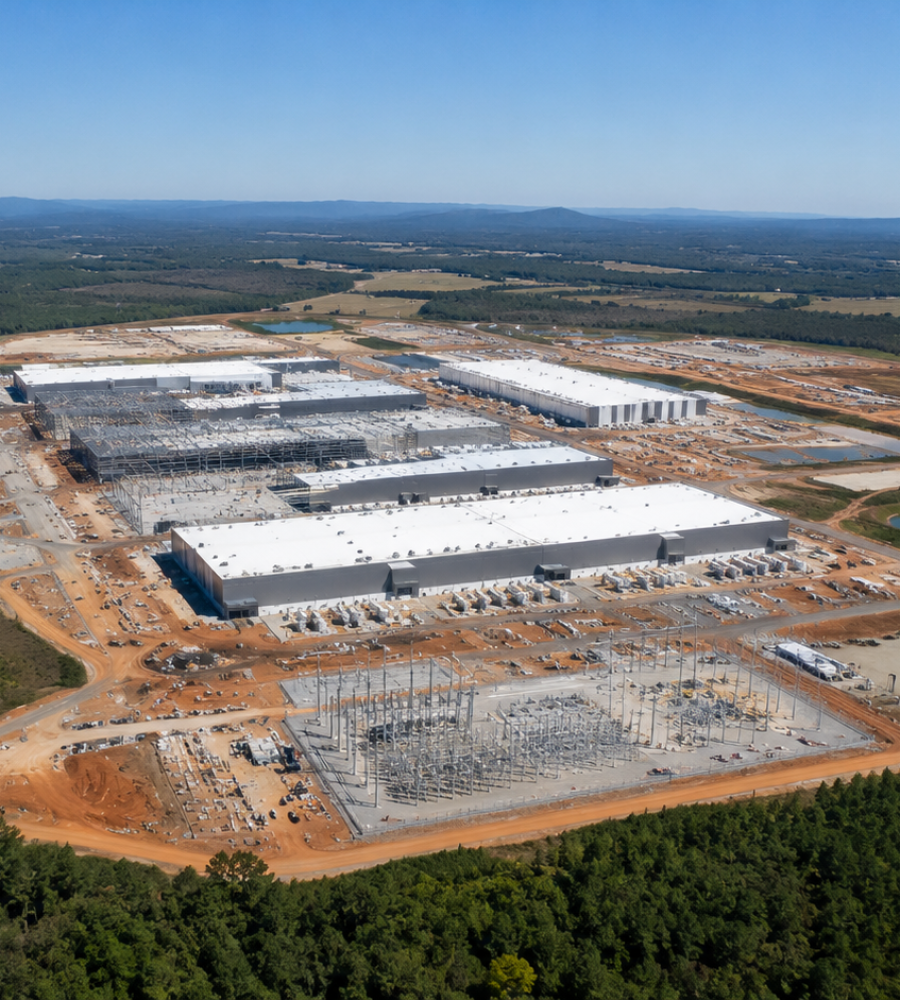

A surprising shift has started to reshape the way infrastructure developers evaluate opportunity. For years, the industry treated scale as the primary indicator of future value, rewarding projects that promised enormous capacity and expansive land positions long before construction crews arrived on site. That approach created a race toward larger announcements, larger acreage positions, and larger power reservations, often without equal attention to execution timelines. Many projects entered development pipelines carrying impressive future potential while remaining years away from meaningful revenue generation. Market conditions have since exposed the practical limitations of that model, particularly as power delivery schedules, permitting complexity, and construction sequencing became increasingly difficult to predict. Today, the most attractive opportunities frequently emerge from utility-ready locations that offer certainty rather than spectacle.
Conversations around data center development now focus less on theoretical buildout capacity and more on how quickly a site can transition from acquisition into operation. Infrastructure investors increasingly evaluate the path between land ownership and customer occupancy rather than simply measuring the ultimate scale of a parcel. Power availability has become a decisive variable because a smaller site with immediate utility access often delivers commercial value faster than a larger property waiting for future grid upgrades. Construction planning has also evolved as modular deployment strategies gain acceptance across multiple infrastructure segments. Development teams increasingly prefer projects that support staged growth because phased execution creates flexibility when customer requirements change. As a result, the industry’s definition of a premium site continues to evolve in ways that would have seemed counterintuitive only a few years ago.
Large campus announcements still attract attention, yet the operational realities behind those projects have become harder to ignore. Utility interconnection queues continue to expand across several major development regions, while permitting reviews often grow more complex as project footprints increase. Contractor availability, equipment procurement, and infrastructure coordination can also create delays that affect timelines long before a facility reaches commercial operation. Smaller projects can avoid some of those challenges when their power, utility, and construction requirements align with existing regional infrastructure conditions. Deployment speed therefore becomes a competitive advantage rather than a secondary consideration. In many cases, the site that reaches customers first captures value that larger developments expected to secure later.
The result is a subtle but important realignment of infrastructure strategy. Success increasingly depends on execution certainty, deployment flexibility, and realistic growth pathways rather than ambitious capacity projections alone. Market participants continue to pursue large-scale opportunities, but they increasingly balance those ambitions with assets capable of generating revenue in shorter timeframes. This shift does not diminish the importance of future expansion. Instead, it places greater emphasis on proving operational viability before committing to successive growth phases. The next generation of successful developments may therefore emerge not from the largest parcels available, but from the sites capable of turning infrastructure readiness into commercial momentum.
The Era of the “Perfect Site” Is Breaking Down
For much of the previous development cycle, site selection teams pursued a highly specific vision of perfection. They searched for large contiguous land positions, abundant future power potential, extensive fiber access, favorable zoning conditions, and room for multiple expansion phases within a single ownership structure. That strategy appeared logical because hyperscale growth created strong incentives to secure capacity far ahead of demand. Development groups therefore competed aggressively for locations capable of supporting future mega-campus ambitions. Many organizations assumed that securing maximum optionality at the beginning of the process would naturally create stronger long-term outcomes. Experience has shown that execution challenges often emerge long before those theoretical advantages become commercially useful.
A large parcel does not automatically translate into deployable infrastructure. Power delivery schedules frequently depend on external utility planning cycles that remain outside developer control. Environmental reviews can become more complicated as project footprints expand across broader geographic areas. Transportation upgrades, water infrastructure planning, and supporting industrial development often introduce additional dependencies that affect construction schedules. Customer demand rarely waits for those variables to align perfectly. Operators increasingly recognize that a smaller site with fewer dependencies can reach operational readiness while larger competitors continue navigating development processes.
Many development teams now evaluate sites through a different lens. Instead of prioritizing maximum future capacity, they increasingly focus on identifying locations where construction can begin with minimal uncertainty. Existing substations, nearby transmission infrastructure, available industrial services, and straightforward permitting pathways often create greater immediate value than undeveloped acreage. This perspective shifts attention toward execution readiness because revenue generation depends on operational infrastructure rather than theoretical buildout potential. Developers therefore spend more time analyzing deployment barriers and less time imagining distant expansion scenarios. Commercial viability increasingly begins with what a site can support today rather than what it might support years later.
Another factor influences this change in thinking. Infrastructure markets now operate in an environment where customer requirements evolve rapidly, creating uncertainty around future workload distribution and regional demand concentrations. A development strategy built entirely around long-term assumptions may struggle when technology adoption patterns change. Smaller executable sites offer flexibility because they allow operators to respond incrementally rather than committing immediately to massive infrastructure programs. That adaptability reduces exposure to forecasting errors while preserving opportunities for future growth. Many organizations increasingly view flexibility as a strategic asset rather than a compromise.
Execution Certainty Has Become the New Competitive Advantage
Execution certainty now occupies a central role in infrastructure decision-making because delays directly affect commercialization opportunities. Customers evaluating deployment options often prioritize occupancy timelines and operational readiness over distant expansion promises. A site capable of supporting construction immediately therefore possesses a competitive characteristic that cannot easily be replicated through marketing or future planning. Development organizations increasingly understand that certainty creates value long before a facility reaches full scale. Every stage completed without significant delay improves project visibility and strengthens customer confidence. Infrastructure strategy consequently shifts toward achievable outcomes rather than aspirational milestones.
This transformation affects how land acquisitions occur. Site evaluation teams increasingly investigate utility engagement, zoning compatibility, transportation access, environmental considerations, and construction feasibility before emphasizing future capacity projections. A parcel that demonstrates predictable execution pathways often receives stronger consideration than a larger alternative burdened by unresolved infrastructure dependencies. Development schedules benefit from this approach because project teams identify potential constraints earlier in the process. Risk management improves as well because fewer unknown variables remain embedded within deployment assumptions. Infrastructure planning therefore becomes more operationally grounded from the beginning.
Contractor coordination also favors projects with manageable scope and realistic deployment objectives. Construction partners can sequence work more effectively when project requirements align with existing regional capabilities. Equipment procurement planning becomes easier when deployment phases remain clearly defined and achievable. Inspection processes often progress more efficiently because authorities review practical construction programs rather than highly complex long-term campus frameworks. Each of these factors contributes to overall execution reliability. The cumulative effect frequently produces faster operational outcomes than larger projects expected to benefit from scale advantages.
The decline of the perfect-site philosophy does not mean that large campuses disappear from infrastructure planning. Instead, development priorities increasingly acknowledge that execution certainty creates measurable commercial value on its own. A site that enters operation quickly can establish customer relationships, generate revenue, validate market demand, and support future expansion from a position of operational strength. Those advantages compound over time because successful deployments create momentum for subsequent growth phases. Infrastructure development increasingly rewards organizations capable of turning readiness into action. The market therefore places growing value on execution itself as a strategic differentiator.
12MW Is Becoming the New Strategic Sweet Spot
A noticeable change has emerged in the relationship between customer demand and infrastructure sizing. For years, development strategies often assumed that larger deployments automatically represented stronger commercial outcomes because future demand would eventually absorb excess capacity. Recent deployment behavior suggests a more nuanced reality. Many workloads enter new markets through phased implementation models that prioritize operational flexibility over immediate large-scale occupancy. Infrastructure operators increasingly observe that customers prefer environments capable of supporting growth without requiring oversized commitments at the beginning of a deployment cycle. That shift places greater value on facilities that match actual consumption patterns rather than speculative future requirements.
The growing relevance of mid-sized utility-ready deployments reflects this operational reality. A site of this scale often provides enough capacity to support meaningful compute deployment while remaining manageable from a utility, construction, and commissioning perspective. Developers can align project timelines more closely with customer onboarding schedules because infrastructure does not require extensive multi-year buildout programs before becoming useful. Utility coordination also tends to remain more straightforward when initial power requirements fit within existing regional capabilities. Construction sequencing benefits because teams can focus on bringing operational space online rather than preparing vast areas for future phases. These characteristics combine to create an environment where deployment efficiency becomes commercially attractive.
Regional AI infrastructure expansion further supports this trend. Inference deployments frequently benefit from geographic distribution because proximity to users influences application responsiveness and service delivery. Operators therefore seek opportunities to establish capacity across multiple markets rather than concentrating every workload inside a handful of massive campuses. A right-sized facility can satisfy regional demand while preserving flexibility for future expansion if utilization grows. This approach reduces the need for oversized infrastructure commitments in markets where long-term demand remains difficult to forecast with precision. Infrastructure planning consequently becomes more adaptive and geographically responsive.
Financial discipline also contributes to the appeal of mid-sized deployments. Capital allocation strategies increasingly favor projects capable of demonstrating commercial traction before successive investment phases proceed. Mid-sized developments often reach operational milestones more quickly than significantly larger projects, allowing stakeholders to evaluate demand based on actual customer activity rather than forecasts alone. Revenue generation can therefore begin earlier within the development lifecycle. Decision-making improves because operators gain visibility into market behavior before committing additional resources. The result is a development framework built around evidence rather than assumption.
Infrastructure Efficiency Is Becoming More Valuable Than Maximum Scale
Infrastructure value increasingly derives from utilization efficiency rather than headline capacity. A facility that supports rapid occupancy and predictable growth often creates stronger operational performance than a much larger project waiting years to reach meaningful utilization. Development teams therefore focus on aligning infrastructure supply with realistic adoption pathways. This perspective encourages more disciplined deployment planning because capacity expansion occurs in response to demonstrated demand rather than optimistic projections. Operational efficiency becomes easier to maintain when infrastructure growth follows measurable customer requirements. Commercial outcomes frequently improve as a result.
Power availability plays an important role in this transition. Grid constraints affect many regions pursuing data center development, making immediate access to utility infrastructure increasingly valuable. Smaller deployable projects often secure operational power faster because their requirements align more effectively with existing system capabilities. Developers can therefore reduce dependence on lengthy transmission upgrades or extensive infrastructure expansion programs. Faster energization directly supports earlier commissioning activities and customer occupancy schedules. Power readiness consequently becomes a significant differentiator in site competitiveness.
Construction logistics also favor right-sized development models. Equipment procurement, workforce coordination, and commissioning activities generally become easier to manage when project scope remains closely aligned with near-term deployment objectives. Teams can maintain tighter control over scheduling because fewer variables affect execution. Operational handoff processes often proceed more smoothly because infrastructure systems enter service within clearly defined deployment phases. This predictability benefits both developers and future occupants. Project outcomes increasingly reflect execution quality rather than sheer scale.
The strategic appeal of 12MW-class developments ultimately reflects a broader infrastructure philosophy. Success increasingly depends on bringing useful capacity online at the right moment rather than maximizing future potential at any cost. Operators continue to pursue expansion opportunities, but they increasingly do so through incremental and commercially validated pathways. A right-sized site can serve as both a revenue-generating asset and a platform for future growth when market demand, power availability, and deployment timing remain aligned. That combination of operational readiness and expansion flexibility helps explain why mid-sized developments continue attracting attention across multiple infrastructure markets. The focus shifts from building the largest possible project to building the most executable one.
Speed-to-Revenue Is Rewriting Site Selection Logic
Infrastructure development once centered heavily on long-range capacity planning. Developers frequently evaluated sites based on their ability to support future expansion horizons that stretched well beyond immediate customer requirements. Current market conditions increasingly favor a different approach because monetization timelines now receive greater attention during investment and deployment decisions. A site capable of generating revenue sooner often delivers stronger commercial performance than a larger development awaiting future infrastructure readiness. Operational timing therefore becomes a primary consideration rather than a secondary benefit. Site selection criteria continue evolving around this reality.
Revenue generation begins only when customers occupy operational infrastructure. Every delay affecting power delivery, permitting approvals, construction readiness, or commissioning schedules pushes monetization further into the future. Development teams increasingly analyze those variables during the earliest stages of site evaluation. Locations with fewer execution dependencies often demonstrate stronger commercial attractiveness because they reduce uncertainty between acquisition and operation. Infrastructure readiness therefore becomes a measurable asset in its own right. The value of deployment certainty continues to rise across development markets.
Permitting simplicity has emerged as another important consideration. Large projects frequently require coordination across multiple review processes involving environmental considerations, transportation planning, utility engagement, and construction oversight. Smaller executable developments often encounter fewer procedural complexities because their scope aligns more closely with existing industrial conditions. Approval pathways may therefore become more predictable. Developers gain confidence in scheduling assumptions because fewer external variables influence project progression. Predictability creates meaningful advantages when speed-to-revenue becomes a strategic objective.
Customer expectations reinforce this trend. Organizations seeking deployment capacity often evaluate providers based on occupancy timelines rather than future campus potential. Immediate operational requirements typically outweigh distant expansion possibilities when business initiatives depend on infrastructure availability. Sites capable of supporting rapid deployment therefore attract attention because they solve present challenges rather than future ones. Developers increasingly recognize this dynamic during project planning. Infrastructure value increasingly correlates with readiness rather than scale alone.
Operational Readiness Is Reshaping Investment Priorities
Investment evaluation frameworks increasingly reward deployability. Stakeholders examining development opportunities often assess how quickly a project can progress from planning into operation because earlier commercialization improves visibility into future performance. A site with established utility access, supportive zoning conditions, and manageable construction requirements frequently demonstrates stronger practical value than a larger parcel requiring extensive preparation before development begins. Execution readiness therefore becomes a core component of investment analysis. Infrastructure planning grows more operationally focused as a result. Commercial logic increasingly favors projects capable of demonstrating progress quickly.
Construction sequencing provides a clear example of this shift. Developers can mobilize resources more efficiently when infrastructure requirements remain closely aligned with available regional capabilities. Workforce planning improves because project scope remains realistic and achievable. Equipment delivery schedules often become easier to manage because procurement aligns with near-term deployment phases. Commissioning activities proceed within a more controlled environment. These operational advantages collectively accelerate the path toward revenue generation.
Utility engagement strategies have also evolved. Rather than pursuing only the largest possible future allocations, developers increasingly investigate locations where available capacity supports immediate deployment objectives. Existing substations, transmission access, and industrial service availability therefore receive heightened attention during site evaluation. This approach recognizes that operational power today often creates greater value than theoretical capacity years into the future. Infrastructure planning becomes grounded in achievable timelines. Market competitiveness increasingly depends on how quickly power can support customer workloads.
Speed-to-revenue ultimately influences nearly every stage of modern site selection. Land characteristics remain important, yet they now exist within a broader framework that prioritizes operational readiness, permitting clarity, utility accessibility, and deployment certainty. Developers continue evaluating future expansion opportunities, but they increasingly balance those ambitions against the need for near-term commercial execution. Revenue generation serves as the practical validation of infrastructure strategy. Projects capable of reaching that milestone sooner frequently gain advantages that larger developments struggle to match. Site selection logic therefore continues shifting toward execution-focused decision making.
Expansion Paths Matter More Than Empty Acreage
For many years, large undeveloped land positions represented a preferred development asset because they appeared to guarantee future growth flexibility. Developers often assembled extensive acreage portfolios under the assumption that long-term demand would eventually justify massive buildouts. Recent market behavior suggests that expansion capability matters more than land ownership alone. Infrastructure operators increasingly evaluate how efficiently additional capacity can be deployed rather than how much unused land exists beyond an initial construction zone. This distinction changes the way development teams assess strategic value. Expansion readiness now receives greater attention than raw acreage totals.
A practical expansion path begins with infrastructure continuity. Power systems, network connectivity, access roads, utility corridors, and construction staging areas must support future growth without requiring complete redevelopment of existing operations. Sites that provide these characteristics often create stronger long-term outcomes than larger parcels lacking integrated expansion planning. Developers therefore focus on the mechanics of future deployment rather than simply securing additional land. Growth becomes easier when each phase connects naturally to the previous one. Infrastructure strategy increasingly prioritizes continuity over scale.
Adjacency options also contribute significant value. Properties located near compatible industrial land can support future expansion even when the initial development footprint remains relatively modest. This approach allows operators to scale in response to actual demand while avoiding excessive upfront commitments. Development flexibility improves because future decisions can incorporate changing market conditions. Infrastructure planning becomes more responsive rather than locked into assumptions established years earlier. Optional growth corridors often outperform speculative land banking strategies.
Operational efficiency further strengthens the case for expansion-oriented planning. Construction teams can mobilize resources more effectively when future phases follow a logical infrastructure framework. Utility coordination often proceeds with greater predictability because expansion occurs within established service environments. Customer confidence benefits because growth plans appear achievable rather than aspirational. These factors collectively support a development model built around practical scalability. The industry increasingly values expansion pathways that translate directly into deployable capacity.
Incremental Growth Models Create Stronger Long-Term Flexibility
Incremental growth has become a defining characteristic of modern infrastructure deployment. Developers increasingly prefer projects that allow capacity additions through clearly structured phases rather than requiring immediate commitment to large-scale construction programs. This strategy reflects the reality that demand patterns can change over time. Infrastructure planning therefore benefits from maintaining flexibility while preserving future growth opportunities. Expansion occurs when conditions justify additional investment. Development becomes more adaptive and less dependent on long-term forecasting assumptions.
Modular deployment principles support this transition. New capacity can enter service through successive construction phases that build upon existing infrastructure foundations. Operators gain the ability to align expansion with customer commitments, utility availability, and market conditions. Risk exposure decreases because resources deploy incrementally rather than all at once. Financial planning also benefits from greater visibility into actual demand behavior. Infrastructure growth becomes a measured process instead of a speculative exercise.
Another advantage emerges from operational learning. Initial deployment phases generate valuable insights regarding customer requirements, infrastructure performance, and regional market dynamics. Developers can incorporate those lessons into future expansion decisions. Subsequent phases therefore benefit from real-world experience rather than theoretical planning assumptions. Execution quality often improves as projects mature. This feedback loop strengthens long-term development outcomes.
The emphasis on expansion paths ultimately reflects a broader shift toward practical scalability. Success increasingly depends on the ability to grow efficiently when demand materializes rather than simply possessing enough land to support hypothetical future capacity. Infrastructure operators continue valuing growth opportunities, yet they increasingly prioritize sites where expansion can occur predictably and economically. Development strategy therefore focuses on continuity, flexibility, and execution readiness. Empty acreage alone no longer guarantees competitive advantage. Growth capability matters most when it can actually be activated.
The Quiet Rise of Secondary Market Infrastructure
Infrastructure development frequently concentrated around a relatively small number of well-known markets because those locations offered established ecosystems, recognizable demand centers, and proven deployment histories. Conditions have changed as power constraints, land competition, and development complexity intensified across many traditional regions. Developers increasingly examine secondary markets that previously attracted limited attention. These locations often possess industrial characteristics that support infrastructure growth without the congestion affecting major development hubs. Interest in such markets continues expanding. Strategic value increasingly emerges from overlooked regions.
Many secondary markets already contain important infrastructure components. Existing industrial activity often creates access to transmission networks, transportation corridors, utility services, and network connectivity that support data center deployment. Developers therefore discover opportunities where foundational requirements already exist. Infrastructure planning becomes more efficient because fewer supporting assets require creation from the ground up. Development timelines may benefit from this existing industrial framework. Operational readiness becomes easier to achieve.
Fiber availability represents another important factor. Numerous industrial corridors developed communications infrastructure long before data center demand reached current levels. Operators evaluating secondary markets often find connectivity resources capable of supporting modern deployment requirements. This existing network environment reduces one of the traditional barriers associated with emerging locations. Infrastructure projects can therefore proceed without waiting for extensive telecommunications expansion. Market attractiveness improves as a result.
Municipal coordination also influences market selection. Smaller jurisdictions frequently possess experience supporting industrial development while maintaining more streamlined administrative processes. Development teams often encounter responsive engagement when project requirements align with local planning objectives. Predictable coordination can improve scheduling confidence throughout the deployment lifecycle. Infrastructure projects benefit when decision-making pathways remain clear. Execution certainty increases accordingly.
Infrastructure Readiness Often Matters More Than Market Reputation
Market reputation historically influenced site selection because established regions offered familiarity and perceived security. Current development conditions increasingly challenge that assumption. Operators now evaluate whether a location can support timely deployment rather than relying solely on historical recognition. A lesser-known market with available infrastructure may create stronger outcomes than a famous region facing extensive constraints. Practical readiness therefore carries growing importance. Infrastructure decisions increasingly reflect operational realities rather than branding considerations.
Power accessibility frequently illustrates this point. Secondary markets sometimes provide utility conditions that support deployment sooner than heavily saturated regions. Developers evaluating commercialization timelines often view this advantage favorably because operational power remains essential to project success. Existing infrastructure capacity therefore becomes a strategic asset. Market visibility matters less when deployment objectives can be achieved more efficiently elsewhere. Execution considerations increasingly drive location decisions.
Construction logistics can also favor emerging regions. Less congested development environments may provide improved access to contractors, equipment staging areas, and supporting industrial resources. Project teams often gain scheduling flexibility because fewer large-scale developments compete simultaneously for the same regional capabilities. Infrastructure deployment can therefore progress with fewer operational bottlenecks. Execution reliability improves as a result. Development efficiency becomes easier to maintain.
The rise of secondary market infrastructure reflects a practical reassessment of what makes a location valuable. Recognition alone no longer guarantees competitiveness when operational constraints limit deployment speed. Developers increasingly prioritize infrastructure readiness, utility accessibility, connectivity resources, and execution certainty regardless of market profile. Secondary regions benefit because many already possess these characteristics without attracting the same level of development pressure. Strategic opportunities continue emerging beyond traditional infrastructure centers. The quiet markets increasingly command serious attention from deployment planners.
Why Smaller Sites Create Faster Customer Commitments
Customer commitment patterns increasingly reflect a preference for certainty over scale. Organizations deploying compute infrastructure often face operational timelines that cannot accommodate extended development schedules. Access to available capacity therefore becomes a critical decision factor. A smaller deployable site frequently offers occupancy opportunities months or even years before larger developments complete successive construction phases. Customers evaluating infrastructure options naturally gravitate toward environments that align with immediate operational requirements. Deployment readiness increasingly influences commercial outcomes.
Many infrastructure consumers now approach capacity planning through staged growth models rather than single large-scale commitments. This approach allows organizations to activate workloads incrementally while preserving flexibility for future expansion. Smaller sites align well with this strategy because they often support phased occupancy without requiring customers to reserve capacity far beyond near-term needs. Deployment decisions become easier when infrastructure availability matches realistic growth expectations. Customers gain operational confidence because capacity becomes accessible within a predictable timeframe. Commercial engagement frequently accelerates under these conditions.
Timing plays a particularly important role in emerging AI deployments. Infrastructure requirements continue evolving as organizations refine workload placement strategies, application architectures, and geographic distribution models. Customers therefore value environments that allow deployment decisions to remain flexible. A site capable of supporting immediate implementation often creates stronger appeal than a future mega-campus promising larger capacity at an uncertain date. Operational needs tend to prioritize availability over ambition. Infrastructure readiness becomes a practical differentiator.
Developers benefit from this dynamic because earlier occupancy often translates into earlier revenue generation and stronger customer relationships. Initial deployments establish operational presence while creating opportunities for future expansion within the same ecosystem. Customer trust grows when infrastructure commitments materialize according to schedule. Commercial momentum frequently builds from successful early deployment experiences. Smaller executable sites therefore support both customer objectives and developer goals. Speed and certainty increasingly reinforce one another within modern infrastructure markets.
Phased Scaling Creates Stronger Commercial Alignment
Infrastructure planning increasingly reflects the reality that demand rarely appears in a single predictable wave. Organizations often expand capacity through successive deployment stages as operational requirements evolve. Smaller sites naturally complement this behavior because they support growth without forcing customers into oversized commitments. Capacity can expand alongside actual usage patterns rather than theoretical forecasts. Infrastructure and customer demand therefore remain more closely aligned. Commercial efficiency improves accordingly.
This alignment reduces decision friction during customer negotiations. Prospective occupants frequently prefer infrastructure environments where future growth remains available but does not require immediate contractual obligations. Developers can offer phased expansion pathways while preserving deployment flexibility. Customers gain confidence because they retain the ability to adjust plans as business conditions change. Infrastructure commitments become easier to justify internally. Commercial agreements often progress more quickly under these circumstances.
Operational predictability further strengthens customer commitment. Smaller developments often maintain tighter control over construction sequencing, commissioning schedules, and service activation timelines. Customers evaluating deployment opportunities place significant value on these characteristics because infrastructure availability directly affects operational planning. Confidence increases when project milestones appear achievable and transparent. Development certainty therefore becomes a commercial advantage. Execution quality influences customer decision-making at every stage.
The growing appeal of smaller sites ultimately reflects changing expectations around infrastructure consumption. Customers increasingly seek environments capable of supporting immediate deployment while preserving room for future growth. Developers respond by prioritizing projects that deliver usable capacity within realistic timeframes. This approach creates stronger alignment between infrastructure supply and customer demand. Commercial relationships form more quickly when operational readiness matches business requirements. Smaller sites continue gaining relevance because they support that alignment effectively.
Mega-Campuses Are Creating Operational Traffic Jams
Large campus developments promise substantial long-term capacity, yet they also introduce layers of operational complexity that can slow execution. Every major infrastructure program requires coordination among utilities, construction teams, equipment suppliers, regulatory authorities, engineering partners, and numerous supporting stakeholders. The number of dependencies grows as project scale increases. Development schedules therefore become more sensitive to delays affecting any single component of the broader program. Complexity frequently expands faster than capacity. Execution risk rises accordingly.
Permitting provides a clear example of this challenge. Extensive developments often require multiple approvals covering environmental review, transportation impacts, utility integration, construction activities, and long-term land use planning. Each process introduces additional review cycles and coordination requirements. Project teams must align numerous timelines while managing evolving regulatory expectations. Delays affecting one approval pathway can influence broader project sequencing. Operational momentum becomes more difficult to maintain.
Construction logistics create another layer of complexity. Large campuses demand substantial quantities of equipment, materials, labor resources, and supporting infrastructure. Contractors frequently coordinate multiple workstreams simultaneously across extensive development areas. Scheduling flexibility decreases because dependencies exist between numerous construction activities. Even minor disruptions can affect broader deployment timelines. Project management requirements increase significantly as scale expands. Operational efficiency becomes harder to sustain.
Utility coordination often follows a similar pattern. Major developments may depend on transmission upgrades, substation expansion projects, or other infrastructure investments that extend beyond the site itself. External stakeholders therefore influence project readiness. Developers cannot always control the pace of these supporting activities. Commercial timelines become linked to broader infrastructure programs. Large-scale ambitions frequently encounter operational realities that slow deployment progress.
Bigger Projects Can Slow the Growth They Intend to Accelerate
Mega-campus strategies often pursue speed through scale, assuming that large infrastructure investments will create long-term deployment advantages. In practice, the operational demands associated with these developments can produce bottlenecks that affect delivery schedules. Multiple construction phases compete for resources while procurement requirements place pressure on supply chains. Coordination challenges accumulate as project scope expands. Growth can therefore become constrained by the very scale intended to support it. Execution speed may suffer as a result.
Regional labor markets frequently illustrate this dynamic. Large developments require specialized engineering, construction, commissioning, and operational expertise. Competition for these resources can intensify when several major projects advance simultaneously within the same geography. Workforce availability may influence scheduling assumptions. Infrastructure deployment becomes dependent on regional capacity constraints rather than developer ambition alone. Operational bottlenecks emerge despite strong market demand.
Inspection and commissioning activities also become more demanding as project complexity increases. Larger campuses often involve numerous interconnected systems that must function reliably before operational handoff occurs. Testing requirements expand accordingly. Coordination between stakeholders becomes increasingly important because delays affecting one component can influence broader commissioning schedules. Project completion therefore requires sustained alignment across multiple disciplines. Execution timelines become more vulnerable to disruption.
These challenges do not eliminate the role of large campuses within future infrastructure development. Significant projects will continue supporting major capacity requirements across important markets. The key lesson lies in understanding that scale alone does not guarantee speed. Developers increasingly recognize the value of balancing long-term ambition with deployable near-term capacity. Operational efficiency often depends on maintaining manageable execution pathways. Infrastructure growth succeeds most consistently when expansion remains achievable at every stage of development.
Developers Are Quietly Optimizing for Optionality
Infrastructure development has entered a period where certainty remains valuable, yet flexibility often determines long-term resilience. Developers increasingly operate in environments shaped by changing power availability, evolving customer deployment patterns, shifting construction costs, and rapidly advancing compute requirements. Under these conditions, rigid long-range assumptions create additional risk. Development strategies therefore place greater emphasis on maintaining options rather than committing every resource to a single growth trajectory. Optionality has become an operational discipline rather than a theoretical planning concept. This shift influences nearly every stage of modern site development.
Land acquisition strategies increasingly reflect this philosophy. Developers often seek sites that can support immediate deployment while preserving multiple future expansion pathways. The objective is not simply to maximize acreage but to create flexibility around how and when growth occurs. A site capable of supporting phased development allows operators to adjust future decisions based on market realities rather than predetermined assumptions. Infrastructure planning becomes more adaptive because expansion remains tied to demonstrated demand. Strategic flexibility grows alongside operational readiness.
Financing structures have also evolved to support optionality. Rather than concentrating capital exclusively on large initial buildouts, developers increasingly align investment schedules with deployment milestones. This approach improves visibility into project performance because future commitments depend on measurable progress. Capital efficiency benefits when resources deploy in response to actual commercial activity. Decision-making becomes more informed because operators gain operational data before advancing subsequent phases. Infrastructure growth therefore proceeds with greater discipline and flexibility.
The broader objective centers on reducing exposure to uncertainty while preserving expansion potential. Developers recognize that market conditions may evolve in ways that cannot be predicted years in advance. Optionality provides room for adjustment without sacrificing growth opportunities. Projects designed around flexibility often demonstrate stronger resilience because they can respond to changing circumstances. Infrastructure planning increasingly values adaptability as a competitive advantage. Execution success now depends as much on flexibility as on scale.
Modular Deployment Supports Long-Term Infrastructure Resilience
Modular deployment frameworks have become a practical mechanism for implementing optionality. Developers can introduce capacity through manageable phases while maintaining the ability to expand as conditions justify additional investment. This approach supports operational efficiency because each deployment stage functions as part of a broader growth strategy. Infrastructure enters service when needed rather than remaining idle while waiting for future demand. Resource utilization therefore improves across the development lifecycle. Scalability becomes more controlled and measurable.
Operational learning represents another important benefit of modular development. Early deployment phases generate insights regarding customer requirements, power utilization patterns, network demand, and infrastructure performance. Developers can incorporate these observations into future planning decisions. Expansion strategies therefore evolve using real-world operational data rather than relying solely on forecasts. Infrastructure quality often improves because successive phases benefit from accumulated experience. Execution reliability strengthens over time.
Utility planning also aligns well with modular approaches. Power requirements can increase incrementally as customer demand expands, allowing developers to coordinate growth more effectively with available infrastructure resources. This strategy reduces pressure on deployment schedules because immediate operational objectives remain realistic and achievable. Infrastructure planning becomes more synchronized with actual market activity. Growth occurs through successive stages rather than large speculative commitments. Development flexibility increases substantially.
The quiet adoption of optionality reflects a broader maturation of infrastructure strategy. Developers continue pursuing growth, yet they increasingly do so through frameworks that preserve flexibility, support phased execution, and reduce unnecessary exposure to uncertainty. Optionality does not represent hesitation or reduced ambition. Instead, it reflects a recognition that adaptable projects often outperform rigid development programs in dynamic markets. Infrastructure success increasingly depends on maintaining the ability to respond as conditions evolve. Flexibility has become a strategic asset in its own right.
The Next Winners May Build Smaller First
The infrastructure market continues to reward growth, yet the characteristics that define successful growth have changed considerably. Large capacity projections and expansive land positions still attract attention, but operational outcomes increasingly determine competitive success. Developers now operate in an environment where utility readiness, permitting efficiency, construction sequencing, and customer deployment timelines directly influence commercial performance. Execution velocity therefore carries growing importance across every stage of the development lifecycle. The ability to deliver operational infrastructure consistently has become a defining advantage.
Smaller utility-ready sites illustrate this shift particularly well. These developments often enter service faster because they align more effectively with existing infrastructure conditions. Developers can reduce exposure to external dependencies while maintaining opportunities for future expansion. Customers benefit from earlier occupancy and greater deployment flexibility. Revenue generation begins sooner because operational readiness arrives more quickly. Commercial momentum frequently favors projects capable of delivering practical outcomes rather than distant promises.
Market dynamics reinforce this trend. Power constraints, infrastructure bottlenecks, supply chain considerations, and evolving customer requirements all increase the value of deployable capacity. A right-sized site with a realistic growth pathway often creates stronger near-term and long-term outcomes than a larger project facing significant execution challenges. Development teams increasingly recognize this reality during site selection and planning processes. Strategic decisions therefore emphasize readiness alongside ambition. Infrastructure value becomes closely tied to execution capability.
The result is not the end of large-scale development. Major campuses will continue supporting important capacity requirements across many regions. The distinction lies in how growth occurs. Developers increasingly understand that sustainable expansion begins with operational success rather than theoretical scale. Smaller executable projects frequently provide the foundation upon which larger ecosystems eventually emerge. Execution has become the first phase of growth rather than its final objective.
The Most Valuable Site May Be the One Ready Today
The future of infrastructure development may ultimately depend less on identifying the largest available opportunity and more on recognizing the most executable one. Sites capable of supporting immediate deployment create tangible value because they shorten the distance between planning and operation. Infrastructure markets increasingly reward certainty, adaptability, and practical scalability. Developers therefore evaluate opportunities through a more operational lens than in previous cycles. Readiness has become a meaningful differentiator. Commercial success increasingly follows execution rather than projection.
Expansion remains important, yet expansion now derives value from its ability to support future growth without delaying present deployment. Adjacency opportunities, modular construction frameworks, and phased investment strategies all contribute to this objective. Developers seek continuity rather than speculative scale because continuity supports sustainable commercialization. Infrastructure growth becomes stronger when each phase builds naturally upon the previous one. Expansion pathways matter because they remain achievable. Flexibility and readiness increasingly work together.
Secondary markets, mid-sized developments, and utility-ready parcels all benefit from these changing priorities. Each represents a different expression of the same underlying principle. Infrastructure value increasingly emerges from the ability to move from concept to operation efficiently while preserving room for future growth. Sites that satisfy this requirement continue attracting attention regardless of their size or market profile. Execution-focused development strategies gain relevance across a wide range of deployment scenarios. The industry continues shifting toward practical scalability.
The next generation of infrastructure leaders may not be defined by the largest announcements or the most ambitious capacity projections. Competitive advantage increasingly belongs to organizations that repeatedly transform deployable sites into operational assets while maintaining the flexibility to expand when demand justifies additional growth. The overlooked 12MW parcel with available power, established connectivity, and a clear expansion pathway often embodies that strategy more effectively than a headline-grabbing mega-campus awaiting future readiness. Infrastructure markets ultimately reward delivery. The next winners may simply be the ones who build smaller first and grow from a position of proven execution.