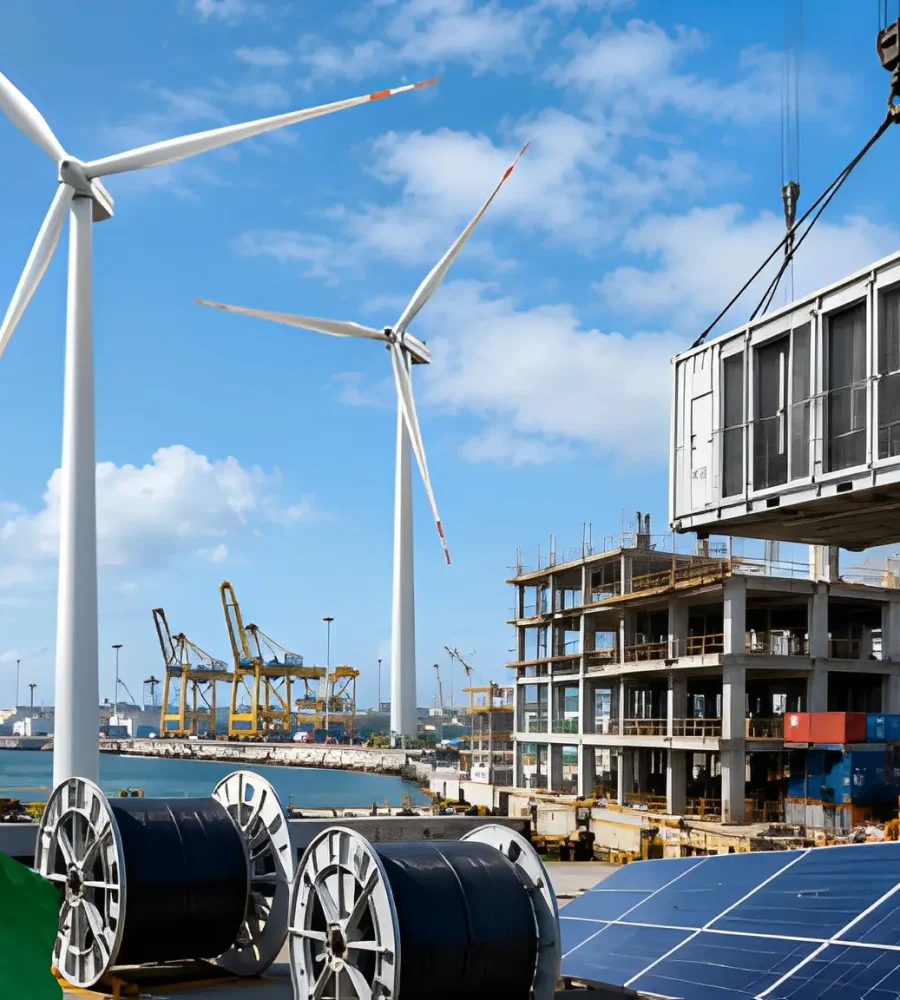

Land, power corridors, fiber routes, and permitting mechanisms are already advancing across Casablanca, Rabat, and Tangier. This build-out reflects a break from the earlier consensus among infrastructure executives, who treated North Africa as a power-export geography for Europe. Grid discussions then emphasized electricity interconnectors and renewable energy flowing north across the Mediterranean, not digital traffic flowing south. AI inference demand and sovereign compute policies are upending that frame. Morocco moved early to position itself for the next phase of AI infrastructure expansion as European markets continued navigating energy constraints, permitting delays, and rising deployment competition. The result is a growing infrastructure pipeline supported by expanding land access, connectivity investment, energy planning, and digital development initiatives across Casablanca, Rabat, and Tangier. The discussion surrounding Morocco’s emerging AI infrastructure position increasingly focuses on how the country could influence future regional deployment strategies as operators look beyond traditional European corridors.
The significance of Morocco’s infrastructure push extends beyond domestic digital development because the country sits directly inside one of the world’s most strategically contested connectivity corridors. European operators face mounting pressure from AI workloads that no longer tolerate inconsistent energy availability, extended permitting cycles, or congested metro interconnection markets that delay deployment schedules. Several Southern European regions already struggle with grid saturation, land constraints, and environmental approval timelines that routinely stretch well beyond commercial planning windows for large-scale compute projects. Morocco offers an alternative geography with shorter network paths into major European markets, lower construction friction, and growing political alignment with Western technology investment priorities. Fiber operators, cloud companies, infrastructure funds, and sovereign investors increasingly view the country as a strategic edge layer capable of supporting both European overflow demand and rapidly expanding Middle Eastern and African inference traffic.
The Rabat Bypass: How Morocco Is Emerging As An Alternative To Southern Europe’s Bottlenecks
Southern Europe spent years building its position as the primary landing zone connecting Europe, Africa, and the Middle East, but growing infrastructure congestion has started weakening that advantage. Spain, Italy, and parts of Southern France now face increasing pressure from dense fiber concentration, lengthy interconnection negotiations, and escalating energy competition surrounding digital infrastructure projects. Morocco recognized that those chokepoints created an opportunity to position itself as an alternative routing layer capable of supporting portions of European AI traffic alongside existing Southern European switching ecosystems. New subsea cable investments linking Morocco with Portugal, France, and broader Atlantic corridors increasingly allow traffic to move into European exchanges through more diversified routing paths that reduce reliance on some heavily congested terrestrial corridors. Cloud operators prefer that flexibility because AI inference workloads behave differently from traditional enterprise traffic and become increasingly sensitive to routing inefficiencies during periods of high demand.
Rabat’s broader connectivity strategy also benefits from Morocco’s geographic positioning along both Atlantic and Mediterranean routes, which creates routing diversity that many Southern European hubs cannot easily replicate. Moroccan landing stations gained strategic value as cloud providers began reassessing concentration risk tied to single-market dependencies and narrow corridor exposure inside Europe. Several international fiber operators have already expanded exchange relationships in Casablanca because regional traffic no longer flows exclusively toward traditional European aggregation points before redistribution. AI traffic increasingly favors distributed edge ecosystems that place inference workloads closer to regional consumption patterns while maintaining low-friction connectivity into larger cloud regions. Morocco effectively positioned itself as a transitional compute layer capable of serving European, African, and Middle Eastern traffic simultaneously without forcing workloads through heavily congested continental bottlenecks. That architecture gives operators more flexibility when balancing latency optimization against rising infrastructure constraints inside Europe’s established digital hubs.
Fiber Swaps Are Quietly Rewiring Regional AI Distribution
Traditional telecom agreements across the Mediterranean largely focused on bandwidth exchange economics, but AI infrastructure expansion has changed the strategic value of those arrangements. Fiber swaps now increasingly function as geopolitical infrastructure tools because compute distribution depends on access rights, landing agreements, and regional routing cooperation that directly influence latency-sensitive AI deployment. Morocco leveraged this transition aggressively by expanding partnerships with European carriers seeking alternative southern connectivity corridors outside heavily regulated continental frameworks. Casablanca emerged as a more attractive interconnection point partly because operators can deploy infrastructure there with fewer procedural delays while still maintaining proximity to European user bases. Several telecom companies now treat Morocco less as an endpoint market and more as a strategic relay geography connecting multiple continental traffic systems into a unified regional compute architecture. Morocco’s network positioning therefore creates operational advantages that extend beyond simple cost comparisons or geographic proximity.
The practical consequence is that European latency competition increasingly includes North African territories rather than remaining confined within EU borders alone. Infrastructure developers historically assumed that European customers would automatically prioritize facilities physically located inside Europe even when alternative geographies offered operational advantages. AI inference economics have started undermining that assumption because deployment timelines, routing efficiency, and energy reliability now carry greater weight than traditional geographic branding. Morocco’s growing role in Mediterranean fiber ecosystems allows operators to support portions of Southern European demand through infrastructure environments that may offer fewer deployment constraints than some established EU markets. Morocco therefore enters the European AI race not as a peripheral participant but as a strategically positioned extension layer capable of supporting regional compute distribution at a time when traditional infrastructure corridors face mounting pressure.
Desert Land, Dollar Signs: Why Sovereign Funds Are Betting on Concrete
The AI investment cycle initially revolved around semiconductor supply chains, accelerator manufacturers, and cloud software ecosystems because investors believed compute scarcity would remain centered primarily around chip access. Sovereign wealth funds now view physical infrastructure control as strategically more durable than speculative exposure to rapidly shifting hardware cycles. Morocco positioned itself directly inside that transition by offering large development zones, expandable industrial corridors, and comparatively flexible construction pathways capable of supporting long-duration digital infrastructure projects. Gulf-backed investors increasingly favor regions where real estate, permitting, and energy coordination can move simultaneously instead of sequentially because deployment speed now determines much of AI infrastructure profitability. Morocco’s combination of geographic proximity to Europe and comparatively expandable land availability creates an attractive environment for capital seeking operational stability rather than short-term valuation swings tied to semiconductor cycles.
Morocco also benefits from the perception that it can support large-scale infrastructure expansion without encountering the same level of local resistance currently slowing portions of Europe’s digital construction pipeline. Investors increasingly worry about political unpredictability surrounding energy allocation, environmental approval disputes, and land-use litigation affecting major European data center developments. Moroccan authorities instead framed AI infrastructure as part of a broader industrial modernization strategy linked to trade competitiveness, renewable expansion, and regional digital positioning. Sovereign funds particularly favor environments where infrastructure policy aligns with long-term national economic planning because hyperscale projects require sustained regulatory consistency across multiple construction phases. Morocco’s positioning therefore appeals not only because of cost dynamics but because investors increasingly view the country as politically committed to building durable digital infrastructure capacity rather than treating data centers as temporary speculative assets. Concrete became strategically valuable again once AI expansion collided with real-world physical deployment constraints.
Land Control Now Matters More Than Hardware Scarcity
Reality evolved differently because land entitlement, transmission access, and environmental approval delays increasingly determine whether projects can scale within commercially viable windows. Morocco gained attention among sovereign investors because it offers access to developable industrial land near expanding connectivity corridors within a comparatively streamlined infrastructure approval environment. That matters because AI campuses increasingly require integrated planning across power, cooling, networking, and physical security layers that become difficult to coordinate when development rights remain highly fragmented. Investors therefore prefer jurisdictions capable of streamlining site assembly and infrastructure coordination before construction even begins. Morocco’s industrial expansion strategy aligns closely with that operational requirement, particularly around Casablanca and Tangier where logistics, connectivity, and export access already intersect. Infrastructure funds increasingly treat those corridors as long-duration strategic assets capable of supporting multiple generations of compute expansion instead of isolated single-campus developments.
The investment logic also reflects growing skepticism surrounding purely speculative AI valuations disconnected from physical infrastructure realities. Sovereign investors historically favored ports, pipelines, transport corridors, and industrial real estate because those assets generate long-term strategic leverage even when broader market cycles fluctuate. AI infrastructure now increasingly resembles those sectors because compute deployment depends heavily on controlling scarce physical inputs including energy access, connectivity pathways, and industrial land availability. Morocco effectively packaged itself as a geography where those components can be assembled relatively quickly compared with increasingly constrained European alternatives. Gulf capital especially favors regions capable of supporting vertically integrated infrastructure ecosystems because those models provide greater operational resilience during volatile market conditions. The result is a growing perception that Moroccan digital infrastructure represents a strategic territorial play rather than a short-duration technology trade.
The Policy Carrot Nobody Saw Coming: Tax Breaks With Teeth
European colocation markets spent years competing primarily on tax neutrality, renewable procurement narratives, and geographic proximity to enterprise customers, but AI infrastructure economics have changed what operators actually prioritize when selecting deployment regions. Morocco recognized that shift early and designed portions of its emerging digital policy framework around operational export competitiveness rather than around traditional telecom liberalization alone. Recent reforms surrounding digital investment treatment, industrial zone expansion, and technology export positioning created a regulatory environment that increasingly appeals to operators seeking faster compute commercialization across Europe, Africa, and the Middle East. Infrastructure developers now evaluate jurisdictions based on how quickly they can monetize deployed GPU capacity rather than purely on long-term tax optimization structures. Moroccan policymakers therefore focused heavily on reducing friction around land conversion, import processing, connectivity coordination, and export-oriented digital operations capable of serving external markets with minimal procedural drag.
The country’s approach also differs from many traditional investment incentive systems because authorities increasingly tie benefits to strategic infrastructure participation rather than purely to financial engineering structures. AI infrastructure groups particularly value regulatory predictability because modern campus development requires synchronized coordination between power delivery, network integration, customs processing, and phased construction sequencing. Morocco’s evolving digital framework attempts to centralize portions of those processes in ways that reduce operational fragmentation during deployment. European markets frequently struggle with overlapping municipal, environmental, and energy review systems that create uncertainty even after projects receive initial approval. Morocco instead positioned itself as a geography where infrastructure operators can move from approval to construction with fewer procedural interruptions while still maintaining export connectivity into European markets.
Sovereignty Language Is Becoming A Competitive Weapon
Morocco’s infrastructure positioning also benefits from a broader geopolitical transition surrounding digital sovereignty and regional data control. European governments increasingly push for tighter oversight regarding sensitive workloads, cross-border data handling, and strategic infrastructure dependencies, but those efforts often create regulatory complexity that slows commercial deployment. Morocco approached sovereignty differently by framing itself as a politically aligned but operationally flexible jurisdiction capable of hosting regional workloads without subjecting operators to some of the heavier procedural burdens emerging inside parts of the EU. That positioning resonates strongly with companies serving multilingual regional markets across Africa and the Middle East because they increasingly require infrastructure environments balancing compliance alignment with operational agility. Morocco effectively offers a middle-ground geography where operators can maintain proximity to European markets while expanding into broader regional demand corridors from a single deployment base.
The sovereignty discussion also intersects directly with economics because regulatory complexity increasingly translates into measurable infrastructure cost escalation across Europe. Compliance overhead, reporting requirements, environmental review duplication, and fragmented energy coordination now materially affect deployment budgets for large-scale AI infrastructure projects. Morocco’s emerging policy framework could help reduce portions of those operational costs by simplifying certain deployment pathways while presenting itself as a stable jurisdiction aligned with Western infrastructure investment interests. Cloud operators increasingly evaluate sovereignty through an operational lens rather than purely through political rhetoric because workloads ultimately require predictable deployment environments more than symbolic regulatory positioning. Morocco recognized that distinction and built portions of its investment narrative around practical infrastructure execution rather than around ideological technology branding. AI infrastructure growth therefore increasingly follows execution certainty rather than political messaging alone.
Casablanca Isn’t Waiting for Brussels: Permitting at Warp Speed
The European AI infrastructure race increasingly revolves around time rather than simply around capacity because hyperscalers now face intense pressure to deploy inference and training environments before demand growth outpaces available compute supply. Morocco recognized that reality while many European jurisdictions continued treating data center approvals through legacy industrial review structures designed for slower construction cycles. Casablanca emerged as a particularly attractive corridor because authorities have been working to streamline permitting coordination across energy, industrial zoning, and connectivity planning while reducing administrative fragmentation around infrastructure projects. Infrastructure developers increasingly value jurisdictions capable of compressing approval timelines because delayed deployment now directly affects competitive positioning in AI service markets where inference demand continues scaling rapidly.. Morocco therefore built portions of its digital infrastructure strategy around execution velocity rather than around purely promotional investment narratives.
European operators increasingly acknowledge that permitting friction has become one of the largest structural obstacles slowing regional AI infrastructure growth. Environmental assessments, municipal coordination disputes, grid connection reviews, and land-use appeals frequently stretch European development schedules far beyond the planning assumptions originally attached to hyperscale projects. Morocco’s comparatively centralized coordination model allows developers to synchronize infrastructure planning earlier in the deployment process while reducing the likelihood of extended procedural delays after projects already enter development phases. Casablanca’s growing appeal therefore stems less from any single incentive and more from the cumulative operational impact of reduced bureaucratic drag across multiple infrastructure layers simultaneously. Morocco effectively positioned itself as a geography where execution timelines remain comparatively predictable at a moment when many European corridors face escalating infrastructure uncertainty.
AI Infrastructure No Longer Waits For Administrative Cycles
Traditional enterprise data center deployments often tolerated extended construction and permitting windows because workloads scaled gradually and customer migration patterns moved relatively slowly across cloud environments. AI infrastructure behaves differently because demand surges can emerge almost instantly across inference platforms, enterprise copilots, and regional model-serving systems. Morocco’s efforts to streamline infrastructure approvals aim to reduce the disconnect between commercial demand timelines and physical infrastructure deployment timelines. Casablanca now increasingly competes not merely as a lower-cost alternative to Europe but as a potentially faster operational environment for bringing large-scale compute online compared with several slower-moving regional markets. That distinction matters because hyperscalers increasingly evaluate regions according to deployment responsiveness rather than solely according to long-term operational cost structures.
The broader consequence is that European latency competition increasingly includes execution speed as a strategic variable alongside geography and energy access. Operators serving latency-sensitive AI workloads cannot afford prolonged delays between site acquisition and operational commissioning when demand patterns evolve rapidly across multiple regions simultaneously. Morocco’s infrastructure planners recognized that modern compute deployment behaves more like logistics infrastructure expansion than like traditional enterprise real estate development. Several investment groups now openly compare portions of Europe’s infrastructure approval environment with supply chain bottlenecks because procedural complexity increasingly slows physical deployment more than engineering limitations themselves. Morocco therefore gains strategic leverage simply by reducing the time separating investment commitment from operational compute delivery. AI infrastructure increasingly rewards countries capable of acting like infrastructure accelerators rather than like regulatory traffic systems, and Casablanca positioned itself directly inside that competitive gap.
The Arabic AI Factor: Why Models Want to Live Here
The first phase of generative AI infrastructure concentrated heavily around English-language training ecosystems because most commercial deployments initially targeted North American and Western European enterprise demand. Language models perform differently when infrastructure sits physically distant from the populations generating requests because latency compounds quickly across conversational systems designed around real-time interaction. Morocco recognized that regional AI demand would eventually require geographically distributed inference layers capable of serving Arabic-speaking markets with lower response times and stronger contextual alignment. Casablanca and Rabat therefore began positioning themselves not only as connectivity hubs but also as regional language-processing environments where inference workloads could operate closer to end-user traffic patterns. The operational logic increasingly resembles content delivery infrastructure evolution where physical proximity gradually became essential for maintaining user experience quality at scale.
Arabic-language AI also presents technical challenges that differ materially from many Western deployment environments because dialect fragmentation, script complexity, and localized semantic patterns require regionally tuned inference architectures. Operators serving Middle Eastern and North African markets increasingly seek environments capable of supporting continuous model adaptation using locally relevant data flows without routing all inference activity through distant European or American regions. Morocco’s geographic position could allow providers to balance proximity to Gulf markets, African growth corridors, and European backbone connectivity from a relatively centralized operational footprint. Morocco benefits because it offers a politically connected environment capable of bridging European infrastructure standards with Arabic-language market requirements at a moment when regional inference demand continues accelerating rapidly.
Cultural Data Gravity Is Reshaping Deployment Strategy
AI infrastructure increasingly follows what operators describe internally as cultural data gravity, where workloads gradually move closer to the linguistic, behavioral, and transactional ecosystems generating the highest-value inference activity. Earlier cloud models concentrated heavily around centralized mega-regions because storage and compute efficiency mattered more than real-time conversational responsiveness. Generative AI changed that balance because user interaction quality now depends heavily on minimizing delay across iterative conversational exchanges happening continuously throughout inference sessions. Morocco gained strategic relevance partly because it sits directly between European backbone connectivity and rapidly expanding Arabic-speaking digital populations whose AI usage patterns continue intensifying across enterprise and consumer applications. Infrastructure developers increasingly view the country as a natural inference distribution layer capable of supporting multilingual deployment strategies across multiple regional markets simultaneously. That positioning allows operators to reduce routing complexity while maintaining stronger localization capabilities for language-sensitive workloads.
Several model providers also increasingly face regulatory pressure to demonstrate stronger regional awareness inside AI systems serving culturally diverse user bases. Localization now extends beyond simple language translation because governments and enterprise clients increasingly expect models to reflect regional legal frameworks, communication norms, and contextual sensitivities during inference operations. Morocco’s emerging AI infrastructure ecosystem benefits from that shift because it offers a deployment environment geographically and culturally closer to many Arabic-speaking user populations than traditional European cloud hubs. Operators therefore increasingly evaluate the country as a potentially relevant environment for region-specific inference optimization alongside broader regional infrastructure expansion. The broader implication is that AI infrastructure geography increasingly follows linguistic and cultural demand distribution rather than purely following historical telecom concentration patterns. Morocco positioned itself early inside that transition, and regional inference economics increasingly reinforce the strategic value of that decision.
Subsea Diplomacy: Cable Deals as Foreign Policy
Subsea cable infrastructure historically operated mostly as a technical telecom layer hidden beneath broader geopolitical discussions, but AI expansion transformed landing stations into strategic leverage points shaping regional digital influence. Morocco recognized that transition earlier than many neighboring markets and began treating cable agreements not merely as connectivity projects but as instruments of long-term infrastructure diplomacy. Every new landing arrangement strengthens the country’s position inside Mediterranean and Atlantic data corridors while increasing its relevance to cloud operators seeking routing diversity into Europe and Africa. Morocco’s ability to present itself as both regionally connected and internationally aligned strengthened its attractiveness during a period when operators reassessed geopolitical concentration risks across global telecom infrastructure. Cable negotiations therefore increasingly involve broader strategic considerations surrounding digital sovereignty, regional routing resilience, and AI traffic distribution rather than simple bandwidth economics alone.
The diplomatic value of subsea infrastructure also rises because AI workloads generate far heavier and more continuous traffic flows than many traditional enterprise applications historically dominating international data exchange. Cloud providers now seek cable ecosystems capable of supporting rapidly expanding east-west and north-south inference traffic while maintaining routing flexibility during geopolitical disruptions or infrastructure failures. Morocco’s growing portfolio of landing relationships gives it increasing leverage when negotiating partnerships with European carriers, American cloud operators, and regional telecom groups seeking alternative connectivity pathways across the Mediterranean. Infrastructure discussions that once focused narrowly on telecom throughput now increasingly intersect with energy cooperation, regional trade positioning, and strategic technology alignment between governments and multinational operators. Morocco increasingly positioned itself within those conversations by expanding its role from transit geography toward a more active infrastructure stakeholder.
Cloud Expansion Now Depends On Cable Politics
Several hyperscalers entered the previous decade assuming compute expansion would depend primarily on land, power, and server procurement, but AI workloads dramatically increased the strategic importance of international connectivity resilience. Massive inference traffic volumes require highly redundant subsea ecosystems capable of balancing latency, throughput, and geopolitical stability simultaneously across multiple regional corridors. Morocco benefits because it increasingly functions as a flexible connectivity bridge linking European digital markets with African and Middle Eastern traffic systems without forcing all flows through traditional Southern European chokepoints. Cloud operators increasingly prefer jurisdictions capable of supporting diverse routing architectures because concentration risk now represents both a commercial and geopolitical concern for global AI infrastructure deployment. Morocco’s cable strategy therefore strengthens its broader positioning as an emerging regional compute gateway rather than merely as a transit market.
The implications extend beyond telecom infrastructure because cable geography increasingly influences investment decisions surrounding data center placement, AI inference distribution, and regional cloud expansion planning. Operators often cluster compute infrastructure near strategically valuable landing environments because direct access to international bandwidth reduces routing complexity and improves operational flexibility for latency-sensitive services. Morocco’s expanding landing ecosystem therefore amplifies the attractiveness of Casablanca and Rabat as emerging AI infrastructure corridors capable of supporting multinational deployment strategies. Several international operators now view cable partnerships as foundational components of regional compute strategy rather than as secondary connectivity procurement decisions. AI infrastructure growth effectively turned subsea diplomacy into a competitive economic instrument where countries capable of controlling strategic digital corridors gain disproportionate influence over future compute distribution patterns. Morocco moved aggressively into that space while portions of Europe remained focused primarily on internal regulatory coordination.
The Mediterranean AI Map Is Beginning To Shift
Several European policymakers still frame Morocco’s digital infrastructure rise as a secondary regional development story, but operators deploying AI infrastructure increasingly view the country as a potentially relevant compute geography within broader Mediterranean network planning. The distinction matters because infrastructure markets often shift long before political narratives catch up to operational reality. Morocco moved aggressively during a period when many European jurisdictions remained trapped between energy uncertainty, procedural delays, and fragmented digital policy coordination. Fiber operators expanded routing diversity, sovereign investors accumulated development exposure, and cloud providers began evaluating North African deployment corridors as legitimate extensions of European inference architecture rather than distant peripheral markets. That process quietly altered how regional infrastructure planners think about compute distribution across the Mediterranean basin. Morocco positioned itself early within this evolving infrastructure topology as AI economics began reshaping regional compute competition.
The broader strategic consequence is that Mediterranean digital geography no longer revolves exclusively around Southern European aggregation points controlling regional traffic movement. Morocco now increasingly operates as an interconnected extension layer supporting European overflow demand, Arabic-language inference expansion, African digital growth, and transcontinental routing diversification simultaneously. Several infrastructure sectors converged to make that possible, including subsea connectivity, renewable energy coordination, industrial land expansion, and accelerated permitting systems capable of supporting hyperscale deployment cycles. Operators increasingly value environments where those layers align operationally because AI infrastructure economics punish fragmentation more severely than previous enterprise cloud deployment models. Morocco’s rise therefore reflects more than opportunistic investment attraction because the country systematically positioned itself across multiple infrastructure dimensions at the same time. That coordinated positioning created strategic momentum difficult for slower-moving competitors to replicate quickly once deployment ecosystems began clustering around established corridors.
The Latency War Has A New Southern Front
The European AI infrastructure race increasingly resembles a latency war where operators compete not only through hardware scale but through physical proximity, routing efficiency, deployment speed, and regional inference optimization. Morocco entered that contest from a position many competitors initially underestimated because the country combined geographic proximity to Europe with operational flexibility unavailable across portions of the EU. AI infrastructure economics amplified those advantages rapidly because modern workloads increasingly depend on continuous low-latency interaction rather than periodic enterprise batch processing. Hyperscalers therefore now evaluate regions according to how effectively they support distributed inference ecosystems spanning multiple markets simultaneously. Morocco’s infrastructure model aligns closely with that transition because the country sits directly between European demand density, African expansion corridors, and Arabic-language digital markets increasingly generating large-scale inference traffic. Operators no longer treat the Mediterranean as a hard boundary separating compute ecosystems because AI deployment patterns increasingly blur those geographic distinctions.
The significance of Morocco’s expanding infrastructure footprint ultimately extends beyond any single campus, tax policy, or cable agreement because the country represents an early example of how AI is redrawing regional power maps around operational execution rather than historical market hierarchy. Countries capable of accelerating land access, energy coordination, subsea integration, and deployment velocity increasingly gain influence over where future compute ecosystems concentrate. Morocco moved early to position itself within the regional AI infrastructure landscape, and that timing advantage could increasingly influence investment flows, infrastructure clustering, and talent migration patterns across the broader region. European operators may still maintain larger installed capacity overall, but infrastructure leadership increasingly depends on responsiveness rather than legacy scale alone. Morocco recognized that dynamic while portions of Europe continued debating frameworks, reviews, and procedural harmonization.