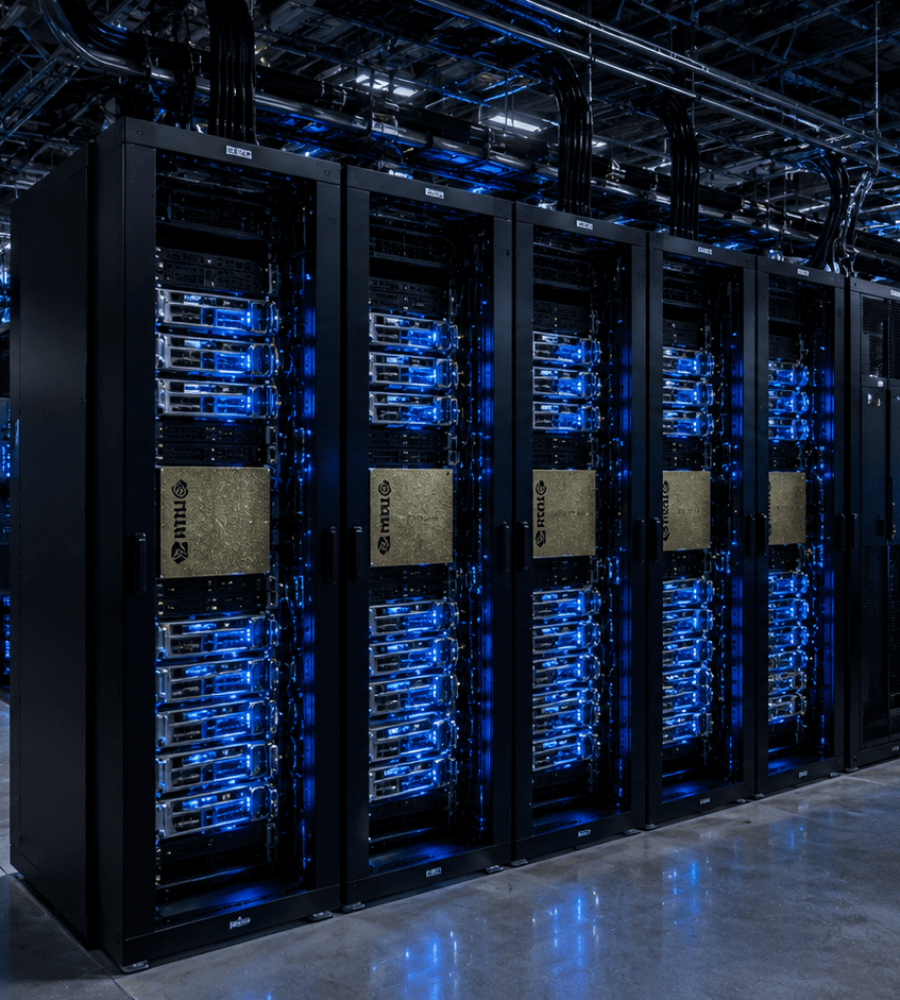
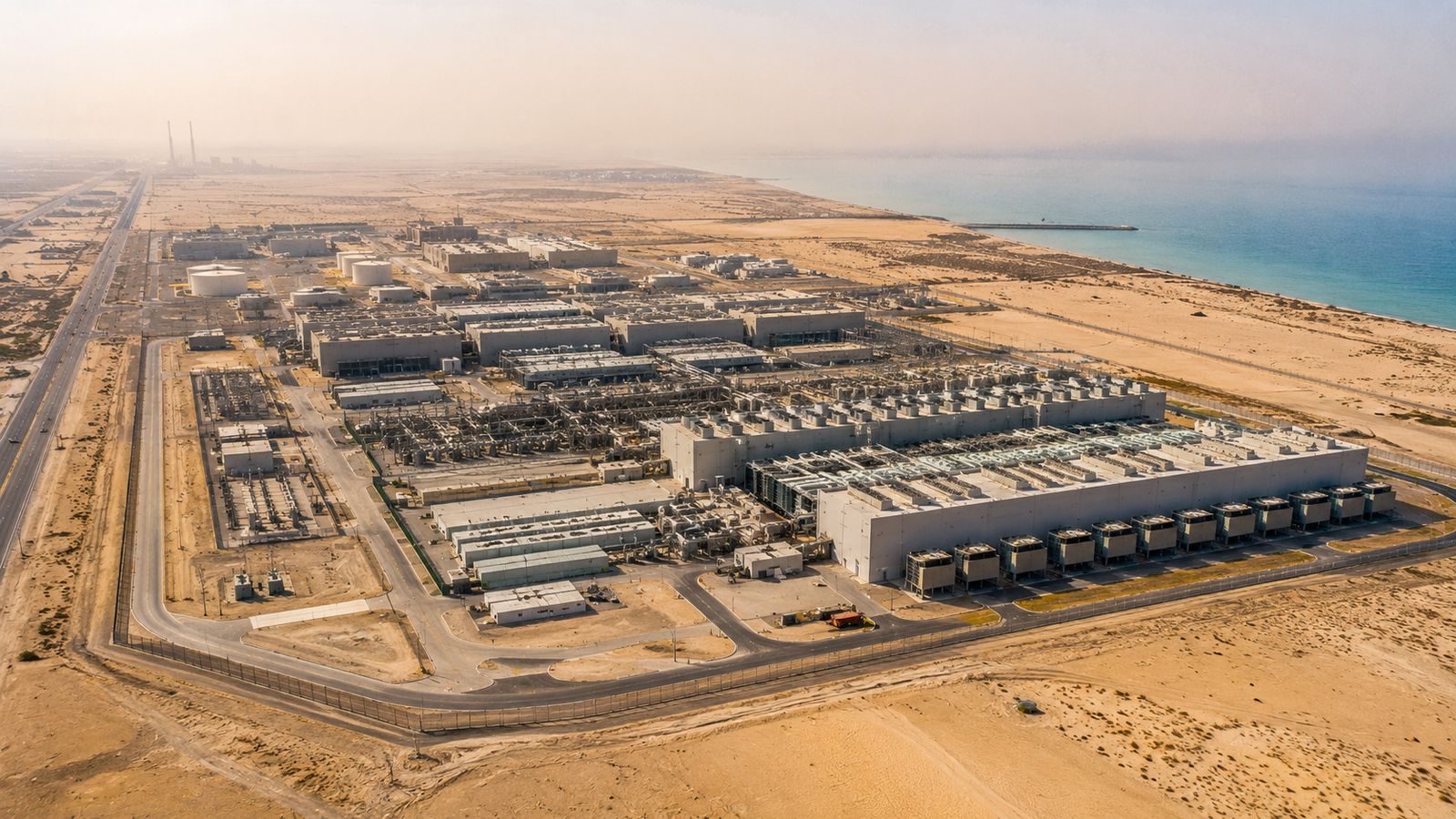
The Gulf is in the middle of one of the most ambitious AI infrastructure buildouts anywhere on earth. Saudi Arabia’s Public Investment Fund has committed $100 billion to Transcendence AI infrastructure. Microsoft has confirmed $5 billion for UAE data centers. OpenAI’s largest project outside the United States is a 5 gigawatt hyperscale complex in Abu Dhabi. Google, Amazon, and Oracle are all deploying capital across the region. The GCC had intended to triple its data center capacity between 2025 and 2030, and the investment pace suggests it is on track.
The MEA AI infrastructure climate problem is that this buildout is being engineered against design assumptions about ambient temperature, water availability, and cooling system performance that the region’s own climate trajectory is already undermining. The Middle East and North Africa is warming at nearly twice the global average rate. The UAE hit a record May temperature of 51.6 degrees Celsius in 2025. Saudi Arabia’s warming rate in recent decades is roughly 50 percent higher than the global average. Air conditioning already consumes over 70 percent of peak summer electricity consumption in some Gulf states, and cooling costs are projected to increase by 25 to 40 percent by 2040 as temperatures continue rising.
A data center campus built in 2026 will still be operating in 2056. The cooling infrastructure specified today, the chiller sizing, the cooling tower capacity, the ASHRAE design temperature assumptions embedded in the facility’s mechanical engineering, will be serving a climate that is materially hotter than the one it was designed for before half its operational life has elapsed. The financial models, the engineering specifications, and the sovereign AI strategies underpinning the Gulf’s AI buildout have not adequately priced that trajectory.
The MEA AI Infrastructure Climate Baseline Is Already Above Design Limits
Data center cooling systems are designed against ASHRAE thermal guidelines, which specify the range of outdoor temperatures and humidity conditions within which cooling infrastructure is expected to maintain server inlet temperatures within safe operating parameters. ASHRAE’s expanded envelope now supports intake temperatures up to 80.6 degrees Fahrenheit, roughly 27 degrees Celsius, with free cooling viable when outdoor wet-bulb temperatures fall below 15 degrees Celsius. Economiser modes, which use outdoor air directly for cooling and represent the most energy-efficient operating condition for data centers, require outdoor dry-bulb temperatures below 27 degrees Celsius to function effectively.
In the Gulf, that condition is met reliably for perhaps four to five months of the year. During the remaining months, outdoor temperatures in the UAE, Saudi Arabia, and Qatar routinely exceed 40 to 50 degrees Celsius during daylight hours. The entire free cooling economic advantage that makes Scandinavian and Canadian data centers so operationally efficient is structurally unavailable in the Gulf for the majority of the operating year. Every hour that ambient temperatures exceed the free cooling threshold is an hour during which mechanical cooling must run at full load, consuming substantially more energy than the same facility would consume in a cooler climate. The cooling penalty is not a design failure. It is a physics constraint that the region’s climate imposes on every facility built there.
The PUE Gap That Does Not Show Up in Investment Prospectuses
Power Usage Effectiveness is the metric through which the cooling penalty becomes financially legible. A best-in-class hyperscale facility in a cool northern European climate achieves a PUE of 1.03 to 1.08. The same hardware configuration in a Gulf climate, running full mechanical cooling for the majority of the year, operates at a PUE of 1.4 to 1.6 under typical conditions, with documented spikes to 1.75 or above during sustained extreme heat events. A Phoenix colocation facility reported its PUE spiking from 1.42 to 1.75 across a four-week stretch of 115-degree Fahrenheit days. The Gulf routinely delivers summer conditions more extreme than Phoenix for periods that extend across multiple months, not weeks.
The financial consequence of that PUE gap is not trivial. At a facility drawing 100 megawatts of IT load, the difference between a PUE of 1.08 and a PUE of 1.5 represents 42 megawatts of additional power consumption dedicated entirely to cooling overhead. At the Gulf’s cost of energy, that differential represents hundreds of millions of dollars in additional operating cost over a 20-year facility life. The investment prospectuses and sovereign AI strategy documents underpinning the Gulf buildout consistently cite cheap energy as the region’s primary competitive advantage. They less consistently acknowledge that the cooling penalty from operating in one of the world’s hottest climates consumes a substantial portion of that energy cost advantage before a single dollar of AI revenue is generated.
The Water Problem That Compounds the Cooling Problem
Cooling towers and evaporative cooling systems are the primary mechanism through which large data centers reject heat in climates where free air cooling is unavailable. They work by evaporating water, which carries heat away from the facility through phase transition. In temperate climates with reliable freshwater access, this is an operationally manageable and relatively inexpensive cooling approach. In the Gulf, it rests on a supply chain that begins with seawater and ends with desalinated freshwater produced at substantial energy cost before a single liter reaches a cooling tower.
Gulf states depend on desalination for between 60 and 90 percent of their freshwater needs, making them the most desalination-dependent region on earth. Gulf desalination plants consume the equivalent of 350,000 barrels of oil daily, at a cost exceeding $10 billion annually. As seawater temperatures rise, desalination efficiency drops by 1 to 2 percent for each additional degree of temperature. The MEA AI infrastructure climate problem therefore creates a compounding loop: higher ambient temperatures require more cooling, more cooling requires more water, more water requires more desalination, and more desalination consumes more energy at declining efficiency as seawater temperatures rise. Each element of that loop is moving in the wrong direction simultaneously.
The Water Consumption Numbers the Industry Is Not Highlighting
The UAE’s AI sector alone may require approximately 61 billion liters of water per year by 2030, according to Middle East Council on Global Affairs research. Saudi Arabia’s data centers consumed 15 billion liters of water in 2024. Preliminary modelling suggests that Saudi data centers could account for 87 billion liters annually as the buildout scales, roughly 35 percent of the country’s current total water output. These figures are not projections from climate activists. They are engineering consequences of deploying cooling tower-dependent data center infrastructure at the scale the sovereign AI programmes are announcing.
The global operators transplanting hyperscale data center designs from Virginia, Oregon, or the Netherlands into Riyadh, Dubai, or Doha are applying cooling specifications that were optimised for climates with plentiful freshwater, meaningful seasonal temperature variation, and reliable free cooling windows. The Middle East Council on Global Affairs put it directly: cooling designs that assume plentiful water and a modest diurnal temperature swing will falter where water is costly to desalinate and nights offer little relief from the heat. The Gulf has always had this problem. What is new is the scale at which AI infrastructure investment is amplifying it, and the absence of serious design-level reckoning with what that means for 20 to 30-year asset economics.
The Climate Trajectory That Design Assumptions Cannot Absorb
A data center commissioned in 2026 will operate through 2056 under a climate trajectory that research institutions are not projecting optimistically. The German Max Planck Institute of Chemistry has found that based on current emissions pathways, the Middle East will face unprecedented heatwaves that will make life in some areas impossible by the end of the century. Average temperatures in some Gulf areas are projected to increase by four degrees Celsius by 2050. The Paris Agreement target of 1.5 degrees of global warming already appears unachievable for the region given current trajectories. Under the more conservative scenarios, the Gulf’s coolest summers by mid-century will be as hot as the hottest summer peaks between 1981 and 2010.
For data center operators with 30-year asset lives, those projections are not distant concerns. A chiller system specified against 2026 design temperatures will be running in 2040, 2045, and 2050 under ambient conditions that are materially hotter than the conditions it was sized for. A cooling tower specified for the water consumption rates consistent with current desalination capacity will be demanding water in 2040 from a desalination system that is simultaneously serving a population whose cooling and potable water needs are also growing under the same temperature trajectory. The engineering assumption that the facility’s operating environment will remain within the design parameters has a declining probability of holding as the asset ages.
The PUE Drift That Climate Creates Over a Facility’s Life
The PUE penalty from operating in hot climates does not remain static across a facility’s life. It drifts upward as ambient temperatures rise, as cooling systems age and lose efficiency, and as rack densities inside the facility increase. A facility designed in 2026 for 100 kilowatt racks may be operating 500 kilowatt GB500-era GPU racks in 2032. The cooling infrastructure specified for the original density profile was not designed for that load. In a cool climate, operators address density growth through targeted cooling upgrades without compromising the overall facility PUE significantly, because the ambient temperature provides a buffer. In a Gulf climate operating near the top of its cooling envelope for the majority of the year, that buffer does not exist. Density increases eat directly into cooling headroom that was already constrained.
Uptime Institute’s surveys consistently show that global average PUE hovers around 1.55, reflecting real-world cooling inefficiency that design projections do not capture. Gulf facilities operating at or above that average during their best months are not carrying the margin that would allow them to absorb density growth, aging cooling infrastructure, and rising ambient temperatures simultaneously without either performance degradation, significant capital reinvestment in cooling upgrades, or both.
What the Gulf Is Actually Doing About It
The Gulf’s response to its MEA AI infrastructure climate challenge is genuine and in some respects innovative. Closed-loop liquid cooling systems eliminate evaporative water consumption entirely, substituting chip-level heat rejection for cooling tower evaporation. The UAE Ministry of Technology has indicated that liquid immersion cooling can yield energy savings of up to 40 percent relative to conventional air cooling in Gulf conditions. Several Gulf operators are deploying district cooling infrastructure, which delivers centralised chilled water to multiple facilities from large-scale plants, achieving cost and efficiency benefits that individual facility cooling systems cannot replicate. NEOM’s planned data infrastructure is designed to run entirely on renewable energy with integrated liquid cooling, targeting PUE ratios below 1.3 in a climate where that target is genuinely challenging.
Waste-heat-driven desalination is an emerging circular economy approach with specific relevance to the Gulf. Data centers convert nearly all their electrical input to heat, consistently releasing temperatures of 40 to 60 degrees Celsius in liquid cooling loops that are high enough to drive multi-effect distillation desalination. Rather than releasing that heat into the already hot Gulf atmosphere, facilities could use it to produce freshwater, turning a cooling waste product into a resource that the region desperately needs. The Atlantic Council has documented the feasibility of this approach and several Gulf facilities are actively piloting it. At scale, it could materially change the water economics of Gulf data center operations.
Why These Solutions Are Not Yet Embedded in the $100 Billion Buildout
The challenge with the Gulf’s technological response to its climate problem is that the innovative solutions are being developed alongside the buildout rather than embedded within it from the start. The majority of the announced Gulf AI infrastructure capacity is being designed using conventional cooling approaches adapted for hot-arid conditions rather than genuinely climate-native architectures. Liquid immersion cooling, closed-loop systems, and waste heat desalination integration require upfront capital investment, construction complexity, and operational expertise that conventional air-cooled colocation design does not. Under the timeline pressure of sovereign AI programmes and the competitive urgency of the hyperscaler land grab, operators are making design choices that prioritise speed to market over long-term climate resilience.
The consequence is a pipeline of infrastructure that will work adequately in 2026 and 2027, when ambient temperatures are within the parameters the engineering assumed, and will face progressive operational stress as the decade advances. The facilities that are built right for the Gulf climate in 2026 will have a compounding competitive advantage over the ones that are built fast. The current pipeline contains more of the latter than the former, and the capital already committed is not easily redirected once construction begins.
The Geopolitical Dimension That Adds Another Layer of Risk
The Gulf International Forum published analysis in April 2026 documenting that data centers in the UAE and Bahrain were directly struck during the conflict between the US, Israel, and Iran that disrupted Gulf energy infrastructure in 2025. The assumption that the Gulf is insulated from regional instability was, as the analysis noted, always tenuous. Both Saudi and Emirati oil infrastructure have been repeatedly targeted, and the conflict brought the region’s data ambitions into direct confrontation with its security environment. Hyperscale AI infrastructure is, by its nature, dual-use: the same facilities that serve commercial AI workloads carry strategic military and intelligence relevance that makes them targets in regional conflicts in ways that data centers in Virginia or Frankfurt are not.
This geopolitical exposure layer sits on top of the climate exposure layer, creating a compounding risk profile for MEA AI infrastructure investment that is not reflected in the valuation frameworks that sovereign wealth funds and hyperscalers are applying to these assets. Insurance markets are beginning to grapple with both dimensions simultaneously. Willis Towers Watson published analysis in April 2026 noting that chronic climate risks including extreme heat and drought can push up cooling costs, squeeze margins, and threaten insurability in water-stressed regions. The insurability question for Gulf data center assets is not theoretical. It is a live commercial risk that will determine the financing terms available to operators as the climate trajectory and geopolitical environment both become more legible over the next five years.
The Sovereign AI Contradiction Nobody Is Naming
There is a specific contradiction embedded in the Gulf’s sovereign AI strategy that the scale of the buildout is making increasingly difficult to ignore. The national AI programmes driving the buildout, Saudi Vision 2030, UAE AI Strategy 2031, Qatar’s Digital Agenda 2030, are motivated in significant part by the need to diversify beyond oil dependence and to position the Gulf as a durable hub for the global digital economy. The infrastructure being built to serve that strategy depends on desalination for water, on fossil fuel generation for power during peak cooling demand, and on cooling systems whose efficiency degrades as the climate warms. The sovereign AI infrastructure that is supposed to represent post-oil economic diversification is, in its current form, operationally dependent on the same resource economics it is meant to transcend.
That contradiction does not make the Gulf buildout wrong. It makes it incomplete. The facilities that resolve the contradiction by combining genuine renewable power, climate-native cooling architecture, and water systems that do not depend on energy-intensive desalination are building something that is genuinely durable. The facilities that address the contradiction with marketing materials about sustainability while building conventional cooling infrastructure on fossil-fuel-backed power are creating assets whose competitive position will deteriorate as the climate trajectory advances and as enterprise customers with their own sustainability obligations begin applying more rigorous scrutiny to the actual operational footprint of the cloud infrastructure they purchase.
The Asset Life Question That the Investment Models Have Not Asked
Infrastructure investment in data centers is typically evaluated on 20 to 30-year asset lives. The returns that sovereign wealth funds and institutional investors require from these assets are calculated against the assumption that the facilities will generate contracted revenue across that horizon. A 30-year asset life for a Gulf data center commissioned in 2026 extends to 2056. The climate projections for the Gulf through 2056 do not describe a stable operating environment for facilities designed against 2026 ambient temperature assumptions. They describe an environment that is 2 to 4 degrees Celsius hotter on average, with extreme temperature events that currently occur periodically becoming the seasonal norm.
The financial models that are underwriting the Gulf AI buildout have not been built against those projections. They have been built against current operating costs, current water prices, and current cooling efficiency figures. That is the same analytical failure that characterises the AI infrastructure depreciation debate: assuming that the operating environment the asset was built for will remain stable across the full accounting life of the asset, in a context where the evidence available at the time of investment clearly suggests it will not.
The Operators Building for the Climate That Is Coming
The operators who will hold the most durable assets in the MEA AI infrastructure market through 2040 and beyond are the ones who are designing against the climate trajectory rather than the current baseline. That means liquid cooling as standard rather than as premium. It means closed-loop water systems rather than cooling tower evaporation. It means renewable power procurement that covers peak summer cooling load rather than annual average consumption. It means site selection that prioritises proximity to deep seawater cooling resources or sites with natural temperature advantages, such as elevated terrain in Saudi Arabia’s western highlands where ambient temperatures run 8 to 10 degrees Celsius below Gulf coastal averages. And it means financial models that are stress-tested against ambient temperatures that are 3 degrees higher than today’s design assumptions, because the climate trajectory says those temperatures are coming within the asset’s operating life.
The Gulf’s AI infrastructure ambitions hitting a physical security wall nobody planned for documented one dimension of this risk. The climate dimension is larger, more structural, and more financially consequential than the security dimension, because it operates continuously rather than episodically and because its trajectory is in one direction only. The Gulf has the capital, the sovereign ambition, and the genuine strategic rationale to become a durable AI infrastructure hub. Whether it builds the infrastructure that the climate it actually has requires, or the infrastructure that the climate it used to have would have accommodated, is the decision that will determine whether the $100 billion being deployed creates 30-year assets or 15-year ones.