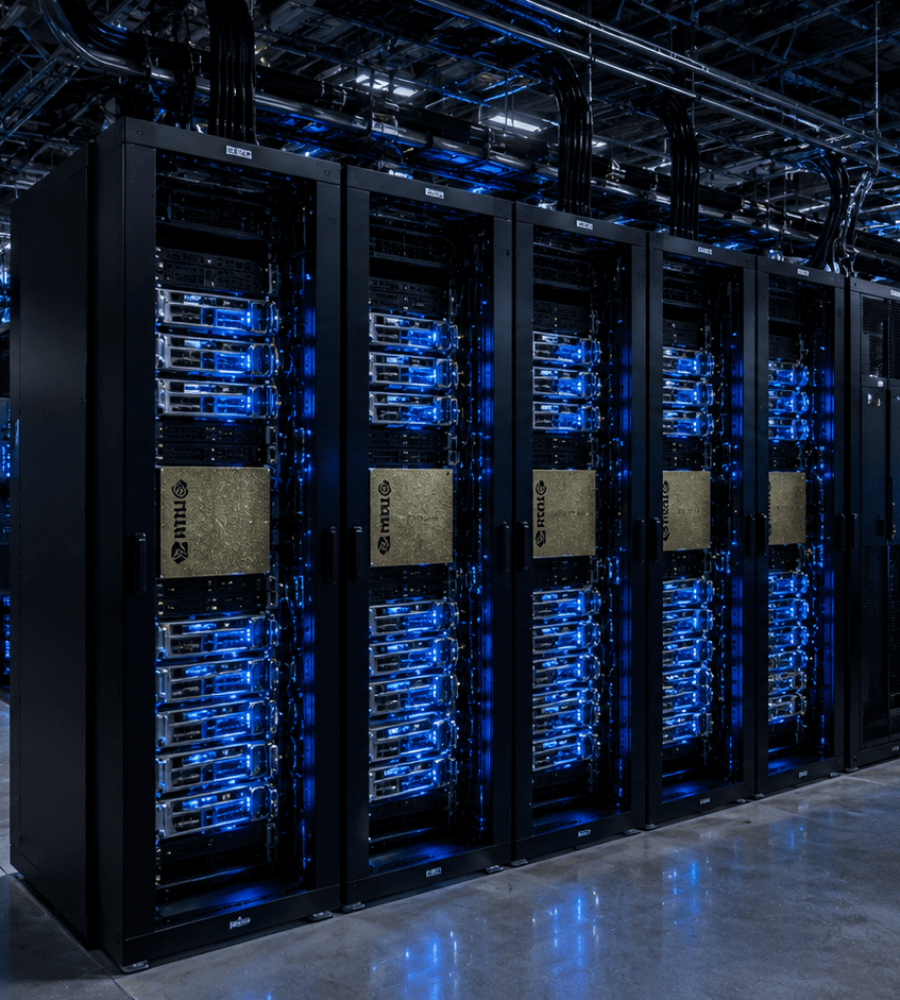
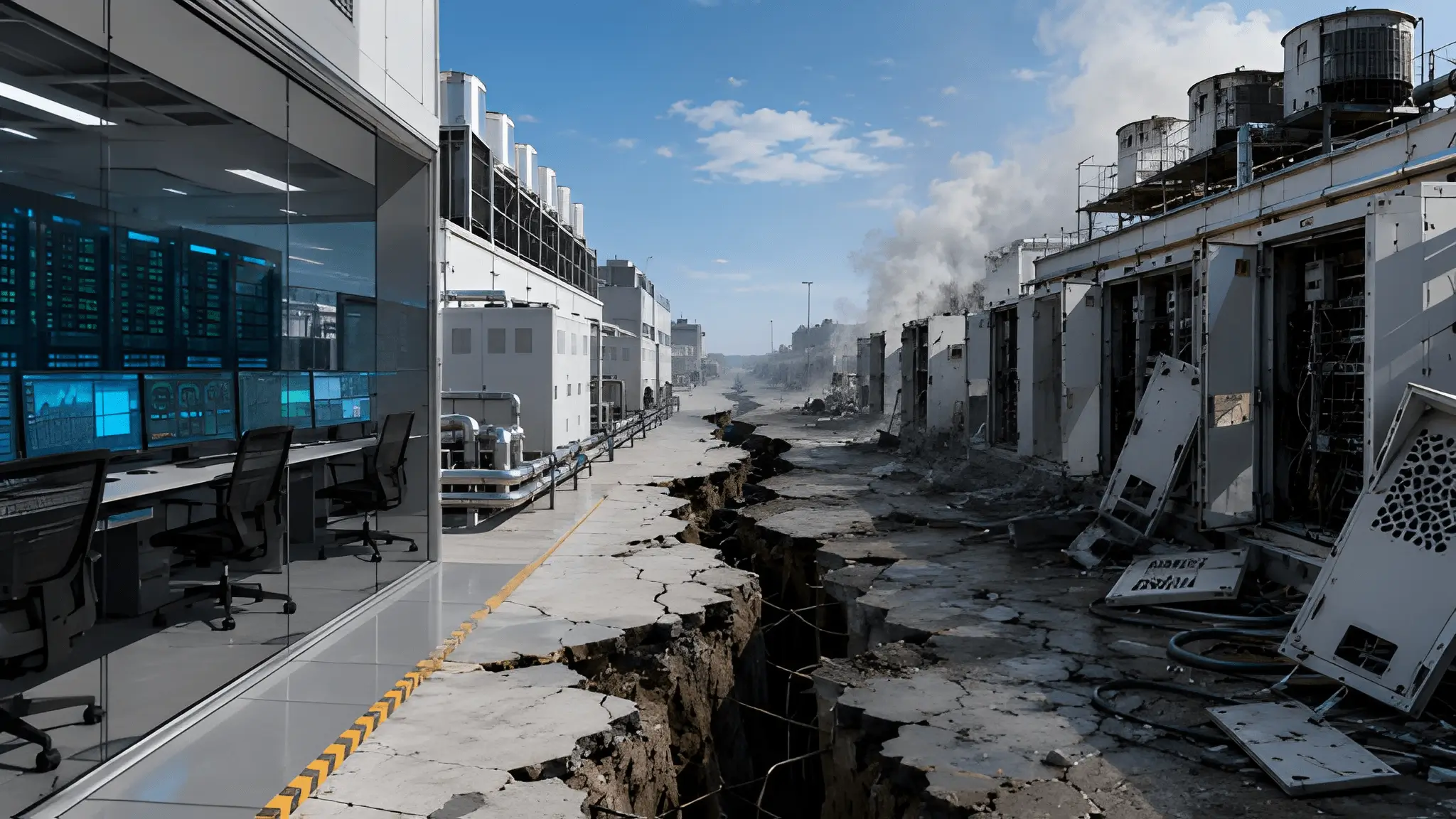
At midnight, the cooling alarms inside the facility looked ordinary enough to ignore. A small pressure imbalance appeared across a secondary liquid loop, one telemetry sensor briefly drifted outside tolerance, and a rack controller retried a firmware handshake twice before recovering. Nothing failed catastrophically during those first twelve minutes, which made the event deceptively easy to dismiss from the operations dashboard. The technicians on shift followed the escalation matrix exactly as documented, yet the room still carried the uneasy silence of a system behaving differently than expected. In some AI facilities, unstable interactions between thermal management systems and power orchestration layers can gradually reduce GPU utilization after seemingly minor infrastructure disturbances. The infrastructure itself remained technically operational, although the people inheriting it no longer understood the deeper interactions hiding beneath the automation layers.
Modern AI facilities increasingly enter production with extraordinary engineering precision but surprisingly fragile operational continuity once the commissioning phase concludes. Construction teams, OEM specialists, firmware engineers, controls integrators, and thermal consultants spend months tuning systems during deployment before disappearing almost immediately after handover. Operators inherit dense ecosystems of interdependent cooling systems, power chains, orchestration software, environmental sensors, and automation logic that often behave predictably only under ideal conditions. Documentation packages describe procedures in exhaustive detail, yet they rarely capture the intuition required to diagnose subtle interactions under abnormal stress. Many teams therefore discover the limits of their operational understanding only after warranty coverage ends and vendor escalation pathways slow dramatically. The result is not an infrastructure crisis caused by defective equipment but an operational maturity gap created by systems that scale faster than institutional knowledge.
The Day the Experts Disappear
Commissioning periods inside AI facilities resemble temporary command centers where specialists continuously interpret live behavior across interconnected infrastructure layers. Electrical engineers analyze transient responses inside power distribution chains while cooling vendors tune thermal balancing curves against live compute densities. Controls integrators modify sequencing logic in real time because theoretical models rarely behave perfectly once GPU clusters begin drawing production-scale loads. Every anomaly becomes a learning event during this phase because the people who designed the systems also understand why the systems behave a certain way. Once commercial acceptance closes, however, most of those experts leave within weeks and operational responsibility shifts toward permanent site teams. The transition appears orderly on paper even though the knowledge transfer frequently captures procedures rather than diagnostic reasoning.
Operations teams can usually execute routine tasks effectively during the first post-launch quarter because the infrastructure still behaves within calibrated tolerances established during commissioning. Problems emerge later when environmental variability, workload volatility, firmware updates, and maintenance cycles gradually introduce conditions that were never fully documented during handover. A technician may know how to restart a cooling sequence from the runbook without understanding how a slight valve timing drift affects pressure stability across adjacent liquid loops. Another operator might recognize an alarm signature but fail to connect it with an upstream synchronization issue inside the building management layer. Meanwhile, vendor escalation pathways become slower after contractual support windows narrow and site familiarity disappears from the external teams supporting the environment. Facilities then enter a dangerous operational phase where teams can operate infrastructure procedurally while lacking the systems intuition required to interpret subtle degradation patterns before they compound.
Runbooks Don’t Teach Instinct
Documentation remains essential inside mission-critical facilities, yet procedural accuracy alone rarely protects complex AI infrastructure during cascading instability events. Standard operating procedures work effectively when systems fail in isolation because the response path remains predictable and bounded. AI environments behave differently because thermal management, power orchestration, workload schedulers, environmental telemetry, and firmware controls increasingly influence each other simultaneously under high-density conditions. A pressure imbalance inside one liquid cooling branch can indirectly alter fan behavior, rack inlet temperatures, workload migration patterns, and power draw sequencing within minutes. Operators following isolated procedures may therefore resolve the visible symptom while missing the interconnected behaviors developing elsewhere across the facility. Experience becomes valuable not because seasoned engineers memorize more steps but because they recognize relationships hidden between seemingly unrelated anomalies.
Runbooks also struggle because infrastructure behavior changes continuously after deployment while documentation updates rarely maintain the same pace. Firmware revisions alter thermal response curves, orchestration platforms introduce new automation dependencies, and monitoring layers evolve faster than operational training programs. An operator reading a static escalation guide may technically follow the correct instructions even though the environment underneath those instructions has already changed materially since commissioning. Consequently, teams begin depending heavily on tribal interpretation shared informally between experienced personnel rather than structured institutional learning. The facilities that maintain operational resilience usually invest aggressively in scenario-based simulations where engineers practice interpreting compound failures instead of rehearsing isolated alarms. Those exercises develop pattern recognition capabilities that static documentation cannot replicate because instinct forms through repeated exposure to unpredictable system behavior rather than procedural memorization alone.
The Silent Skill Drain After Go-Live
Staffing models inside many newly launched facilities gradually shift toward operational efficiency once executive pressure moves from deployment milestones to cost optimization targets. Specialized commissioning personnel rotate off-site while outsourced operations teams assume larger portions of day-to-day infrastructure oversight. In some environments, increased automation can create pressure to shorten onboarding timelines and reduce dependence on highly specialized operational staffing after go-live. New technicians inherit sophisticated environments where dashboards simplify operational visibility without explaining the engineering assumptions beneath the visualizations. Over time, the facility still appears stable externally even as institutional understanding quietly erodes beneath routine operational activity. The most damaging knowledge loss usually occurs incrementally rather than through a single dramatic staffing event.
Turnover amplifies the problem because experienced engineers frequently become informal interpreters of infrastructure behavior long before organizations formally recognize their importance. One senior operator may understand how a particular chiller behaves during rapid workload ramping because they observed commissioning anomalies firsthand months earlier. Another technician may know that specific telemetry spikes historically precede synchronization instability between cooling and power orchestration systems. When those individuals leave, much of that operational context disappears because the knowledge never existed inside formal documentation systems. Furthermore, outsourced staffing structures sometimes optimize for procedural consistency instead of diagnostic depth, creating teams that respond efficiently to alarms while struggling to investigate subtle behavioral drift. Facilities therefore accumulate operational blind spots over time despite maintaining strong compliance metrics, healthy uptime statistics, and apparently stable infrastructure performance across standard reporting windows.
AI Infrastructure Is Creating “Black Box Operations”
Automation layers inside modern AI campuses increasingly abstract infrastructure behavior into simplified operational dashboards designed for speed and scalability. Operators can monitor thousands of telemetry points simultaneously through centralized interfaces that translate complex engineering interactions into concise status indicators. These systems improve responsiveness dramatically under normal operating conditions because teams can identify anomalies faster than traditional manual oversight models allowed. Problems arise when operators begin trusting visual abstractions without understanding the underlying logic controlling automated decisions. A dashboard may display healthy thermal conditions while orchestration software quietly compensates for hidden inefficiencies developing elsewhere in the environment. The facility therefore appears stable operationally even though multiple systems may already be operating outside ideal tolerance thresholds.
This abstraction can create environments where operational visibility expands faster than deeper systems-level understanding across site teams. Engineers can observe enormous amounts of real-time telemetry yet struggle to explain why automation layers reached specific decisions during abnormal events. Some facilities now operate with orchestration systems capable of dynamically redistributing workloads, adjusting thermal sequencing, modifying power allocation, and triggering predictive maintenance workflows automatically. However, some operational teams may have limited exposure to the logic layers governing increasingly automated orchestration behaviors. Consequently, troubleshooting becomes significantly harder once automation itself behaves unexpectedly because operators lack the contextual understanding necessary to challenge or override machine-driven logic confidently. The danger does not originate from automation replacing human expertise entirely but from organizations assuming visibility tools automatically create understanding without sustained technical depth behind them.
Why Small Misconfigurations Become Million-Dollar Events
Post-warranty incidents inside AI facilities rarely begin with dramatic hardware destruction or catastrophic infrastructure collapse. Small calibration drifts, synchronization delays, firmware mismatches, airflow imbalances, or sensor inaccuracies often initiate the earliest stages of operational instability. Individually, those conditions appear manageable because each issue remains technically minor when analyzed in isolation. The danger emerges when teams fail to interpret how multiple low-severity anomalies interact simultaneously across interconnected systems. A slight sequencing delay between cooling activation and workload ramping may create intermittent thermal spikes that remain invisible during routine monitoring windows. Those spikes can gradually destabilize adjacent infrastructure layers until compute reliability degrades under production-scale load conditions.
Financial consequences escalate quickly because AI workloads amplify the economic impact of even short-lived infrastructure instability. High-density GPU clusters consume extraordinary amounts of power while supporting workloads that often carry direct commercial, research, or customer-service implications. A cooling imbalance that reduces sustained GPU performance by only a few percentage points can still create significant financial consequences through delayed training throughput, interrupted inference activity, or degraded utilization efficiency across large-scale deployments. Nevertheless, the underlying root cause frequently traces back to delayed human interpretation rather than immediate equipment failure. Teams recognize symptoms after cascading interactions become operationally visible instead of identifying the early-warning indicators when intervention remains relatively simple. The infrastructure therefore fails operationally long before it fails mechanically because complexity compounds faster than organizational understanding inside post-commissioning environments.
The Next Reliability Crisis May Be Human, Not Technical
The future reliability profile of AI infrastructure will depend increasingly on operational maturity rather than hardware sophistication alone. Facilities continue adding automation, telemetry density, predictive analytics, and orchestration intelligence at extraordinary speed because compute demand rewards efficiency aggressively. Yet operational resilience still depends heavily on people capable of interpreting ambiguous system behavior before instability spreads across interconnected infrastructure layers. Engineering teams that understand why systems behave a certain way consistently outperform organizations relying exclusively on procedural execution and automated visibility platforms. The next generation of resilient facilities will likely treat knowledge retention as seriously as redundancy planning because operational intuition now functions as a core reliability asset.
Many operators already recognize that post-launch infrastructure stability requires continuous learning models extending far beyond the commissioning period itself. Scenario-based training, cross-disciplinary diagnostics, embedded vendor collaboration, and long-duration operational simulations are becoming increasingly important inside advanced AI campuses. These investments may appear operationally expensive in the short term, although they often cost far less than the compounded impact of misinterpreted anomalies during production-scale failures. Ultimately, the greatest long-term vulnerability inside modern AI facilities may not come from defective infrastructure but from organizations inheriting complexity they were never truly taught to understand deeply. The systems continue becoming more autonomous every quarter, yet the responsibility for recognizing when those systems drift outside safe operational behavior still belongs to human operators interpreting signals beneath the dashboards.