
Malaysia Data Centers Surge as Power Availability Reorders Asia’s Digital Infrastructure
Asia’s data center expansion cycle is rapidly shifting toward countries with available electricity, lower deployment friction, and land capable of supporting next-generation artificial intelligence infrastructure. Malaysia and India now sit at the center of that transition as hyperscale operators, institutional investors, and AI cloud providers increasingly prioritize power-secure markets over traditional gateway hubs. The latest Asia Pacific data center outlook from CBRE shows Johor recording a 53% year-on-year increase in live capacity during 2025, making it one of the fastest-growing infrastructure corridors in the region.
Melbourne followed with 37% growth, while Mumbai expanded by 20%, underscoring how capital continues to migrate toward scalable energy ecosystems instead of saturated metropolitan clusters. Mature markets including Singapore and Hong Kong SAR posted materially slower growth than emerging power-advantaged markets, reflecting mounting constraints tied to electricity availability, cooling infrastructure, and regulatory oversight. The trend points toward a broader restructuring across Asia’s digital infrastructure economy as operators seek sufficient power capacity for AI-driven compute deployments.
India Emerges as an AI Infrastructure Power Market
India’s rising position in the regional rankings reflects more than simple demand growth from cloud adoption or enterprise digitization. Investors increasingly view the country as an important AI infrastructure destination because large campuses can still secure land parcels, grid connectivity, and long-term expansion potential at a scale that remains difficult in several established Asian markets. Mumbai continues to attract substantial hyperscale interest due to subsea cable connectivity and financial sector demand, yet secondary Indian markets are also drawing attention as operators evaluate future AI deployment corridors. CBRE’s report argues that electricity access now plays a decisive role in determining where capacity can realistically come online, particularly for high-density compute environments supporting generative AI training and inference workloads. That dynamic has increasingly influenced site selection priorities throughout the region and supported investor interest in India’s broader infrastructure ecosystem.
Power Constraints Pressure Mature Asia Pacific Data Center Markets
The report also highlights how mature data center markets are struggling to accommodate the requirements of next-generation AI systems. Singapore and South Korea, long viewed as premium digital infrastructure hubs, face increasing challenges linked to power procurement and advanced cooling demands. Government authorities in those markets have introduced policy measures aimed at balancing economic growth with energy management objectives, including closer oversight of infrastructure expansion and efficiency requirements. Those measures have created additional urgency for hyperscalers seeking near-term deployment capacity across Asia Pacific. Markets such as Malaysia and India therefore appear increasingly well positioned because they can offer both physical expansion opportunities and comparatively greater flexibility for future AI infrastructure scaling. The shift could represent a broader structural change in regional investment patterns rather than a temporary redistribution of demand.
“Asia Pacific’s data centre market is undergoing a significant reordering,” said Ada Choi, Head of Research, Asia Pacific for CBRE. “Growth is shifting from traditional Tier I markets toward power-advantaged locations. As AI adoption accelerates, Asia Pacific is expected to remain one of the most important global growth regions, with attractive opportunities in power-secure, AI-ready markets.”
Johor Becomes Southeast Asia’s Fastest-Rising Data Center Hub
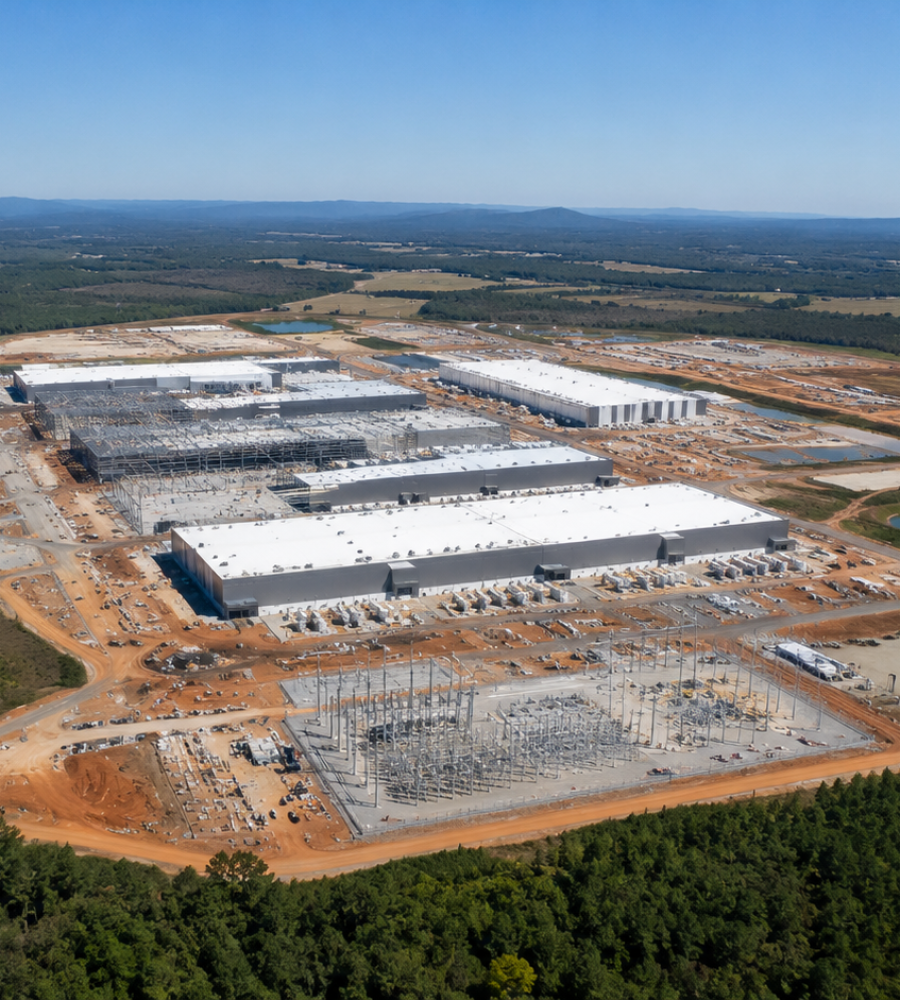
Malaysia’s emergence as a major AI infrastructure market has accelerated particularly around Johor, where operators continue building large-scale campuses designed for hyperscale and high-density computing requirements. The state’s proximity to Singapore gives cloud providers geographic continuity while avoiding some of the power and land limitations affecting the city-state. Investors increasingly view Johor as one of the regional locations capable of supporting substantial multi-phase developments tied to future AI demand growth. The 53% surge in live capacity during 2025 reflects how quickly the market has matured from an overflow destination into a strategic infrastructure center in its own right. Developers increasingly position Malaysia as an AI-ready deployment market capable of accommodating large electricity requirements associated with next-generation compute environments. As a result, regional competition for power-secure land banks has intensified sharply across the country.
Construction economics now represent another defining factor shaping the industry’s expansion strategy throughout Asia Pacific. Higher material costs, grid interconnection complexity, and extended project timelines have forced operators to reconsider how they structure new developments. Investors and developers increasingly pursue partnership-led development strategies designed to accelerate permitting processes and secure electricity access earlier in the development cycle. These approaches also help global operators navigate complex regulatory processes in fast-growing markets while reducing delays associated with utility approvals and site acquisition. The report suggests this operational shift may increasingly differentiate markets capable of scaling quickly from those facing bureaucratic or energy-related bottlenecks. Meanwhile, investors continue directing capital toward regions where execution certainty remains comparatively stronger.
Capital Strategies Shift Toward Long-Term Digital Infrastructure Assets
Investment structures inside the sector are also evolving as institutional capital seeks more flexible exposure to digital infrastructure assets. CBRE reported that Asia Pacific data center investment reached a record US$11.6 billion during 2025, alongside continued growth in entity-level transactions tied to operating companies and platform investments. Investors increasingly prefer structures that provide direct operational exposure, liquidity flexibility, and scalable portfolio expansion rather than purely passive real estate ownership. Fund management strategies and capital recycling models have therefore gained traction because they allow operators to expand while maintaining healthier balance sheets. The shift reflects a growing institutional view that digital infrastructure increasingly behaves more like a long-duration utility asset than a conventional commercial property category. Accordingly, infrastructure-focused investment strategies continue gaining momentum across the sector.
AI Neocloud Providers Redraw Regional Infrastructure Demand
Another major force reshaping Asia Pacific’s infrastructure landscape involves the rapid emergence of AI-focused cloud providers commonly referred to as neoclouds. These companies specialize in high-performance computing environments optimized for artificial intelligence workloads and increasingly compete alongside traditional hyperscale cloud platforms. Their expansion across Asia Pacific has contributed to rising demand for large campuses capable of supporting dense GPU deployments and substantial electricity consumption profiles. Global operators and regional entrants alike are increasingly seeking footholds in markets where power access remains achievable at scale. However, the segment remains relatively early-stage, particularly as operators and infrastructure providers evaluate the long-term stability and financing durability of newer market participants. Even so, the sector’s expansion trajectory continues influencing regional infrastructure planning decisions.
“AI is reshaping how infrastructure is selected and deployed across Asia Pacific,” said Matt Madden, Senior Managing Director, Data Centre Solutions, Asia Pacific for CBRE. “For neocloud providers, access to power is increasingly outweighing traditional location advantages. This is directing demand toward markets that can support high-density campuses at scale, particularly across India, Malaysia, and parts of Southeast Asia.”
AI Infrastructure Demand Prioritizes Energy-Ready Markets
The growing emphasis on AI-ready infrastructure increasingly positions electricity availability as the defining competitive advantage for regional data center markets. Countries capable of delivering stable power, expandable campuses, and faster development timelines are attracting increasing shares of global infrastructure investment. India and Malaysia now stand among the notable beneficiaries of that shift as operators prepare for what could become a multi-year expansion cycle driven by artificial intelligence deployment, cloud growth, and enterprise digitization. Their rise also reflects how digital infrastructure strategy is increasingly extending beyond connectivity advantages toward broader considerations involving energy resilience and long-term scalability. Furthermore, the competition for power-secure markets will likely intensify as AI models become larger and compute requirements continue climbing. The next phase of Asia’s data center economy could therefore depend less on geography alone and more on which countries can sustainably support the energy demands associated with the AI era.