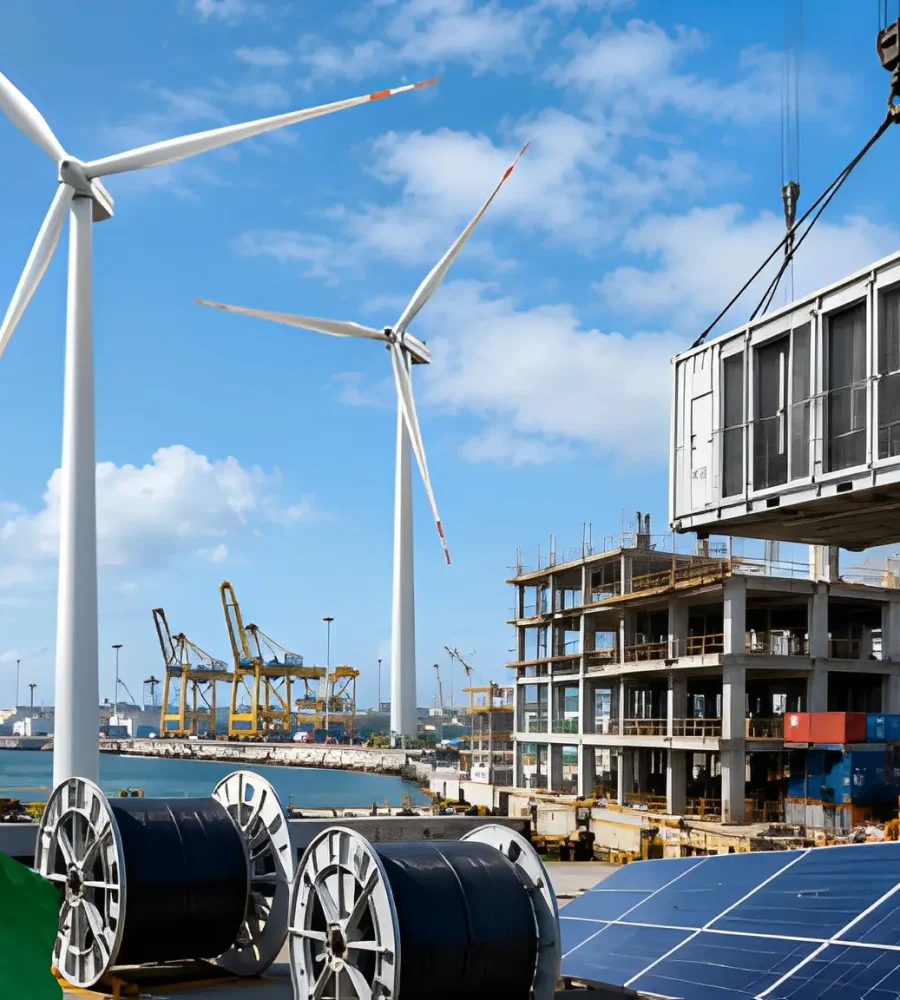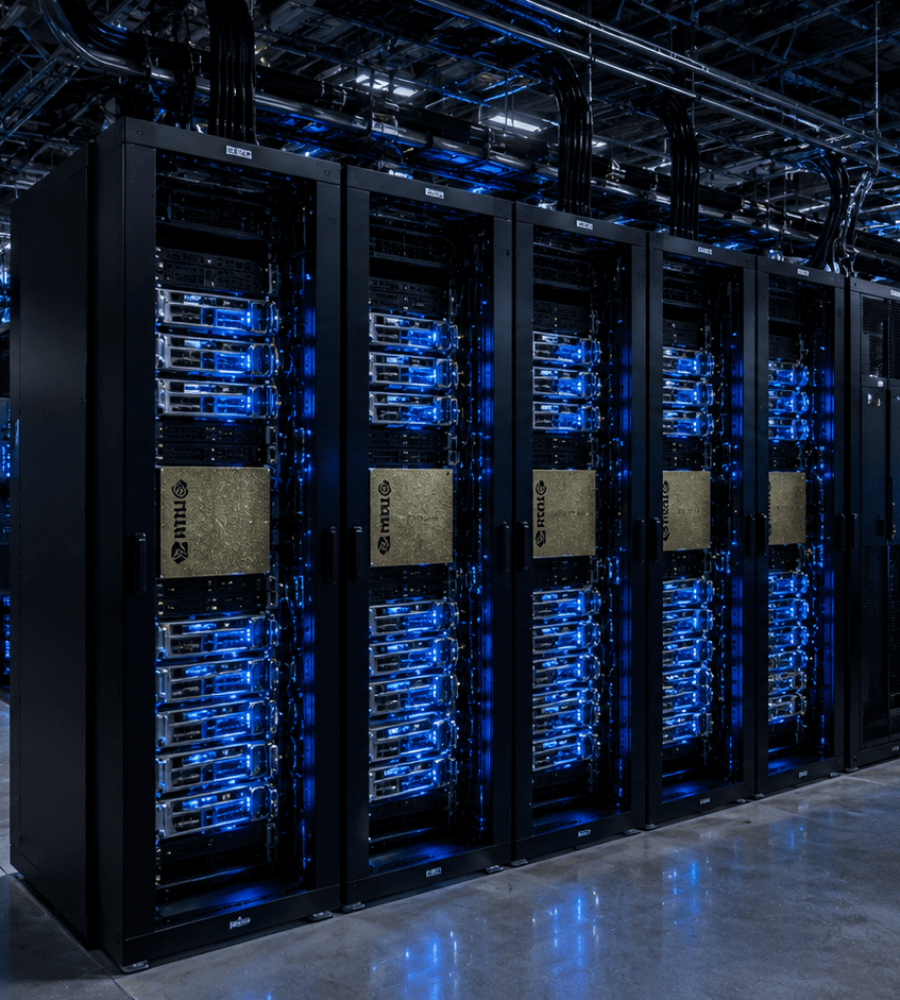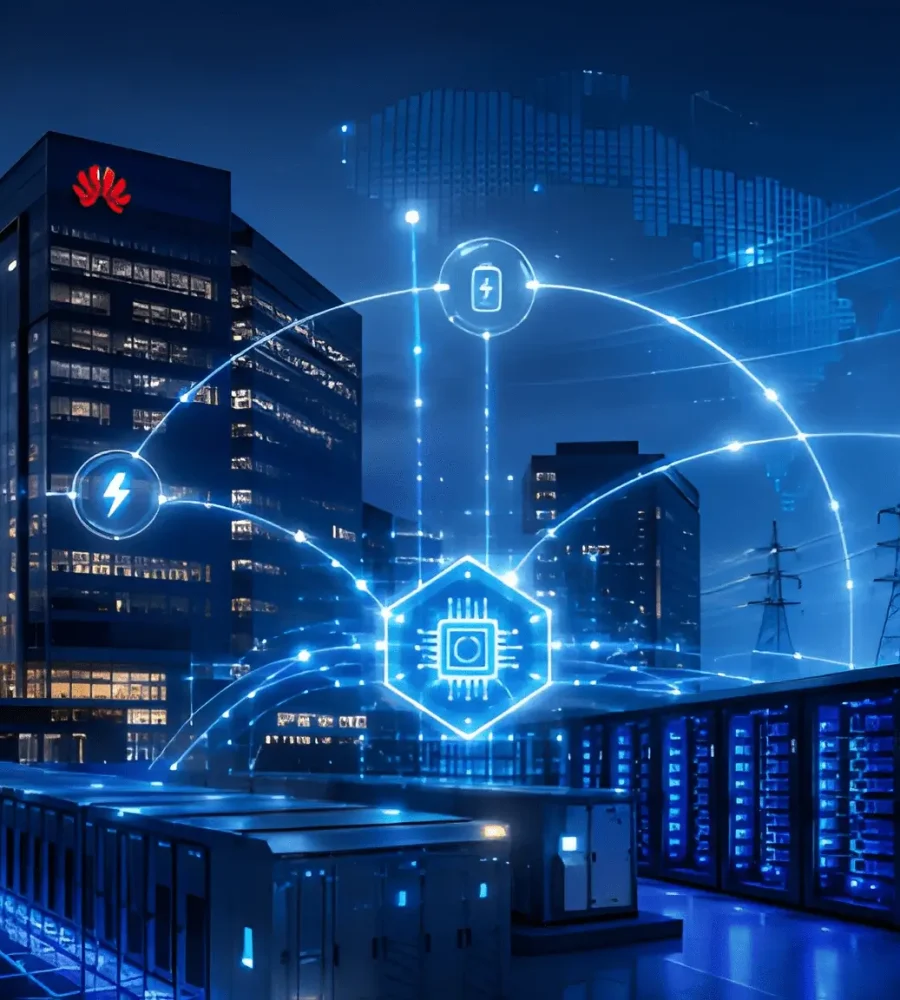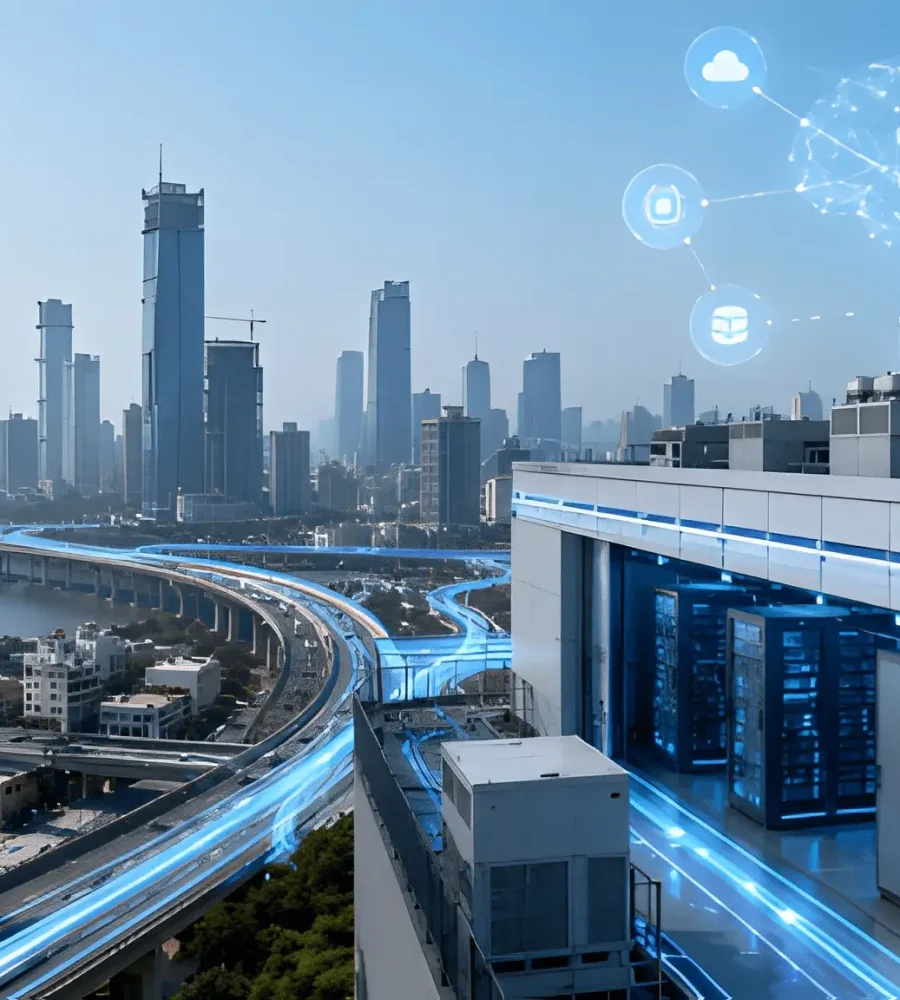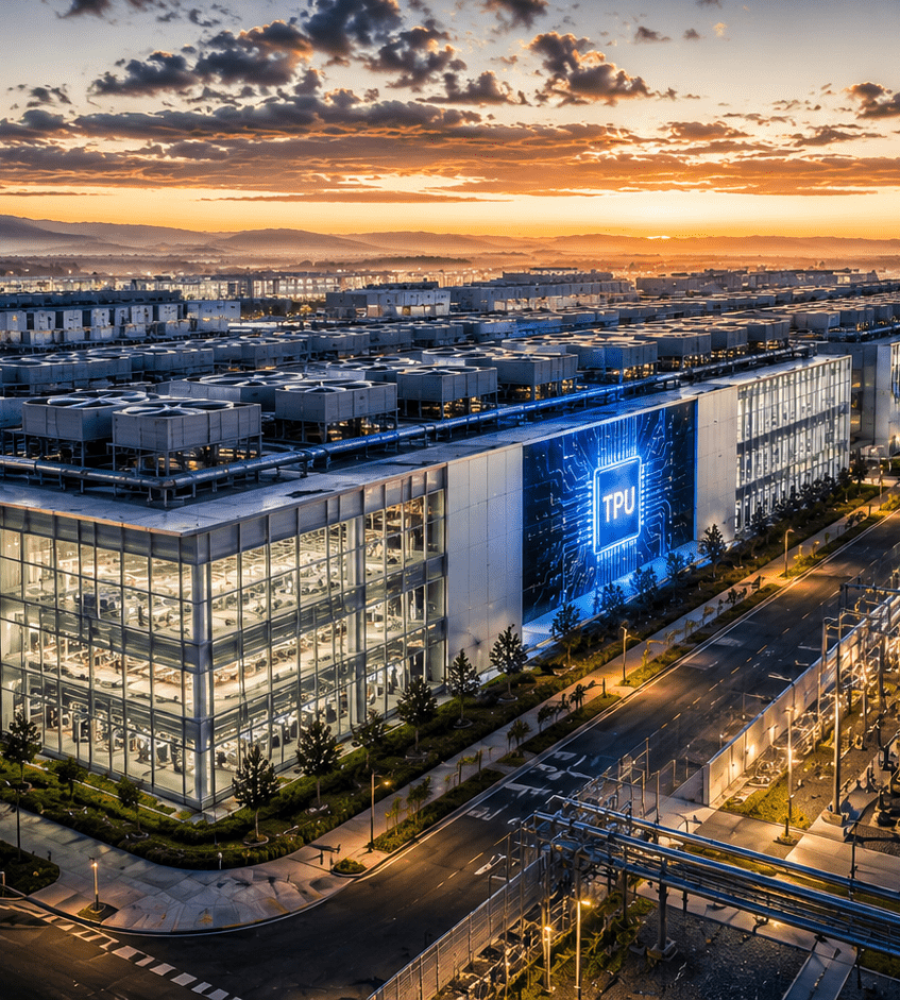
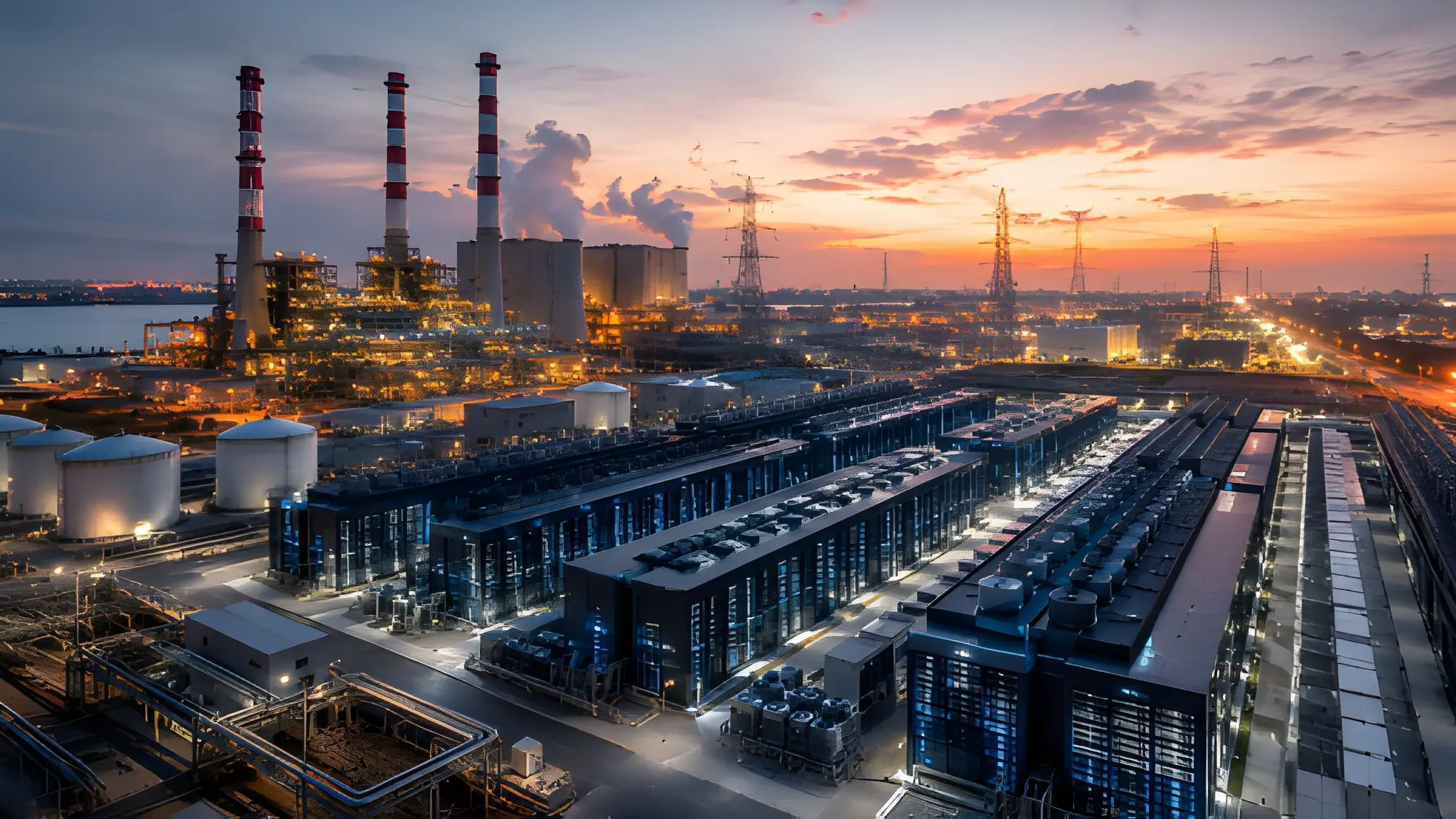
A decade ago, the physical identity of a data center felt relatively easy to define. Rows of servers sat behind secured doors, network engineers monitored traffic patterns, and electrical redundancy stayed largely invisible unless a utility feed failed unexpectedly. Mechanical infrastructure mattered, but most operators still treated it as supporting architecture wrapped around the real asset, which was compute. That distinction has started to collapse inside the newest hyperscale campuses now being built for AI-scale workloads.
The modern AI campus behaves less like a passive digital warehouse and more like an industrial energy conversion site that continuously balances electricity, heat, water flow, combustion readiness, and workload scheduling in real time. Operators now coordinate fuel reserves, thermal transfer systems, substation controls, chemical treatment loops, and high-density cooling corridors with the same operational discipline traditionally associated with utility infrastructure. The shift did not emerge from branding strategy or architectural preference because the physics of accelerated computing forced it into existence. High-density compute clusters consume power in patterns that resemble industrial manufacturing loads far more than traditional enterprise IT deployments.
Inside many hyperscale campuses, the most important conversations no longer happen around server procurement alone because energy orchestration increasingly determines whether advanced compute infrastructure can operate reliably at scale. Electrical engineers, cooling specialists, industrial mechanics, and process control operators now influence uptime outcomes as directly as software architects or network teams. Utility interconnections, water recirculation systems, and thermal stability have become operational constraints that shape expansion timelines, land selection, and even workforce planning. The result is a new type of industrial site where digital infrastructure and energy infrastructure have effectively merged into the same operational organism.
The Rise of the ‘Load Dispatcher’ Job Title
The vocabulary inside large AI campuses has started to sound remarkably similar to the language used inside regional power operations centers because workload density now depends on tightly coordinated energy management. Operators increasingly hire specialists responsible for balancing electrical draw, cooling demand, and equipment sequencing across entire campuses in real time. Some of these operational responsibilities increasingly resemble roles traditionally associated with utility dispatching, thermal operations management, energy coordination, and industrial process supervision rather than conventional enterprise IT administration. These roles emerged because modern GPU clusters create volatile and concentrated electrical demand patterns that require active operational balancing throughout the day. Conventional IT staffing structures never anticipated an environment where compute orchestration and power orchestration would become operationally inseparable.
The operational priorities attached to these new positions differ sharply from legacy data center management models because the focus now extends beyond uptime into continuous resource optimization. Dispatch teams monitor transformer loading, chilled water temperatures, power quality conditions, backup generation readiness, and thermal recovery rates while simultaneously coordinating compute scheduling windows. Large campuses increasingly operate rotating shifts that resemble industrial control environments instead of traditional network operation staffing patterns built around ticket escalation workflows. Mechanical systems now influence compute performance directly, which means thermal instability can affect inference latency or GPU efficiency long before an outright outage occurs. Operators therefore need personnel capable of interpreting electrical telemetry and process behavior with the same precision once associated mainly with utility-grade operations.
Utility Thinking Moves Inside The Campus
The hiring profile for hyperscale infrastructure has consequently shifted toward industrial engineering disciplines that rarely intersected with cloud operations in earlier years. Mechanical process engineers, controls technicians, thermal specialists, and water treatment professionals are increasingly becoming relevant to hyperscale infrastructure operations as campuses expand their industrial-scale cooling and energy systems. Campus operators now prioritize candidates with experience managing industrial plants, district energy systems, or utility substations because those environments already depend on continuous process reliability. AI infrastructure did not simply increase server density because it transformed compute campuses into energy-intensive operational ecosystems that require industrial coordination skills. The workforce transition happening quietly behind hyperscale expansion may ultimately become one of the clearest signals that modern data centers no longer behave like conventional IT infrastructure.
AI Workloads Changed Operational Staffing Models
Traditional enterprise workloads generally produced predictable electrical demand curves because applications scaled gradually and infrastructure utilization remained relatively stable across operating cycles. AI infrastructure behaves differently because training clusters and inference systems generate abrupt power swings tied to model activity, memory transfer intensity, and accelerated compute synchronization. Operators therefore cannot rely exclusively on static electrical provisioning models that assume relatively even consumption patterns throughout the day. A sudden spike in workload density can alter cooling demand, voltage stability, and thermal transfer rates across an entire hall within minutes. Industrial-style operational oversight becomes necessary once those variables start interacting continuously at campus scale.
Large campuses increasingly coordinate workload timing alongside energy conditions because electrical stability now influences operational efficiency in measurable ways. Dispatch personnel sometimes delay noncritical training runs until cooling systems recover thermal headroom or until on-site generation assets stabilize reserve margins after maintenance activity. Process coordination therefore extends well beyond conventional server management because infrastructure teams now treat energy availability as a schedulable operational resource rather than an unlimited utility input. The structure resembles industrial production management far more closely than earlier cloud computing environments built around static redundancy assumptions. Modern campuses effectively operate as continuously balanced industrial systems where electrical, thermal, and computational variables influence each other simultaneously.
On-Site Fuel Reserves Aren’t Just Backup Anymore
Backup generators once existed primarily as emergency infrastructure designed to activate during utility failures before shutting down once grid service returned. Modern hyperscale campuses increasingly treat on-site fuel systems as continuously managed operational assets because compute density now depends on assured energy continuity across far more complex risk conditions. Operators stockpile diesel, natural gas, and increasingly hydrogen-ready reserves not simply for outage scenarios but also for grid instability events, curtailment periods, and controlled islanding strategies. Fuel management therefore evolved from a compliance requirement into an operational discipline tied directly to campus resilience planning. The infrastructure surrounding storage tanks, combustion systems, filtration equipment, and delivery logistics increasingly resembles industrial generation facilities rather than auxiliary backup architecture.
Large campuses now design fuel storage with greater operational integration because reserve energy increasingly supports broader continuity strategies instead of isolated emergency activation. Some campuses coordinate fuel readiness with battery systems, microgrid controls, and substation automation platforms capable of balancing multiple power sources dynamically during stressed conditions. Operators regularly conduct load synchronization testing, combustion readiness checks, and transfer sequence exercises to ensure that reserve generation can stabilize entire campuses without interruption. Mechanical teams monitor fuel quality, temperature conditions, and delivery scheduling with the same rigor traditionally associated with utility-scale standby generation environments. The campus increasingly functions as a partially self-managed energy ecosystem rather than a site dependent entirely on external utility continuity.
Fuel Logistics Become A Core Operational Discipline
Fuel logistics now influence site selection decisions because operators require predictable delivery access, regulatory compatibility, and infrastructure scalability alongside network connectivity and land availability. Campus planners increasingly evaluate pipeline access, transportation corridors, refueling timelines, and storage expansion capacity during early development phases. Regions capable of supporting industrial-scale energy logistics therefore gain strategic importance within the hyperscale construction landscape. The physical footprint associated with modern AI infrastructure increasingly includes storage yards, generation compounds, and fuel handling systems that visually resemble industrial energy sites. Data centers are no longer hiding their energy dependencies behind perimeter walls because those dependencies now sit at the center of operational planning itself.
The operational culture surrounding backup generation has changed significantly because hyperscale campuses can no longer treat reserve systems as dormant infrastructure waiting passively for rare emergencies. Operators now maintain continuous readiness procedures that resemble power plant operational practices where combustion systems must remain available for immediate dispatch under changing load conditions. Mechanical teams conduct recurring synchronization drills, fuel transfer validation, emissions testing, and generator sequencing exercises designed to verify sustained operational stability across extended runtime conditions. The objective extends beyond starting generators successfully because campuses increasingly need confidence that generation assets can stabilize critical compute loads under volatile operating environments. AI infrastructure forced operators to think in terms of operational endurance rather than simple emergency redundancy.
Combustion Readiness Mirrors Power Plant Operations
Modern campuses also face growing pressure to integrate cleaner combustion pathways into long-duration resilience planning because diesel-only strategies increasingly encounter environmental, permitting, and logistical constraints. Natural gas generation systems, fuel cell deployments, and hydrogen-capable turbines increasingly appear inside campus expansion plans as operators search for more scalable continuity architectures. This transition introduces operational complexity that resembles utility-scale generation management far more than conventional standby infrastructure oversight. Combustion efficiency, emissions control, gas supply coordination, and thermal recovery considerations now shape infrastructure planning decisions throughout large campuses. The data center increasingly behaves like an integrated industrial energy site with compute loads attached rather than a pure digital environment supported by occasional backup power.
Fuel readiness now influences operational confidence in ways that directly affect infrastructure deployment strategy because hyperscale operators increasingly expect prolonged stress events rather than isolated outage incidents. Severe weather instability, transmission congestion, and regional supply constraints have all demonstrated how quickly external grid conditions can affect concentrated compute clusters. Operators therefore build layered continuity systems capable of sustaining controlled operation even when utility conditions become unpredictable. The procedural discipline surrounding fuel storage and generation readiness increasingly mirrors industrial resilience planning frameworks long used by utilities and heavy manufacturing sectors. AI infrastructure has effectively pushed modern campuses into the operational category once occupied mainly by critical industrial plants and dispatchable energy assets.
Water Is the New Steam: Process Loops Take Over
Cooling infrastructure inside modern AI campuses no longer resembles the mechanical support systems that once sat quietly behind traditional enterprise compute environments. High-density accelerators generate concentrated thermal loads that force operators to treat water circulation, heat transfer, and fluid stability as continuous industrial processes rather than secondary infrastructure concerns. Chilled water loops, heat exchangers, pumping stations, and chemical treatment systems now operate with the same operational importance once associated mainly with thermal generation facilities and industrial processing sites. Operators increasingly monitor flow rates, conductivity conditions, pressure stability, and thermal gradients in real time because cooling disruptions can rapidly affect compute performance across entire halls. The scale and intensity of AI-related thermal management pushed campuses toward process engineering models long established inside utility and manufacturing sectors.
Closed-loop cooling systems increasingly dominate hyperscale expansion strategies because operators need precise thermal control while minimizing water instability and operational waste. Large campuses circulate massive volumes of treated water continuously through tightly controlled thermal pathways that resemble industrial process loops more than conventional comfort-cooling systems. Mechanical teams manage filtration chemistry, corrosion prevention, microbial control, and pressure balancing with procedural rigor borrowed directly from district energy operations and industrial plant management. Small deviations in water quality or flow stability can create operational consequences that ripple through cooling performance, equipment reliability, and thermal efficiency simultaneously. Process reliability therefore becomes inseparable from compute reliability once workloads reach hyperscale AI density.
Cooling Systems Start Behaving Like Industrial Thermal Plants
Operators increasingly design campuses around thermal continuity rather than purely around compute expansion because cooling infrastructure now shapes the physical limits of deployment density itself. Pipe routing, pumping redundancy, thermal storage systems, and heat rejection architecture influence how much compute infrastructure a campus can realistically support within stable operating conditions. Mechanical corridors increasingly resemble industrial utility tunnels carrying chilled water, condenser flow, and process transfer systems across entire campuses. The visual and operational distinction between a data center and an industrial thermal site therefore continues to narrow with every generation of AI infrastructure expansion. Water has effectively become the working fluid around which modern compute environments organize themselves operationally.
The growth of closed-loop thermal systems forced hyperscale campuses to adopt industrial-grade water treatment practices that rarely existed inside earlier generations of data center infrastructure. Operators now maintain dedicated treatment programs focused on scaling prevention, corrosion control, microbial management, and conductivity stabilization because cooling loops must remain continuously reliable under heavy thermal stress. Mechanical teams regularly analyze water chemistry conditions, inspect filtration systems, and coordinate treatment cycles with operational schedules to prevent instability inside critical cooling infrastructure. AI density accelerated this transition because modern liquid cooling environments tolerate far narrower operational margins than legacy air-cooled deployments. Process discipline around water quality increasingly resembles industrial plant operations rather than traditional building management practices.
Chemical Treatment And Water Discipline Expand Rapidly
Water management strategy also increasingly influences environmental permitting, land selection, and infrastructure planning because hyperscale campuses now require long-term thermal sustainability rather than temporary cooling adequacy. Operators evaluate regional water resilience, recycling potential, discharge requirements, and treatment scalability before approving large campus developments. Many campuses increasingly integrate reclaimed water systems, advanced filtration infrastructure, and heat recovery loops designed to stabilize operational continuity under changing environmental conditions. Mechanical infrastructure therefore extends beyond cooling alone into broader resource management planning traditionally associated with industrial utilities and process-heavy manufacturing environments. The operational identity of the campus shifts further toward industrial infrastructure once water treatment becomes central to continuity planning.
Thermal process management increasingly shapes operational staffing as well because campuses require specialists capable of managing fluid systems with industrial precision across continuously active environments. Water treatment technicians, industrial plumbers, process engineers, and thermal systems operators now play direct roles in protecting compute uptime and infrastructure reliability. Operators increasingly perform predictive maintenance on pumps, valves, exchangers, and filtration systems using telemetry platforms that resemble industrial process monitoring architectures. The culture surrounding thermal infrastructure changed fundamentally because cooling instability can now disrupt advanced compute operations as rapidly as electrical disturbances. Water systems no longer operate quietly in the background because they have become central operational infrastructure inside the AI-era campus.
Control Rooms Copied Straight From Utilities
The visual atmosphere inside modern hyperscale operations centers increasingly resembles utility dispatch environments instead of traditional IT monitoring rooms because campuses now manage continuous industrial processes alongside compute orchestration. Large wall displays track electrical load balancing, chilled water circulation, thermal conditions, backup generation status, and substation performance in real time across sprawling campuses. Operators monitor energy flow, mechanical system behavior, and process stability continuously through centralized control platforms built around telemetry-intensive operational oversight. The environment increasingly mirrors industrial control centers where personnel supervise interconnected infrastructure systems rather than isolated digital assets. AI infrastructure pushed operational visibility requirements into territory traditionally associated with utilities, transportation systems, and industrial manufacturing complexes.
Shift-based operations have consequently expanded because infrastructure stability now depends on continuous supervision of dynamic physical systems rather than periodic equipment inspection cycles. Control room personnel increasingly work rotational schedules similar to utility dispatch teams because campuses operate around the clock under fluctuating thermal and electrical conditions. Mechanical alarms, electrical irregularities, and process deviations require immediate operational interpretation rather than delayed escalation through traditional IT support hierarchies. Industrial process management principles therefore increasingly define the organizational structure of hyperscale campus operations. The modern data center control room now functions as an industrial coordination environment responsible for balancing physical infrastructure continuously under high operational stress.
Real-Time Telemetry Shapes Infrastructure Decisions
Control platforms increasingly incorporate predictive operational logic capable of identifying mechanical degradation or electrical irregularities before they create larger continuity risks. Operators analyze vibration trends, temperature gradients, flow conditions, and electrical harmonics continuously to detect early-stage infrastructure instability across critical systems. The maintenance culture therefore evolves away from periodic inspection models toward continuous condition-based operational management similar to industrial reliability engineering practices. AI infrastructure accelerated this transition because dense compute environments provide far less tolerance for gradual infrastructure deterioration than traditional enterprise deployments once allowed. Operational awareness increasingly depends on interpreting process telemetry with industrial precision across every major infrastructure layer.
The integration of telemetry into operational governance also changes how campuses coordinate maintenance, outages, and expansion planning across active infrastructure environments. Dispatch teams increasingly simulate operational changes digitally before implementing physical modifications across electrical or cooling systems supporting critical compute loads. Operators therefore manage campuses through continuous process modeling rather than static infrastructure assumptions built around isolated redundancy planning. Industrial process coordination increasingly defines the operational culture surrounding hyperscale infrastructure because every major system now interacts dynamically under AI-scale demand conditions. The control room ultimately becomes the nerve center of an industrial energy ecosystem whose output happens to be compute rather than manufactured goods.
The Permitting Paperwork Looks Awfully Familiar
The permitting profile attached to modern hyperscale campuses increasingly resembles the approval process historically associated with industrial energy infrastructure rather than conventional commercial construction projects. Large campuses now navigate emissions compliance, fuel storage regulation, water discharge oversight, electrical interconnection review, and environmental impact scrutiny before construction can move forward at scale. Air quality agencies, grid operators, environmental regulators, and local planning authorities increasingly evaluate AI infrastructure through the same operational lens applied to peaker plants, manufacturing sites, and utility installations. The transition reflects the growing physical intensity of hyperscale infrastructure rather than a change in branding or ownership structure. AI demand effectively transformed data center construction into a category of industrial infrastructure development with corresponding regulatory consequences.
Backup generation systems illustrate this shift particularly clearly because campuses now deploy combustion infrastructure at scales large enough to trigger extensive permitting oversight. Operators increasingly submit emissions modeling documents, fuel storage plans, noise mitigation studies, and operational readiness procedures similar to those required for industrial energy facilities. Regulators examine runtime assumptions, combustion scenarios, and emergency operation frameworks carefully because concentrated generation assets can materially affect local environmental conditions. Mechanical infrastructure that once existed quietly in the background of smaller facilities now occupies a central role in public review processes surrounding campus development. Hyperscale operators therefore dedicate substantial planning resources toward environmental compliance long before compute infrastructure even arrives on site.
AI Campuses Enter The Industrial Regulatory World
Water infrastructure also expanded the regulatory footprint attached to modern campuses because large-scale cooling systems increasingly interact directly with regional resource planning and environmental oversight. Permitting authorities evaluate water sourcing strategies, discharge conditions, chemical treatment protocols, and thermal management systems with growing scrutiny as campus scale expands. Operators therefore coordinate closely with regional utilities, environmental agencies, and infrastructure planners during development timelines that increasingly resemble industrial project sequencing rather than rapid commercial deployment cycles. Land once considered suitable for traditional enterprise campuses may no longer satisfy the infrastructure requirements attached to AI-scale thermal and energy operations. Regulatory complexity consequently becomes an operational constraint shaping where large campuses can realistically expand over the coming decade.
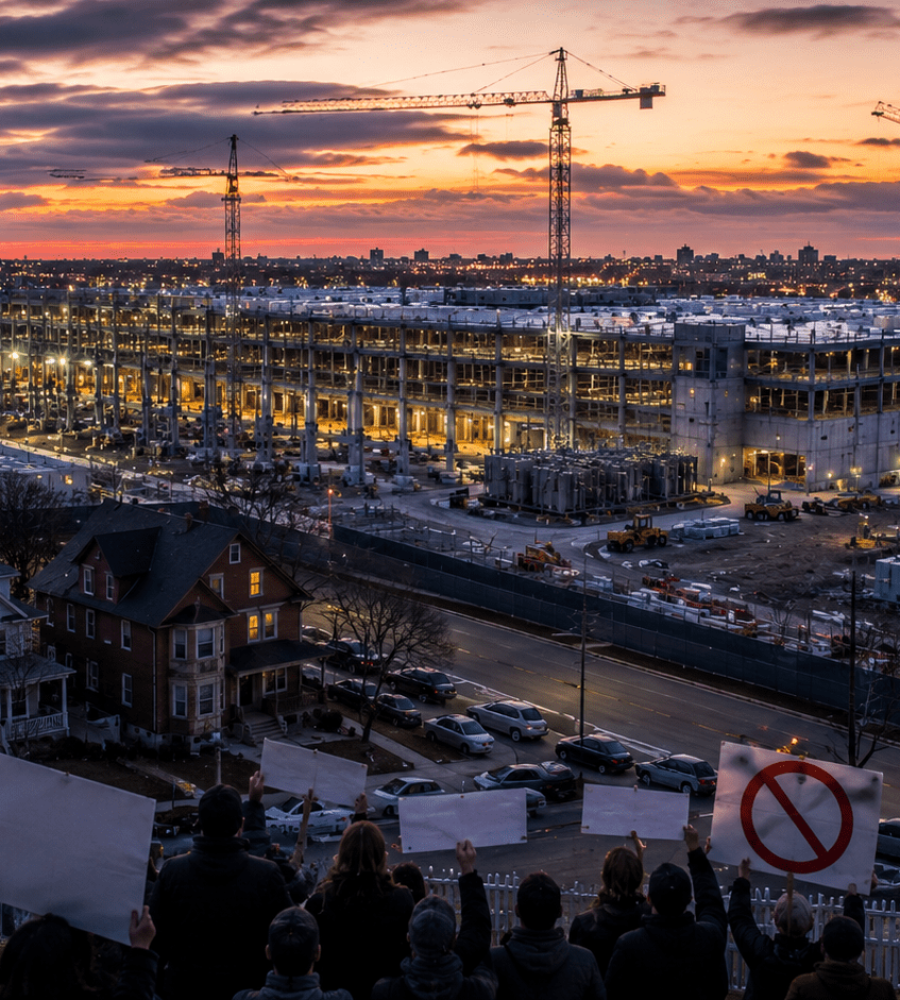
Public scrutiny surrounding hyperscale development increasingly centers on physical infrastructure effects rather than abstract concerns about digital growth because communities now encounter campuses that resemble industrial utility environments operationally and visually. Residents evaluate noise conditions from cooling systems and backup generation compounds while local planners examine transmission expansion, water demand, traffic flow, and fuel logistics associated with large-scale AI infrastructure. The public conversation therefore shifts away from server capacity toward broader questions about energy intensity, environmental compatibility, and industrial land use. AI infrastructure became materially visible once campuses started integrating substations, cooling plants, fuel reserves, and process infrastructure at significant scale. Communities increasingly respond to these projects through the same political and environmental frameworks historically applied to industrial development proposals.
Community Impact Reviews Intensify Around Energy Density
Operators consequently spend more time coordinating with environmental consultants, utility planners, and legal specialists because campus approval timelines increasingly involve complex infrastructure negotiations rather than straightforward zoning reviews. Grid integration studies, emissions modeling, acoustic analysis, and water management planning now influence project sequencing from the earliest development stages. Local authorities increasingly request detailed operational projections explaining how campuses will manage generation assets, thermal systems, and long-duration continuity infrastructure during stressed regional conditions. The planning environment therefore becomes substantially more technical as regulators and communities attempt to understand the long-term physical implications attached to concentrated AI infrastructure growth. Hyperscale campuses increasingly enter the civic landscape as industrial infrastructure projects rather than invisible digital platforms.
Regulatory expectations surrounding resilience planning also continue expanding because governments increasingly recognize the economic importance attached to uninterrupted digital infrastructure. Operators now document emergency procedures, fuel continuity strategies, environmental safeguards, and outage response protocols with levels of detail once associated mainly with industrial utility operations. Campus planning therefore incorporates operational resilience as both a technical and regulatory obligation tied directly to infrastructure approval. AI workloads intensified this scrutiny because interruptions increasingly affect broader economic activity, communications systems, and industrial workflows beyond the campus perimeter itself. The permitting process now reflects the reality that hyperscale infrastructure operates as a critical industrial layer embedded deeply within regional energy ecosystems.
Black Start: When the Campus Has to Fire Itself Up
Traditional data center continuity planning largely assumed that utility grids would eventually stabilize after disturbances while backup systems bridged temporary interruptions during recovery periods. Some advanced hyperscale campuses are beginning to evaluate scenarios where portions of a site may need to recover operations independently during prolonged grid instability or delayed utility restoration conditions. This operational concept, which parallels utility-sector black start frameworks, involves progressively restoring critical systems through coordinated on-site power and infrastructure sequencing. The concept historically belonged to power generation facilities responsible for rebuilding sections of the electrical grid after large-scale outages. AI infrastructure increasingly pushes hyperscale campuses toward adopting similar operational readiness frameworks because uninterrupted compute continuity now carries broader economic consequences.
Black start planning introduces operational complexity far beyond conventional generator failover procedures because campuses must coordinate electrical sequencing, cooling stabilization, fuel management, and load synchronization across interconnected infrastructure environments. Operators progressively energize substations, thermal systems, switchgear, pumps, and compute halls in carefully controlled stages designed to prevent instability during restart conditions. Mechanical and electrical teams therefore rehearse restoration procedures resembling utility recovery operations rather than standard IT continuity exercises. Cooling systems must stabilize before dense compute loads activate fully, while reserve generation assets must synchronize carefully with campus electrical distribution architecture during recovery phases. The operational choreography increasingly resembles industrial plant startup procedures coordinated across tightly coupled energy systems.
Self-Starting Infrastructure Gains Strategic Importance
The growing interest in black start capability reflects broader concerns surrounding grid resilience under rising infrastructure stress and concentrated electrical demand growth. Severe weather events, transmission bottlenecks, and regional instability scenarios increasingly influence continuity planning for large AI campuses operating around the clock. Operators therefore seek operational independence capable of sustaining controlled recovery even under prolonged utility disruption conditions. Battery systems, microgrids, on-site generation assets, and advanced control platforms are increasingly being evaluated as part of broader resilience strategies intended to support staged operational recovery during severe infrastructure disruptions. Modern data centers now prepare for energy restoration scenarios that once concerned mainly utility operators responsible for maintaining regional electrical stability.
Recovery sequencing inside black start-capable campuses increasingly resembles industrial commissioning activity because every major infrastructure layer must stabilize progressively before compute operations can return safely to full density. Operators coordinate chilled water circulation, electrical synchronization, thermal balancing, and reserve generation ramp-up through tightly managed procedures designed to prevent cascading instability across interconnected systems. The process requires continuous coordination between mechanical specialists, electrical operators, controls technicians, and infrastructure dispatch personnel working through predefined operational stages. Restarting a hyperscale AI campus therefore becomes an orchestrated industrial recovery event rather than a simple reboot process initiated automatically through software. The operational philosophy surrounding continuity changed fundamentally once campuses reached utility-scale infrastructure complexity.
Campus Recovery Procedures Become Industrial Operations
Testing and simulation increasingly support these recovery strategies because operators cannot rely exclusively on theoretical continuity planning when campuses support dense, high-value compute infrastructure continuously. Mechanical teams regularly validate synchronization procedures, load sequencing logic, and transition timing across integrated infrastructure environments. Some campuses conduct partial islanding exercises designed to confirm that critical systems can stabilize independently before reconnecting with external utility feeds. Operational readiness therefore depends on procedural discipline and infrastructure coordination similar to practices long established inside industrial energy sectors. AI infrastructure effectively forced hyperscale operators to think like utility restoration planners managing continuous industrial processes under stressed conditions.
Black start capability also changes how campuses evaluate infrastructure investment because resilience increasingly depends on operational autonomy rather than redundancy alone. Operators prioritize infrastructure capable of supporting controlled self-recovery during unpredictable external conditions instead of relying exclusively on utility restoration timelines. Energy storage, microgrid coordination, advanced controls, and fuel continuity therefore become strategic operational assets integrated directly into campus architecture. The campus evolves into a semi-autonomous industrial energy environment capable of managing its own restoration sequence during severe disruptions. AI demand did not merely increase electricity consumption because it fundamentally altered how modern data centers prepare for operational survival under real-world infrastructure stress.
Maintenance Windows Become ‘Industrial Outages’
Maintenance culture inside modern hyperscale campuses increasingly resembles industrial outage management rather than traditional IT servicing because infrastructure density and operational interdependence have grown dramatically under AI-scale demand conditions. Operators now schedule coordinated maintenance windows involving electrical isolation, cooling system shutdowns, valve replacements, fuel system inspections, and thermal infrastructure retrofits across continuously active campuses. These events often require weeks of planning, specialized contractors, procedural rehearsals, and tightly controlled sequencing to avoid destabilizing interconnected infrastructure systems supporting critical compute loads. Mechanical and electrical operations therefore evolved far beyond the era of isolated server maintenance and software patch cycles. Modern campuses increasingly manage planned outages with operational frameworks borrowed directly from industrial energy and manufacturing sectors.
Lockout-tagout procedures, confined space coordination, electrical isolation protocols, and industrial safety management now play central roles during campus maintenance activity because infrastructure systems carry utility-scale operational risk. Teams isolate switchgear, depressurize cooling systems, inspect transformers, and validate backup generation readiness through carefully documented operational workflows designed to protect both personnel and continuity conditions. The maintenance environment increasingly resembles a controlled industrial shutdown where multiple technical disciplines coordinate simultaneously under strict procedural oversight. AI infrastructure accelerated this transition because dense compute environments leave little tolerance for unplanned operational disturbance during infrastructure servicing. Reliability therefore depends as much on disciplined maintenance execution as on the physical resilience of the equipment itself.
Planned Downtime Starts Looking Like Plant Turnarounds
Operators also increasingly coordinate maintenance activity around energy conditions, cooling availability, and workload scheduling because infrastructure systems now interact continuously under fluctuating operational demand. Dispatch teams may temporarily redistribute compute loads, adjust thermal balancing strategies, or activate reserve systems before critical maintenance begins. The operational objective extends beyond replacing equipment because campuses must maintain stable infrastructure equilibrium throughout the outage process itself. Planned downtime therefore becomes a carefully managed industrial event requiring continuous operational coordination across energy, thermal, and compute environments simultaneously. The modern hyperscale campus increasingly behaves like a continuously operating industrial plant where every maintenance decision influences broader system stability.
The industrialization of hyperscale infrastructure significantly expanded demand for specialized technical trades because campuses now operate mechanical and electrical systems at scales rarely associated with earlier generations of digital infrastructure. Electricians, controls technicians, pipefitters, combustion specialists, industrial mechanics, and water treatment experts increasingly support campus operations directly because continuity depends on continuous infrastructure precision. Maintenance events therefore require coordinated expertise across multiple industrial disciplines rather than isolated IT support workflows alone. AI infrastructure effectively merged digital operations with physical plant management inside the same operational environment. The workforce composition inside large campuses increasingly reflects that convergence.
Specialized Trades Gain Strategic Importance
Mechanical retrofits and infrastructure upgrades now resemble industrial modernization projects because campuses continuously adapt cooling systems, electrical architecture, and energy management platforms to support changing compute density requirements. Operators replace pumps, expand thermal corridors, reconfigure switchgear, and integrate new cooling technologies while maintaining continuity across active compute environments. The complexity attached to these upgrades requires engineering coordination, procedural oversight, and commissioning discipline similar to industrial facility expansion projects. Infrastructure maintenance therefore becomes an ongoing process of operational adaptation rather than occasional equipment servicing performed quietly behind the scenes. AI workloads accelerated infrastructure evolution faster than traditional data center operational models were originally designed to accommodate.
The growing importance of industrial maintenance culture also changes how operators think about reliability itself because uptime increasingly depends on process discipline rather than simple redundancy depth. Campuses require procedural consistency, operational rehearsal, and infrastructure expertise capable of sustaining highly interconnected systems under continuous stress conditions. Maintenance teams therefore influence operational continuity as directly as network engineers or software architects once did inside earlier infrastructure generations. The distinction between industrial operations and digital operations continues fading as campuses evolve into hybrid environments combining energy infrastructure, thermal management, and compute orchestration within the same operational framework. The maintenance outage increasingly becomes one of the clearest examples of how fully modern data centers now resemble industrial power facilities in practice.
The Industrial Internet Is Built on Industrial Bones
The industry spent years describing hyperscale infrastructure as an abstract digital layer floating above the physical economy, but the operational reality now looks far more industrial than virtual. Modern AI campuses consume electricity, circulate water, manage combustion systems, coordinate thermal transfer, and maintain process continuity with operational intensity comparable to large industrial energy sites. Operators increasingly manage substations, fuel reserves, cooling plants, and industrial control systems as core infrastructure layers directly responsible for compute reliability. The modern campus therefore behaves less like a passive repository of servers and more like an actively balanced industrial organism built around continuous energy conversion. AI demand did not simply increase compute density because it fundamentally changed the physical architecture supporting digital operations.
This transformation carries major implications for where future campuses can realistically operate because infrastructure availability increasingly determines deployment feasibility more directly than network proximity alone. Regions with strong transmission capacity, resilient water systems, industrial zoning compatibility, and scalable energy infrastructure will likely attract disproportionate hyperscale development over time. Land once considered suitable for digital infrastructure may no longer satisfy the operational requirements attached to utility-scale compute environments. Campus planning increasingly resembles industrial infrastructure strategy where energy logistics, thermal sustainability, and operational resilience shape development pathways from the earliest design stages. The geography of AI infrastructure will increasingly follow the geography of industrial resource availability rather than purely digital connectivity patterns.
AI Infrastructure Changed The Physical Identity Of Compute
The workforce surrounding hyperscale infrastructure will continue evolving alongside this operational transition because campuses now require industrial expertise at every major infrastructure layer. Mechanical operators, electrical dispatchers, thermal engineers, controls specialists, and process technicians increasingly shape operational continuity as directly as software and network personnel. Universities, technical training programs, and industrial apprenticeship pipelines may all become more important to hyperscale expansion than traditional enterprise IT staffing channels once were. AI infrastructure ultimately industrialized compute operations by forcing digital systems to obey the same physical constraints governing utilities, factories, and large-scale process environments. The future data center campus will therefore look increasingly familiar to anyone who has spent time inside a power plant, industrial thermal facility, or utility control environment.
Local governments and utility planners increasingly evaluate hyperscale campuses through the same strategic lens applied to major industrial infrastructure because AI demand materially affects regional energy planning, water management, and grid stability conditions. Transmission upgrades, substation expansion, water reuse infrastructure, and emergency continuity planning increasingly accompany large campus proposals as standard development considerations. The public discussion surrounding hyperscale growth therefore shifted away from abstract conversations about internet expansion toward practical questions involving industrial resource allocation and infrastructure resilience. Communities increasingly recognize that modern AI campuses interact directly with regional physical systems rather than existing separately from them. The industrial profile of hyperscale infrastructure has become impossible to ignore operationally, visually, and politically.
Cities And Utilities Now View Campuses Differently
Utilities also increasingly coordinate directly with hyperscale operators because campuses now behave like large industrial loads capable of influencing regional demand conditions significantly. Long-term infrastructure planning increasingly includes conversations around dispatch flexibility, on-site generation, energy storage coordination, and microgrid integration between operators and grid authorities. The relationship therefore evolves beyond simple electricity procurement into broader operational coordination surrounding reliability and infrastructure resilience. Modern campuses increasingly participate in regional energy ecosystems as active operational entities rather than passive commercial consumers. The distinction between digital infrastructure and energy infrastructure continues narrowing with every generation of AI-driven expansion.
Public perception of these campuses may also continue evolving because the physical scale and industrial behavior of hyperscale infrastructure now shape how surrounding regions experience digital growth directly. Cooling systems, substations, generation compounds, utility corridors, and water infrastructure increasingly become visible parts of the local industrial landscape attached to AI expansion. Communities therefore engage with hyperscale development through conversations traditionally associated with industrial planning, environmental review, and infrastructure governance. AI infrastructure effectively anchored the digital economy back into the physical world by exposing the enormous industrial systems required to sustain continuous compute growth at scale. The modern data center no longer resembles a quiet server warehouse because it has become one of the defining industrial infrastructure typologies of the AI era.
The Future Campus Will Operate Like A Utility
Current infrastructure trends suggest that some large campuses may gradually adopt more utility-style operational characteristics through expanded energy coordination, storage integration, and advanced infrastructure management systems. Operators increasingly integrate microgrids, advanced cooling architectures, energy trading systems, and predictive process management into unified infrastructure ecosystems designed around continuous compute continuity. The campus therefore evolves toward a hybrid operational identity combining characteristics of utilities, industrial plants, and digital infrastructure simultaneously. AI demand accelerated this convergence because concentrated compute loads created operational conditions that traditional enterprise infrastructure models could no longer support efficiently. Industrialization became the unavoidable consequence of sustaining advanced compute density at scale.
Future campus expansion will likely continue deepening this industrial convergence as operators pursue greater operational independence and resilience under increasingly stressed regional infrastructure conditions. Self-managed energy ecosystems, advanced thermal reuse systems, industrial automation platforms, and autonomous operational controls will probably become more common across large AI deployments over time. Mechanical systems, energy management platforms, and industrial process coordination will increasingly determine infrastructure competitiveness alongside compute capability itself. The next generation of hyperscale development may therefore look less like the evolution of traditional IT infrastructure and more like the emergence of a new category of industrial utility architecture built specifically for machine intelligence. Compute has effectively become an industrial process governed by energy physics rather than abstract software logic alone. The most important shift may ultimately be conceptual because the industry can no longer treat digital infrastructure as separate from the physical systems sustaining it operationally every second of the day.