Regulators, utilities, and environmental groups across North America’s largest data center corridors are increasingly asking the same question: how much water can hyperscale AI infrastructure consume as compute density accelerates? The Great Lakes region, which holds nearly one-fifth of the world’s surface freshwater under a single regulatory framework, now sits at the center of that debate. Microsoft wants policymakers to understand that its expansion strategy will remain below the thresholds that trigger deeper interstate scrutiny under the Great Lakes Compact. At the same time, the company’s position highlights a broader shift inside the AI infrastructure industry. Cooling architecture now shapes permitting conversations, regional politics, and long-term expansion strategies instead of serving only as an engineering consideration. Consequently, hyperscale operators increasingly treat water-efficient cooling systems as strategic infrastructure tools rather than secondary facility components.
Microsoft Positions Closed-Loop Cooling As A Regulatory Advantage
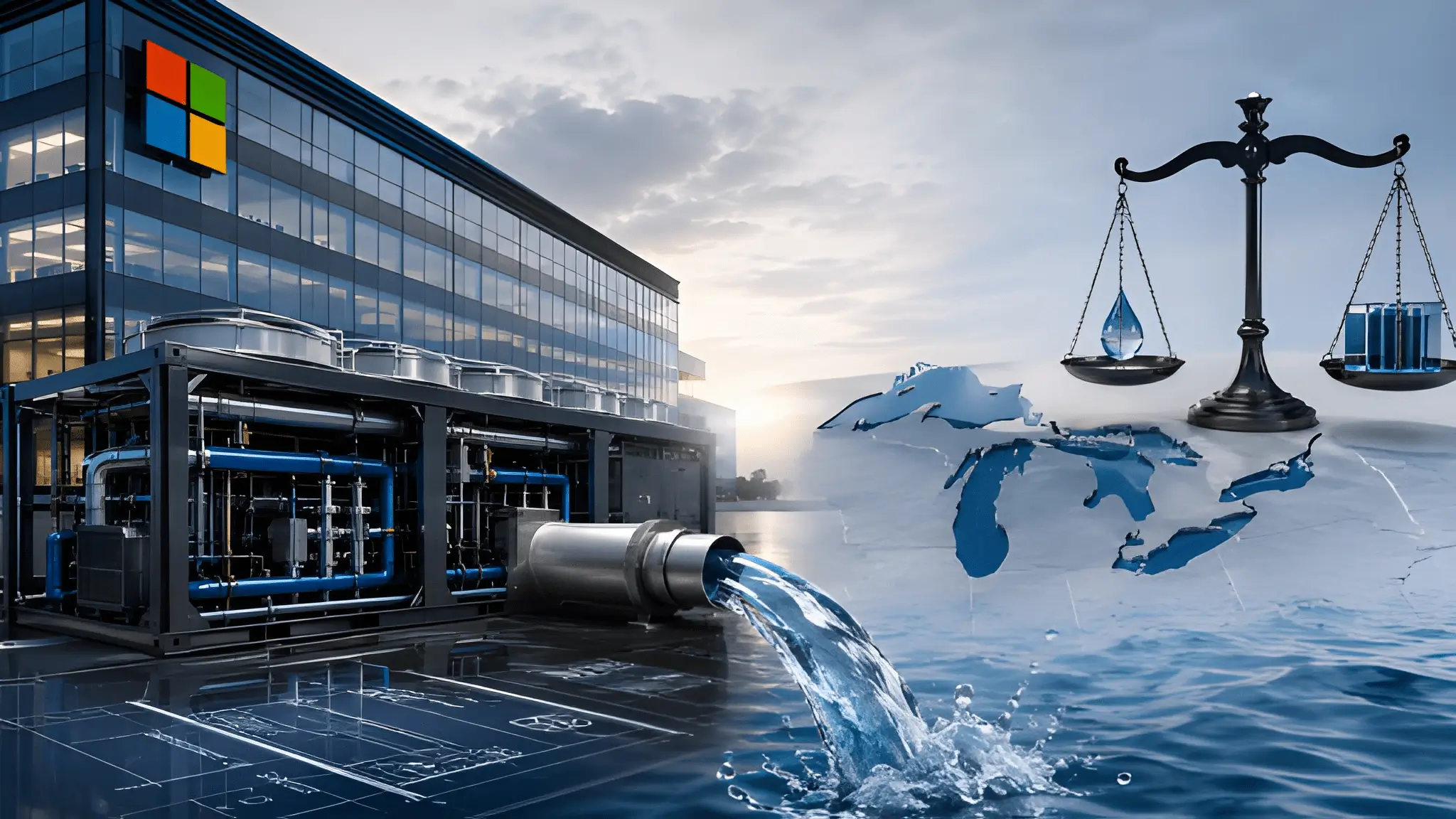
Microsoft executives said the company’s data centers across the Great Lakes region are unlikely to trigger enhanced review requirements under the Great Lakes Compact because most planned facilities will rely on closed-loop cooling systems that consume relatively limited amounts of water. The comments arrived during a panel discussion hosted by the Conference of Great Lakes St. Lawrence Governors & Premiers, an organization focused on protecting freshwater resources across the basin that supplies drinking water, industrial capacity, and ecological stability to a large portion of North America. The discussion reflected rising scrutiny surrounding the resource intensity of hyperscale infrastructure as AI computing demand accelerates across the Midwest and adjacent regions.
Microsoft is currently investing roughly $20 billion into data center development in Mount Pleasant while simultaneously expanding campuses across Michigan and Indiana, both of which fall under Great Lakes Compact oversight. Under the compact’s framework, individual states manage in-basin water withdrawals, although projects that lose more than 5 million gallons daily over any 90-day period must undergo regional notification and nonbinding review involving neighboring states and Canadian provinces. That threshold has increasingly become a symbolic benchmark for environmental advocates tracking whether hyperscale AI infrastructure could materially reshape freshwater consumption patterns in the basin. Jonathan Noble, Microsoft’s senior director of infrastructure government affairs, said the company does not expect its projects to approach that level of water loss because newer cooling systems recycle significantly larger portions of water internally.
Why Closed-Loop Cooling Matters For AI Infrastructure Expansion
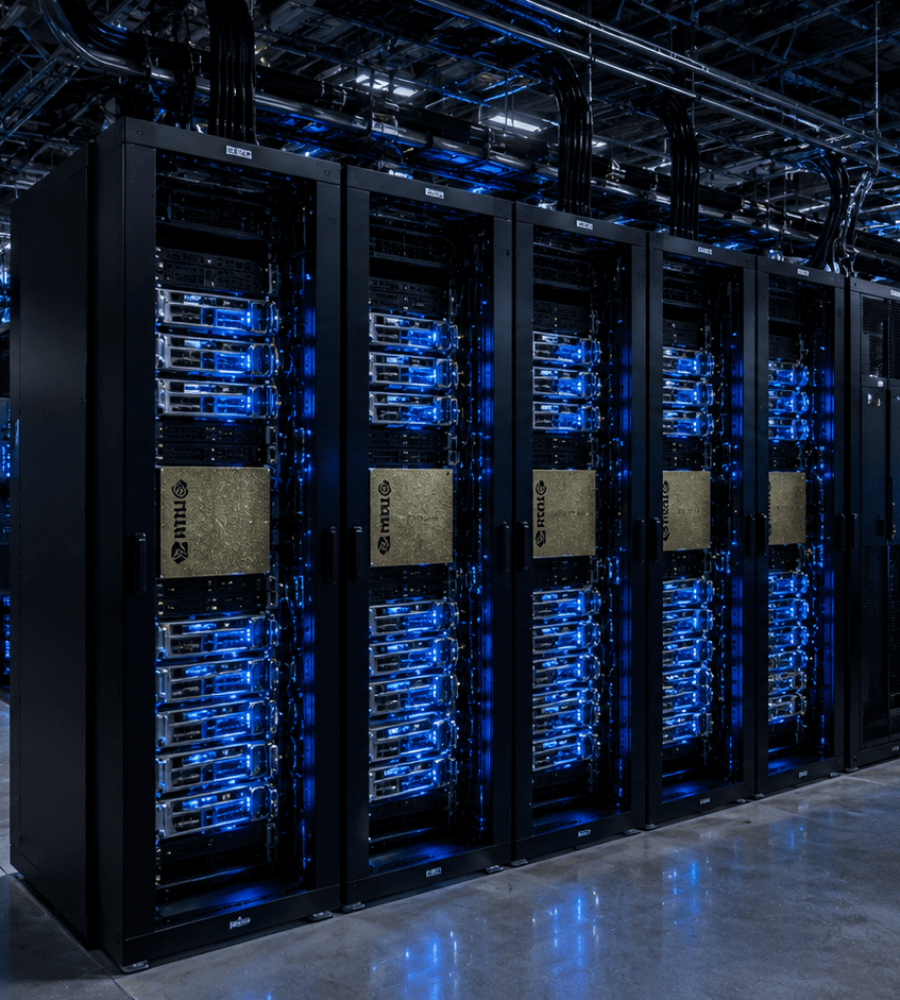
“At this point, the majority of those projects are expected to be closed-loop (systems) and therefore would be comparable to what we’re seeing at Mount Pleasant, if not, even less,” Noble said. Closed-loop systems differ materially from traditional evaporative cooling approaches because they continuously circulate cooling fluids instead of relying on large-scale evaporation cycles that require constant replenishment. That distinction matters operationally because advanced AI infrastructure places enormous thermal stress on facilities running dense GPU clusters for training and inference workloads. Consequently, cooling design now directly affects not only operational efficiency but also permitting risk, long-term regulatory exposure, and local political acceptance. Microsoft’s framing suggests the company increasingly views water efficiency as part of the strategic infrastructure narrative needed to secure continued hyperscale expansion in environmentally sensitive regions.
Great Lakes Water Governance Is Emerging As An AI Infrastructure Constraint
The Great Lakes Compact has historically focused on preventing large-scale diversions of freshwater outside the basin, yet the rise of AI infrastructure is creating new questions about cumulative industrial demand inside the region itself. According to projections released by the city of Racine, Microsoft’s Mount Pleasant facilities at full buildout could consume as much as 8.4 million gallons annually. However, officials from the Wisconsin Department of Natural Resources emphasized that actual daily consumption remains far below the thresholds that initially concerned residents and advocacy groups. Adam Freihoefer, water use section manager for the Wisconsin DNR, said Microsoft reported average daily water usage near 15,000 gallons, with peak hot-weather demand reaching approximately 468,000 gallons per day. Early fears surrounding AI infrastructure had led many observers to assume hyperscale campuses would routinely require millions of gallons daily, particularly given public debate surrounding large evaporative cooling deployments in arid regions.
Freihoefer noted that the water conversation cannot remain limited solely to direct facility withdrawals because electricity generation introduces a second layer of freshwater demand that policymakers increasingly must evaluate. “We may see that with energy … if there’s going to be a larger demand on grid peaking plants, for example,” Freihoefer said. “We’re starting to see those come in for natural gas.” That dynamic substantially broadens the infrastructure footprint associated with AI expansion because thermal power plants themselves consume enormous water volumes for cooling and generation processes. We Energies is currently adding roughly 3 gigawatts of generation capacity to support rising data center demand, including new gas-fired infrastructure intended to stabilize regional electricity supply. Freihoefer said Wisconsin’s 10 largest power plants used around 715 billion gallons of water in 2024, with approximately 9.7 billion gallons categorized as lost consumption.
AI Expansion Is Increasing Pressure On Infrastructure Transparency
The debate unfolding around Microsoft’s projects also reflects a broader tension between hyperscale expansion and public transparency expectations. Environmental organizations, local residents, and policy researchers have repeatedly argued that communities often lack sufficient visibility into the long-term water and energy implications associated with AI infrastructure projects. Racine officials released Microsoft water-use projections only after litigation from an environmental group challenged the denial of public records requests tied to the development. That dispute reinforced concerns among advocacy organizations that data center permitting processes frequently operate with limited disclosure standards despite the scale of infrastructure being deployed. In March, Microsoft announced it would end nondisclosure agreements with local governments connected to future data center projects, a move widely interpreted as an attempt to reduce friction surrounding infrastructure negotiations. Nevertheless, advocacy groups argue the absence of mandatory reporting standards still leaves substantial information gaps regarding operational water consumption.
Helena Volzer, senior source water policy manager for the Alliance for the Great Lakes, said transparency challenges remain unresolved because reporting obligations largely fall on municipal water systems rather than the facilities themselves. “If they’re using public supply, which 97 percent of data centers are, that reporting requirement would fall to the water system,” Volzer said. “As long as the water system has the capacity to supply, there’s really no requirement to report on that water usage.” Her comments underscore an emerging policy dilemma confronting regulators globally as AI infrastructure scales faster than modern reporting frameworks.
Why Water Efficiency Alone May Not Resolve AI’s Environmental Concerns
Hyperscale operators increasingly emphasize direct water efficiency improvements through technologies like closed-loop cooling, yet critics argue those gains can obscure the indirect environmental costs created by the massive electricity demand required to sustain AI workloads. A Clean Wisconsin analysis published last year estimated that energy generation supporting certain Wisconsin data center developments could require at least 54 million gallons of water daily if supplied through nonrenewable power sources. Accordingly, policymakers are beginning to treat AI infrastructure as an interconnected industrial system where cooling, electricity generation, and grid expansion all influence freshwater consumption simultaneously.
The Real Infrastructure Battle Is Moving Beyond Water Withdrawals
Microsoft’s comments reveal how rapidly infrastructure strategy is evolving inside the AI economy. Today, operators increasingly must demonstrate they can scale compute intensity without triggering political backlash over water consumption, electricity demand, or regional resource strain. Peter Johnson, deputy director of the Great Lakes St. Lawrence Governors and Premiers, said recent basin assessments have not identified substantial impacts from existing withdrawals or diversions affecting Lake Michigan. “But we are continuing to keep our eyes on that,” Johnson said. His remarks reflect a regulatory posture that remains cautious rather than adversarial, although the pace of AI infrastructure deployment could eventually test existing governance frameworks. The Great Lakes region holds several structural advantages for hyperscale development, including comparatively stable climates, extensive freshwater access, industrial land inventories, and strong transmission infrastructure compared with drought-prone markets in the American Southwest.
Still, Microsoft executives stressed that freshwater proximity itself is not the primary reason the company continues expanding across the region. Noble said customer demand, shovel-ready industrial sites, and power accessibility remain the dominant drivers behind location selection decisions. Wisconsin currently hosts 53 data centers according to Data Center Map, illustrating how the Midwest is quietly becoming one of the more strategically important infrastructure corridors in North America’s AI buildout. However, the political durability of that growth may increasingly depend on whether operators can prove that next-generation cooling architectures genuinely reduce environmental strain rather than simply redistribute it across the power system. Therefore, closed-loop cooling is becoming more than an engineering upgrade inside hyperscale facilities. It is emerging as a strategic compliance mechanism that could determine which regions remain politically viable for AI expansion during the next decade of infrastructure growth.