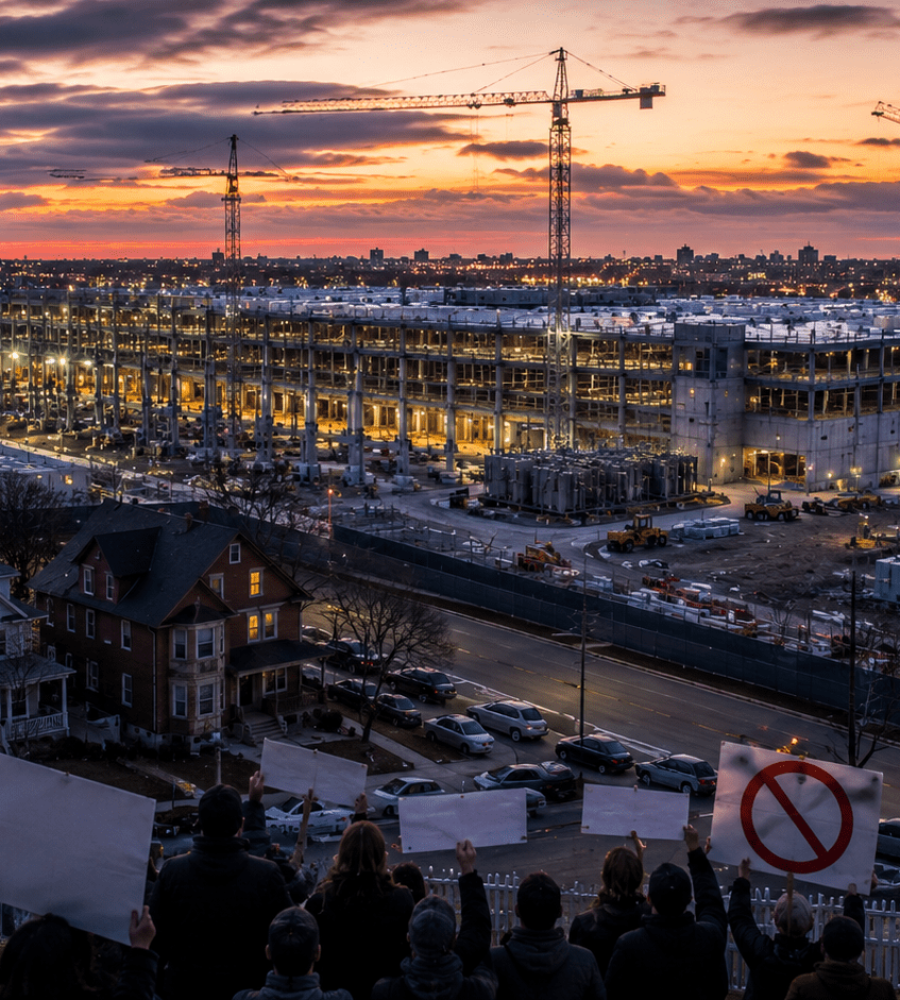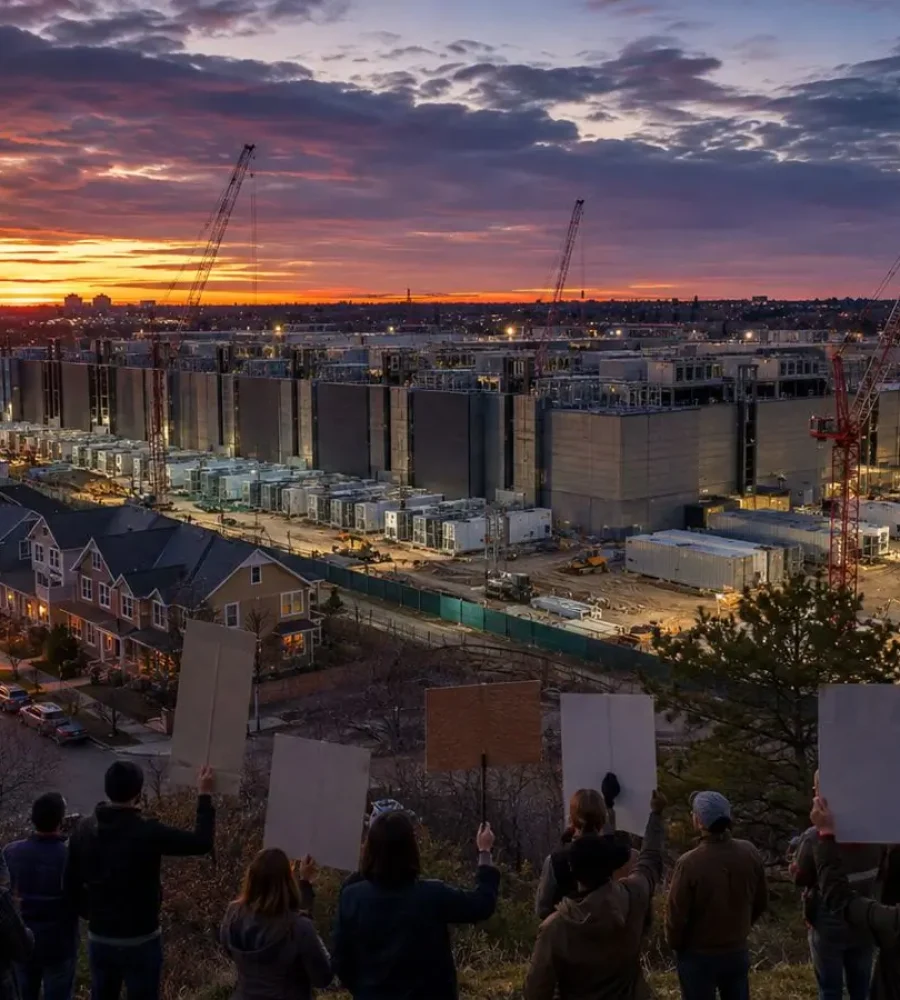
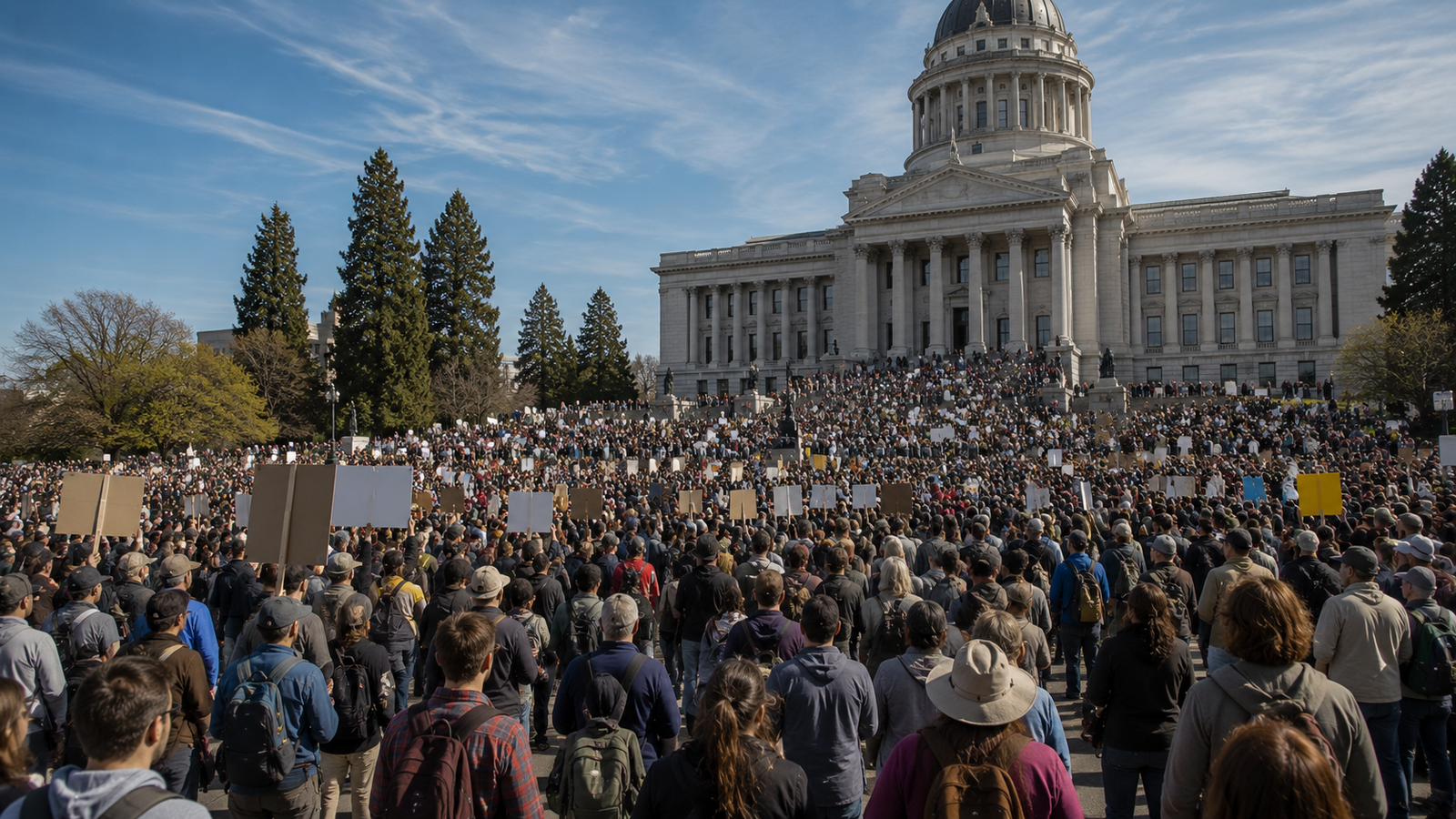
More than 600 people gathered at the Utah State Capitol in Salt Lake City on Saturday May 23 to demand a halt to the Stratos Project, a proposed 40,000-acre AI data center campus in Box Elder County backed by Canadian entrepreneur and Shark Tank investor Kevin O’Leary. The protest is the largest organised community action against a single data center development in the United States this year, and it came three weeks after Box Elder County commissioners unanimously approved the project despite widespread public opposition at the approval meeting.
The rally drew residents from across the state, with attendees travelling from the Idaho-Utah border south to Payson. A Deseret News-Hinckley Institute of Politics poll taken after the approval found a majority of Utah voters oppose the project. Speakers included House Minority Leader Angela Romero, activists, and Shannon Barton, a Brigham City resident who formed the Box Elder Accountability Referendum (BEAR) specifically to put the project to a public vote. Barton said she left the county commission meeting “devastated” after commissioners cut off public comment when the crowd became unruly before casting their unanimous approval vote.
What the Stratos Project Is and Why It Has Generated Such Opposition
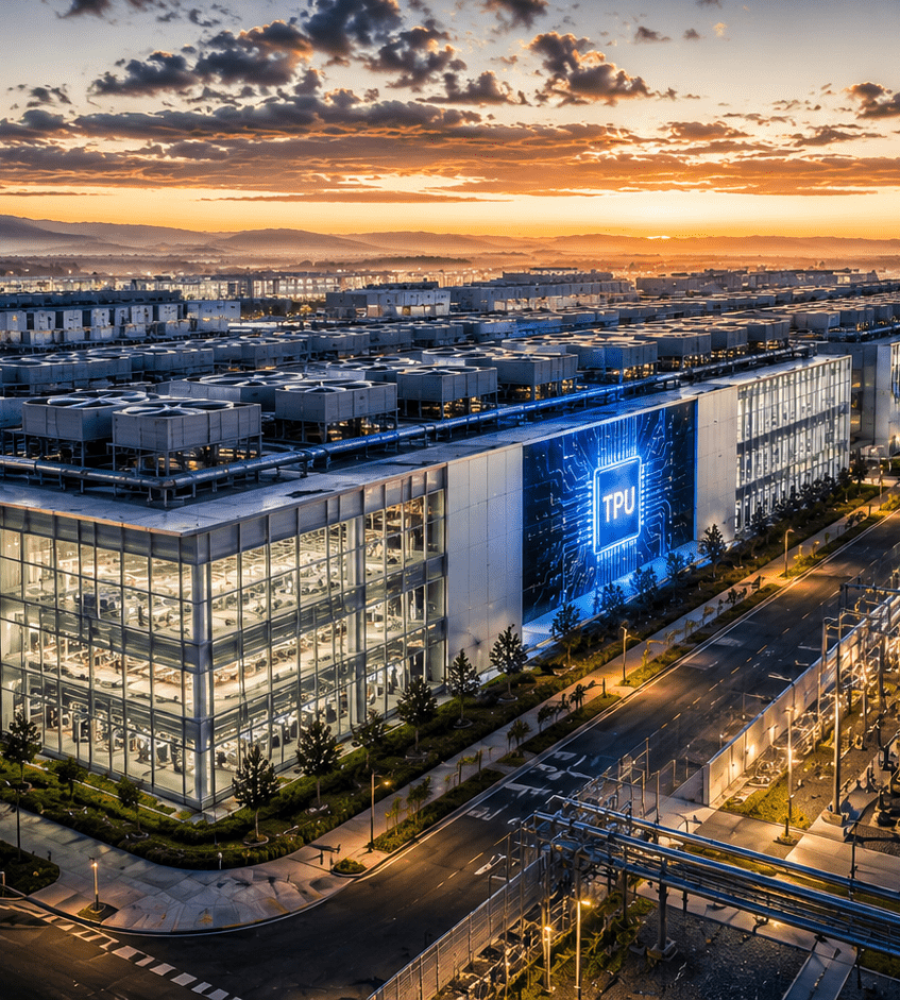
The Stratos Project is a proposed AI data center campus in Hansel Valley in northern Utah’s Box Elder County, sitting just north of the Great Salt Lake. At full buildout, developers say the campus will occupy approximately 10,000 to 13,000 acres of the 40,000 acres under consideration, with a dedicated on-site power plant to keep the project off the local grid. Investors including O’Leary have put $20 million into the project so far. At full buildout, the total investment will likely exceed $100 billion, with the first gigawatt of data center capacity coming online within two years if construction proceeds on schedule.
Utah’s Military Installation Development Authority, a body the state legislature created to develop land supporting defence-related infrastructure, backs the project. Proponents argue the campus will deliver $30 million annually in new revenues to Box Elder County in its initial phases, rising to $108 million at full buildout, and that expanding US computing capacity serves a national security priority.
What Protesters Are Actually Objecting To
The objections raised at Saturday’s rally were specific and consistent. Water is the primary concern. Box Elder County sits in one of the most water-stressed regions of an already water-stressed state, and the Great Salt Lake is already at historically low levels. Critics argue the cooling systems required for a data center campus of this scale will consume water that northern Utah cannot spare, and that the environmental review process did not adequately model that consumption.
Chants including “you can’t drink data” and “protect the water, the air, the land” reflected the rally’s core argument that the economic benefits claimed by developers do not justify the environmental risks in a region where water availability is already a generational crisis. Protesters also cited concerns about air quality from the on-site power plant, noise from facility operations, and the speed at which the project moved through the approval process without adequate public input.
O’Leary responded to the protest by claiming in a video posted to X that most protesters were bused in from out of state and that many online critics were paid. Protesters at the Capitol explicitly disputed that characterisation, with multiple speakers identifying themselves as Box Elder County and Utah residents who attended on their own initiative.
What Comes Next
Shannon Barton’s Box Elder Accountability Referendum organisation is pursuing a mechanism to put the project to a popular vote in November. A state bill proposed by Representative Doug Owens would require a study of the environmental impacts of data centers in Utah before further approvals can proceed. House Minority Leader Romero said at the rally that a study alone is insufficient.
The project still faces a lengthy permitting process. Utah state officials have confirmed the Stratos Project remains subject to standard public review processes and that county approval does not bypass state-level environmental review. Developers have said they hope to begin early site preparation work in the autumn.
The Stratos Project has become the most visible flashpoint in the national debate over AI data center development and community opposition. Why AI data centers keep getting denied permits found that the gap between what data center developers promise and what communities experience fuels opposition movements like the one that filled the Utah Capitol steps on Saturday.