There was a period, not long ago, when the most strategically important contract an AI infrastructure operator signed was the GPU supply agreement with Nvidia. Access to hardware at sufficient scale and with sufficient lead time was the binding constraint that separated operators who could grow from ones that could not. The GPU allocation was the document that determined what you could build, when you could build it, and how fast you could serve the demand that was accumulating faster than anyone had anticipated.
That period is ending. The GPU constraint has not disappeared, but it has eased enough, through expanded manufacturing, new entrants from AMD and custom silicon programmes at the hyperscalers themselves, that hardware access is no longer the singular determinant of competitive position it was in 2023 and 2024. The constraint that has replaced it is more fundamental, more durable, and significantly harder to resolve through purchasing power alone. Power. Not the megawatts that flow through the facility on a given day, but the contractual structure that secures those megawatts at a known price over the decade-plus horizon that AI infrastructure investment requires.
The power purchase agreement has become the most strategically important contract in AI infrastructure. The operators who understand that and have acted on it are building positions that will compound in value for twenty years. The ones who are still treating energy procurement as a facilities management function rather than a strategic investment decision are falling behind in a race they may not realise they are losing.
Why Energy Became the Binding Constraint
The transition from GPU access to energy access as the primary binding constraint in AI infrastructure happened faster than most market participants anticipated and through a mechanism that is worth understanding precisely because it will not reverse.
AI data centers draw power at densities and scales that grid operators never designed the infrastructure of most major markets to serve. A single hyperscale AI campus drawing 500 megawatts of continuous power adds load to a regional grid equivalent to a medium-sized city. Multiply that by the hundreds of campuses commissioning simultaneously across the United States, Europe, and Asia, and the result is a rate of demand growth that utility planning cycles, which operate on five to ten-year horizons, cannot absorb unless operators provide years of advance notice.
The consequence is interconnection queue backlogs that in constrained markets like Northern Virginia, Phoenix, and the Chicago suburbs now stretch seven to ten years. An operator who submits an interconnection request today in Northern Virginia will receive their grid connection in the early 2030s. The AI infrastructure they are planning to deploy will be running on the fourth or fifth hardware generation by then. The grid, not the hardware, is the timeline that governs what can actually be built and when.
Power purchase agreements are the primary mechanism through which operators are escaping that constraint. By contracting directly with generation sources, committing to long-term offtake that funds construction of new capacity, and bypassing the public interconnection queue through dedicated transmission arrangements, operators with the right PPA structures in place can access power on timelines that public grid connections cannot deliver. The contract is not just a sustainability instrument or an energy price hedge. It is an infrastructure access tool that determines whether a facility can be built at all.
What the Most Sophisticated PPA Portfolios Look Like
The power purchase agreements AI infrastructure operators signed in 2022 and 2023 look significantly different from the contracts they are signing in 2026, and that evolution reflects a deeper understanding of the strategic role those agreements need to play.
Microsoft’s energy portfolio is the most extensively documented example. The company has contracted 10.5 gigawatts of renewable capacity across multiple markets, representing the largest corporate renewable PPA portfolio in history. The portfolio includes 20-year fixed-price agreements with genuine additionality requirements, meaning the contracted generation would not have been built without Microsoft’s offtake commitment. It includes the 20-year agreement with Constellation Energy to restart Three Mile Island’s 837-megawatt reactor, which is now tracking ahead of its original 2028 schedule with a revised target of 2027 following a federal loan and accelerated regulatory processing. And it includes the $4.75 billion acquisition by Google of Intersect Power, which represents the first time a hyperscaler has purchased a major clean energy developer outright rather than contracting with it, moving the energy relationship from vendor to owned subsidiary.
Amazon holds 20 gigawatts of contracted renewable capacity, making it the world’s largest corporate renewable energy purchaser. TotalEnergies signed two 15-year PPAs in February 2026 to deliver one gigawatt of solar capacity from Texas facilities to Google’s data centers, complementing the 1.2 gigawatts Clearway Energy contracted separately for Google across ERCOT, PJM, and SPP markets in the same period. Meta signed a nuclear PPA with Vistra for capacity from the Comanche Peak facility. These are not energy procurement decisions made at the procurement department level. They are capital allocation decisions made at the board level, funded at scales that rival the construction costs of the facilities they are designed to power.
The Financial Structure That Makes PPAs Strategic
Understanding why the power purchase agreement AI infrastructure operators are signing functions as a strategic asset rather than an operating cost requires understanding what the contract actually contains and what financial risks it transfers between the parties.
A 15-year fixed-price PPA with genuine additionality requirements transfers three distinct categories of financial risk from the data center operator to the generation developer. The first is electricity price risk. Spot electricity prices in AI-intensive markets like PJM have risen more than tenfold in two years, from $28.92 per megawatt-day for the 2024-2025 delivery year to $329.17 for 2026-2027. An operator running on spot market pricing bears that volatility directly. An operator that secured a 15-year fixed-price PPA in 2023 at pre-scarcity rates locks in electricity cost certainty across a period when competitors face power cost increases that compress margins regardless of how efficiently they operate their hardware.
The Risk Transfers That Create Long-Term Advantage
The second risk transferred is carbon and sustainability compliance risk. Regulatory frameworks in the EU and increasingly in the US are moving toward mandatory disclosure of actual carbon intensity at the facility level rather than allowance of certificate-based annual matching. An operator with genuine additionality PPAs covering their full load has a disclosure position that mandatory verification frameworks will accept. An operator whose sustainability claims rest on renewable energy certificate purchases faces impairment risk as those certificates cease to meet mandatory verification standards.
The third risk a PPA mitigates is regulatory access risk. Several jurisdictions, including North Carolina and Wisconsin, have passed legislation requiring data center operators to fund the full cost of the grid infrastructure their facilities require. Operators that contract directly with dedicated generation sources and reduce their dependence on grid interconnections avoid much of the financial impact of those cost allocation decisions. CAISO solar PPAs currently achieve pricing of around $20 per megawatt-hour. Middle Eastern solar PPAs have fallen below $15 per megawatt-hour. At hyperscale, the electricity cost gap between an operator running on well-structured long-term PPA pricing and one buying power at market rates in a constrained grid environment can reach hundreds of millions of dollars annually.
The Nuclear Convergence That Is Changing the Contract Structure
The most significant structural shift in power purchase agreements AI infrastructure operators are signing in 2026 is the acceleration of nuclear energy as a primary contracted source. Nuclear PPAs look different from solar and wind PPAs in ways that make them particularly valuable for AI infrastructure: they provide firm, dispatchable power on a 24-hour basis regardless of weather conditions, they deliver high-capacity factor output that AI training clusters require to run continuously, and they eliminate the intermittency management costs that renewable-only strategies require.
Amazon committed $500 million to X-energy’s small modular reactor programme as a direct nuclear offtake partner. Google contracted 1.8 gigawatts with Elementl Power for SMR development. Microsoft’s Three Mile Island agreement is tracking ahead of schedule with the facility now targeting 2027 grid synchronization. Meta’s Comanche Peak agreement with Vistra covers capacity from an operational nuclear plant, providing immediate output rather than waiting for new build completion.
The nuclear PPA structure differs from renewable PPAs in one critically important way: the contract terms are typically longer and the payment structures are more complex, reflecting the higher capital cost of nuclear generation and the longer lead time from investment to output. A 20-year nuclear PPA is not just an energy price hedge. It is a commitment to fund baseload clean power infrastructure across a period that will see multiple GPU generations, multiple regulatory cycles, and multiple economic cycles. The operators making those commitments are not optimising for 2026 electricity costs. They are building infrastructure positions for the 2030s and 2040s.
The Geography of PPA Availability and What It Means for Site Selection
One of the least discussed dimensions of the power purchase agreement AI infrastructure equation is geography. The availability of attractive PPA opportunities is not uniform across markets. It is highly concentrated in regions with specific combinations of renewable resource quality, grid interconnection capacity, and regulatory frameworks that support long-term contracted generation.
The United States is the deepest PPA market globally, with California, Texas, and the mid-Atlantic states hosting the majority of utility-scale solar and wind development that is eligible for corporate PPA structures. CAISO solar PPAs achieving $20 per megawatt-hour and ERCOT wind PPAs in the $15 to $25 per megawatt-hour range represent pricing that European and Asian operators can rarely access at equivalent terms. The US regulatory environment, particularly the combination of investment tax credits and the Inflation Reduction Act’s production tax credits, has lowered the cost of new renewable generation to levels that make long-term fixed-price PPAs attractive to both sides of the agreement.
The Global Markets Defining the Next PPA Frontier
Europe offers a different PPA landscape, with Nordic markets providing access to very low-cost hydroelectric power, the Iberian Peninsula offering competitive solar PPA pricing, and offshore wind development across the North Sea creating new long-term contracted capacity. But European permitting timelines are typically longer, renewable resource quality is more variable by geography, and the regulatory landscape for corporate PPAs is more fragmented across national markets than the US framework.
The Middle East represents the frontier of PPA pricing innovation. Saudi Arabia and UAE solar PPA projects have demonstrated sub-$15 per megawatt-hour pricing, the lowest utility-scale solar costs in the world, driven by exceptional irradiance levels and rapidly scaling manufacturing and construction capacity. Site selection for AI infrastructure in 2026 is increasingly driven by PPA availability rather than traditional factors like real estate cost, permitting speed, and connectivity. An operator who identifies a market with competitive renewable PPA pricing, available grid interconnection capacity at the transmission level, and a regulatory environment that supports long-term contracted generation structures has found something more valuable than cheap land.
The PPA Due Diligence That Most Operators Are Getting Wrong
The sophistication required to evaluate a power purchase agreement AI infrastructure operators are considering has grown substantially as the contracts themselves have become more complex. The most common error is treating the headline PPA price as the total cost of contracted power. A $20 per megawatt-hour solar PPA price is the generation cost. It does not include transmission costs, which in some markets can add $5 to $15 per megawatt-hour. It does not include the cost of managing intermittency, which requires either storage procurement, firm backup generation, or grid balancing services that add further cost.
The second most common error is underweighting the additionality requirement. A PPA signed against a generation facility that already exists, or that would have been built regardless of the offtake agreement, provides price certainty but does not generate the sustainability credit that mandatory disclosure frameworks will ultimately require. The gap between an additionality PPA and a market PPA is the gap between a sustainability position that survives mandatory verification and one that does not.
The third error is term structure. A seven-year PPA provides price certainty for seven years. A 20-year PPA provides price certainty for 20 years. For AI infrastructure with 20 to 30-year economic lives, a seven-year PPA provides price certainty for roughly a third of the asset’s operating life, leaving the remaining two-thirds exposed to whatever electricity market conditions prevail after the contract expires. The operators who negotiated the longest terms in 2022 and 2023, when generation developers were more willing to accept long-term fixed pricing in exchange for capital certainty, have the best positioned portfolios.
The Role of PPAs in Financing AI Infrastructure
The power purchase agreement AI infrastructure operators sign also plays a direct role in the financing of the infrastructure itself. Long-term contracted revenue streams from AI workloads secured by take-or-pay agreements, combined with long-term contracted power costs secured by fixed-price PPAs, create a double-contracted financial structure that private credit lenders and institutional infrastructure investors find more attractive than either contract in isolation.
A data center operator who has secured a 15-year take-or-pay lease agreement with an investment-grade hyperscaler and a 15-year fixed-price PPA covering the facility’s power needs has created an infrastructure asset whose cash flows are predictable at both the revenue and cost levels for the full investment period. That predictability is what allows institutional infrastructure funds to underwrite debt at the interest rates and loan-to-value ratios that make the capital structure viable. The absence of a strong PPA portfolio does not just create operating cost exposure. It creates financing structure limitations. Lenders pricing debt against an AI data center with spot market power exposure require higher equity cushion, more restrictive covenants, or higher interest rates relative to a comparable asset with long-term contracted power costs.
The Compounding Advantage That Early Movers Are Already Building
The financial advantage of a well-structured PPA portfolio does not simply persist year over year. It compounds, and the compounding mechanism is worth understanding in detail because it explains why the gap between early movers and late movers in the PPA market will widen rather than narrow over the next decade.
An operator who locked in 20-year solar PPA pricing at $25 per megawatt-hour in 2022 is generating a larger cost advantage relative to spot market buyers every year that electricity prices remain elevated. In year one of the contract, spot market electricity was not dramatically higher than the contracted rate in most markets. In 2026, with PJM capacity prices up more than tenfold in two years and spot electricity costs rising across every AI-intensive market, the contracted rate represents a cost structure that competitors cannot access at any price. The advantage in year one was modest. The advantage in year ten, when spot market prices have incorporated a decade of grid scarcity, carbon pricing mechanisms, and infrastructure investment cost recovery charges, will be potentially transformational in competitive terms.
This compounding dynamic is what separates the PPA from most other strategic investments in AI infrastructure. Hardware investments depreciate and reset with each generation cycle. Software investments face competitive pressure that erodes their value over time. A well-structured long-term PPA generates competitive advantage that grows as the underlying commodity becomes scarcer and more expensive. The operator paying $20 per megawatt-hour from a 2023 PPA while competitors pay $50, $60, or $80 per megawatt-hour from spot markets in a constrained grid environment has a cost advantage that no amount of hardware optimisation or operational efficiency can close. It is not an operational advantage. It is a structural cost position embedded in a legal contract that runs for 15 or 20 years.
The Sustainability Advantage That Also Compounds
The compounding also works at the sustainability disclosure level. Mandatory disclosure requirements are moving toward greater stringency on an accelerating timeline. An operator who built genuine additionality into their PPA portfolio in 2022 and 2023 is generating a disclosure advantage that grows as mandatory frameworks tighten. The operator whose 2022 and 2023 energy strategy relied on renewable energy certificates will face an increasing compliance burden as mandatory verification frameworks close the loopholes that certificate-based reporting exploited. The cost of closing that compliance gap in 2026 and 2027, including PPA renegotiation, additionality verification, and potential carbon liability, is substantially higher than the cost of building additionality into the original portfolio in 2022.
The Regulatory Environment That Is Amplifying PPA Urgency
The regulatory environment around AI infrastructure energy procurement is moving faster in 2026 than at any point in the previous decade, and the direction of movement is uniformly toward greater accountability for operators who have not built genuine clean energy positions.
The EU AI Act’s sustainability labeling requirements, which are advancing through regulatory channels with phased implementation timelines, will require verified disclosure of actual environmental footprint from AI infrastructure operators serving European markets. That requirement is not satisfied by certificate-based annual renewable matching. It requires documented, audited evidence of actual power mix, actual carbon intensity, and genuine additionality in renewable energy procurement. European data center operators who cannot demonstrate genuine additionality PPAs will face competitive disadvantage in enterprise procurement processes as European corporate customers begin requiring supply chain carbon transparency from their cloud providers.
The Policy Shift Reshaping Energy Strategy
In the United States, the regulatory pressure is more fragmented but accumulating at pace. More than 300 data center-related bills were introduced across 30 US state legislatures in the first six weeks of 2026, with the majority focused on grid cost allocation, energy disclosure, and environmental accountability. North Carolina, Wisconsin, Washington, and Oregon have all passed or advanced legislation that shifts infrastructure cost obligations toward data center operators. The DATA Act proposal at the federal level would create new categories of private power infrastructure specifically to address the regulatory relationship between hyperscale AI operators and the grid. Each of these regulatory developments creates a financial incentive for operators to develop dedicated generation capacity rather than rely on public grid connections, amplifying the strategic value of PPA portfolios that provide that independence.
The operators who built their PPA portfolios before the regulatory environment became as demanding as it is in 2026 acquired their positions at lower cost and with less contractual complexity than the same positions would require today. Developers and operators negotiated 2022 additionality PPAs under a regulatory framework that imposed less stringent verification requirements than the framework regulators are constructing today. A 2026 additionality PPA must satisfy more demanding documentation, verification, and reporting standards because the incoming mandatory frameworks have raised the evidentiary bar for what counts as genuine clean energy procurement. Getting the contract right in 2022 was cheaper than getting it right in 2026, and getting it right in 2026 is cheaper than trying to retrofit compliance onto a certificate-based strategy in 2028 when mandatory frameworks are already in force.
What Late Movers Must Do Differently
The operators who did not build strong PPA portfolios in 2022 and 2023 are not in an unrecoverable position, but they are competing for a resource that is more expensive and more constrained than when the window was most open. The question for late movers is not whether to build PPA positions but how to build them in a market that has already committed the most attractive projects at the most attractive prices.
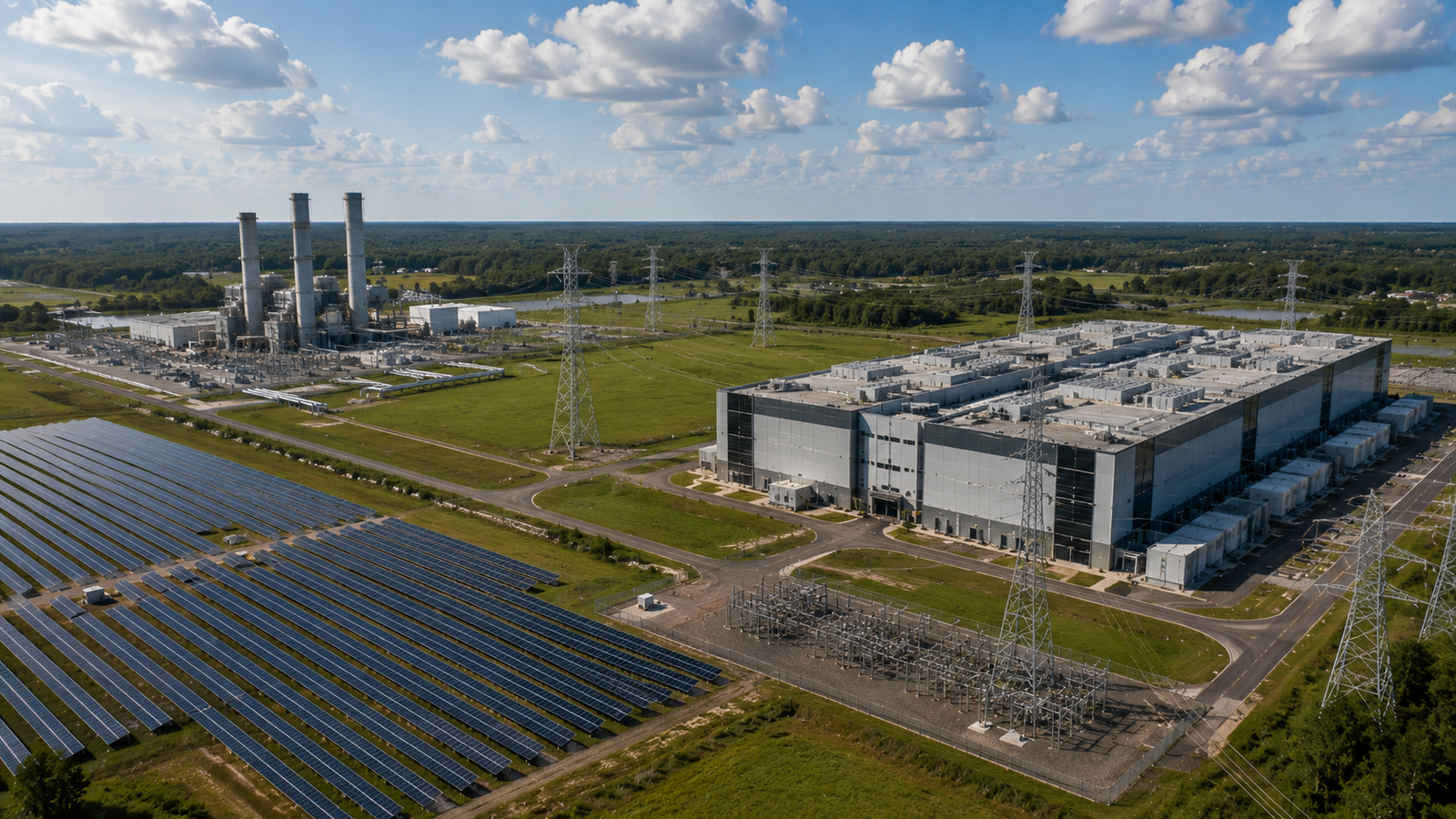
The most viable path for late movers is behind-the-meter generation development. By developing dedicated generation assets on or adjacent to their data center sites, operators can bypass the public interconnection queue and the associated years of waiting, secure generation capacity at known capital costs rather than at contracted market prices, and create asset positions that appreciate in value as scarcity in the broader electricity market continues increasing. Behind-the-meter natural gas combined with battery storage is the fastest path to power in constrained markets and is being deployed by operators across the United States who cannot wait for renewable capacity to be contracted and built on sufficient timelines.
The Trade-Offs Behind the Fastest Path to Power
The sustainability tension in behind-the-meter gas is real and cannot be dismissed. Operators building gas-dependent energy strategies in 2026 are solving the power access problem while creating a sustainability disclosure problem that mandatory frameworks will surface within the next three to five years. The operators navigating this most carefully are structuring their behind-the-meter gas positions as transitional infrastructure, committed contractually to replacing gas capacity with renewable or nuclear generation as those resources become available, rather than as permanent energy strategy.
The second path for late movers is international expansion into markets where PPA economics remain more attractive than in saturated US and European primary markets. Australia, Southeast Asia, and parts of Latin America offer renewable PPA pricing and grid interconnection timelines that are more accessible than Northern Virginia or the Netherlands. Operators who are willing to site capacity in less mature markets in exchange for better energy economics are finding that the PPA landscape in those markets more closely resembles what the US and European markets offered in 2021 and 2022. The trade-off is infrastructure maturity, connectivity, and talent availability, but for the right workload types, particularly inference rather than training, those trade-offs are commercially manageable.
The operators who build PPA positions now, even at the higher costs and in the more constrained market of 2026, are building infrastructure advantages that will compound over the life of the contracts they are signing. The operators who defer energy strategy decisions until the regulatory pressure forces them, treating power as an operational cost rather than a strategic position, are not just losing current competitive advantage. They are guaranteeing that the cost of building that position later will be higher, the contracts will be shorter, and the compliance position will be weaker than if they had acted when the window was open.
The Market That Produces the Next Generation of PPA Innovation
The power purchase agreement market for AI infrastructure in 2026 is already more sophisticated than the corporate renewable PPA market of 2020, and it will be more sophisticated still by 2030. The most important frontier innovation is 24/7 hourly matching, which attempts to align contracted renewable generation with actual consumption on an hour-by-hour basis rather than on an annual aggregate basis. Google has achieved 90% hourly matching at five data centers using a combination of wind, solar, storage, and geothermal contracted generation. Iron Mountain has achieved 97% carbon-free operation at a specific facility using 300 megawatt-hours of storage alongside its renewable contracts. Operators who build 24/7 matching capability now are ahead of the compliance requirement. Operators who are still relying on annual aggregate matching through certificate purchases will face a ratcheting compliance burden as hourly matching becomes the mandatory standard.
The second frontier is integrated storage contracting, where the PPA includes both generation and storage capacity under a single agreement structure. This structure eliminates the intermittency problem that plagues standalone renewable PPAs by shifting renewable generation to the periods when data centers need power rather than limiting consumption to periods when the sun is shining or the wind is blowing.
The Contracts That Matter More Than Hardware
The power purchase agreement AI infrastructure operators sign in 2026 is more complex, more strategic, and more consequential than any contract the data center industry has previously managed at scale. The US utilities quietly becoming the most important players in AI infrastructure reflects the demand side of this dynamic. The PPA portfolio reflects the supply side. Both point to the same conclusion: AI infrastructure operators no longer sign their most important contracts with chip manufacturers. Instead, they sign them with energy companies, and the operators who recognised that shift earliest are compounding an advantage that competitors cannot replicate simply by writing a bigger check in 2027.