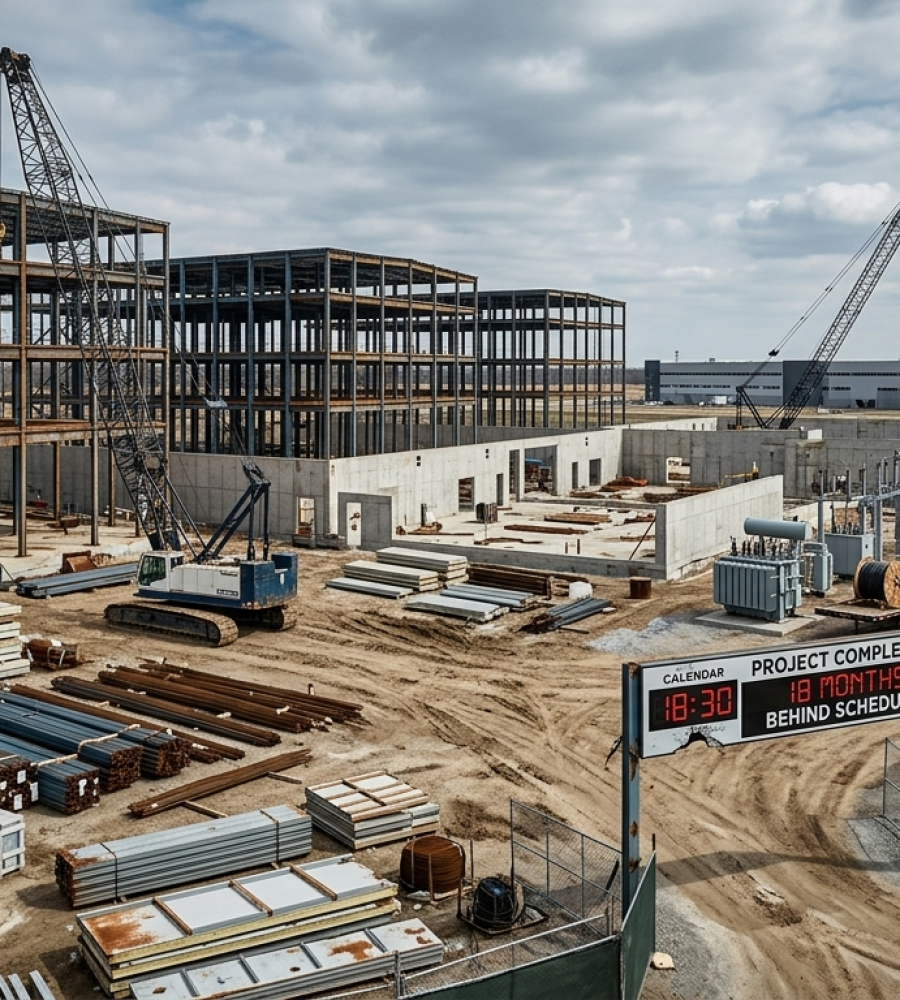

Site selection discussions for large-scale AI infrastructure increasingly revolve around a resource that rarely appeared in executive board presentations a decade ago. Compute capacity, transmission access, and tax incentives still influence development decisions, yet water availability has become an increasingly important site-selection consideration in several major data center markets where utilities and local governments face growing concerns about long-term supply capacity and infrastructure planning. Municipal governments across North America have started scrutinizing high-consumption facilities with greater intensity as population growth, drought cycles, and industrial demand place pressure on local supplies. Recent examples include municipal actions that paused or reconsidered water commitments to large computing facilities while environmental and infrastructure studies proceeded. For operators planning multi-billion-dollar campuses, access agreements increasingly carry strategic importance equal to energy procurement contracts.
Investor expectations have also changed because infrastructure risk assessments now extend beyond electricity availability and fiber connectivity. Lenders, insurers, regulators, and enterprise customers increasingly examine whether a campus can maintain operations through prolonged supply constraints. Water planning can affect operating costs, permitting outcomes, regulatory exposure, and long-term expansion planning, particularly in regions that have adopted drought management programs or supply-constrained development policies. A facility that secures sufficient electrical capacity but lacks durable access to cooling resources may face growth limitations long before server halls reach design utilization. Municipal authorities have begun integrating long-range water reliability planning and drought contingency frameworks into development decisions, creating a direct connection between resource governance and digital infrastructure deployment. Consequently, executive teams that negotiate access rights early can reduce uncertainty while preserving operational flexibility throughout the life of an asset.
The Aquifer Overdraft Clause Hiding in Your Lease
Land acquisition teams often focus on zoning, utility interconnection schedules, and environmental reviews while overlooking language tied to groundwater extraction. In jurisdictions governed by groundwater management authorities, development agreements and water service arrangements may include provisions that require compliance with local pumping restrictions, conservation requirements, or groundwater sustainability regulations. Those clauses may appear routine during contract review, yet they can significantly alter operating assumptions several years after a campus enters production. If aquifer levels decline below predetermined thresholds, local authorities may reduce permitted withdrawals regardless of original demand forecasts. Operators therefore face a scenario where installed cooling infrastructure remains available but usable water volumes decline because regional supply conditions changed. Such restrictions transform groundwater access from a static entitlement into a dynamic operating variable that requires continuous monitoring.
Contract negotiations should address this risk before execution rather than after construction begins. Development agreements can incorporate alternative supply provisions, priority allocation language, infrastructure cost-sharing arrangements, and contingency access pathways that activate during restricted periods. Operators should also evaluate whether local utilities possess sufficient rights and infrastructure to accommodate projected expansion phases without triggering additional regulatory reviews. Legal teams frequently model power curtailment scenarios but often devote less attention to resource restrictions tied to groundwater management. However, an unfavorable pumping limitation can reduce campus scalability just as effectively as a transmission constraint. Careful due diligence around groundwater governance now represents a core component of infrastructure risk management rather than a narrow environmental compliance exercise.
Water Credits Are Coming: How Tradable Allocation Will Price AI Uptime
Resource allocation mechanisms continue evolving as municipalities search for ways to balance economic growth with long-term supply resilience. Several regions already rely on water banking, allocation programs, conservation incentives, and drought-stage restrictions that effectively place an economic value on access during constrained periods.As pressure increases from industrial development and population growth, policymakers in several regions continue evaluating conservation measures, allocation frameworks, and water-management strategies designed to balance economic development with long-term resource availability. Organizations that secure long-term water service agreements or legally recognized water rights early in the development process generally reduce uncertainty associated with future supply availability and project expansion. In regions where water rights can be purchased, transferred, or leased under established legal frameworks, access to reliable supply already carries measurable economic value beyond standard utility service arrangements. That shift would connect resource strategy directly to uptime economics and long-term capacity planning.
Financial exposure emerges when demand growth outpaces available allocations across a region. Facilities that do not secure sufficient long-term supply commitments may face expansion delays, additional infrastructure costs, or the need to develop supplemental water sources if local capacity becomes constrained. Procurement teams therefore need visibility into local governance trends before selecting development locations. Regulatory frameworks vary considerably between municipalities, creating material differences in long-term operating risk even when utility rates appear similar today. Moreover, investors increasingly evaluate infrastructure assets according to their resilience under constrained resource scenarios rather than under normal operating conditions. Organizations that treat allocation access as a strategic procurement category can improve planning certainty while protecting future computing capacity.
Gray Water Pipelines: The Permitting Shortcut No One’s Modeling Yet
Freshwater rights often attract attention because they traditionally supported industrial cooling systems, yet reclaimed supply networks present a different development pathway. Municipal wastewater partnerships can reduce dependence on potable resources while aligning with regional conservation priorities. Many jurisdictions already operate reclaimed supply programs that support industrial, irrigation, and infrastructure uses under defined regulatory frameworks. For project developers, these arrangements can reduce reliance on potable water supplies and support local conservation objectives that many municipalities actively promote. Local governments frequently view reuse projects as infrastructure investments that improve overall system efficiency. Projects that reduce demand on potable-water systems often align with municipal water-conservation goals and can strengthen the overall case presented during permitting and regulatory review processes.
Successful implementation still requires careful attention to treatment standards, monitoring obligations, infrastructure expansion costs, and operational reliability requirements. The partnership developed in Quincy, Washington illustrates how municipalities and technology operators can create reuse systems that significantly reduce reliance on potable groundwater while supporting large-scale cooling operations. Regulatory agencies generally require strict controls over treatment quality, discharge management, and environmental protection measures, creating compliance obligations that persist throughout project operation. Nevertheless, reuse infrastructure can diversify supply portfolios and strengthen resilience during drought conditions. In addition, municipalities often support such initiatives because they help preserve existing drinking-water resources for residential demand. Strategic planners should therefore evaluate reclaimed supply opportunities during initial site assessments rather than treating them as a future optimization project.
Drought Declarations as a Force Majeure Trigger
Infrastructure operators often assume service-level commitments remain insulated from regional environmental events provided that equipment performance remains within design specifications. State and municipal drought declarations challenge that assumption because emergency measures can restrict resource use even when facilities remain technically capable of operating normally. Water utilities commonly implement staged conservation programs that escalate restrictions as supply conditions deteriorate. Under severe circumstances, authorities may prioritize essential public needs above industrial demand categories. Such actions can affect operational planning, water availability, and contractual obligations depending on the specific regulatory requirements and commercial agreements involved. Executive teams therefore need to understand how emergency declarations interact with service obligations and continuity commitments.
Contract language plays a decisive role when resource restrictions affect operational output. Service agreements should clearly define responsibility for supply interruptions, mitigation obligations, and performance thresholds under government-imposed limitations. Operators should evaluate how their contracts allocate responsibility when regulatory restrictions affect access to critical resources because outcomes often depend on the specific language negotiated between the parties. Legal reviews should examine force majeure provisions alongside resource procurement agreements to ensure consistent treatment across all contractual relationships. Meanwhile, scenario planning exercises should include drought-stage responses in the same manner as power outages, fuel disruptions, or transmission failures. Organizations that integrate these considerations into commercial frameworks can reduce uncertainty while preserving stronger control over operational outcomes.
Investor Disclosures Are Asking About Watershed Exposure Next
Capital markets increasingly expect infrastructure owners to demonstrate awareness of resource-related risks that could affect long-term performance. Climate reporting frameworks already encourage disclosure of physical and operational vulnerabilities, and resource availability continues moving higher on stakeholder agendas. Financial institutions want evidence that management teams understand how environmental constraints could influence operating margins, expansion timelines, and asset values. Assessment of water-related operational risks increasingly complements broader resilience and climate-risk reporting practices used by infrastructure owners and investors. Documentation quality can materially influence perceptions of operational preparedness and governance maturity.
Finance teams should maintain detailed records covering supply contracts, allocation rights, contingency sources, conservation measures, reuse initiatives, and regional risk assessments. These materials support investor due diligence while providing evidence that management understands resource dependencies across the operating portfolio. Reporting processes should also connect engineering assumptions with financial disclosures so that resilience claims remain consistent across stakeholder communications. Many organizations now use scenario analysis to evaluate operational risks associated with climate, infrastructure, and resource constraints as part of broader enterprise risk-management processes. Organizations that establish robust documentation frameworks can respond more effectively to lender inquiries, insurance reviews, and strategic transaction processes. Strong governance around resource planning increasingly serves as a signal of operational discipline and long-term infrastructure quality.
From Water Rights to Business Rights
The economics of AI infrastructure increasingly depend on securing reliable access to critical resources before regional constraints emerge. Electrical capacity remains essential, yet long-term operational success now requires equally rigorous attention to supply agreements, allocation structures, reuse opportunities, and regulatory exposure. Municipal governments have demonstrated a growing willingness to review, limit, or condition access when demand threatens long-term system resilience. Development teams that postpone these discussions until late-stage permitting may face fewer options and greater uncertainty. Evaluating long-term water availability during site selection can help developers identify potential supply constraints before permitting, design, and construction decisions are finalized. Durable access arrangements create operational flexibility that extends well beyond environmental objectives.
Business continuity now depends on understanding how governance, infrastructure planning, environmental conditions, and contractual rights interact across the entire operating lifecycle. Organizations that secure reliable water supplies, maintain contingency planning measures, and understand local regulatory requirements are generally better positioned to manage operational risks associated with changing resource conditions. Those advantages become increasingly valuable as AI campuses expand into regions facing growing resource competition. Ultimately, securing dependable access is no longer a sustainability initiative operating at the edge of infrastructure planning. Reliable access to water has become an important operational consideration for large-scale AI and data center developments in regions where supply availability and long-term resource planning influence infrastructure growth. Decisions made during land acquisition and contract negotiations today will shape infrastructure resilience for decades after the first servers come online.