For years, data center operators focused primarily on securing land, fiber connectivity, and power contracts. The rise of artificial intelligence is changing that equation. As AI workloads drive unprecedented electricity demand, access to energy infrastructure is becoming just as important as access to computing hardware. SoftBank appears to recognize this shift and is positioning itself accordingly. Rather than treating batteries as a supporting technology, the company is building an integrated strategy that combines energy storage, battery manufacturing, renewable technologies, and AI computing infrastructure. The initiative reflects a broader industry realization that future AI growth may depend as much on energy management as on processor performance.
AI Is Turning Power Into a Strategic Infrastructure Asset
Artificial intelligence is reshaping data center economics across the world. Large language models, AI training clusters, and inference workloads require substantially more electricity than traditional enterprise applications. Operators are increasingly competing for access to power infrastructure as demand for high-density computing environments continues to grow. In many regions, electricity availability has emerged as a constraint on future data center expansion. Governments and technology companies are therefore exploring new approaches to energy generation, storage, and distribution. The challenge extends beyond securing electricity to ensuring that power remains available when and where computing demand arises.
According to the International Energy Agency, global electricity demand from data centers is expected to more than double by 2030, reaching approximately 945 terawatt-hours annually. That figure slightly exceeds Japan’s current total electricity consumption. Such projections illustrate the scale of infrastructure required to support future AI deployments. As power demand rises, energy storage systems are becoming increasingly important components of digital infrastructure planning. Battery technologies can help operators manage fluctuations in demand while supporting greater integration of renewable energy sources. The growing importance of energy storage is creating new opportunities for companies seeking to participate in the AI infrastructure ecosystem.
SoftBank Is Building More Than a Data Center Campus
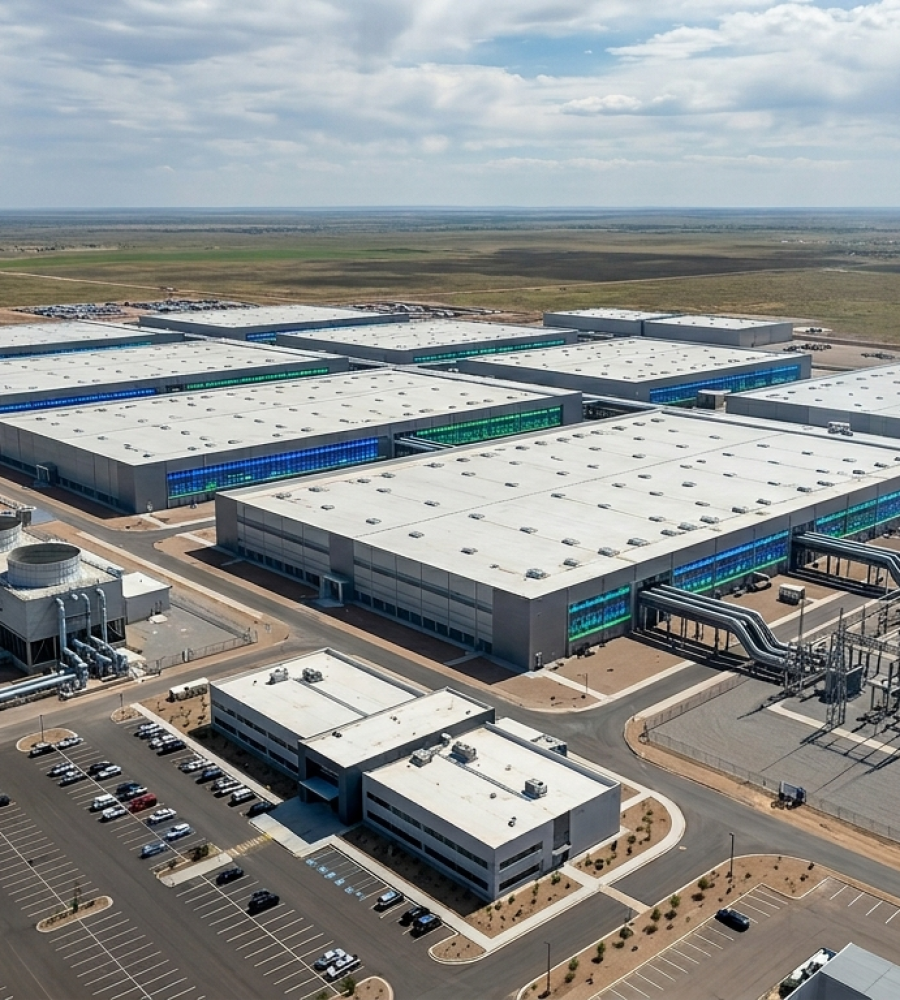
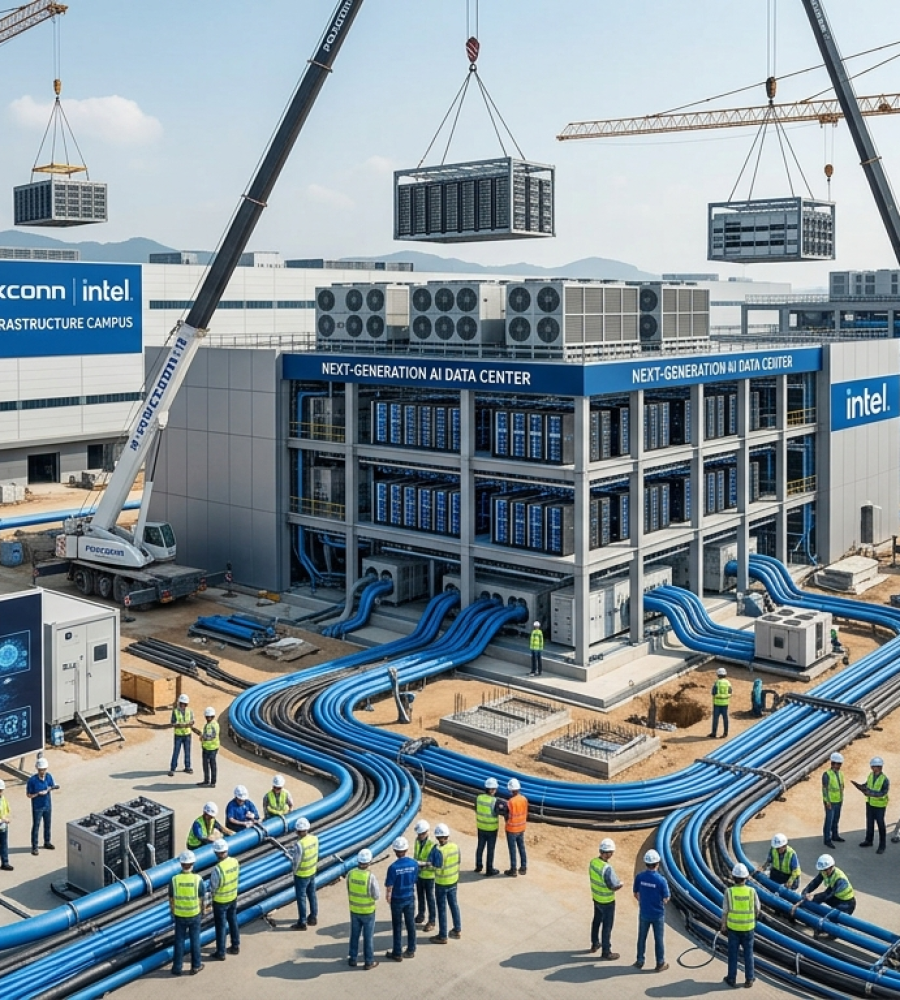
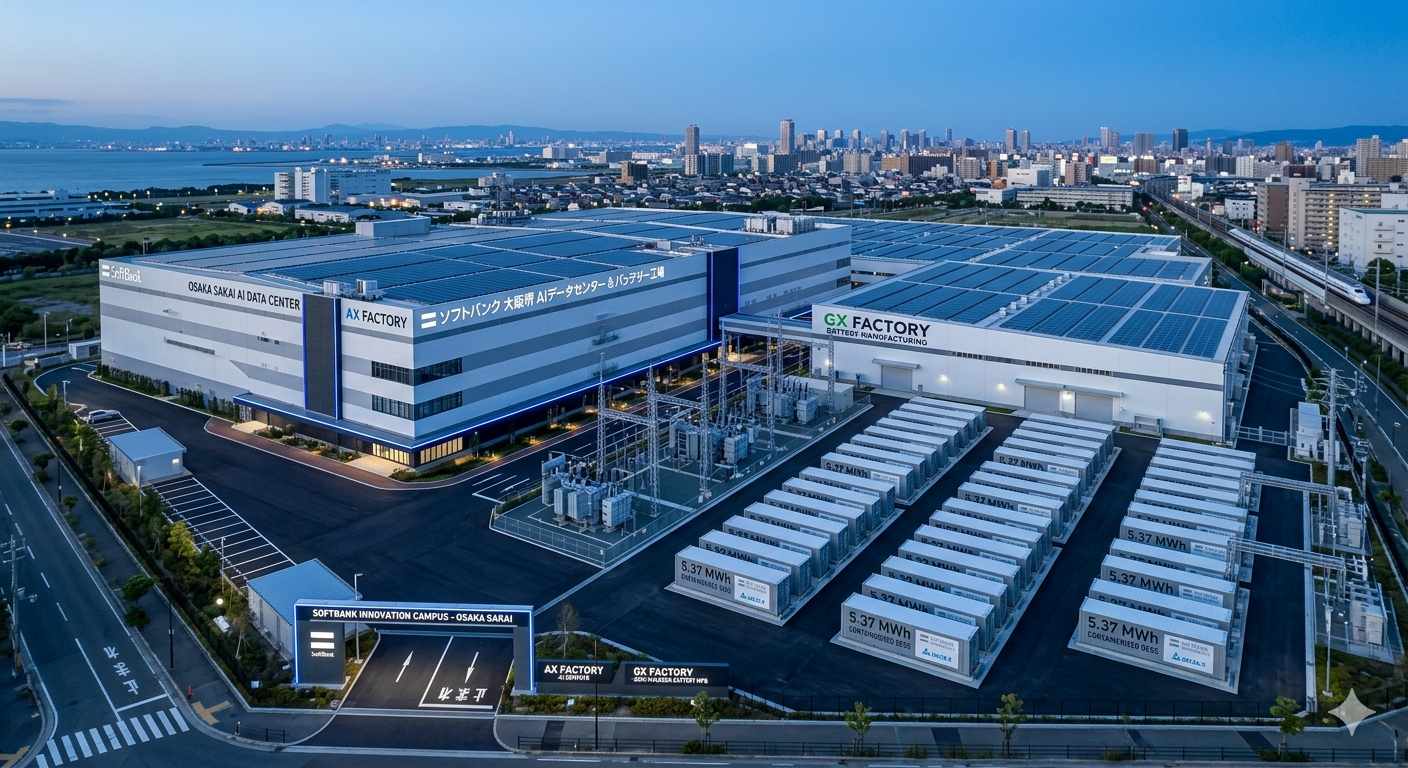
SoftBank’s latest initiative centers on a large-scale development in Sakai City, located in Osaka Prefecture. The project serves as both an AI infrastructure platform and a manufacturing hub for next-generation energy technologies. At the center of the development are two facilities known as the AX Factory and the GX Factory. Together, they form the foundation of SoftBank’s strategy to address both computing and energy requirements within a single ecosystem. The company views these capabilities as complementary rather than separate infrastructure categories. This integrated approach distinguishes the project from many conventional data center developments.
The AX Factory will focus on AI data center operations and the production of AI-related infrastructure hardware. Alongside it, the GX Factory will manufacture next-generation battery technologies, solar panels, and energy storage systems. SoftBank plans to begin production of battery cells and battery energy storage systems at the facility in 2028 before scaling manufacturing capacity over subsequent years. Batteries produced at the site are expected to support the company’s own AI data center developments. This strategy enables SoftBank to participate across multiple segments of the infrastructure value chain. The result is a vertically integrated model that combines energy production, storage, and computing infrastructure.
Why Energy Storage Matters for AI Infrastructure
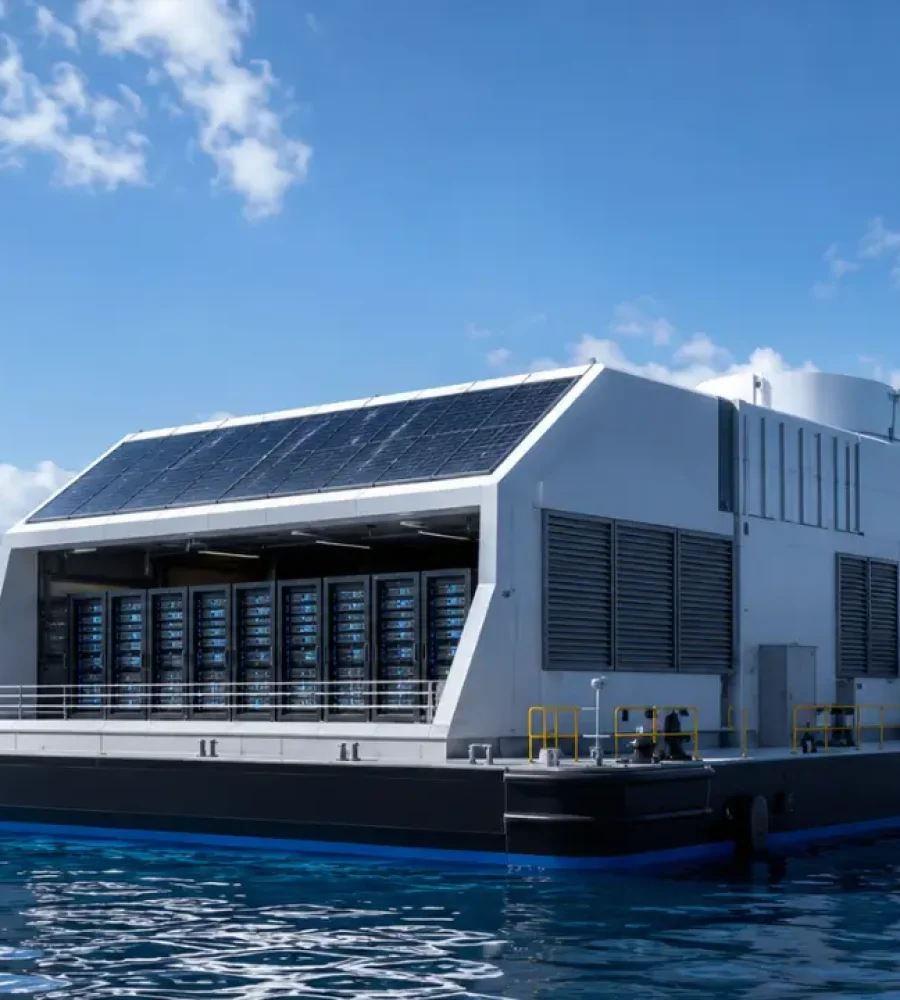
Battery energy storage systems are becoming increasingly important as data centers consume larger amounts of electricity. These systems store electrical energy and can release it when demand increases or when renewable generation fluctuates. Operators use energy storage to improve reliability, manage peak demand, and optimize power consumption patterns. As renewable energy penetration increases, storage technologies play a critical role in balancing supply and demand across electricity networks. Data center operators increasingly view energy storage as a tool for improving operational resilience and reducing dependence on traditional power infrastructure. These capabilities become particularly valuable in AI-focused facilities where electricity consumption can vary significantly.
Industry forecasts suggest energy storage deployment will accelerate substantially during the remainder of the decade. The International Energy Agency’s Batteries and Secure Energy Transitions report projects global battery energy storage capacity will expand from approximately 83 GW in 2023 to more than 1,200 GW by 2030. Such growth reflects increasing demand from utilities, industrial operators, and digital infrastructure providers. Data centers represent one of the sectors expected to benefit from these investments. As AI workloads continue to expand, energy storage systems could become standard components of large-scale computing campuses. This trend is encouraging infrastructure developers to incorporate battery strategies into long-term planning efforts.
SoftBank Is Betting on Alternative Battery Technology
A notable aspect of SoftBank’s strategy involves its focus on battery technologies that differ from conventional lithium-ion systems. The company states that its battery cells utilize halogen-based materials for cathodes and zinc for anodes. According to SoftBank, the design offers strong charging and discharging performance while maintaining energy efficiency comparable to or better than lithium-ion alternatives. The company also believes the technology can reduce energy losses during operation. If successful, these characteristics could make the batteries attractive for large-scale infrastructure deployments. The development reflects broader industry efforts to explore alternatives to existing battery chemistries.
Safety considerations also play a role in the company’s technology strategy. SoftBank has partnered with battery specialist COSMOS LAB to develop zinc-halogen battery cells that use pure water as the electrolyte. The companies state that the technology combines strong energy storage performance with highly safe and non-flammable characteristics. Fire risk remains a major consideration for large-scale battery deployments, particularly within mission-critical infrastructure environments. Alternative battery chemistries that address these concerns may attract interest from data center operators and utilities. The partnership aims to accelerate development and establish manufacturing capabilities suitable for large-scale production.
Partnerships Are Supporting the Development Strategy
SoftBank is relying on specialized technology partnerships to accelerate commercialization efforts. The collaboration with COSMOS LAB focuses on battery cell development and manufacturing technologies. Both companies are working to establish mass production processes that can support future deployment requirements. The partnership reflects the complexity of bringing new battery technologies from development into commercial operation. Success will depend not only on technical performance but also on manufacturing scalability and cost competitiveness. These factors will influence whether the technology can gain traction within infrastructure markets.
The company is also collaborating with DeltaX on battery energy storage systems. According to SoftBank, DeltaX contributes Cell Connecting System and Cell to Pack technologies designed to maximize battery performance and energy density. The storage systems will additionally incorporate an energy management platform that uses AI-powered demand forecasting capabilities. Combining storage hardware with intelligent energy management software may improve overall operational efficiency. This approach aligns with broader industry trends toward integrating AI into infrastructure management systems. Such capabilities could become increasingly important as data centers and energy systems grow more complex.
The Infrastructure Race Is Expanding Beyond Computing
The significance of SoftBank’s strategy extends beyond battery manufacturing alone. The company is effectively building an ecosystem that links energy infrastructure with AI computing infrastructure. Historically, operators treated power generation, storage, and data center operations as separate segments. AI growth is encouraging a more integrated approach because computing demand is becoming increasingly dependent on energy availability. Companies capable of managing both infrastructure layers may gain competitive advantages as the market evolves. SoftBank’s development suggests that future infrastructure strategies could place energy systems at the center of AI expansion plans.
The company’s Osaka project highlights how the AI infrastructure race is broadening beyond processors, GPUs, and networking equipment. Access to reliable electricity, renewable energy integration, and energy storage capacity are becoming critical considerations for long-term growth. By combining battery manufacturing, energy storage systems, solar technologies, and AI data center operations, SoftBank is positioning itself to address multiple infrastructure challenges simultaneously. Whether the strategy succeeds remains to be seen, but it reflects a growing recognition that future AI capacity will depend on more than computing hardware alone. As electricity demand from AI workloads continues to rise, energy infrastructure may become one of the most important competitive battlegrounds in the digital economy.