Taiwan rarely enters a technology transition from a position of weakness. Its industrial ecosystem remains one of the most sophisticated production networks in the world, capable of scaling advanced electronics faster and more efficiently than most competitors. That capability helped transform personal computing, smartphones, networking equipment and semiconductor manufacturing into global industries. Yet physical AI introduces a different competitive equation. The emerging robotics economy is not forming around hardware alone. It is forming around software intelligence, training environments, foundation models, digital twins, data pipelines and autonomous decision systems. In that environment, production capacity remains important, but production alone may not determine who captures the largest share of future value. That reality appears to be shaping Taiwan’s increasingly visible interest in robotics and physical AI.
The discussion is not simply about building more robots. It centers on where influence will exist once robots become intelligent, connected and continuously updated systems. The companies that define operating frameworks, simulation ecosystems and AI architectures could shape entire markets. Hardware manufacturers may still thrive, but their negotiating power could look very different if the critical software layers belong to others. Taiwan has seen this pattern before. The lesson from previous technology cycles was not that manufacturing failed. Manufacturing succeeded. The challenge was that ecosystem ownership often generated greater economic leverage than production leadership. The firms that controlled platforms frequently dictated standards, captured developer communities and maintained direct customer relationships. Physical AI may represent another moment when those dynamics become visible.
Robotics Is Becoming a Software-Centric Industry
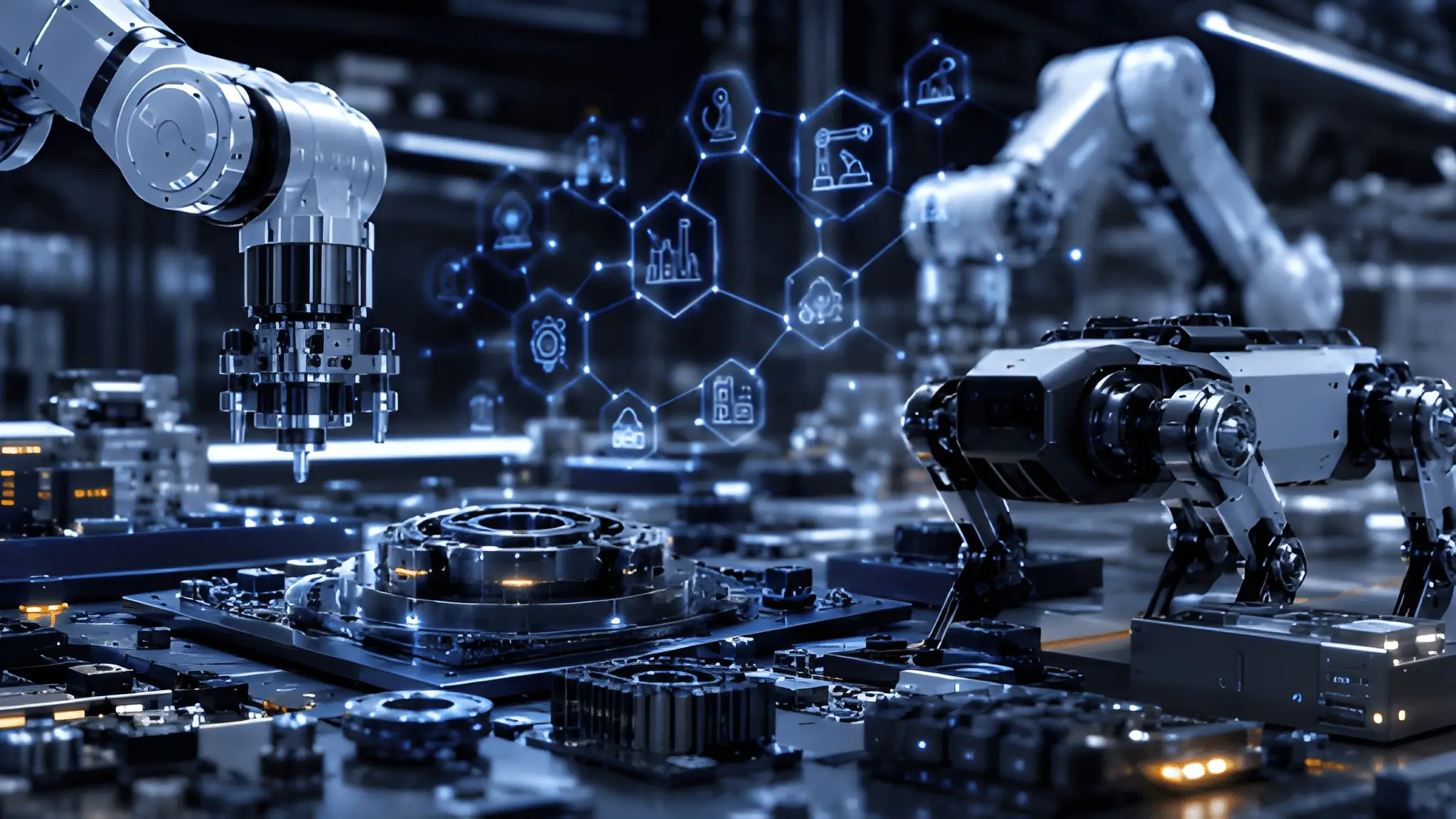
Many discussions about robotics still focus on mechanical engineering, sensors and industrial automation. Those elements remain essential, but they increasingly represent only part of the value stack. Modern robotics development depends on massive software infrastructure. Robots require simulation environments for training, AI models for decision-making, orchestration systems for coordination and cloud-connected frameworks for deployment. Performance improvements increasingly emerge from software updates rather than mechanical redesigns. That shift alters the economics of the industry. A robotics platform can improve thousands of deployed machines simultaneously through software enhancements. Hardware upgrades, by contrast, often require manufacturing changes, logistics coordination and capital investment.
The scalability of software creates an advantage that investors and technology companies understand well. As physical AI matures, the distinction between a robot manufacturer and a robotics platform company may become increasingly significant. The manufacturer sells machines. The platform owner influences the broader ecosystem surrounding those machines. That ecosystem can include developers, application providers, system integrators, enterprise customers and future hardware partners. Once those networks reach meaningful scale, they often become difficult to displace. Taiwan’s growing focus on physical AI suggests policymakers and industry leaders recognize that the robotics market is evolving beyond traditional hardware competition.
The Value Chain Is Moving Upward Again
Technology industries rarely stand still. Competitive advantages migrate. At one stage, component manufacturing creates differentiation. Later, system integration becomes the priority. Eventually, software and ecosystem control emerge as the dominant strategic positions. Physical AI appears to be entering that transition phase. The robotics sector remains fragmented compared with smartphones or cloud computing. No single platform has achieved universal dominance. Multiple software architectures, AI frameworks and deployment models continue to compete for adoption. That fragmentation creates opportunity. Countries and companies that move early can still influence standards, establish partnerships and shape market direction. Those opportunities become harder to capture after ecosystems mature.
For Taiwan, timing may matter as much as capability. The country already possesses engineering expertise, semiconductor leadership and deep manufacturing knowledge. Those strengths provide a foundation that many competitors cannot easily replicate. The question is whether those assets can be translated into influence at higher layers of the robotics stack. That challenge extends beyond technology development. It requires ecosystem building, software investment, AI talent cultivation and long-term platform thinking. Manufacturing organizations often optimize around efficiency and execution. Platform businesses frequently prioritize developer adoption, network effects and ecosystem expansion. Those are different disciplines. Success in one does not automatically create success in the other.
Physical AI May Redefine Competitive Hierarchies
The rise of physical AI creates uncertainty for every participant in the robotics market. Traditional industrial automation companies face pressure to incorporate increasingly sophisticated AI capabilities. Software companies are moving closer to the physical world. Semiconductor providers are expanding into broader AI ecosystems. Cloud operators continue searching for pathways into robotics deployment. The boundaries separating these sectors are becoming less distinct. That convergence increases the importance of strategic positioning. A company that supplies critical components may hold substantial influence today. However, influence can shift rapidly if software platforms become the primary interface between customers and robotic systems.
In many technology markets, users interact with platforms long before they think about underlying hardware. Physical AI could accelerate that trend. The organizations controlling training environments, autonomous decision frameworks and deployment ecosystems may gain visibility that component suppliers rarely achieve. They become the layer through which innovation flows. Taiwan’s interest in moving beyond manufacturing should therefore be viewed as a strategic response to industry evolution rather than a rejection of its existing strengths. Manufacturing remains essential. The concern is whether manufacturing alone will remain sufficient.
The Window for Influence Remains Open
One characteristic separates the current robotics market from more mature technology sectors. The competitive landscape remains unsettled. Physical AI has not yet produced the equivalent of a dominant smartphone operating system or a universally accepted cloud architecture. Companies continue experimenting with software stacks, deployment models and monetization strategies. Industry standards remain fluid. That uncertainty creates a rare opportunity. Emerging markets allow new participants to establish influence before power structures become entrenched. Once ecosystems mature, competitive barriers often increase dramatically. Platform leaders benefit from developer communities, accumulated data and customer lock-in effects that can take years to challenge.
Taiwan appears to be approaching robotics during this formative stage. The timing matters because influence is typically easiest to establish before industry consolidation occurs. Waiting for the market to mature may reduce strategic flexibility. By then, platform standards could already reflect decisions made elsewhere. Manufacturers would still participate, but their ability to shape ecosystem direction might diminish. The broader significance extends beyond Taiwan. Many manufacturing-centric economies face similar questions as AI transforms physical industries. The debate is not whether hardware remains important. It is whether hardware leadership alone can secure long-term influence in an era increasingly defined by intelligent software systems.
The Next Robotics Era Will Reward More Than Production
The most important question surrounding physical AI is not who builds the most robots. It is who defines how those robots learn, communicate, operate and improve. That distinction could determine where profits, influence and innovation concentrate during the next phase of technological development. Taiwan enters this transition with advantages that many nations would welcome: engineering depth, production scale, semiconductor expertise and established global supply chain relationships. Those capabilities provide credibility in a market where hardware performance still matters. However, physical AI introduces a new competitive layer.
The future leaders of robotics may not be identified solely by manufacturing output. They may be recognized by their ability to create ecosystems that connect hardware, software and intelligence into a unified platform. Taiwan’s pursuit of physical AI suggests an awareness that the industry’s center of gravity is shifting. The country already knows how to build the machines. The larger strategic challenge is ensuring that it also participates in defining the systems that make those machines valuable. In the emerging robotics economy, ownership of the platform may ultimately matter as much as ownership of the factory.