Europe’s AI Narrative Is Colliding With Infrastructure Reality
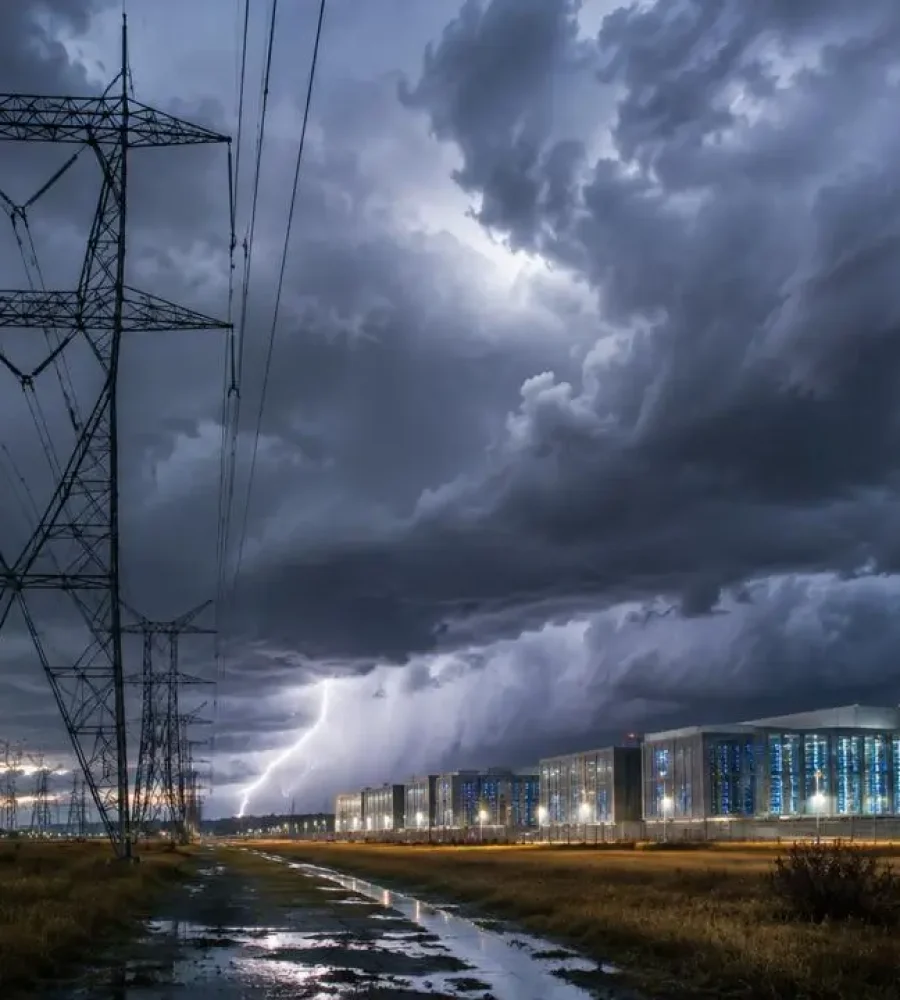
Europe’s digital economy has entered a phase its power systems were never fully designed to absorb. The continent’s political and corporate messaging still frames artificial intelligence expansion as compatible with aggressive decarbonization targets, yet the physical requirements behind hyperscale infrastructure are beginning to undermine that narrative. The contradiction no longer sits at the margins of energy policy. It now defines it.
Across Europe, governments continue to promote AI sovereignty, cloud independence, semiconductor investment, and large-scale data center construction as strategic economic priorities. At the same time, regulators maintain increasingly ambitious climate targets tied to renewable deployment and emissions reduction. Both agendas were presented as parallel transitions that could scale together through innovation, efficiency, and long-term power purchase agreements. That assumption is weakening under pressure from actual electricity demand.
Modern AI infrastructure does not behave like traditional enterprise computing. Large language models, accelerated computing clusters, and GPU-heavy workloads require continuous, high-density power consumption that strains grids differently from conventional digital infrastructure. Training and inference workloads operate at industrial scale. The power profile resembles manufacturing more than software.
Europe appears to have underestimated that distinction. The continent spent years treating digital growth as an abstract layer of the economy rather than a physically intensive industrial expansion. That framing worked when cloud adoption outpaced public awareness of infrastructure costs. AI has changed the equation. The electricity requirements are now too visible, too concentrated, and too politically sensitive to remain hidden behind sustainability messaging.
The challenge is not that renewable energy deployment has failed entirely. Europe remains one of the world’s most aggressive renewable markets. The problem is speed, timing, and infrastructure synchronization. AI demand is accelerating faster than renewable projects can reliably connect to the grid.
Renewable Capacity Exists on Paper Faster Than on Grids
The political language surrounding “green AI” often assumes renewable availability equals renewable accessibility. In practice, those are separate conditions. A wind or solar project announced today may require years before interconnection approval, transmission expansion, storage integration, and commercial delivery become operational realities. Europe’s permitting systems, land-use constraints, supply chain delays, and local opposition continue slowing deployment timelines even as public commitments expand.
Hyperscale operators do not operate on those timelines. Cloud companies require predictable, uninterrupted electricity at enormous scale. AI workloads cannot pause because wind generation fluctuates or transmission infrastructure remains unfinished. The economics of hyperscale computing depend on reliability first and sustainability second, regardless of public positioning. That tension increasingly defines Europe’s energy landscape.
Power purchase agreements helped create the perception that technology firms could neutralize infrastructure emissions through renewable contracting. Yet PPAs cannot independently solve grid congestion, transmission bottlenecks, or regional capacity shortages. They secure financial arrangements for energy supply. They do not magically create dispatchable electricity where grid systems lack resilience.
Europe’s energy conversation still often treats renewable commitments as equivalent to operational readiness. Data center developers are discovering otherwise. Several European markets already face grid connection delays for large-scale facilities because utilities cannot guarantee sufficient capacity. In some regions, developers encounter waiting periods extending multiple years before receiving access approvals. Those constraints are not temporary administrative inefficiencies. They reflect structural limitations inside transmission systems built for earlier economic assumptions.
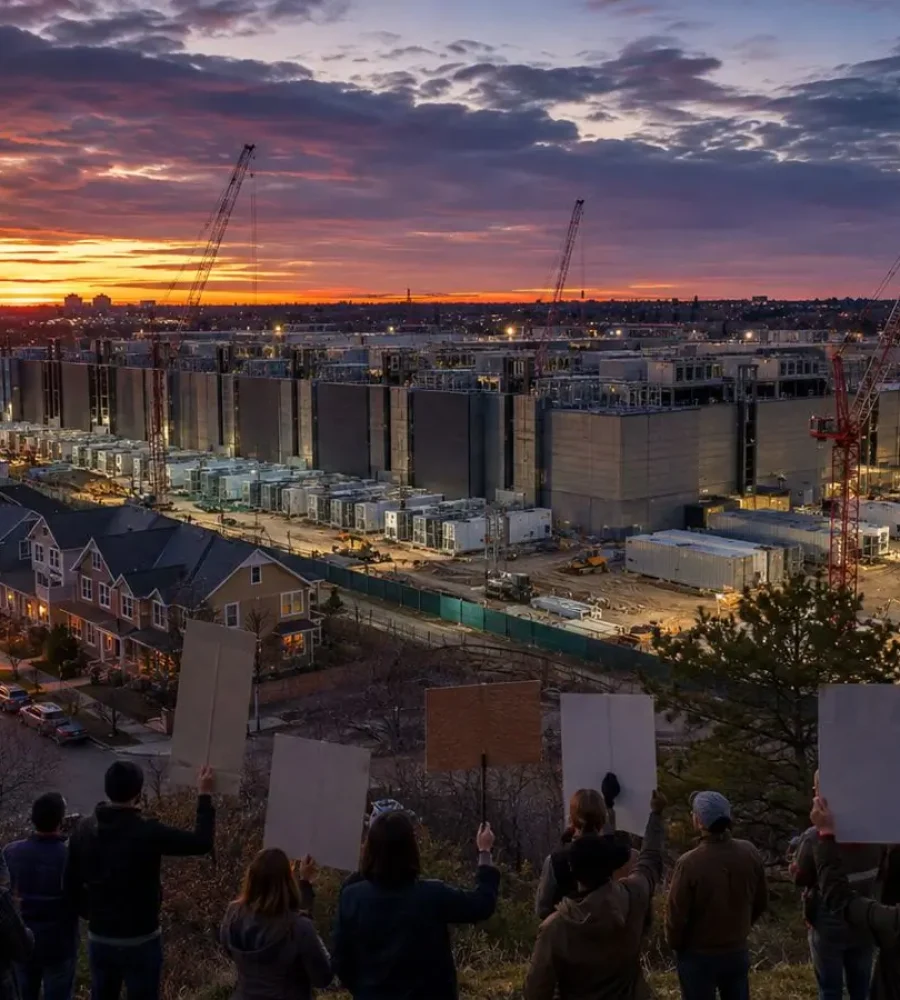
The issue extends beyond electricity generation itself. AI infrastructure concentrates demand geographically. Data centers cluster near fiber routes, population centers, cooling resources, and stable connectivity hubs. That concentration creates localized stress even when national renewable statistics appear strong. Europe may produce growing volumes of renewable electricity overall while still lacking the ability to deliver stable power to hyperscale facilities where demand is surging most aggressively. That distinction matters because the AI race rewards immediacy, not long-term alignment.
Fossil Fuels Remain the Quiet Insurance Policy
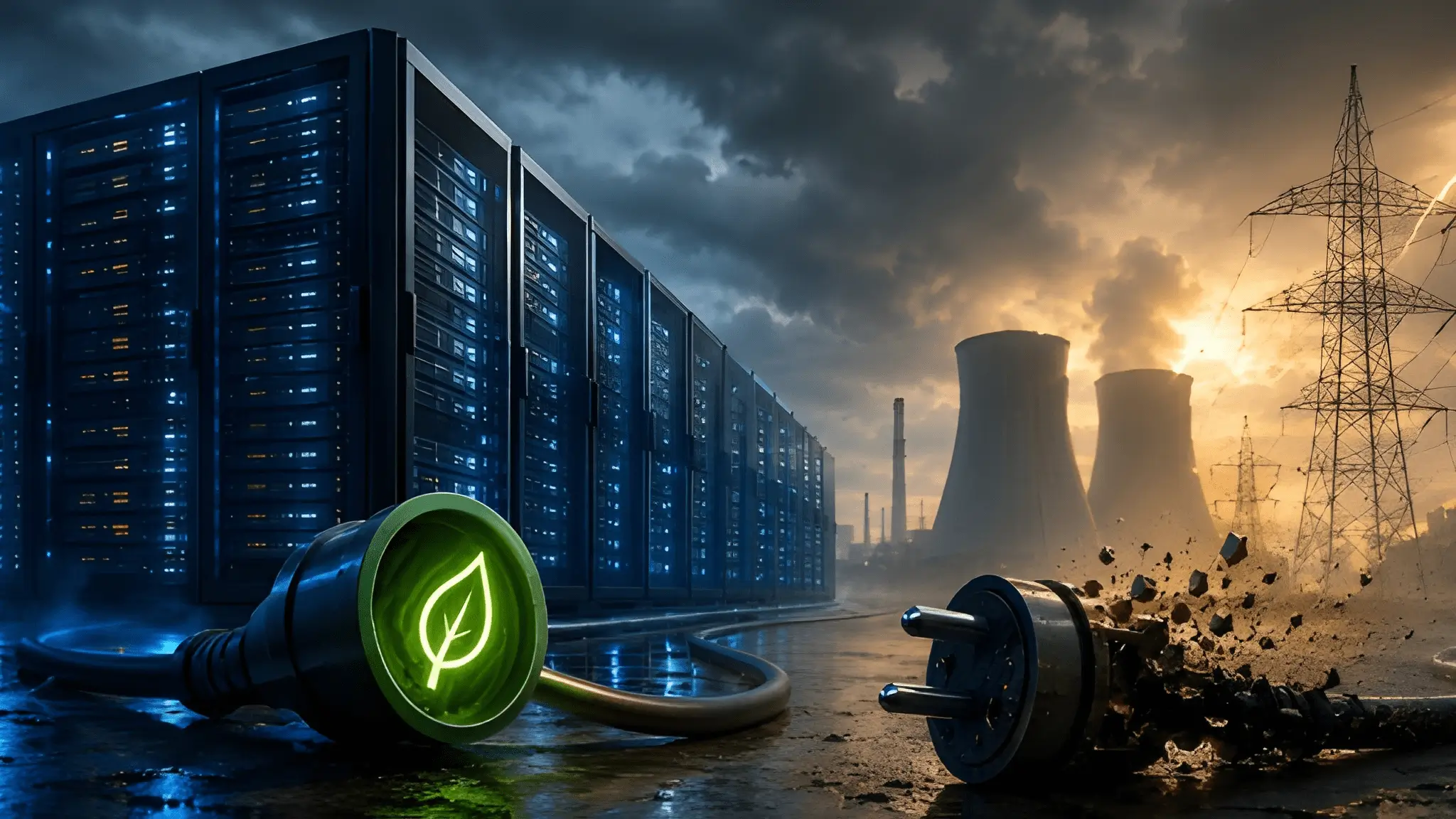
Europe’s public energy rhetoric often suggests fossil fuel dependence belongs to a declining industrial era. The reality inside grid operations is more complicated. Natural gas continues functioning as a stabilizing mechanism across multiple European power markets because intermittent renewable systems still require dispatchable backup generation. AI expansion may deepen that dependency rather than reduce it.
Few policymakers want to openly frame fossil fuels as part of Europe’s AI infrastructure strategy. Yet reliability concerns increasingly push utilities, operators, and governments toward pragmatic compromises. When grid operators confront the choice between slowing strategic digital investment or maintaining backup thermal generation, economic pressure usually wins.
Europe has spent years positioning itself as the global model for sustainable industrial transformation. AI threatens to expose the limits of that branding exercise because data center demand introduces a scale problem renewable deployment alone cannot rapidly solve. Battery storage remains expensive at hyperscale duration requirements. Nuclear expansion moves slowly in much of Europe. Transmission modernization requires time and political coordination many governments struggle to sustain.
Meanwhile, AI investment cycles continue accelerating. The risk for Europe is not merely higher emissions. The larger risk is credibility erosion. If governments continue promoting simultaneous AI expansion and rapid decarbonization without acknowledging infrastructure trade-offs, the continent may drift into a policy gap where official narratives diverge sharply from operational realities. Investors notice those contradictions quickly. So do utilities.
The market already understands something policymakers still communicate cautiously: the modern AI economy is fundamentally energy-intensive. That recognition is reshaping global infrastructure competition.
Europe Is Discovering That AI Is an Industrial Policy Challenge
Europe often framed technology regulation as its primary competitive advantage during earlier phases of digital expansion. AI infrastructure shifts competitive pressure toward energy access, permitting speed, grid resilience, and industrial execution.
The United States benefits from abundant natural gas resources, large-scale transmission investment potential, and comparatively flexible land development dynamics. Gulf states increasingly position themselves around energy-backed AI infrastructure strategies. Asian markets continue investing aggressively in industrial-scale digital ecosystems.
Europe enters that environment carrying stricter climate obligations and slower infrastructure coordination mechanisms. The continent still possesses major advantages, including engineering expertise, established utilities, strong research ecosystems, and mature renewable industries. But AI infrastructure rewards physical scalability more than policy ambition. That changes the competitive equation.
Europe now faces an uncomfortable strategic question: whether it prepared sufficiently for the material demands of the AI economy it publicly championed. The answer increasingly appears uncertain. The broader issue is not whether renewable energy should remain central to Europe’s long-term strategy. It almost certainly will. The problem is that political messaging often implied the transition would unfold with minimal friction between sustainability goals and industrial expansion.
AI is dismantling that assumption in real time. The continent’s digital ambitions now depend less on climate branding and more on transmission corridors, backup generation capacity, grid modernization, and industrial power management. Those realities sound less inspiring than “green AI,” but they determine whether Europe can support hyperscale growth at all.
Europe may still achieve both decarbonization and AI expansion eventually. What is becoming harder to defend is the claim that the transition would scale smoothly, quickly, and without compromise. The grid is no longer allowing that illusion to survive.