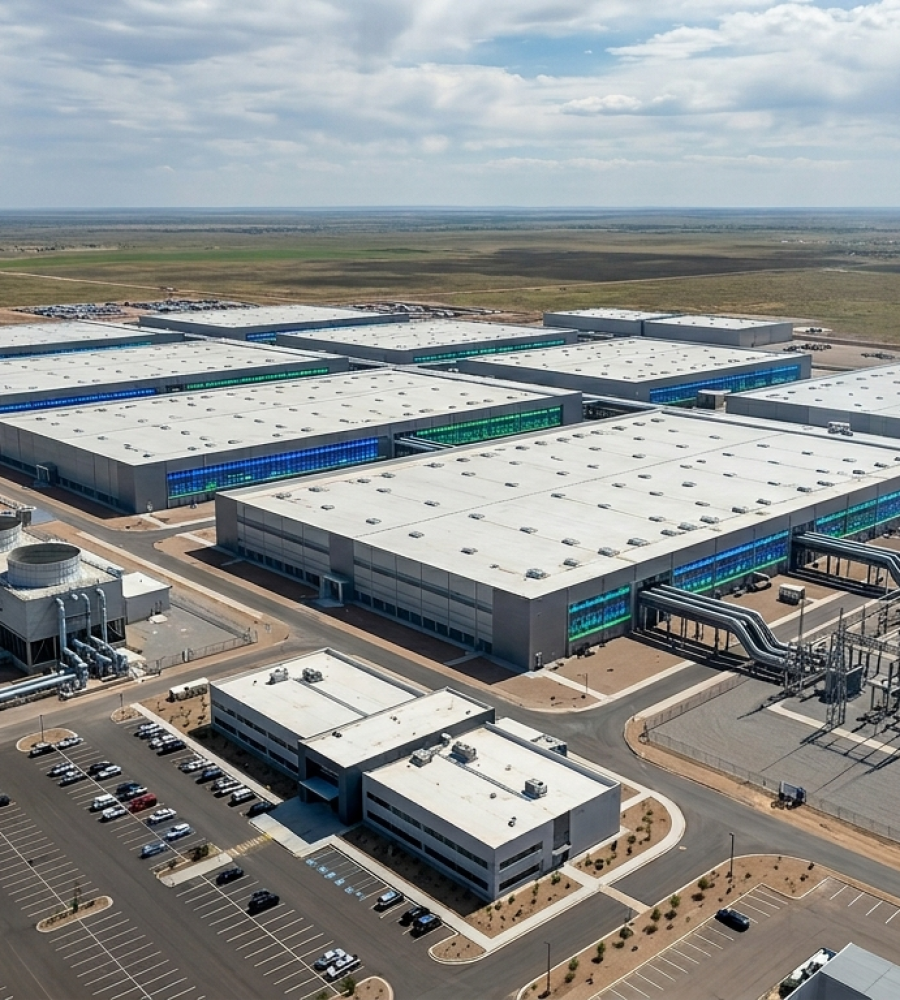

SAP SE has opened a new data center in Mumbai, marking a significant expansion of its infrastructure footprint in one of the world’s most strategically important digital markets. The facility reinforces the German enterprise software company’s long-term commitment to India, where it employs more than 15,000 people and serves a rapidly expanding base of enterprises undergoing digital transformation. The investment arrives as organizations across industries face mounting pressure to localize data, modernize procurement systems, and strengthen supply chain resilience. The launch also positions India as a more integral component of SAP’s global cloud architecture.
The Mumbai facility joins SAP’s existing data center network spanning Europe, the United States, and Saudi Arabia. Through that expanded footprint, SAP has enhanced the data federation capabilities supporting SAP Business Network Commerce Automation, allowing procurement data and workflows to operate across multiple jurisdictions while remaining interconnected. The move addresses growing customer demand for infrastructure capable of supporting regional compliance requirements without sacrificing global operational visibility. As multinational supply chains become increasingly complex, distributed data architectures are gaining strategic importance.
The company said the launch fulfills a key commitment made to customers operating across India and the broader subcontinent. SAP also plans to extend data federation capabilities for SAP Business Network Supply Chain Collaboration through the Mumbai facility later this year. That expansion will broaden the scope of localized data services available to enterprises managing supplier relationships, manufacturing operations, and cross-border logistics. The initiative reflects SAP’s effort to deepen cloud capabilities in regions where regulatory requirements continue to evolve.
Data Localization Becomes a Strategic Business Requirement
The new data center arrives at a time when data sovereignty has become a boardroom-level issue for many enterprises. Organizations operating in India increasingly seek cloud infrastructure that allows sensitive operational data to remain within national boundaries while maintaining connectivity to global business ecosystems. Procurement records, supplier information, manufacturing intelligence, and transaction data now represent critical assets that businesses must secure while remaining accessible to authorized partners. SAP’s latest investment directly addresses those competing priorities.
According to SAP, the Mumbai facility supports localized data storage aligned with Ministry of Electronics and Information Technology (MeitY) guidelines through a MeitY-empaneled cloud service provider. This approach enables enterprises to maintain compliance with domestic regulatory expectations while continuing to participate in international supply chains. The ability to localize data without creating information silos has become a key differentiator in enterprise cloud infrastructure. Consequently, vendors capable of balancing governance requirements with operational flexibility are seeing increased demand.
SAP highlighted the broader role of SAP Business Network in supporting these objectives. “To collaborate with their trading partners on these and other core business processes, companies conducting business in India require a cloud-based platform that provides secure infrastructure for building resilient domestic supply chains while maintaining global connectivity, thus maintaining sensitive procurement, supplier, and manufacturing data within Indian jurisdiction. SAP Business Network furthers these objectives with our newly launched data center in Mumbai, where data is localized in a manner compliant with Ministry of Electronics and Information Technology (MeitY) guidelines, with a MeitY-empaneled cloud service provider.”
SAP Business Technology Platform Powers Next-Generation Commerce
The Mumbai facility is built on SAP Business Technology Platform, which serves as the foundational layer supporting SAP Business Network’s expanding data federation architecture. Beyond geographic expansion, the platform provides the technological framework needed to support a new generation of intelligent enterprise applications. Businesses increasingly require infrastructure capable of handling automation, analytics, artificial intelligence, and security requirements simultaneously. SAP’s architecture strategy aims to unify those capabilities within a connected cloud environment.
The company views data federation as a core component of future enterprise operations. By distributing data intelligently across multiple regions while maintaining a unified operational framework, organizations can improve scalability, resilience, and governance. The architecture also supports open extensibility, enabling customers to integrate specialized applications and workflows without disrupting broader business processes. These capabilities become increasingly valuable as enterprises adopt more complex hybrid and multi-cloud strategies.
SAP argues that the resulting network extends beyond simple connectivity. The platform is designed to help organizations improve decision-making, respond more rapidly to market changes, and generate greater value across procurement, logistics, supply chain management, asset collaboration, and working capital operations. As enterprises continue to digitize business-critical processes, infrastructure capable of supporting real-time collaboration across global ecosystems becomes increasingly important.
Data Federation Gains Importance Amid Supply Chain Uncertainty
Data federation has emerged as a strategic technology priority as companies seek greater operational resilience. The model offers practical advantages including improved cost efficiency, stronger governance frameworks, faster system responsiveness, and enhanced security controls across distributed environments. These benefits become particularly relevant for organizations operating across multiple cloud providers or geographic regions. The approach also helps reduce dependency on distant infrastructure, which can introduce latency and operational complexity.
Yet the broader value proposition extends beyond technical performance. Business leaders increasingly view data federation as a mechanism for reducing uncertainty in an era characterized by persistent disruption. Supply chains remain vulnerable to geopolitical tensions, labor shortages, economic volatility, natural disasters, and unexpected market shocks. Access to unified, localized, and secure data has become essential for maintaining visibility during periods of instability.
Therefore, enterprises are accelerating investments in cloud-based technologies that improve transparency across supplier networks and operational ecosystems. SAP’s Mumbai expansion reflects this broader market trend, where resilience has become as important as efficiency. As global commerce becomes more interconnected and regulatory frameworks grow more demanding, infrastructure strategies centered on data federation are likely to play a larger role in enterprise technology roadmaps.
SAP Bets on India’s Expanding Digital Economy
India remains one of the fastest-growing enterprise technology markets globally, making it a natural destination for infrastructure investment from major cloud and software providers. The country’s accelerating digital adoption, expanding manufacturing ambitions, and growing emphasis on data governance continue to attract strategic investments from multinational technology firms. SAP’s latest expansion underscores its confidence in both the Indian market and the long-term demand for localized enterprise cloud services.
The Mumbai data center represents more than additional capacity. It signals a broader shift toward regionalized digital infrastructure that can support global operations while satisfying local regulatory requirements. As enterprises place greater emphasis on resilience, compliance, and intelligent automation, SAP’s expanded data federation capabilities may become an increasingly important component of how businesses manage commerce and supply chains across borders.