
The race to secure artificial intelligence infrastructure is creating a new class of financial partnerships across the technology sector. In the latest example, Google is helping support a financing structure worth approximately $35 billion that will enable AI startup Anthropic to secure large-scale computing capacity across multiple US data centers. The arrangement illustrates how the world’s largest technology companies are becoming deeply interconnected as demand for advanced AI computing continues to surge. While competition in AI model development intensifies, companies are increasingly collaborating behind the scenes to secure the hardware, facilities, and financing required to train and deploy next-generation systems.
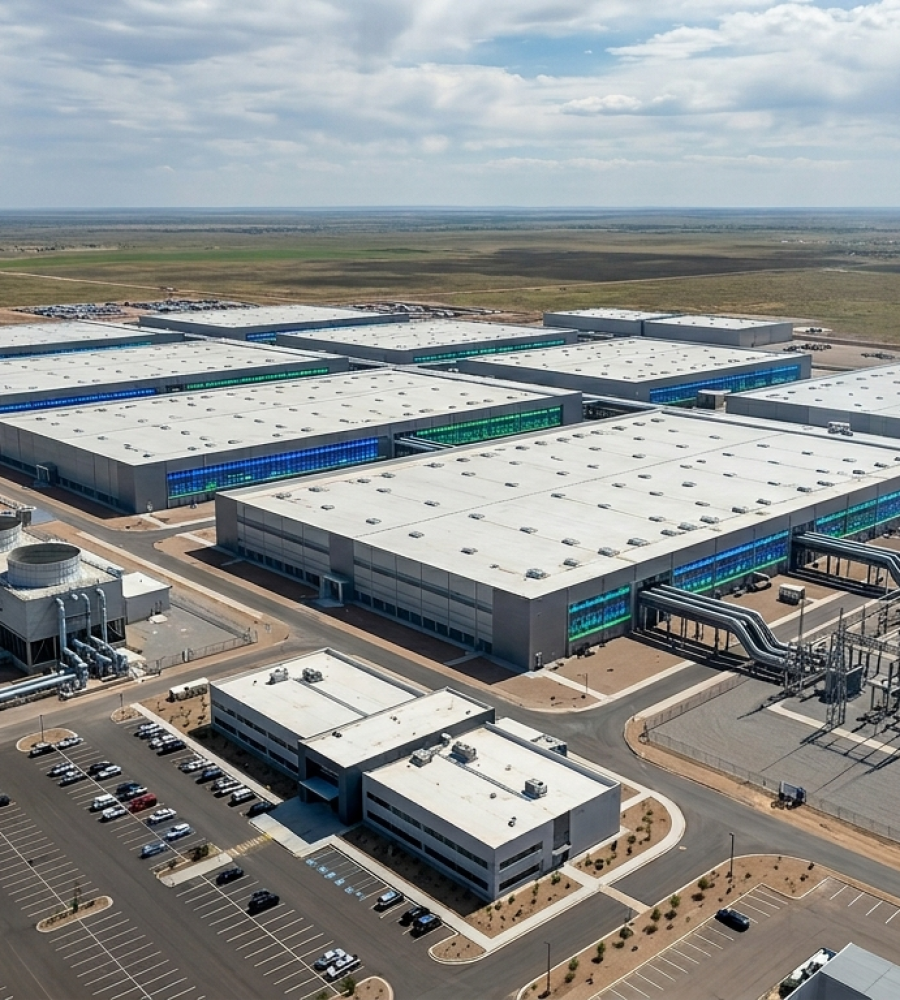
The latest transaction places Google in multiple positions within the AI value chain, extending beyond its role as both a technology provider and investor. Anthropic, the developer behind the Claude family of AI models, is leasing high-performance computing chips deployed across five US-based data centers. Google has agreed to support lease obligations tied to those facilities, creating the financial certainty necessary for lenders to provide what effectively amounts to a $35 billion financing package. Anthropic’s participation in the data center financing structure had not previously been publicly disclosed.
Google Deepens Its Infrastructure Relationship With Anthropic
Google’s involvement with Anthropic stretches back several years. The company emerged as one of Anthropic’s earliest strategic investors and has repeatedly increased its financial exposure to the startup as competition in the AI sector accelerated. The new financing arrangement adds another layer to that relationship. By supporting lease commitments associated with data center deployments, Google helps unlock substantial capital for infrastructure expansion. At the same time, the company stands to benefit from increased demand for its proprietary AI hardware, creating a commercial relationship that extends well beyond equity ownership.
The agreement reflects a broader shift underway across the AI industry. Major technology firms are no longer simply purchasing hardware or constructing facilities. Instead, they are building interconnected ecosystems that combine investment capital, infrastructure financing, cloud services, semiconductor design, and AI model development under increasingly complex commercial frameworks. The financing package also highlights the growing importance of semiconductor partnerships in large-scale AI deployments. Chip designer Broadcom helped facilitate the transaction by leveraging its industry standing and investment-grade credit profile to support financing efforts tied to the infrastructure rollout.
Under the structure, Broadcom designs the custom processors, Google develops and supplies the tensor processing units (TPUs), and Anthropic deploys the hardware to train and operate AI models. The arrangement creates a tightly integrated supply chain spanning chip design, hardware manufacturing, infrastructure deployment, and AI software development. Google and Anthropic already maintain a significant hardware partnership. The two companies entered a long-term TPU agreement in 2025, establishing Google’s processors as a core component of Anthropic’s computing strategy. More recently, Google committed an additional $10 billion investment into the AI startup, further strengthening ties between the organizations.
Investors Continue Funding Massive AI Capacity Buildouts
Large institutional investors remain willing to commit substantial capital to AI infrastructure projects as demand for computing resources outpaces available supply. In the Anthropic financing package, investment firms Apollo Global Management Inc. and Blackstone Inc. are providing the capital backing required to support the transaction. Industry participants increasingly view access to computing power as a strategic asset rather than a simple operational expense. As a result, financing structures that combine technology providers, infrastructure operators, chip manufacturers, and institutional investors are becoming more common across the sector.
“A year ago, some wondered if there could possibly be enough demand to support all this infrastructure spending,” said Joe Allen, head of securitized credit strategies at Bright Meadow, a Mariner Investment Group team. “In fact, the amount of infrastructure available is still a limiting factor, and companies are going to great lengths to ensure access,” he said, without specifically addressing the Google-Anthropic tie. Anthropic declined to comment. Representatives for Broadcom and Google’s parent company Alphabet did not respond to requests for comment. The increasing concentration of financial and operational relationships among leading AI companies continues to attract attention from regulators and market observers.
AI Industry Faces Growing Questions Around Interconnected Partnerships
Critics have raised concerns that interconnected partnerships could amplify risks if a major participant encounters operational or financial challenges. Regulators have already begun examining these dynamics. In 2024, the Federal Trade Commission launched an inquiry designed to “scrutinize corporate partnerships and investments with AI providers.” The investigation reflected growing interest in how ownership structures, strategic investments, and commercial agreements shape competition within the rapidly expanding AI market. However, supporters argue that these partnerships represent a practical response to the extraordinary capital requirements of AI infrastructure. Training advanced models requires access to enormous quantities of computing power, specialized chips, and energy-intensive facilities. Consequently, companies often rely on strategic alliances to secure resources at the scale needed for continued growth.
The Google-Anthropic financing structure demonstrates how the AI industry’s competitive landscape is shifting beyond model performance alone. Access to capital, hardware, power capacity, and data center infrastructure now plays an equally important role in determining which companies can scale successfully. Recent developments across the sector reinforce that trend. Technology firms continue signing increasingly large agreements to secure future compute capacity, reflecting expectations that demand for AI services will remain elevated for years. Infrastructure availability, rather than customer demand, is emerging as one of the industry’s primary constraints. As AI adoption accelerates across enterprises, governments, and consumers, partnerships that once appeared unusual are becoming a defining feature of the market. The $35 billion financing package supporting Anthropic’s expansion offers another indication that the next phase of AI competition will be fought as much through infrastructure and capital markets as through algorithms and software innovation.