Summary
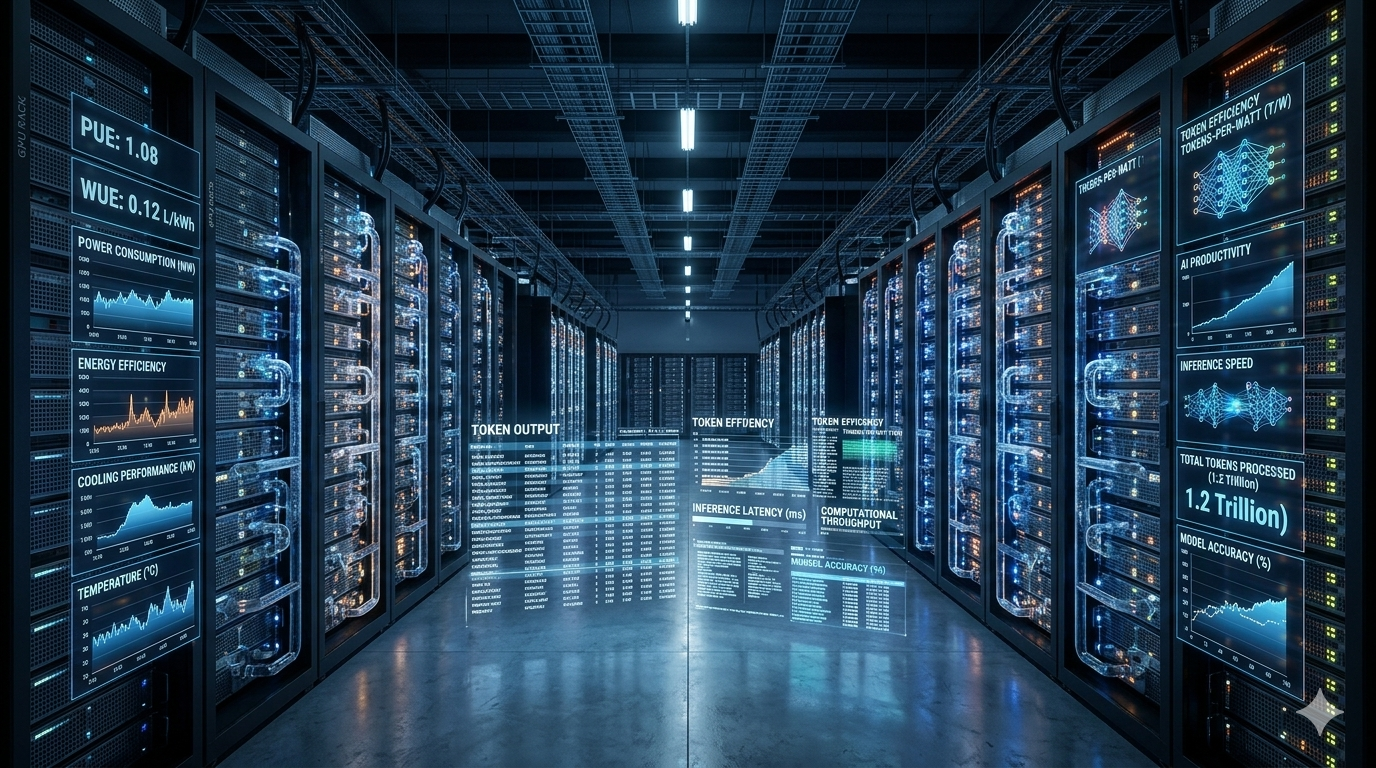
The rapid growth of artificial intelligence is changing how the data center industry evaluates performance. For nearly two decades, operators relied on facility-focused metrics such as Power Usage Effectiveness (PUE) and Water Usage Effectiveness (WUE) to measure efficiency and sustainability. Those metrics helped improve infrastructure design, reduce resource waste, and establish common benchmarks across the industry.
AI workloads are introducing a different set of priorities. Organizations increasingly care about how much useful computational work infrastructure can produce rather than only how efficiently facilities consume resources. That shift has elevated the importance of token efficiency, a metric that connects energy consumption and infrastructure investment with AI output.
The emergence of token-based measurements raises important questions about the future of data center benchmarking. Are traditional efficiency metrics becoming less relevant, or is the industry moving toward a broader framework that balances operational efficiency, sustainability, and computational productivity?
How PUE Became the Industry Standard
The modern data center industry grew around a simple challenge: how to deliver more computing power without wasting energy. As facilities expanded during the early cloud computing era, operators faced rising electricity costs and increasing pressure to improve efficiency. Infrastructure overhead became a major concern because cooling systems, power conversion equipment, and backup systems consumed significant amounts of energy beyond the IT load itself.
The introduction of Power Usage Effectiveness provided a straightforward solution to that problem. By comparing total facility energy consumption with the energy used directly by IT equipment, PUE offered a clear view of operational efficiency. The metric quickly gained traction because it allowed operators to measure progress using a standardized methodology.
Industry adoption accelerated as hyperscale providers expanded their global footprints. Data center developers began competing to achieve lower PUE values through innovations in cooling architecture, airflow management, and electrical design. What started as a technical benchmark eventually became one of the most widely recognized performance indicators in the industry.
PUE also succeeded because it translated complex engineering decisions into a single figure that executives, investors, and regulators could understand. The metric created a common language for discussing efficiency improvements across facilities of different sizes and configurations. That simplicity contributed significantly to its longevity.
The Efficiency Race That Followed
As PUE became an industry benchmark, operators invested heavily in technologies designed to reduce facility overhead. Containment systems, free-air cooling strategies, advanced monitoring platforms, and high-efficiency power distribution systems became standard features in many new developments. Each innovation aimed to direct a larger share of incoming electricity toward computing equipment.
These efforts produced measurable results. Average PUE values declined steadily across the industry as operators optimized infrastructure designs and adopted more sophisticated operational practices. Facilities that once required large amounts of supporting energy gradually became far more efficient.
The pursuit of lower PUE values also influenced how new facilities were designed. Developers increasingly selected locations with favorable climates, access to renewable energy, and conditions that supported efficient cooling operations. Efficiency became a central component of infrastructure planning rather than an operational afterthought.
Over time, however, the industry’s relationship with PUE began to change. As facilities approached increasingly efficient operating levels, opportunities for dramatic improvements became harder to find. Incremental gains remained possible, but the era of transformative PUE reductions began to slow.
Why WUE Joined the Conversation
Sustainability Moves Into Infrastructure Planning
Energy efficiency was not the only issue attracting attention. Water consumption emerged as another major consideration as data center capacity expanded globally. Many cooling systems relied on significant amounts of water, particularly in regions where environmental resources were already under pressure.
The introduction of Water Usage Effectiveness reflected growing concern about the environmental footprint of digital infrastructure. Communities, regulators, and environmental organizations wanted greater visibility into how facilities managed water resources. WUE provided a framework for evaluating those practices.
Unlike PUE, which focused on electricity usage, WUE highlighted another dimension of sustainability. The metric helped operators compare cooling strategies and identify opportunities to reduce water consumption. It also encouraged greater transparency around environmental performance.
As sustainability reporting became more common, WUE gained importance alongside energy-related measurements. Operators increasingly recognized that long-term infrastructure planning required a broader understanding of resource consumption.
Water Consumption Becomes a Strategic Concern
The rise of AI has intensified discussions around water usage because advanced computing systems generate substantial amounts of heat. Managing that thermal load often requires increasingly sophisticated cooling technologies. In some cases, those technologies can affect water consumption patterns.
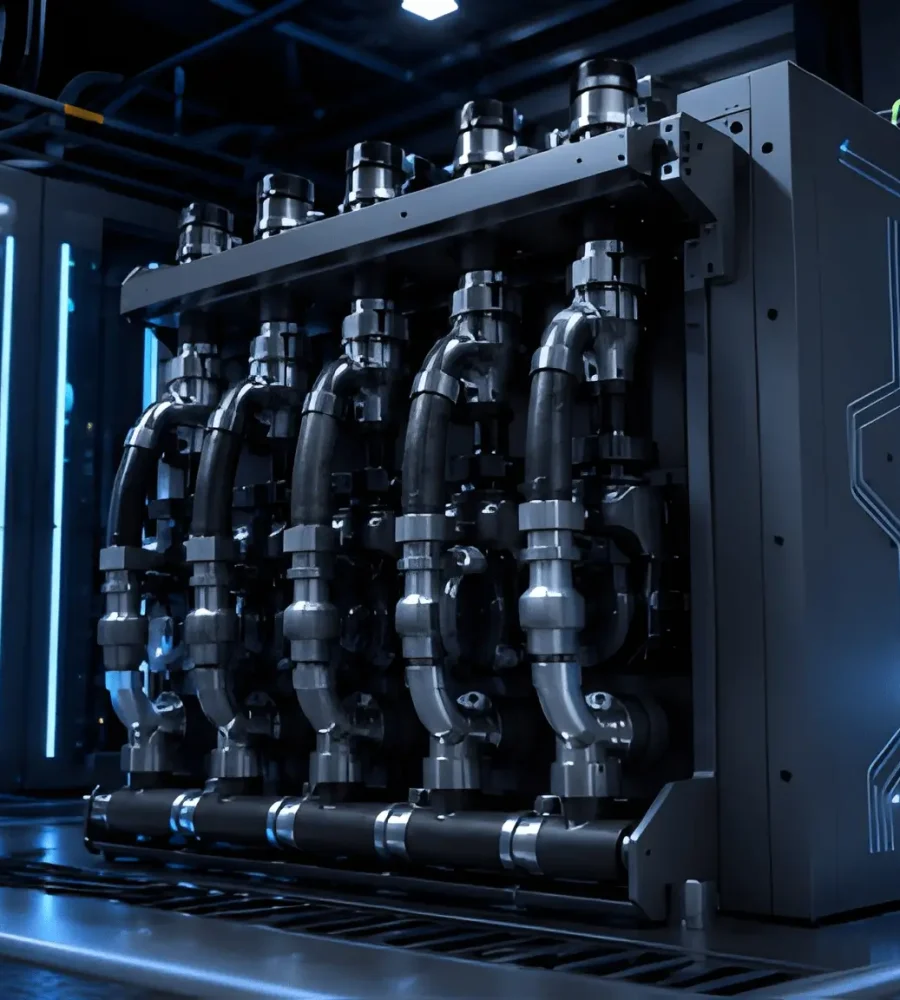
Liquid cooling has emerged as one of the most significant developments in modern infrastructure design. Direct-to-chip cooling systems, immersion cooling platforms, and hybrid thermal management approaches are becoming more common as rack densities increase. These technologies can improve thermal performance while reducing some of the limitations associated with traditional air cooling.
At the same time, operators face growing pressure to demonstrate responsible resource management. Communities evaluating new data center developments often focus on energy and water usage before considering computational output. Environmental performance therefore remains an important component of infrastructure evaluation.
This reality highlights a challenge that continues throughout the AI era. Productivity matters, but resource consumption remains impossible to ignore.
AI Changes the Definition of Performance
Infrastructure Is No Longer Just About Availability
Traditional data center operations focused heavily on reliability, uptime, and efficiency. Those priorities remain important, but AI workloads have introduced a new performance dimension centered on computational productivity. Organizations deploying large language models increasingly measure success through output rather than infrastructure utilization alone.
This shift reflects the nature of modern AI applications. Generative AI systems produce measurable outputs that can be directly linked to computational activity. Unlike many traditional workloads, these outputs create a practical way to evaluate how effectively infrastructure converts resources into useful work.
The growing demand for AI services has also changed capacity planning. In many environments, the primary challenge is no longer reducing infrastructure overhead. Instead, operators seek ways to maximize the amount of computational work produced from available resources.
As a result, performance discussions increasingly extend beyond facility efficiency. Organizations want visibility into how infrastructure contributes to AI productivity and business outcomes.
The Rise of Computational Productivity
Computational productivity represents a significant departure from traditional infrastructure thinking. Earlier generations of metrics focused primarily on reducing waste. AI introduces a complementary objective: maximizing useful output.
This distinction matters because two facilities with similar efficiency characteristics can produce dramatically different levels of AI performance. Differences in hardware selection, software optimization, networking architecture, and cooling strategies can significantly influence computational throughput.
Organizations investing in AI infrastructure increasingly evaluate these factors together. The goal is not simply to operate efficiently but to generate the greatest possible value from available resources.
That objective has created demand for metrics capable of measuring output directly. Token efficiency has emerged as one of the most prominent responses to that demand.
Understanding Token Efficiency
What Is a Token?
A token is a unit of data processed by an AI model during training or inference. In large language models, tokens often represent words, parts of words, punctuation marks, or other elements of text. Models process tokens as they generate responses, analyze documents, or perform reasoning tasks.
The concept may appear highly technical, yet tokens have become one of the most practical ways to measure AI activity. Every interaction with a large language model involves token processing. That relationship creates a direct connection between infrastructure resources and computational output.
Unlike many traditional IT workloads, token generation provides a visible measure of productive work. Organizations can evaluate how much output infrastructure produces over time and compare that output against resource consumption.
This characteristic makes tokens particularly attractive as a performance indicator. They provide a bridge between infrastructure operations and application-level outcomes.
Why Tokens Matter to AI Economics
The importance of tokens extends beyond technical measurement. Many AI services price products based on token usage, making tokens a commercial unit as well as a computational one. Infrastructure performance therefore influences both operational efficiency and economic value.
Organizations deploying AI systems increasingly examine how many tokens they can generate from a given amount of hardware capacity and energy consumption. Improvements in token efficiency can reduce costs, increase service capacity, and improve overall infrastructure utilization.
This relationship explains why discussions around AI economics frequently focus on throughput and output. The ability to generate more useful work from existing infrastructure can create meaningful competitive advantages.
For data center operators, the trend represents a shift toward outcome-oriented performance evaluation. Infrastructure is increasingly judged by what it produces rather than simply how efficiently it consumes resources.
From Data Centers to AI Factories
A Shift in Infrastructure Philosophy
The growing focus on token efficiency reflects a broader transformation in how the industry views data center infrastructure. Traditional facilities primarily existed to host applications, store data, and maintain service availability. AI infrastructure introduces a different objective because the facility itself increasingly functions as a production environment for computational output.
This shift has given rise to the concept of the AI factory. Unlike conventional data centers that prioritize capacity utilization and reliability, AI factories emphasize throughput and output generation. The value of the infrastructure depends not only on uptime but also on how much useful work it can produce over a given period.
The AI factory concept changes the language surrounding infrastructure investments. Operators are no longer evaluating facilities solely as physical assets that consume electricity and house servers. They increasingly view them as production systems designed to transform energy, silicon, and software into intelligence outputs.
As a result, infrastructure decisions are becoming more closely tied to computational productivity. Every component within the facility contributes to the ability to generate AI outputs efficiently and consistently.
Why Throughput Matters More Than Utilization
Traditional data center metrics often focused on utilization rates because underused infrastructure represented wasted investment. AI environments introduce a different challenge. The objective is not simply keeping hardware busy but ensuring that hardware generates the maximum amount of useful output.
A cluster may operate at high utilization levels while still delivering suboptimal performance if bottlenecks limit throughput. Network congestion, memory constraints, storage delays, or software inefficiencies can reduce output despite strong utilization figures. Operators therefore increasingly prioritize measurements that capture productive work rather than hardware activity alone.
This distinction explains why token-based metrics resonate with AI operators. They focus attention on outcomes rather than intermediate indicators. The ultimate goal is not simply running infrastructure but producing meaningful computational results.
The emphasis on throughput is likely to remain a defining characteristic of AI infrastructure as models become larger and demand continues to expand.
Why Hardware Is Driving the Metric Shift
GPUs Change Infrastructure Priorities
The rapid adoption of advanced AI accelerators has altered the relationship between facility infrastructure and computational performance. Modern GPUs deliver enormous amounts of processing power compared with previous generations of hardware. These gains have shifted attention toward how effectively facilities support computational workloads.
Historically, improvements in facility efficiency often generated meaningful operational benefits. Today, advancements in processors frequently produce larger gains in overall AI performance than incremental improvements in infrastructure overhead. This trend has elevated the importance of output-focused measurements.
AI accelerators also consume significant amounts of power. The industry’s latest platforms operate at power levels that would have been considered extreme only a few years ago. Supporting those systems requires substantial investments in power distribution, cooling technologies, and networking infrastructure.
As hardware capabilities continue advancing, measuring computational productivity becomes increasingly important. Operators need metrics that capture the value generated by these investments rather than focusing exclusively on resource consumption.
The Role of Networking and Memory
AI performance depends on far more than processor speed. Large-scale training and inference environments rely on high-speed networking systems, advanced memory architectures, and optimized storage platforms. Any weakness in these areas can reduce overall throughput.
The increasing complexity of AI infrastructure has exposed limitations in traditional measurement frameworks. Facility metrics can reveal how efficiently resources are delivered, but they cannot explain whether those resources produce optimal computational outcomes.
Token efficiency provides insight into the combined impact of hardware and software decisions. Improvements in networking performance, memory management, or workload optimization can all contribute to higher output levels. These gains become visible through output-based measurements.
This capability helps explain why token-focused metrics are gaining attention across the industry. They capture the performance of the entire system rather than focusing on a single operational component.
The Case for Token-Based Measurement
Measuring Useful Work Instead of Consumption
One of the strongest arguments for token efficiency is that it measures useful work directly. Traditional metrics evaluate how resources are consumed, but they provide limited visibility into the value generated by that consumption. Token-based measurements address that gap by focusing on output.
This perspective aligns closely with the economic realities of AI deployment. Organizations invest in infrastructure to produce computational results, not simply to operate efficient facilities. Measuring output therefore provides a clearer picture of infrastructure effectiveness.
The distinction becomes particularly important when comparing different AI environments. Two facilities may report similar energy efficiency metrics while producing very different levels of computational output. Token efficiency helps reveal those differences.
By focusing on productivity, token-based measurements provide additional context that traditional infrastructure metrics cannot offer on their own.
Connecting Infrastructure to Business Outcomes
Another advantage of token efficiency lies in its connection to business performance. Many AI services generate revenue based on the amount of computational work performed. The ability to produce more output from the same infrastructure resources can therefore improve financial performance.
This relationship creates a direct link between infrastructure decisions and commercial outcomes. Investments in hardware, software optimization, and facility design can influence token generation rates, which in turn affect operational economics.
For decision-makers, this connection provides a more tangible way to evaluate infrastructure investments. Instead of focusing solely on operational efficiency, organizations can assess how infrastructure contributes to productivity and growth.
As AI becomes a larger component of digital services, this alignment between technical and economic performance is likely to become increasingly important.
The Limits of Token Efficiency
Not Every Workload Produces Tokens
Despite its growing relevance, token efficiency has important limitations. The most obvious challenge is that not all workloads generate tokens. Data centers continue to support a wide range of applications that cannot be evaluated using AI-specific measurements.
Enterprise software, storage platforms, networking services, databases, and countless other workloads operate independently of token generation. A performance framework built entirely around AI output would fail to capture the value of these systems.
The industry therefore cannot rely on token efficiency as a universal benchmark. Different workload categories require different measurement approaches. Infrastructure evaluation must remain broad enough to accommodate that diversity.
This limitation suggests that token efficiency is more likely to complement traditional metrics than replace them entirely.
The Standardization Challenge
Another challenge involves measurement consistency. PUE and WUE benefit from years of industry standardization and widespread adoption. Operators understand how to calculate these metrics and compare results across facilities.
Token efficiency remains a newer concept. Different AI models process information in different ways, making comparisons more complicated. Variations in model architecture, workload type, and optimization techniques can influence output measurements significantly.
Without standardized methodologies, benchmarking token efficiency across organizations becomes difficult. Industry groups may eventually establish common frameworks, but that process is still evolving.
The lack of standardization does not diminish the metric’s value. It simply highlights the need for caution when making direct comparisons between different AI environments.
The Risk of Overlooking Sustainability
A strong focus on output can also create unintended consequences. Facilities optimized exclusively for computational productivity may consume significant amounts of energy and water. High output alone does not guarantee responsible resource management.
Environmental considerations remain important regardless of workload type. Communities, regulators, and investors continue to evaluate infrastructure through the lens of sustainability. Those stakeholders require visibility into resource consumption alongside computational performance.
Token efficiency cannot replace environmental accountability. Operators still need metrics that measure the broader impact of infrastructure operations.
This reality reinforces the argument for a balanced performance framework rather than a single dominant benchmark.
Why PUE and WUE Are Not Going Away
Regulators Still Need Environmental Metrics
Regulatory oversight remains a major reason why traditional metrics will continue to matter. Governments and public agencies evaluating data center developments require standardized measurements that reflect environmental impact.
PUE and WUE provide a consistent way to assess resource efficiency across facilities and regions. These metrics support policy discussions around energy consumption, water management, and sustainability planning.
Token efficiency serves a different purpose. While valuable for measuring productivity, it does not provide the information regulators need to evaluate environmental performance. Both perspectives remain necessary.
As AI infrastructure expands, regulatory interest in resource consumption is likely to increase rather than decline.
Communities Care About Resource Consumption
Local communities often evaluate data center projects based on their impact on regional resources. Questions about energy demand, water usage, and environmental sustainability frequently shape public discussions surrounding new developments.
These concerns exist regardless of how much computational output a facility produces. A highly productive AI environment may still face scrutiny if it places pressure on local infrastructure or natural resources.
Traditional metrics therefore remain important communication tools. They help operators demonstrate how facilities manage resources and address environmental concerns.
This role cannot be fulfilled through token efficiency alone.
The Emergence of Multi-Metric Benchmarking
Infrastructure Efficiency
The future of data center measurement is unlikely to revolve around a single metric. Infrastructure efficiency remains important because operational overhead directly affects costs, sustainability outcomes, and facility performance.
Metrics such as PUE will continue providing insight into how effectively facilities deliver power to computing equipment. These measurements remain valuable for operators seeking to optimize infrastructure design and operations.
The industry’s long investment in efficiency benchmarking is unlikely to disappear simply because AI introduces new performance priorities.
Instead, existing metrics are becoming part of a larger measurement framework.
Computational Productivity
At the same time, computational productivity is becoming increasingly important. AI workloads require metrics that capture output and throughput in ways traditional measurements cannot.
Token efficiency helps fill that gap by connecting infrastructure resources with measurable AI outcomes. It provides visibility into how effectively facilities generate computational value.
The growing importance of AI ensures that output-based measurements will remain part of future benchmarking discussions.
Rather than competing with traditional metrics, they are becoming complementary tools.
Environmental Accountability
Sustainability considerations will continue influencing infrastructure decisions for years to come. Energy availability, water resources, carbon reduction targets, and environmental regulations all shape how facilities are developed and operated.
A comprehensive performance framework must account for these factors alongside computational productivity. Operators cannot evaluate infrastructure success using output measurements alone.
Environmental accountability remains a core requirement of modern infrastructure planning.
The industry’s challenge is integrating productivity and sustainability into a single, balanced view of performance.
What Data Center Operators Need to Measure Next
The Search for Holistic Performance Metrics
The debate surrounding token efficiency highlights a broader industry challenge. Modern infrastructure has become too complex to evaluate through a single measurement. Operators increasingly require visibility into multiple dimensions of performance.
Future benchmarking frameworks will likely combine operational efficiency, sustainability indicators, and workload productivity metrics. Together, these measurements can provide a more complete understanding of infrastructure effectiveness.
The objective is not to replace existing metrics but to build a broader framework that reflects the realities of AI-driven computing.
That evolution mirrors previous shifts in the industry, where new metrics emerged to address changing technological priorities.
The Future of AI Infrastructure Evaluation
As AI adoption accelerates, performance measurement will continue evolving. Operators, investors, regulators, and customers all require different forms of visibility into infrastructure operations. No single metric can satisfy every stakeholder requirement.
Token efficiency will likely become an important component of future benchmarking because it captures an aspect of performance that traditional metrics overlook. However, its value increases when viewed alongside measurements that evaluate energy efficiency, water consumption, and sustainability outcomes.
The industry’s future lies in combining these perspectives rather than choosing between them.
Conclusion
Token efficiency has emerged as one of the most significant new metrics in the AI era because it reflects a fundamental shift in how organizations evaluate infrastructure performance. AI workloads prioritize computational productivity, making output-based measurements increasingly relevant for operators seeking to maximize the value of infrastructure investments.
However, the rise of token efficiency does not signal the end of PUE or WUE. Traditional metrics continue to provide essential insight into resource consumption, environmental performance, and operational efficiency. These factors remain critical as data center capacity expands to support growing AI demand.
The future of infrastructure evaluation is unlikely to be defined by a single benchmark. Instead, the industry appears to be moving toward a multi-metric framework that balances productivity, efficiency, and sustainability. In that environment, token efficiency becomes an important addition to the measurement toolkit rather than a replacement for the standards that helped shape the modern data center industry.