NVIDIA H200 shipments delayed to Q3  · BREAKING: Microsoft confirms 3GW data centre expansion in Asia-Pacific ·  AWS announces new sovereign cloud regions in India and UAE  · Arm-based servers now 24% of hyperscale deployments ·  EU AI Act enforcement enters phase two  · Global data centre investment hits $612B in 2026 ·  TSMC Arizona yields improve to 68% on 3nm process  · OpenAI valuation reaches $400B after latest funding round ·  NVIDIA H200 shipments delayed to Q3  · BREAKING: Microsoft confirms 3GW data centre expansion in Asia-Pacific ·  AWS announces new sovereign cloud regions in India and UAE  · Arm-based servers now 24% of hyperscale deployments ·  EU AI Act enforcement enters phase two  · Global data centre investment hits $612B in 2026

AI Inference Workloads Need a Different Cooling Architecture Than AI Training

The AI infrastructure buildout of 2023 and 2024 prioritised training workloads. Hyperscalers and neocloud operators assembled large-scale GPU clusters to

Share
AI inference cooling architecture vs training data center liquid cooling 2026

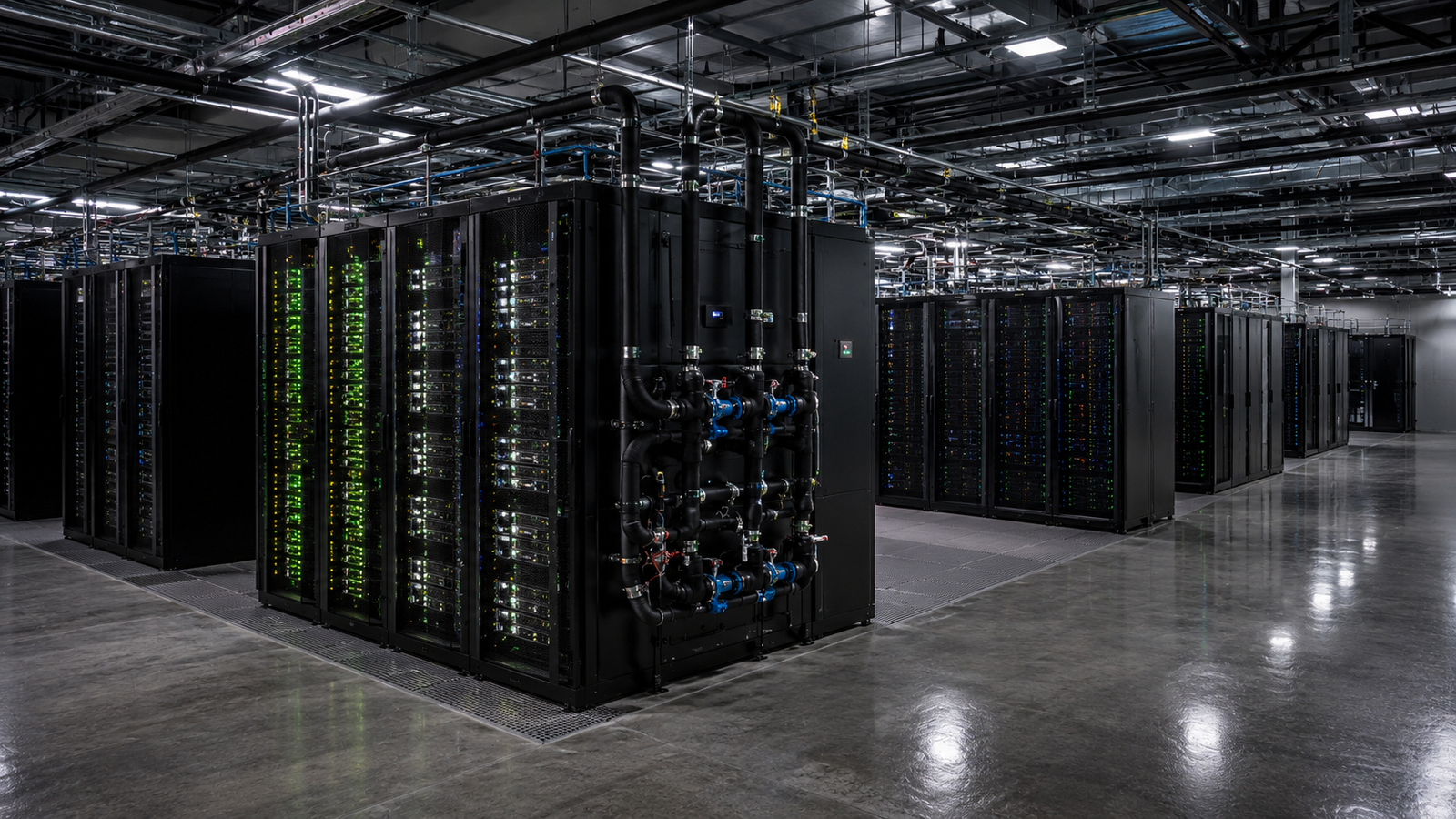
The AI infrastructure buildout of 2023 and 2024 prioritised training workloads. Hyperscalers and neocloud operators assembled large-scale GPU clusters to run sustained, high-intensity training jobs: weeks of continuous maximum-load operation across thousands of tightly coupled GPUs that generated heat at densities the industry had never previously engineered at scale. In response, operators adopted cooling infrastructure built around direct-to-chip liquid cooling at the rack level, high-capacity cooling distribution units, and chilled water loops sized to manage sustained thermal loads approaching one megawatt per rack. That architecture matched the demands of the workloads operators needed those systems to support.

Inference is now becoming the dominant AI workload, and it is not the same problem. Inference workloads are bursty, latency-sensitive, geographically distributed, and operate at rack densities that sit meaningfully below the frontier training tier. The cooling infrastructure that was purpose-built for training is not the wrong answer for inference, but it is frequently the oversized answer, and operators who apply training-optimised cooling assumptions to inference deployments are making design decisions that will compound into financial and operational problems over a five to ten year asset life.

Training and Inference Have Fundamentally Different Thermal Profiles

The thermal profile of an AI training cluster is defined by sustained maximum load. A training run does not pause for traffic fluctuations. It does not respond to user demand patterns. It runs at full GPU utilisation across all nodes simultaneously, for weeks at a stretch, generating heat continuously at the peak rate the hardware is capable of producing. Frontier training clusters running Blackwell NVL72 configurations draw around 120 kilowatts per rack sustained, with GB300 Ultra deployments approaching one megawatt. Cooling infrastructure for training must be sized and operated at that sustained maximum load, because that is what the workload delivers.

Inference operates differently at the physics level. Inference clusters serve real-time user requests, which means their thermal output tracks user traffic patterns rather than a fixed sustained maximum. Traffic spikes at peak hours and drops overnight. A large language model inference cluster serving enterprise customers in a single timezone may operate at 20 to 30 percent of peak thermal load for significant portions of each day. The cooling system serving that cluster must respond to those fluctuations instantly, because even brief thermal disruptions in an inference environment cause latency issues or service failures that are immediately visible to end users. The requirement is not maximum sustained cooling capacity. It is responsive, variable-capacity cooling with tight uptime guarantees.

The Density Gap Between Training and Inference Changes the Architecture

Training clusters at the frontier operate in the 120 kilowatt to one megawatt per rack range. At those densities, direct-to-chip liquid cooling is not an option but a requirement: air cooling’s physics fail to maintain safe GPU inlet temperatures above 35 kilowatts per rack, and, moreover, the energy cost differential between air and liquid at these densities makes the capital investment in liquid cooling infrastructure straightforward to justify. As a result, frontier training workloads dictate the cooling architecture through direct-to-chip liquid loops, cooling distribution units, and chilled water infrastructure engineered to support sustained peak load.

Inference workloads operate at a different density tier. Production inference clusters commonly run at 30 to 150 kilowatts per rack depending on the hardware generation and deployment configuration. That range spans three distinct cooling regimes: the lower end remains within the range where rear-door heat exchangers extend air cooling viability, the middle supports direct-to-chip liquid cooling at moderate capacity, and the upper end of next-generation inference deployments approaches training-tier densities that require a full liquid cooling stack. Applying a single cooling architecture to that entire range, as operators who build inference capacity by replicating their training facility design tend to do, results in either overcooling at lower densities or undercooling as inference hardware generations advance.

Inference Geography Creates Cooling Constraints That Training Does Not Face

Training clusters are sited for power access. Remote locations with cheap, reliable grid connections and few neighbours to compete for electrical infrastructure are commercially optimal for training. The operator building a frontier training campus can choose a greenfield site in a low-cost power market, design the facility from the ground up for the cooling architecture the workload requires, and optimise every element of the thermal management system without legacy infrastructure constraints.

Inference does not have that siting freedom. Inference must be close to users. Latency requirements below 100 milliseconds for production inference systems force operators to distribute inference capacity across major metropolitan markets instead of concentrating it in remote locations with abundant power. Operators frequently deploy inference capacity into colocation facilities, urban edge sites, and metro data centers whose original designs did not account for liquid cooling. They carry legacy air-cooled infrastructure, structural constraints that complicate the installation of cooling distribution units and chilled water runs, and floor loading limitations that affect heavy cooling equipment placement. The liquid cooling vendor market fragmenting and operators struggling to choose creates an additional constraint: operators retrofitting urban facilities for inference cooling are making vendor selections in a market without common standards, where equipment from different suppliers frequently cannot interoperate without custom integration work.

The Cooling Decision That Will Define Inference Economics for a Decade

The operators building inference capacity in 2026 are making cooling architecture decisions that will determine their unit economics for the next five to ten years. A facility designed with the right cooling infrastructure for inference density and traffic patterns will maintain competitive PUE, avoid thermal throttling at peak load, and carry capital costs appropriate to the actual workload.A facility whose designers copy the training cooling playbook will operate with excess cooling capacity at typical load, carry excess capital cost because designers sized the cooling infrastructure for thermal peaks the facility rarely reaches, and face the same retrofit economics as today’s air-cooled legacy facilities when future inference hardware generations exceed the density limits built into the original design.

The cooling architecture conversation the industry is having in 2026 is predominantly about training: megawatt-per-rack densities, direct-to-chip mandates, immersion versus direct-to-chip at the frontier. That conversation is necessary and correct for the facilities it addresses. What is missing is the equivalent conversation for inference, which will account for the majority of AI compute deployments by volume within the next few years. Inference cooling is not a simpler version of training cooling. It is a different engineering problem with different density requirements, different uptime characteristics, different geographic constraints, and different economic optimisation targets. The operators who understand that distinction before they break ground on their next inference facility will build assets whose economics hold up as the workload matures. The ones treating inference as a lower-power version of training will be managing retrofit debt within three to five years.

[simple-author-box]

More from AI Infrastructure

The race to build AI infrastructure is exposing a challenge that extends far beyond

Electricity prices have long shaped conversations about infrastructure investment, yet they rarely remain the

Artificial intelligence has shifted the economics of digital infrastructure beyond processors and server clusters,

COMPUTE WEEKLY

The briefing that 40,000+ tech leaders read every Monday. Sharp, fast, essential.

Great! We’ve received your information.

We couldn’t process your submission. Please retry

Building an AI Startup Without Owning GPUs

Not owning GPUs has become the default, deliberate strategy for building an AI company — not a compromise founders accept reluctantly. H100 rental rates fell 64-75% in fifteen months, a dense ecosystem of neoclouds and inference-as-a-service providers now lets startups skip infrastructure entirely, and credit programs can fund a company’s first year before a founder writes a check
Most Read

Infrastructure planning discussions often prioritize engineering, construction, and utility considerations before examining how end

AI infrastructure deployment schedules depend on coordinated progress across hardware availability, electrical infrastructure, cooling

Artificial intelligence has transformed the economics of digital infrastructure. Every new AI model requires

Data centers do not visibly smoke. They have no smokestacks, no visible exhaust, and

Artificial intelligence has transformed the economics of digital infrastructure. Companies once competed by acquiring

Disruptor Spotlight

Cerebras Systems

The chip that makes Nvidia nervous. Cerebras’ Wafer Scale Engine is rewriting the rules of AI inference at scale.
Faster
0 x
YoY Revenue
0 x
Transistors
0 T
Market Pulse
NVDA
$924.60
-2.11%
MSFT
$421.30
-2.94%
AMZN
$192.80
-4.87%
AMD
$924.60
-2.40%
TSMC
$924.60
-2.32%
Indicative only · Not financial advice
Upcoming Events
SEP
The AI Infrastructure Race (India)
WEBINAR · ONLINE
The AI Infrastructure Race: Won on Power, Land and Trust — Not Capital
MAY
0
AI Infrastructure Summit
DUBAI · IN PERSON
MEA’s premier AI infrastructure event.
JUN
0 0
Compute Forecast Summit
SINGAPORE · IN PERSON
Our flagship APAC event. Early bird open.
Latest Moves
Live
ecolab
Ecolab Deepens Cooling Strategy With $4.75B CoolIT Acquisition
Ecolab is making one of its biggest moves yet into AI infrastructure after completing its $4.75 billion acquisition of liquid cooling specialist CoolIT Systems
Pure DC AVK Europe data center microgrid Dublin 110MW AI infrastructure Ireland 2026
Pure DC and AVK Deploy Europe’s First 110 MW Data Center Microgrid in Dublin
The Pure DC Dublin microgrid has made history as Europe’s first large-scale on-site data center microgrid, launched in partnership with power solutions provider AVK at Pure DC’s campus in Ireland.
Pace Digitek
Pace Digitek Partners With MEGMEET to Expand AI Data Center Power Business
India’s AI infrastructure ecosystem continues to mature as domestic technology manufacturers move beyond traditional telecommunications and industrial markets toward high-growth digital infrastructure opportunities
Follow Compute Forecast
11K followers
1200 followers
Companies to Watch
CW
CoreWeave
Neo Cloud · $19B · IPO Watch
CB
Cerebras Systems
AI Hardware · $4.25B · Pre-IPO
G42
G42
Sovereign AI · Abu Dhabi
H
Humain
Saudi AI · $40B Fund
Latest Podcast
AI Capex, Cloud Margins & the Nuclear Bet
48 MIN · 25 APR 2026

AI Inference Workloads Need a Different Cooling Architecture Than AI Training

The AI infrastructure buildout of 2023 and 2024 prioritised training workloads. Hyperscalers and neocloud operators assembled large-scale GPU clusters to

Share
AI inference cooling architecture vs training data center liquid cooling 2026
26
847 SHARES

0
SHARES

[simple-author-box]

More from AI Infrastructure

Infrastructure planning discussions often prioritize engineering, construction, and utility considerations before examining how end

AI infrastructure deployment schedules depend on coordinated progress across hardware availability, electrical infrastructure, cooling

Artificial intelligence has transformed the economics of digital infrastructure. Every new AI model requires

Data centers do not visibly smoke. They have no smokestacks, no visible exhaust, and

COMPUTE WEEKLY

The briefing that 40,000+ tech leaders read every Monday. Sharp, fast, essential.

Great! We’ve received your information.

We couldn’t process your submission. Please retry

Global AI Infrastructure Outlook 2026

The briefing that 40,000+ tech leaders read every Monday. Sharp, fast, essential.
Download Free
Most Read

Infrastructure planning discussions often prioritize engineering, construction, and utility considerations before examining how end

AI infrastructure deployment schedules depend on coordinated progress across hardware availability, electrical infrastructure, cooling

Artificial intelligence has transformed the economics of digital infrastructure. Every new AI model requires

Data centers do not visibly smoke. They have no smokestacks, no visible exhaust, and

Artificial intelligence has transformed the economics of digital infrastructure. Companies once competed by acquiring

Disruptor Spotlight

Cerebras Systems

The chip that makes Nvidia nervous. Cerebras’ Wafer Scale Engine is rewriting the rules of AI inference at scale.
Faster
0 x
YoY Revenue
0 x
Transistors
0 T
Market Pulse
NVDA
$924.60
+2.4%
MSFT
$421.30
+1.1%
AMZN
$192.80
-0.6%
NVDA
$924.60
+2.4%
NVDA
$924.60
+2.4%
Indicative only · Not financial advice
Upcoming Events
MAY
0 0
DCD Global — London
LONDON · IN PERSON
World’s largest DC event. CF is media partner.
MAY
0
AI Infrastructure Summit
DUBAI · IN PERSON
MEA’s premier AI infrastructure event.
JUN
0 0

Compute Forecast Summit

SINGAPORE · IN PERSON
Our flagship APAC event. Early bird open.
Latest Moves
  • Live
Sam Altman
OpenAI appoints new Chief Infrastructure Officer to lead $100B DC programme
27 APR · OPENAI
Sam Altman
OpenAI appoints new Chief Infrastructure Officer to lead $100B DC programme
27 APR · OPENAI
Sam Altman
OpenAI appoints new Chief Infrastructure Officer to lead $100B DC programme
27 APR · OPENAI
Follow Compute Forecast
18.4K followers
12.1K followers
9.3K subscribers
41 episodes
Companies to Watch
CW
CoreWeave
Neo Cloud · $19B · IPO Watch
CB
Cerebras Systems
AI Hardware · $4.25B · Pre-IPO
G42
G42
Sovereign AI · Abu Dhabi
CW
Humain
Saudi AI · $40B Fund
Latest Podcast
AI Capex, Cloud Margins & the Nuclear Bet
48 MIN · 25 APR 2026
Scroll to Top