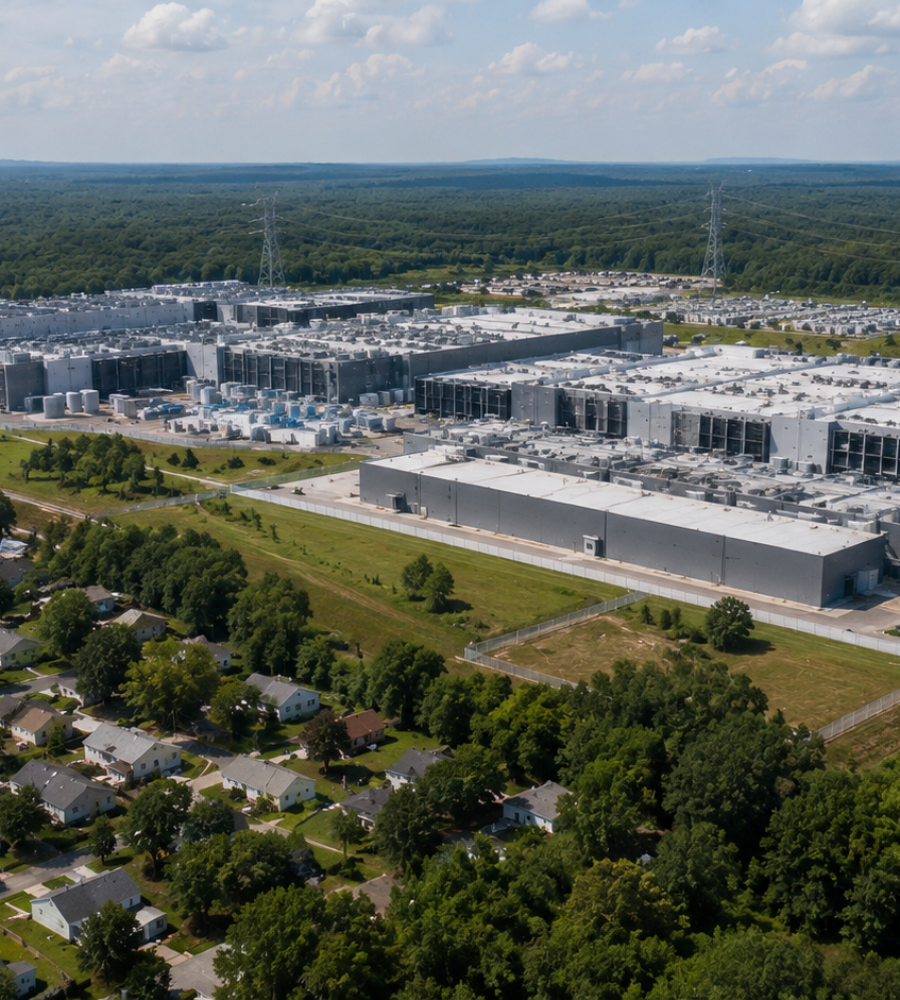
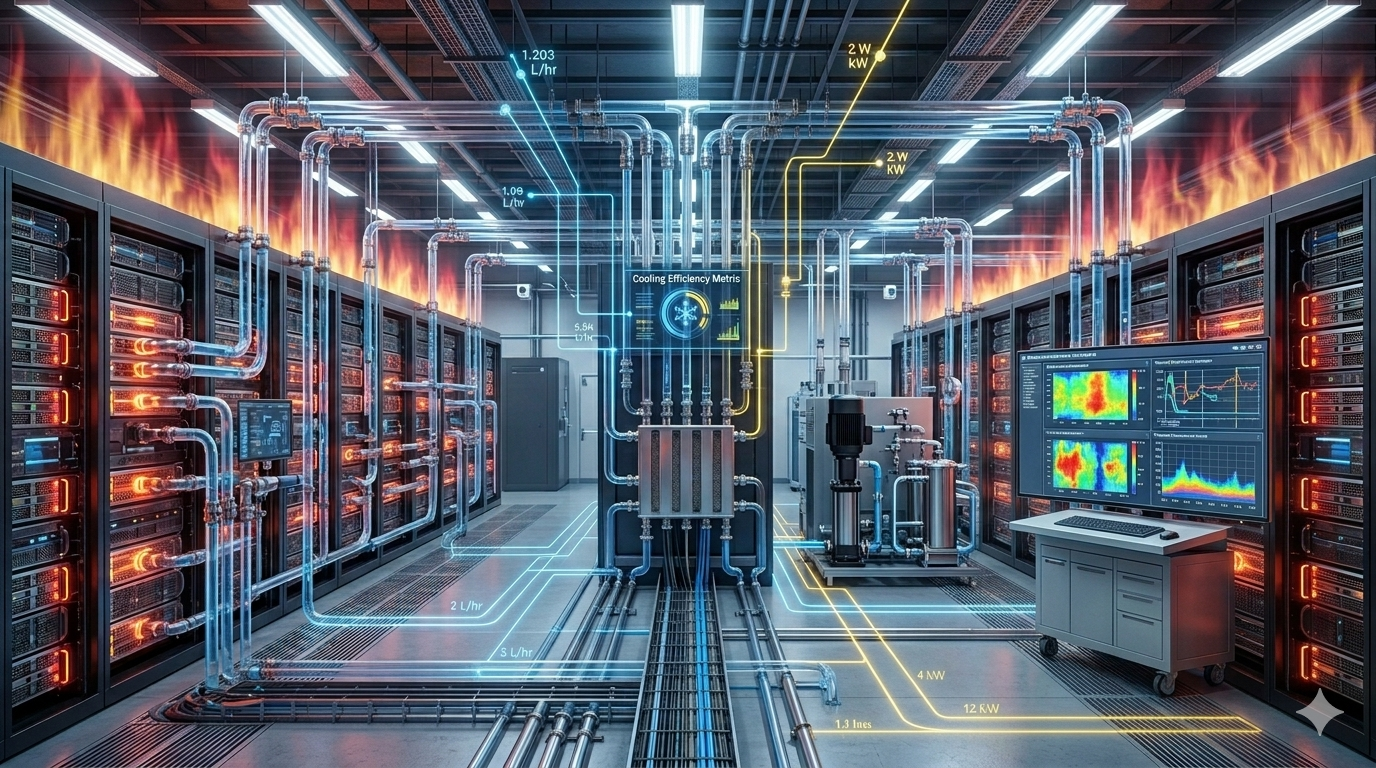
Artificial intelligence is changing the economics of data center infrastructure, and cooling systems are becoming one of the most affected components. As GPU clusters push rack densities beyond traditional limits, operators must remove significantly more heat while maintaining efficiency and reliability.
This challenge has placed renewed attention on the relationship between water consumption and energy demand across digital infrastructure. What once appeared to be a straightforward choice between water-based and air-based cooling has evolved into a far more complex engineering decision.
Data center developers now evaluate cooling technologies through the lens of resource interdependence rather than isolated performance metrics. The result is a growing focus on what industry experts describe as the water-energy nexus.
Why Cooling Decisions Have Become More Complicated
Traditional enterprise facilities operated at relatively modest power densities, allowing conventional air cooling systems to maintain stable operating conditions.
Modern AI training environments have altered that equation by concentrating unprecedented levels of compute power within individual racks. As thermal loads increase, cooling infrastructure requires greater amounts of energy, water, or both to sustain performance.
Operators can no longer assess cooling technologies solely on their direct resource consumption. Each decision now carries implications that extend beyond the boundaries of a single facility. This broader perspective is reshaping how infrastructure teams evaluate long-term sustainability and operational risk.
The Hidden Water Cost of Electricity
Many discussions about sustainable cooling focus on visible water consumption within a data center campus. However, energy production itself often depends heavily on water resources.
Thermoelectric power plants continue to use substantial volumes of water for cooling and heat rejection processes across many regions. When a facility replaces water-intensive cooling equipment with highly energy-dependent alternatives, part of the water footprint may simply move upstream to the electrical grid.
This shift creates a situation where apparent reductions in onsite water usage do not necessarily reduce overall environmental impact. Consequently, operators are beginning to evaluate cooling systems based on total resource consumption rather than facility-level metrics alone. Sources:
AI Infrastructure Is Amplifying Resource Demands
The rapid deployment of AI infrastructure is accelerating both power consumption and cooling requirements. Large-scale training clusters operate continuously for extended periods while generating substantial thermal output.
Industry researchers increasingly view data centers as contributors to broader water, energy, and carbon management challenges. Several recent studies suggest that cooling decisions can create resource trade-offs that affect surrounding utility networks and regional infrastructure planning.
Rather than existing as independent facilities, hyperscale campuses now influence electricity generation strategies, water management policies, and long-term sustainability objectives. These interconnected impacts are driving a new generation of infrastructure planning models.
Hybrid Cooling Approaches Gain Momentum
Growing awareness of the water-energy relationship is encouraging operators to explore hybrid cooling architectures. These systems combine dry cooling capabilities with limited adiabatic or evaporative support during periods of elevated ambient temperatures.
Engineers can reduce annual water consumption while avoiding the significant energy penalties associated with fully mechanical cooling systems. This balanced approach allows facilities to adapt performance based on climate conditions and operational requirements.
Many organizations view hybrid systems as a practical compromise between sustainability goals and thermal performance demands. Interest in these technologies continues to grow as AI deployments expand across diverse geographic regions.
The Rise of Advanced Dry Cooling Technologies
Recent advances in cooling equipment design have improved the viability of water-conserving solutions. Enhanced heat exchangers, electronically commutated fans, intelligent controls, and liquid cooling integrations have increased the efficiency of dry cooling systems.
These developments provide operators with greater flexibility when deploying infrastructure in regions facing water constraints. Facilities can now pursue lower water consumption without accepting the performance limitations associated with earlier generations of equipment.
Improvements in thermal management technology have expanded the range of cooling options available for high-density computing environments. As a result, site selection strategies increasingly incorporate water availability alongside power accessibility.
Regional Constraints Are Influencing Design Decisions
Water availability is becoming an important factor in data center development planning. Communities in water-stressed regions have begun scrutinizing large-scale digital infrastructure projects because of their potential impact on local resources.
Developers must address concerns related to both direct water use and indirect resource consumption associated with electricity generation. Regulatory requirements, environmental permitting processes, and community engagement efforts increasingly influence infrastructure design choices.
Cooling strategies that may work effectively in one climate can become impractical in another. This regional variation is reinforcing the need for customized cooling architectures rather than standardized deployment models.
From Cooling Efficiency to Resource Optimization
The industry’s cooling conversation is expanding beyond traditional efficiency metrics such as Power Usage Effectiveness. Operators now recognize that optimizing a single variable can create unintended consequences elsewhere within the resource chain.
Researchers increasingly describe this phenomenon as burden shifting, where reductions in one area generate higher demands in another. Understanding these interactions requires a more comprehensive evaluation framework that includes water, energy, carbon emissions, and long-term infrastructure resilience.
Data center operators that account for these factors are likely to make more informed investment decisions. The shift reflects a broader evolution in how digital infrastructure sustainability is measured and managed.
The Future of Cooling Will Depend on Balance
AI-driven growth is forcing the industry to rethink long-held assumptions about thermal management. No single cooling technology can address every challenge associated with rising power densities, water scarcity, and sustainability objectives.
The most resilient facilities will likely combine multiple cooling approaches while adapting to local environmental conditions and utility constraints.
Future investments will focus on balancing water conservation, energy efficiency, operational reliability, and long-term scalability.
Organizations that understand the interconnected nature of these resources will be better positioned to support next-generation computing demands. The water-energy nexus is no longer a theoretical concept but a central factor shaping the future of data center cooling.