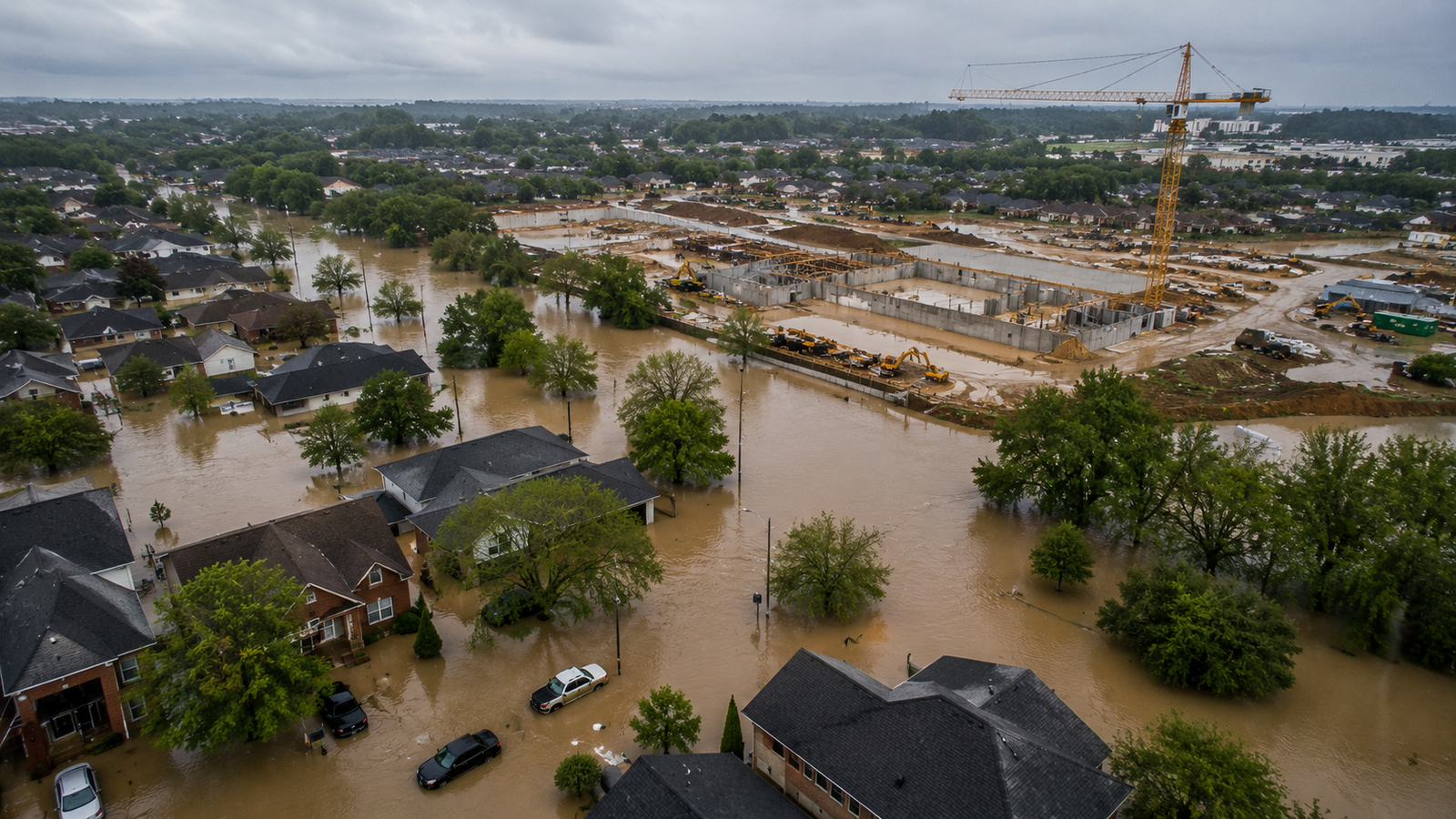
A weekend storm exposed one of the less-discussed risks of the AI infrastructure buildout: what happens when large-scale data center construction disrupts the land around it. Residents along University Lane in Mason County, West Virginia woke to severe flooding on Saturday after a storm overwhelmed temporary erosion controls at the nearby Monarch Compute Campus construction site. Floodwater damaged garages and other parts of homes. The developer released a statement to WSAZ confirming it would cover all cleanup and repair costs and had already deployed restoration crews to each affected property.
The Monarch Compute Campus is a joint project by Fidelis New Energy, 8090 Industries, and the American Intelligence & Power Corporation, announced earlier this year. It sits near Point Pleasant in Mason County, a rural part of western West Virginia that is one of hundreds of non-traditional markets absorbing AI infrastructure development as hyperscalers and data center developers push beyond saturated primary markets.
What Happened and What the Developer Said
Monarch Site Manager Jason Bechtle issued a statement on Sunday. The storm dropped approximately a month’s worth of rain in 48 hours, placing the area under a Flash Flood Warning. He said the intensity exceeded the design capacity of the temporary erosion controls in place during construction, and one section of silt fencing gave way under the force of the water. Crews rebuilt that section immediately and began reinforcing controls across the rest of the site, cutting additional drainage channels and raising elevation in low areas to prevent water from moving toward the neighbourhood.
Bechtle said the company was on site within an hour of the first call and had not left. The company covered hotel rooms for any residents who needed them and provided meals to those affected.
The Stormwater Compliance Question
The statement noted that the site’s stormwater controls were inspected the previous week and found compliant with the approved plan. That compliance with pre-storm standards did not prevent the flooding. It raises a question that data center developers building in rural markets across the country will need to answer more carefully: whether the stormwater management standards applied during construction are adequate for the intensity of weather events that communities in those markets actually experience.
Rural construction sites in the mid-Atlantic and Appalachian regions regularly face weather events that exceed the design parameters of standard temporary erosion controls. A construction site covering hundreds of acres generates runoff at a scale that standard residential development controls were not designed to manage. When that site sits adjacent to existing residential streets, the consequences of a control failure fall on the neighbours. The Monarch Campus developer’s response, covering all costs and maintaining a continuous on-site presence, reflects a community relations awareness that many data center developers elsewhere have failed to demonstrate. But the fact that the failure occurred at all points to a gap between standard construction practice and the actual risk profile of large-scale data center development in areas without established data center infrastructure.
Why This Story Is Part of a Larger Pattern
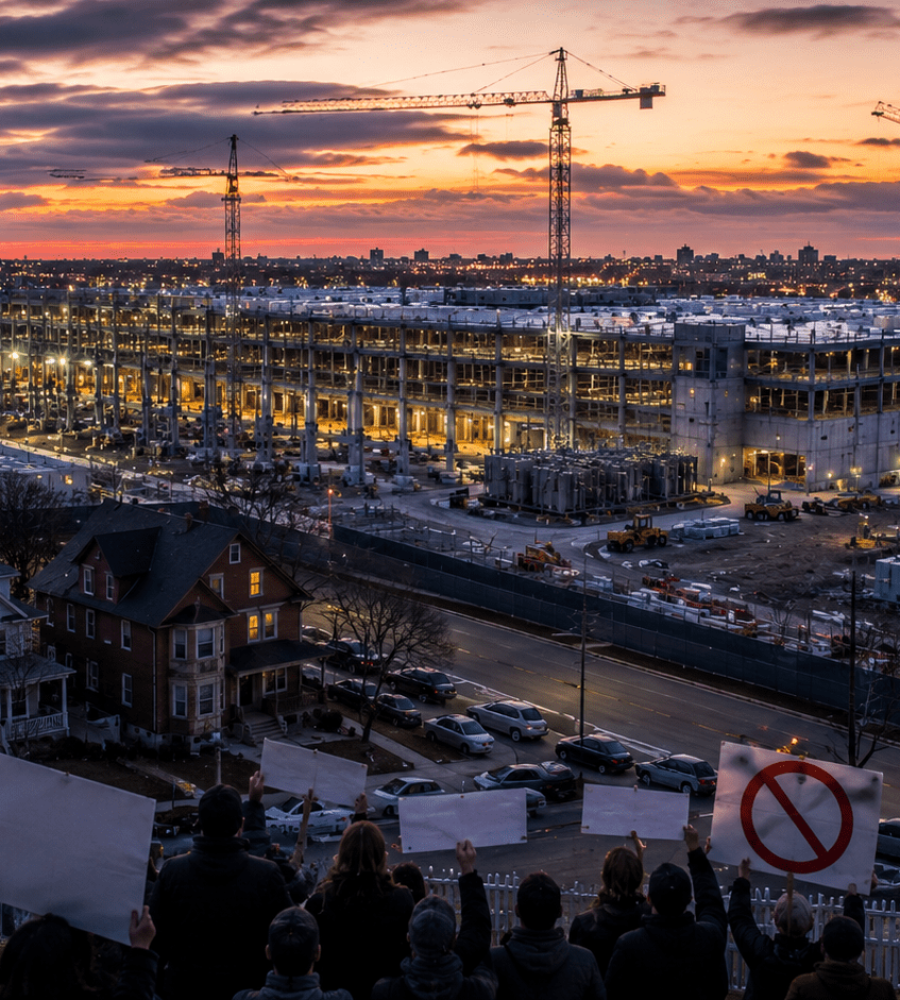
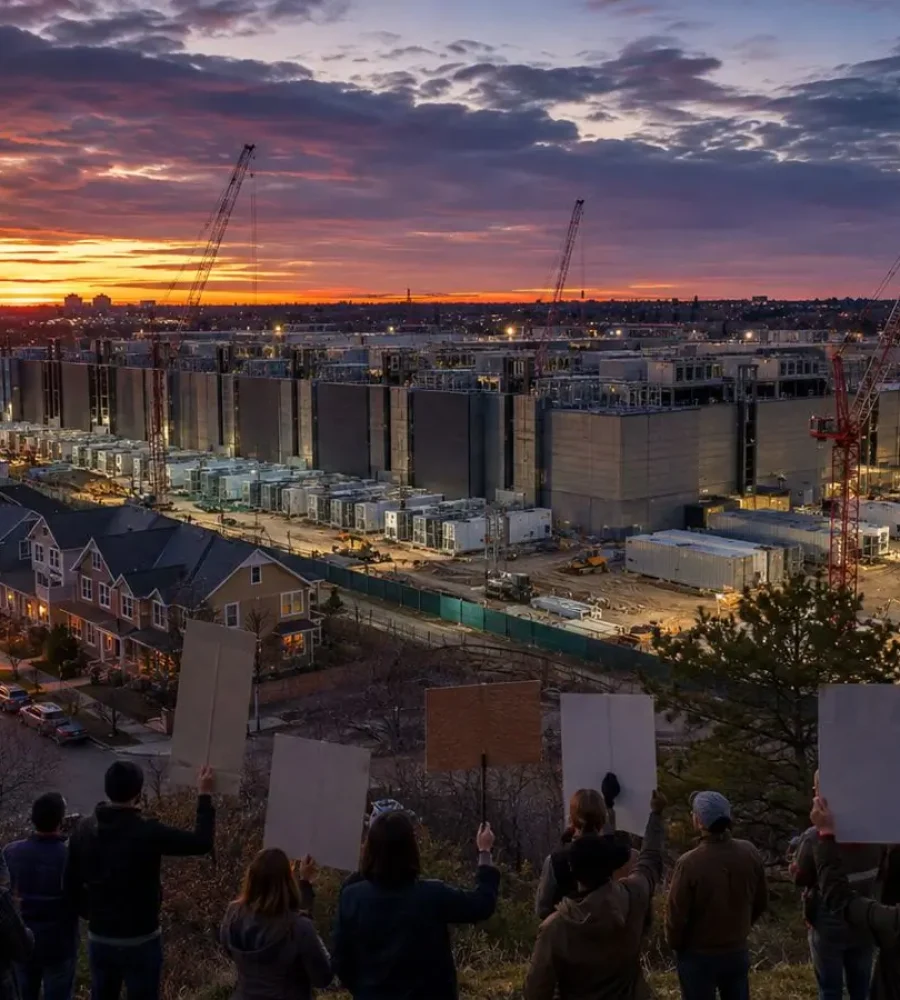
The flooding in Mason County is a concrete illustration of the community impact argument that drives data center opposition across the country. Opponents of data center developments in communities from Utah to Michigan to New Jersey consistently raise concerns about impacts that extend beyond electricity and water consumption: construction traffic, noise, drainage changes, and the disruption of residential character that large industrial development creates. In most of those cases, the impact is prospective and contested. In Mason County, it is immediate and documented.
The developer’s willingness to accept responsibility and cover costs is the correct response. It is also a recognition that the relationship between a data center campus and its immediate neighbours does not end at the property line and does not begin when the facility opens. Construction itself creates impacts, and the communities that host data center development bear those impacts before they receive any of the economic benefits that proponents use to justify the development.
Why AI data centers keep getting denied permits documented that the credibility gap between what data center developers promise and what communities experience drives the opposition movement that is producing moratoriums across the country. Events like the Mason County flooding make that gap visible in the most direct way possible.