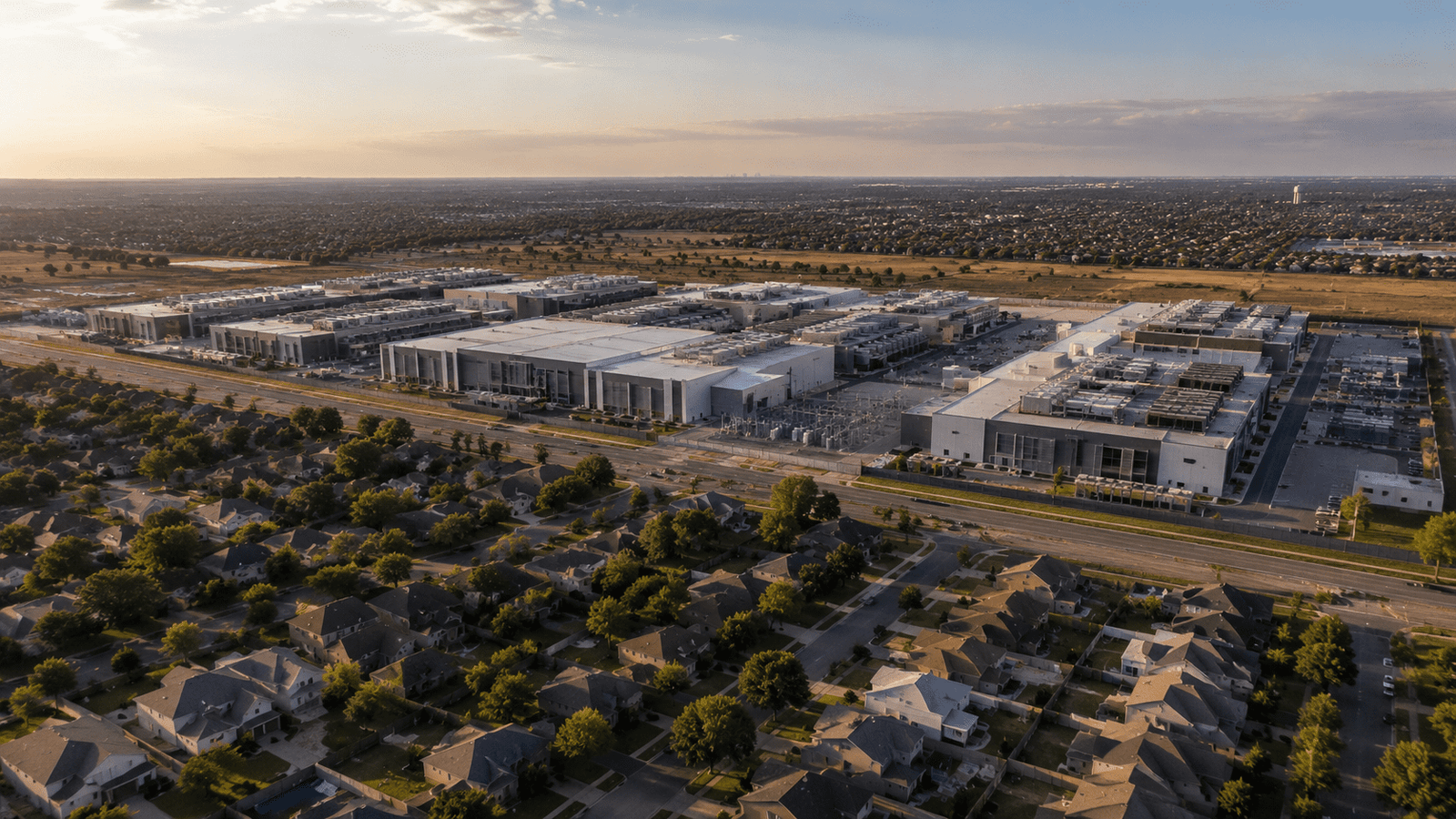
Seven in ten Americans say they do not want an AI data center built near them. That is according to a Gallup poll published on Wednesday. Forty-eight percent said they strongly oppose it. Just 27% expressed support, including only 7% who strongly favour one. It is the first time Gallup has asked the question. The firm cited fierce local opposition across the country as the reason for doing so.
The poll surveyed 1,000 adults between March 2 and 18, with a margin of error of plus or minus four percentage points. Opposition was highest among Democrats at 56%, followed by independents at 48% and Republicans at 39%. Among the concerns cited, 20% pointed to living costs. Sixteen percent flagged pollution. Fourteen percent each cited economic impact and general negative views of AI. The results are, notably, not abstract. Maine’s legislature passed a bill in April barring large-scale data center construction, though the governor vetoed it. A Wisconsin city approved a referendum giving residents greater say over tax-funded projects tied to a local data center campus. Fourteen states spanning the political spectrum are, consequently, now considering data center legislation of some kind, according to the National Conference of State Legislatures.
What the Numbers Mean for the Industry
The Gallup poll does not measure what people know about data centers. It measures, rather, how they feel about them. The gap between the two is, specifically, where the industry’s problem lives. The 48% who strongly oppose a nearby data center are a motivated constituency. They show up to planning meetings. They vote. And they are, in turn, increasingly finding legislators willing to act on their concerns. The sector has consistently underestimated how quickly scepticism translates into political action, a dynamic examined in depth in the Blog Data Centers Are Losing Public Support and the Industry Has No Plan.
The broader consequence is a permitting environment that is becoming structurally harder to navigate across every primary AI infrastructure development region in the US. Projects that would have cleared planning approvals two years ago are, however, now facing organised opposition, legal challenges, and state-level legislative intervention. The window to get ahead of this politically is narrowing, a point laid out in the Long Read The Data Center Industry Is Losing the Public Consent Battle and Running Out of Time to Win It Back. A Gallup poll with these numbers reaches, specifically, legislators who were not previously paying attention.
The Political Dimension Is Accelerating
What makes the Gallup result particularly significant is the partisan breakdown. Opposition is, notably, not concentrated on one side of the political spectrum. Democrats oppose at 56%, but Republicans oppose at 39% and independents at 48%. That spread means the issue does not fit neatly into existing political coalitions. It is, consequently, harder for either party to simply absorb it into existing positions. Republicans in data center-heavy states are, already, facing constituent pressure that sits awkwardly alongside their pro-business instincts. Democrats are finding the environmental and cost concerns align more naturally with their base, but the economic development arguments complicate the picture too.
The industry’s challenge is, in turn, that no single communications strategy resolves opposition grounded in genuinely different concerns across different communities. Higher electricity bills are a real issue for households near large data center campuses. Water consumption is a real concern in drought-prone regions. Noise, visual impact, and the perceived prioritisation of corporate infrastructure over community needs cannot, specifically, be addressed with press releases about job creation. The Gallup numbers suggest those concerns are, already, more widespread than the industry has publicly acknowledged.