 Skip to content
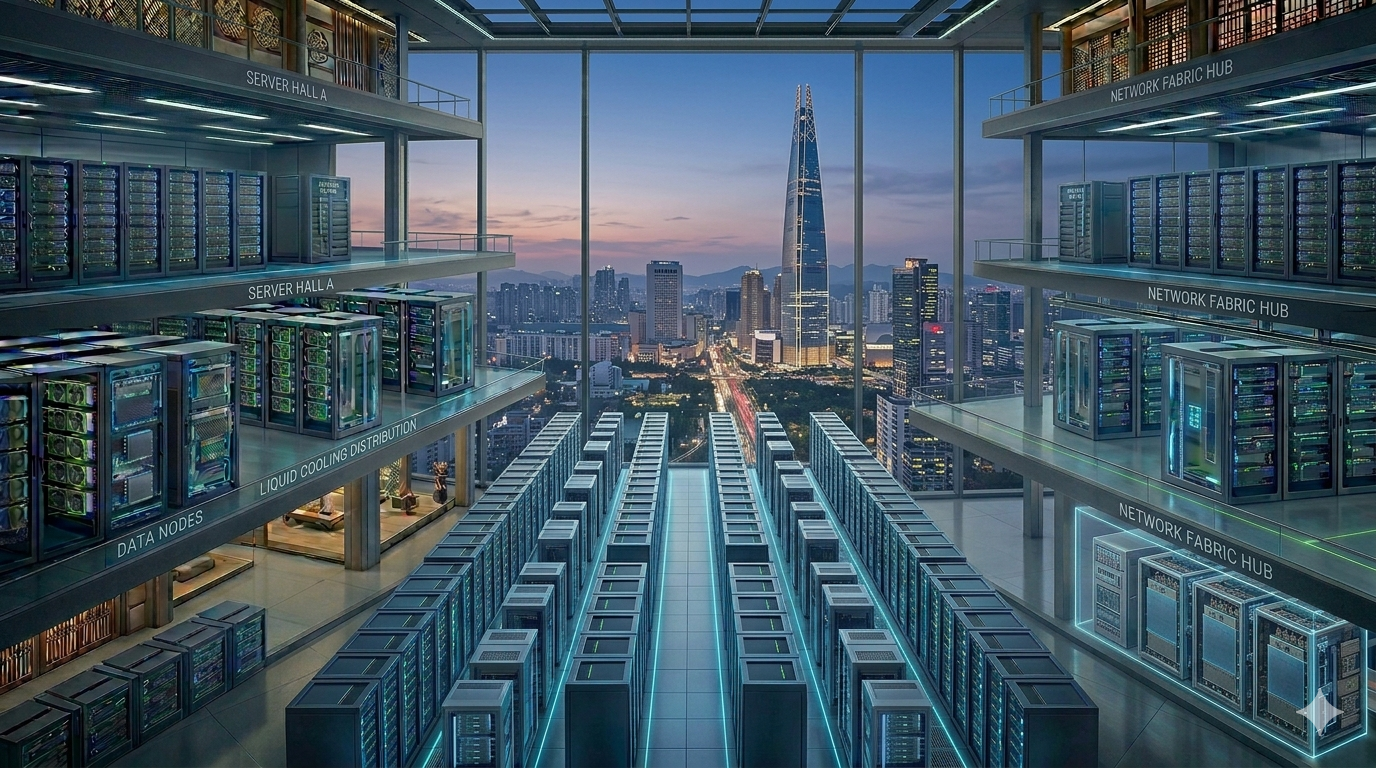
STMicroelectronics has increased its revenue expectations for the data center market, citing sustained AI Infrastructure Demand and continued progress in expanding production capacity.

The semiconductor manufacturer now expects data center-related revenue to reach approximately $1 billion in 2026, nearly double its previous forecast of more than $500 million. The company also indicated that, if current market conditions persist, data center revenue could approach $2 billion in 2027, significantly higher than its earlier projection of well above $1 billion. The revised outlook underscores how AI infrastructure investment is creating new growth opportunities across the semiconductor supply chain, extending beyond GPUs and processors into power management and supporting technologies required for large-scale AI deployments.
AI Infrastructure Demand Reshapes Semiconductor Growth
The updated forecast reflects continued expansion in AI infrastructure spending worldwide. As hyperscalers, cloud providers, and enterprises deploy larger AI clusters, demand has increased for semiconductors that support power delivery, energy conversion, cooling systems, and infrastructure efficiency. These technologies have become increasingly important as AI facilities consume more power and require higher-density compute environments.
STMicroelectronics said recent progress in capacity ramp-up has strengthened its ability to serve the growing market. The company supplies a broad portfolio of semiconductor products used across industrial, automotive, energy, and data center applications. Industry analysts have increasingly pointed to power electronics as one of the key enabling technologies behind next-generation AI infrastructure. As data center operators seek to improve efficiency, demand for advanced power management components continues to rise.

Data Centers Become a Larger Revenue Driver
The company’s revised targets highlight the growing importance of data centers within its broader business strategy. Data center revenue is now expected to contribute significantly more than previously anticipated, reflecting accelerating investment in AI infrastructure globally. The latest forecast suggests that demand from AI-related projects is expanding faster than earlier projections.
The announcement follows a broader industry trend in which semiconductor suppliers across multiple categories are benefiting from increased spending on AI infrastructure, networking systems, and power technologies.
Capacity Expansion Supports Higher Expectations
STMicroelectronics attributed part of its revised outlook to progress in scaling manufacturing capacity. As AI infrastructure deployments accelerate, suppliers face pressure to increase production while maintaining delivery timelines. The company said recent advancements in capacity ramp-up have improved its ability to support growing customer demand.
The market for power electronics has become increasingly strategic as operators build larger AI facilities. Modern data centers require advanced power conversion, voltage regulation, and energy management technologies to support high-density computing environments. These requirements have expanded opportunities for companies supplying infrastructure components beyond traditional processors and memory products.
Sustainability Remains Part of Long-Term Strategy
Alongside its growth ambitions, STMicroelectronics reiterated its sustainability commitments. The company said it remains on track to achieve carbon neutrality across direct and indirect emissions, transportation activities, business travel, and employee commuting emissions. It also expects to reach its goal of sourcing 100% renewable electricity by the end of 2027.
Sustainability has become an increasingly important consideration for the data center industry as operators face growing scrutiny over energy consumption and environmental impact. Semiconductor manufacturers are also under pressure to improve efficiency across production and supply chain operations.
Power Efficiency Gains Strategic Importance
The rise of AI workloads has intensified the industry’s focus on energy efficiency. As data center operators seek to balance compute growth with sustainability goals, demand for efficient power management technologies continues to increase. For semiconductor suppliers such as STMicroelectronics, this trend creates opportunities to support infrastructure expansion while helping customers improve operational efficiency and reduce energy consumption.










