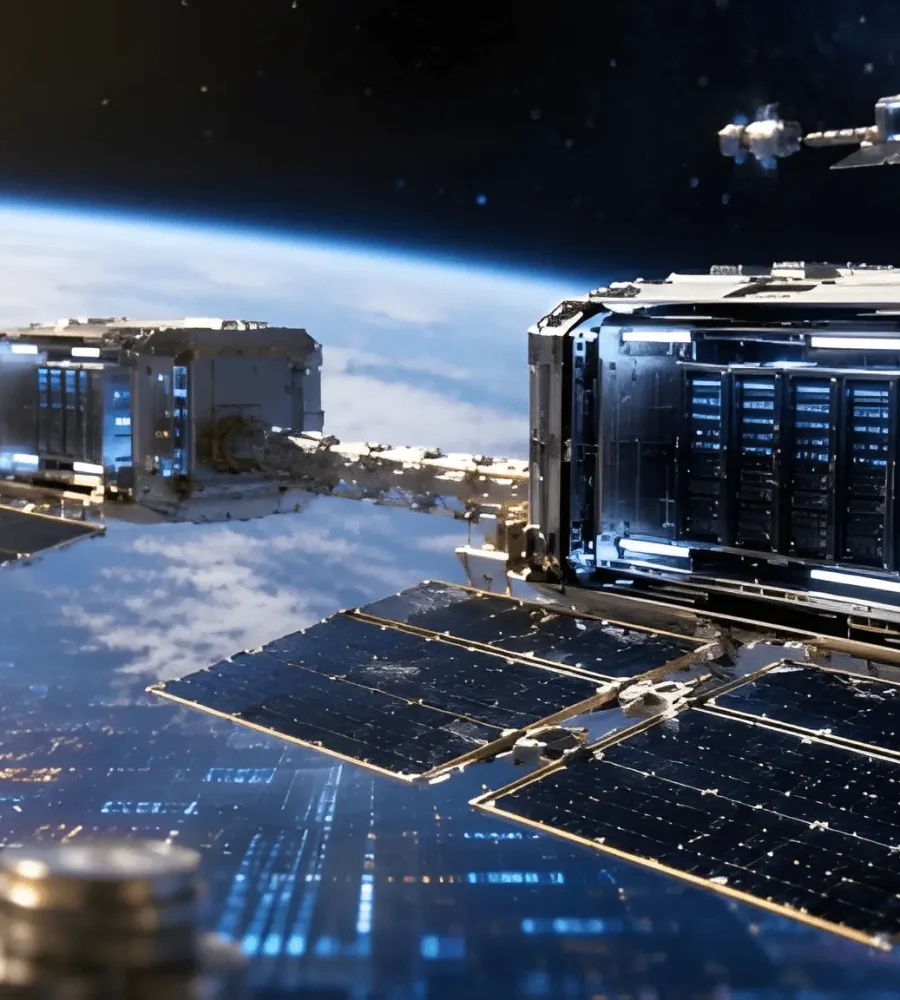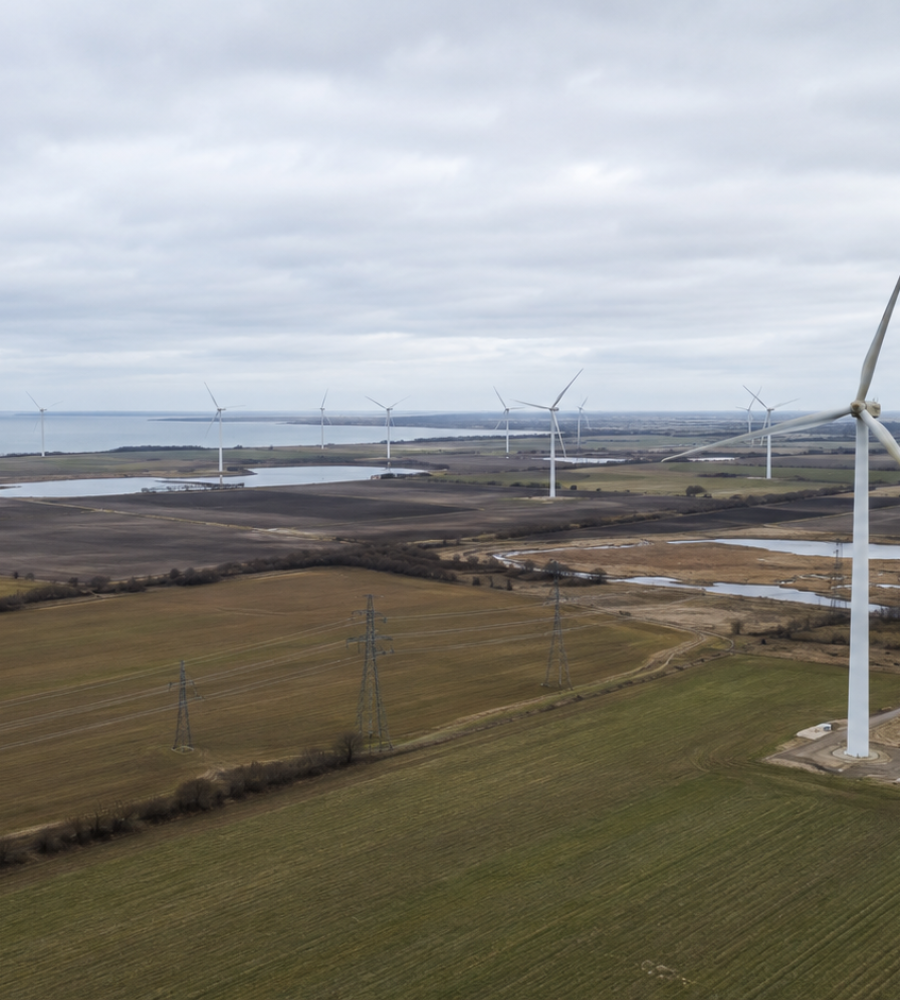
Artificial intelligence infrastructure is beginning to collide with a problem the industry can no longer quietly engineer around: power availability. As hyperscalers and AI firms race to secure energy for future compute growth, a US-based startup called Panthalassa believes the answer may not sit on land at all. Instead, the company wants to move both energy generation and data processing directly into the open ocean, where wave energy becomes the fuel source for floating AI infrastructure.
Backed by a fresh $140 million investment round led by Peter Thiel, Panthalassa now carries a valuation approaching $1 billion. The company spent the past decade developing ocean energy systems designed specifically for offshore deployment at industrial scale. Rather than positioning itself as another renewable energy experiment, Panthalassa is framing its technology as a parallel infrastructure stack for the AI economy.
“We’re now ready to build factories, deploy fleets, and provide a sustainable new source of energy for humanity,” said Garth Sheldon-Coulson, Co-founder and CEO of Panthalassa.
The company’s timing reflects broader industry anxiety around grid bottlenecks. Across major data center markets, power constraints are slowing deployments, extending project timelines, and forcing operators into secondary locations. Panthalassa’s strategy attempts to bypass that equation entirely by shifting compute workloads into waters where energy generation and cooling already coexist naturally.
Floating Compute Nodes Could Redefine AI Deployment Models
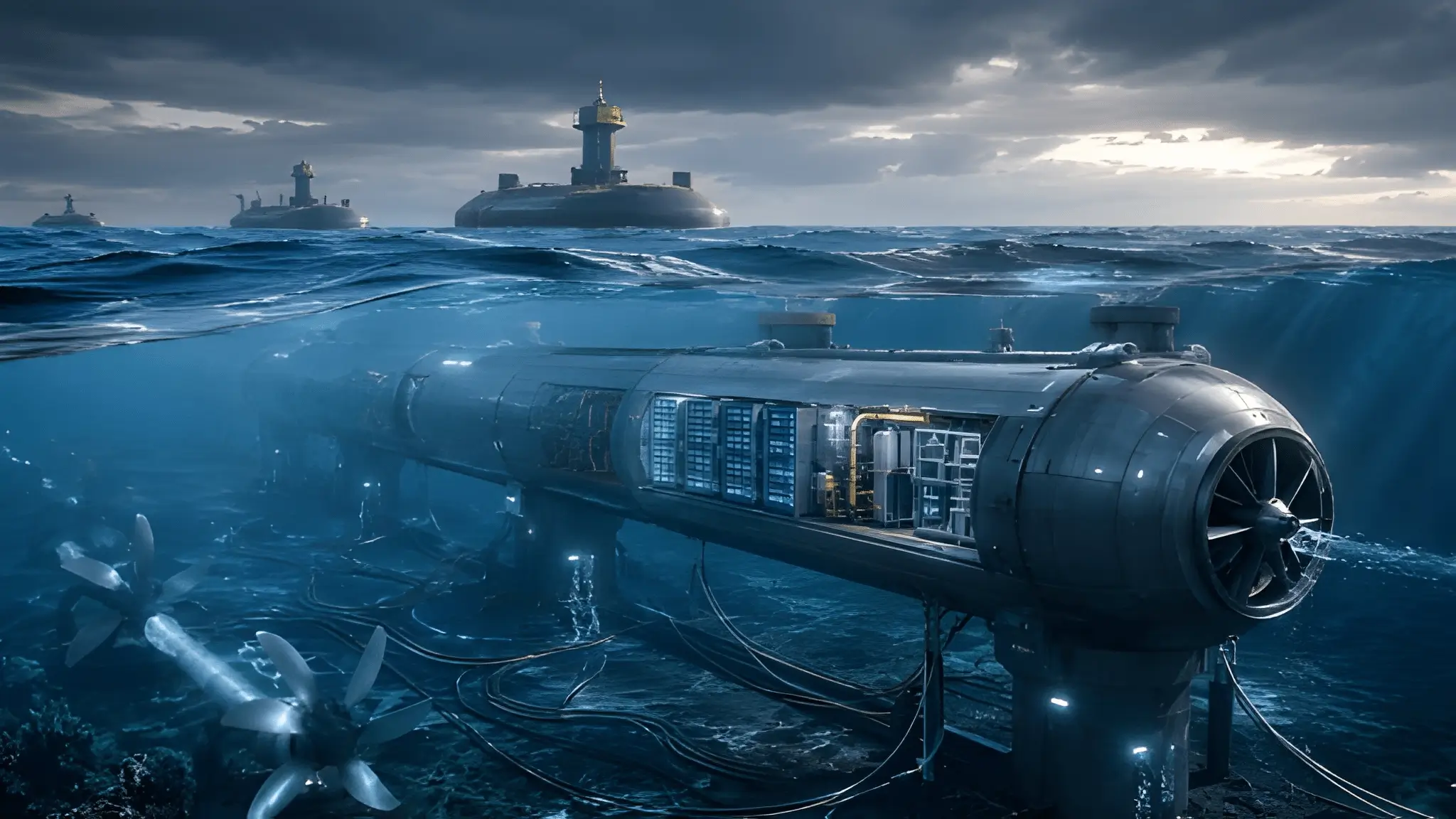
At the center of Panthalassa’s system is an offshore structure the company calls a node. The platform measures roughly 85 meters in length and sits mostly beneath the ocean surface inside a solid steel body engineered for long-term marine operation. Unlike conventional floating energy systems filled with moving mechanical assemblies, the node avoids hinges, flaps, and gearboxes that typically fail under harsh ocean conditions.
The concept operates through wave motion. As waves move the structure vertically, water gets forced through an internal turbine system that generates electricity. That power flows directly into onboard AI infrastructure housed inside a hermetically sealed chamber cooled by surrounding seawater.
The company believes this architecture solves two persistent infrastructure problems simultaneously: access to energy and thermal management. Cooling has become one of the defining operational burdens of modern AI data centers, particularly as rack densities continue climbing. By embedding compute infrastructure within the ocean itself, Panthalassa removes dependence on traditional cooling systems and terrestrial electrical grids.
“There are three sources of energy on the planet with tens of terawatts of new capacity potential: solar, nuclear, and the open ocean,” Sheldon-Coulson said.
The vessels also eliminate reliance on conventional propulsion systems. According to the company, the hull design allows nodes to guide themselves toward deployment zones without engines or fuel consumption. That feature reduces operational complexity while supporting the company’s ambition to deploy large fleets across remote ocean regions.
Starlink Connectivity Brings AI Workloads Offshore
Panthalassa is not attempting to transmit electricity back toward coastal infrastructure. Instead, the company plans to process AI inference workloads directly at sea. User queries would reach offshore nodes through SpaceX’s Starlink satellite network, while generated inference tokens would return using the same pathway.
That distinction matters strategically. Many offshore renewable projects fail because undersea transmission infrastructure becomes prohibitively expensive and operationally difficult to maintain. Panthalassa removes that dependency by relocating computation directly beside the energy source.
The company argues waves offer a unique advantage compared to intermittent renewable systems. Ocean wave activity persists even after wind conditions shift, creating a more continuous energy profile for long-duration compute operations. As a result, Panthalassa sees wave-powered AI infrastructure as a future complement to terrestrial hyperscale deployments rather than a niche experimental platform.
“The future demands more compute than we can imagine,” said Peter Thiel. “Extra-terrestrial solutions are no longer science fiction. Panthalassa has opened the ocean frontier.”
Investor enthusiasm surrounding the company reflects how aggressively capital markets are now searching for alternative energy pathways tied to AI growth. Power access has evolved from a utility issue into a strategic competitive advantage for cloud providers, chip companies, and sovereign infrastructure planners.
John Doerr, one of Silicon Valley’s most influential early technology investors, also positioned Panthalassa’s platform within a larger geopolitical context.
“It is a triple win: workers benefit, communities benefit, and we gain a strategic asset that strengthens American technological leadership,” Doerr added.
Ocean Conditions Remain the Industry’s Hardest Barrier
Despite the momentum, Panthalassa still faces an engineering challenge that has defeated numerous ocean energy ventures before it. Building successful prototypes is one hurdle. Operating and maintaining massive offshore fleets across hostile marine environments is another entirely.
The company previously demonstrated Ocean-1, Ocean-2, and Wavehopper prototypes between 2021 and 2024. Panthalassa now plans to deploy its Ocean-3 pilot nodes in the northern Pacific later this year, with commercial-scale deployments targeted for 2027. However, scaling toward hundreds or thousands of floating compute systems introduces logistical complexity few technology companies have confronted before.
Saltwater corrosion continuously degrades exposed infrastructure. Marine biofouling impacts operational efficiency and maintenance cycles. Storm systems create unpredictable structural stress across long-duration deployments in open waters. These problems remain constant realities for every marine industrial platform operating far from shore-based support systems.
Panthalassa’s manufacturing model attempts to counter some of those concerns through simplicity and material choice. The company says its systems rely heavily on steel and earth-abundant materials supported by mature global supply chains. That decision could help accelerate manufacturing throughput if commercial deployment begins successfully.
Still, physics remains the final gatekeeper for offshore infrastructure ambitions. Capital can accelerate factory construction and deployment schedules, yet the ocean rarely tolerates engineering shortcuts. Panthalassa now enters the phase where its vision must survive not only investor enthusiasm, but also the relentless operational demands of the open sea.