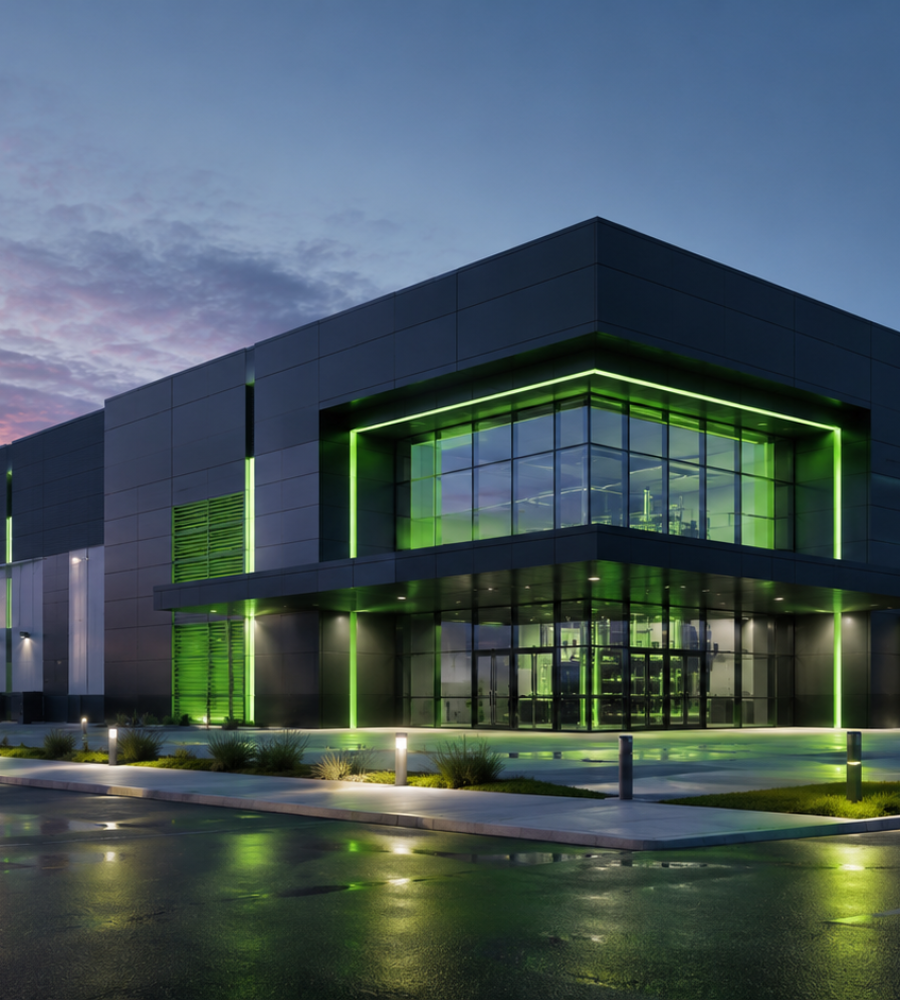
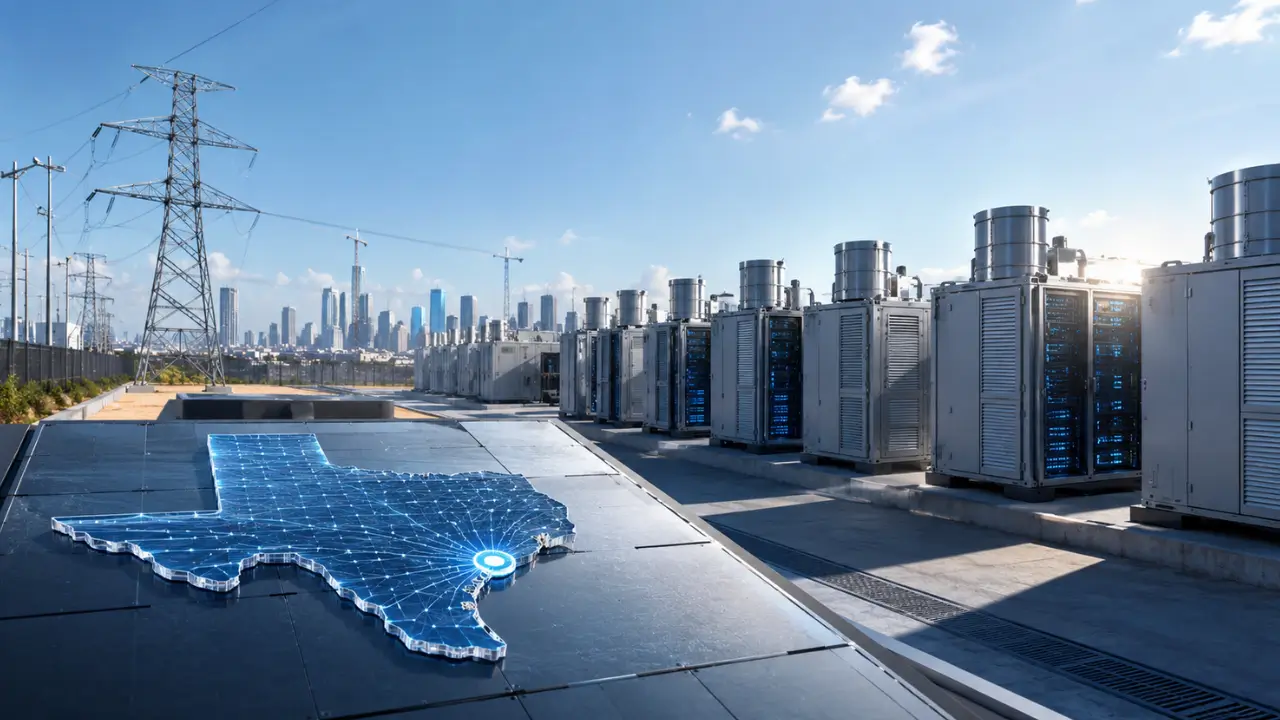
Hut 8 has signed a 15-year lease agreement valued at nearly $9.8 billion for its Beacon Point data center campus in Texas, marking one of the largest AI infrastructure contracts announced this year. The agreement strengthens the company’s position in the rapidly expanding AI compute market, where hyperscale operators continue searching for new sources of power and large-scale data center capacity. Investors responded immediately after the announcement, sending Hut 8 shares up more than 25% during early trading. The deal also reflects how infrastructure developers now sit at the center of the AI economy rather than operating as background utilities.
The first phase of the agreement covers 352 megawatts of capacity at the Beacon Point campus in Nueces County, Texas. Hut 8 did not identify the tenant, although the company confirmed the customer plans to deploy computing hardware designed for large-scale AI model training and inference operations. The project forms part of a broader 1-gigawatt campus strategy that positions the company to compete directly in the AI infrastructure race. Demand for high-density compute environments continues to intensify as enterprise and cloud firms expand generative AI deployments across global markets.
“We have a 15-year obligation from a high-investment-grade counterparty and the contract is structured on a take-or-pay, triple-net basis with no termination for convenience,” Hut 8 CEO Asher Genoot told Reuters.
Beacon Point Reflects AI’s Growing Power Consumption Crisis
The agreement adds another signal that the AI boom increasingly revolves around electricity access as much as semiconductor supply. Data center developers now compete for transmission access, long-term utility relationships, and scalable energy infrastructure capable of supporting GPU-heavy workloads. Beacon Point illustrates this transition because the site combines large-scale power planning with infrastructure optimized for AI operations from the start. Consequently, the economics of AI deployment increasingly depend on securing power before competitors lock up regional capacity.
Hut 8 stated that the contract includes annual rent escalators and renewal structures that could raise the total contract value to approximately $25.1 billion over time. Following the announcement, the company said its contracted AI-focused data center portfolio now totals 597 megawatts with an estimated contract value of roughly $16.8 billion. Those figures place Hut 8 among a growing class of infrastructure operators attempting to evolve beyond traditional colocation and crypto-related operations. The company’s broader pipeline now exceeds 7 gigawatts of potential development capacity across future projects.
Power connection at Beacon Point is expected in early 2027, while the first facility on the campus should reach completion later that year. Hut 8 confirmed the project will use the latest AI data center systems from NVIDIA, further reinforcing the chipmaker’s expanding influence over next-generation compute infrastructure. NVIDIA hardware increasingly shapes how developers design cooling systems, networking layouts, and energy distribution inside hyperscale AI campuses. That influence has created a new layer of dependency across the broader AI infrastructure ecosystem.
Infrastructure Partnerships Become Central To AI Scale
Hut 8 is developing the project alongside several major infrastructure and engineering partners, including American Electric Power, Vertiv, and Jacobs. These partnerships highlight how AI infrastructure development increasingly requires coordination across utilities, cooling providers, construction firms, and hardware suppliers. Building AI campuses at gigawatt scale now resembles industrial infrastructure deployment more than conventional commercial real estate development. As a result, the next phase of AI competition may depend less on algorithms and more on who can secure energy, land, and deployment speed first.
Texas continues emerging as a major battleground in that expansion race because of its power infrastructure, land availability, and large-scale industrial development ecosystem. Companies across the AI sector continue searching for regions capable of supporting dense compute clusters without long deployment timelines. Hut 8’s latest agreement signals that infrastructure demand remains aggressive despite growing concerns surrounding energy consumption and grid strain. The AI boom no longer revolves only around building smarter models; it now centers on who can physically power them at scale.