A Border Town Becomes a Compute Corridor
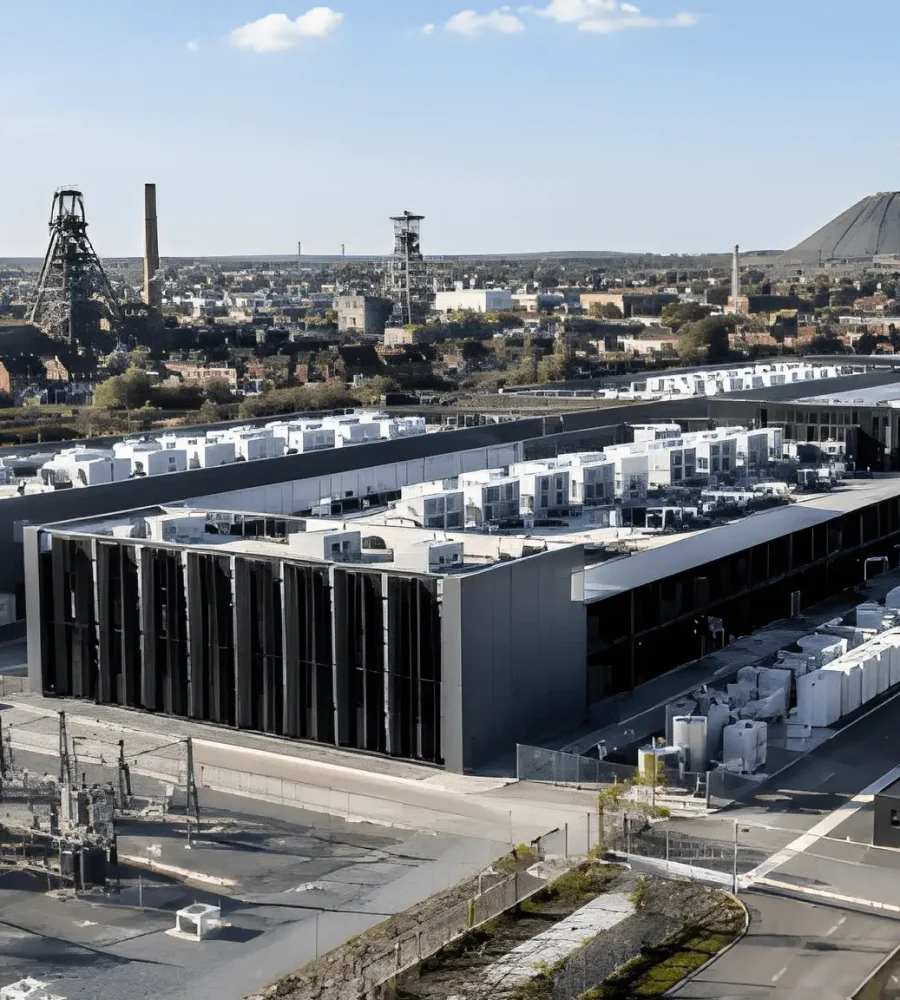
Johor Bahru sits across a narrow causeway from one of the world’s most important data centre markets, and for most of its modern history that proximity meant very little beyond traffic congestion and weekend shopping trips. The state functioned as Singapore’s industrial periphery, a place where palm oil estates and light manufacturing absorbed overflow labour from the city-state without ever becoming a digital infrastructure destination in its own right. That changed with a regulatory decision made eighty kilometres away, in a jurisdiction that had nothing to do with Malaysian planning policy. When Singapore imposed a moratorium on new data centre approvals between 2019 and 2022, citing the pressure that energy-intensive facilities placed on its already constrained land, water, and electricity systems, it did not reduce regional demand for digital infrastructure. It redirected that demand across the strait, and Johor was the only place close enough, cheap enough, and politically willing enough to absorb it.
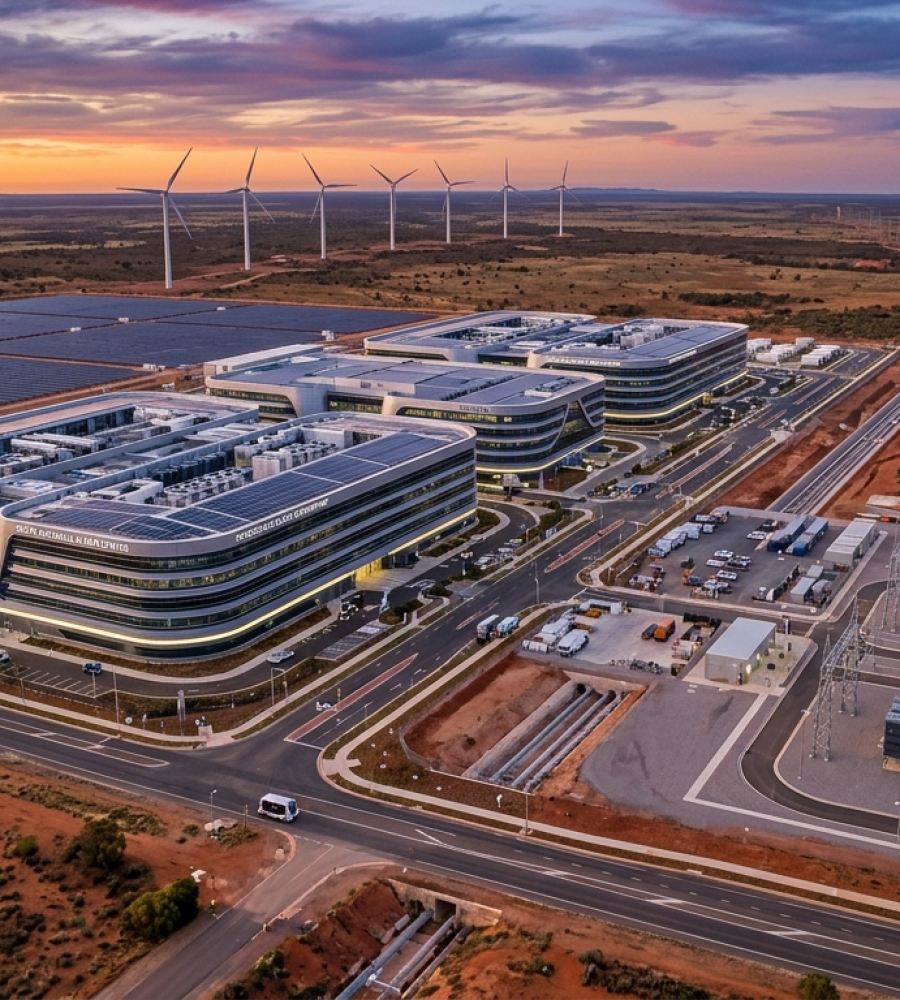
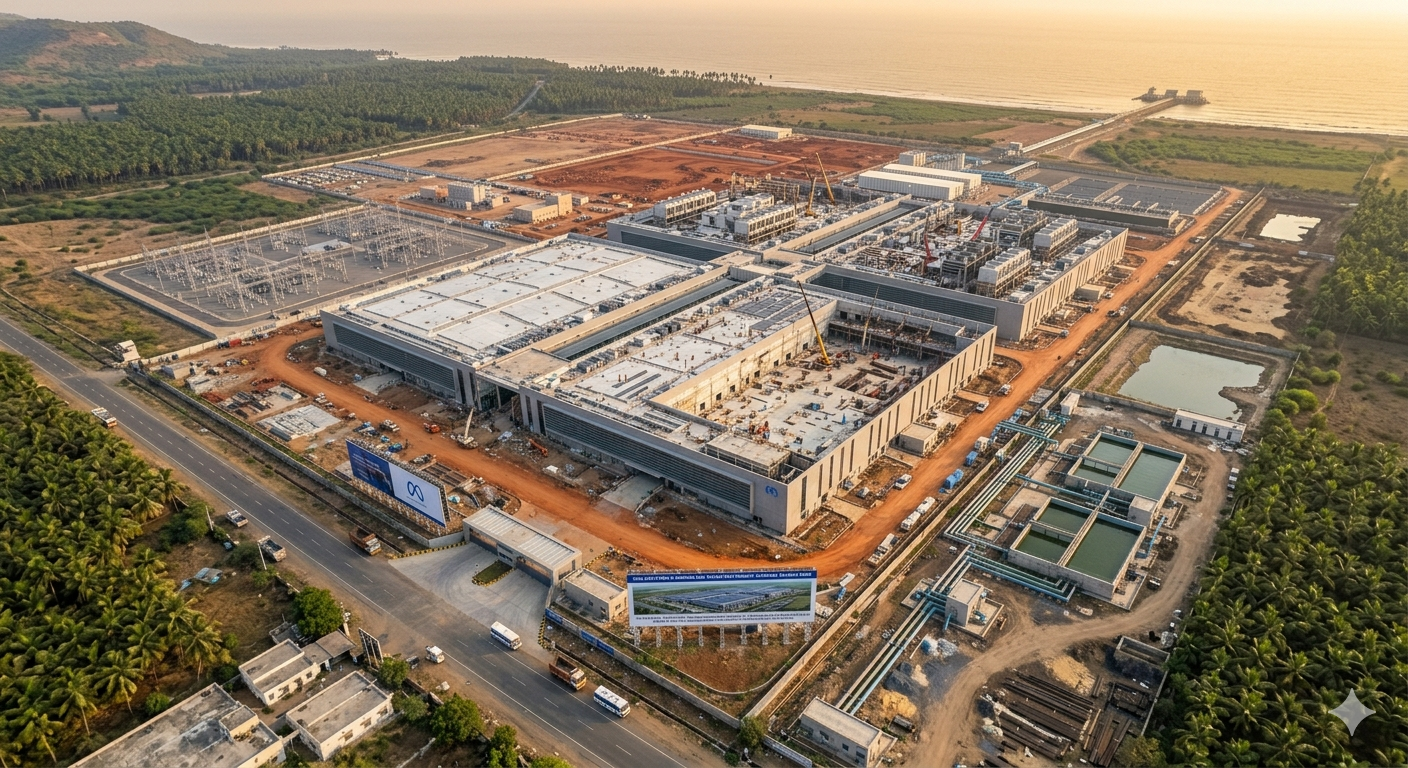
The scale of what followed has surprised even people who track data centre markets professionally. Johor Bahru recorded growth of more than 5,000% over five years according to JLL’s regional analysis, translating into a compound annual growth rate of approximately 70% since 2020 a figure that places it alongside Tokyo and Beijing as one of the three fastest-expanding data centre markets in the entire Asia-Pacific region. As of early 2026, the state has 850MW of capacity completed, a further 1,800MW under construction, and 2,700MW in the pipeline beyond that. Aggregate capacity in the broader Johor corridor nearly doubled in a single year, reaching approximately 5.8 GW by mid-2025 according to reporting from The Diplomat. Malaysia secured roughly US$26.6 billion in approved data centre investment between 2021 and 2023 alone, with at least a quarter of that flowing into Johor specifically. None of this happened because Malaysia out-competed Singapore on merit in a contested bid. It happened because Singapore closed a door, and Johor was standing on the other side of it with land available and a government eager to say yes.
The Mechanics of an Accidental Hub
The structural logic behind Johor’s rise deserves more attention than the headline growth figures usually receive, because it explains why the boom has unfolded the way it has fast, broad, and largely unconditional. Singapore’s moratorium did not just pause new approvals; it created a backlog of capital that had already committed to the region and needed somewhere to land. Multinational cloud providers, colocation operators, and increasingly Chinese technology companies looking for a Southeast Asian foothold all faced the same constraint at the same time, and Johor offered three things Singapore could no longer guarantee on short notice: available land at a fraction of Singapore’s cost, a government actively courting investment rather than restricting it, and physical proximity close enough to preserve the low-latency connectivity that made Singapore valuable in the first place. Princeton Digital Group, a Singapore-based operator, began expanding its footprint across Johor specifically to maintain regional service continuity while Singapore’s own pipeline stalled. The Johor-Singapore Special Economic Zone, formally operationalised in the years that followed, gave this spillover a legal and infrastructural scaffold streamlining cross-border trade, integrating power and connectivity planning, and extending preferential treatment to data centre operators on the Malaysian side of the border.
What makes Johor’s trajectory different from a typical secondary-market growth story is the timing of the AI wave relative to the spillover wave. Johor’s expansion began as an overflow market for conventional cloud and enterprise workloads displaced from Singapore, but the launch of ChatGPT in November 2022 arrived just as that overflow infrastructure was beginning to scale, and AI-specific demand layered directly on top of the spillover demand rather than arriving as a separate wave. Bridge Data Centers, a subsidiary of Bain Capital-backed ChinData, operated 32% of built IT capacity in Malaysia as of December 2024, with DayOne at 29% and AirTrunk at 13% figures that reflect a market built rapidly by a small number of large operators rather than organically by dozens of smaller entrants. The combination of an open door, a pre-existing connectivity advantage, and an AI demand curve that arrived at exactly the right moment is what produced growth rates that no other APAC market has matched.
The Capital Flowing In: Hyperscalers, Chip Makers, and Chinese Operators
A Market Built by Everyone at Once
Few data centre markets anywhere have attracted such a diverse coalition of capital sources within such a compressed timeframe. American hyperscalers established their presence early, with AWS, Microsoft, and Oracle all operating significant facilities across the Johor corridor. Microsoft’s commitment deepened further in February 2025, when the company acquired its second site in the state for approximately US$143 million, signalling that its Johor presence was a long-term platform rather than an opportunistic lease. Nvidia partnered with Malaysian conglomerate YTL on a US$4.3 billion AI data centre project, anchoring one of the most significant AI-specific infrastructure commitments in Southeast Asia and demonstrating that chip suppliers themselves now see strategic value in securing capacity in the corridor rather than simply selling into it. Alibaba Cloud’s decision to open a new cloud region in Johor, bringing its total Malaysian footprint to five facilities, reflects the same calculation from the Chinese hyperscaler side — Johor offers connectivity to Southeast Asian markets without the regulatory friction that Chinese technology companies increasingly encounter in Western-aligned jurisdictions.
The Chinese capital flowing into Johor extends well beyond cloud platforms into the physical infrastructure layer itself. ByteDance committed approximately US$2.1 billion to expand its Johor facilities, while DayOne formerly the international arm of Chinese operator GDS Holdings — invested US$3.5 billion in the state in 2025 alone, representing one of the largest single investment flows into data centre infrastructure anywhere in Asia that year. PowerChina has become involved in energy projects supporting the corridor, including gas power plants and hydropower developments, while Huawei is participating in smart grid upgrades that underpin the reliability data centre operators require. Tianneng Group’s announcement of a 1 GWh “Solar-Storage-Computing” project in early 2026 illustrates a further dimension of this relationship: Chinese firms are not only consuming Malaysian infrastructure capacity but actively building the energy infrastructure that capacity depends on, creating a degree of vertical integration between Chinese investment in compute and Chinese investment in the power systems that feed it.
The Numbers Behind the Narrative
The financial scale attached to Johor’s transformation is difficult to overstate relative to the size of the state itself. By mid-2025, Johor had approved RM164.45 billion in data centre-related investments a figure that dwarfs typical state-level industrial investment totals anywhere in Southeast Asia and reflects a degree of capital concentration that few regional governments have managed before. The Malaysian data centre market overall was valued at US$4.04 billion in 2024 and is projected to exceed US$13.5 billion by 2030, with Malaysia securing approximately US$23.3 billion from North American hyperscalers in just the first ten months of 2024. Malaysia’s cost advantage relative to Singapore sits at roughly 22% lower, comparable to Indonesia and Thailand, but Johor’s advantage over those other markets lies in something cost figures alone cannot capture: physical proximity to Singapore’s existing fibre and submarine cable infrastructure, which allows operators to maintain latency profiles close to what Singapore itself offers.
Land availability sits at the centre of why this capital concentration became possible at all. Malaysia is more than 450 times larger than Singapore in land area, with a population only about six times larger, producing a population density gap that translates directly into available industrial land for greenfield development at a scale Singapore simply cannot replicate within its borders. That land advantage, combined with the cost differential and the connectivity inheritance from decades of Singapore-centred regional infrastructure planning, created conditions where Johor could absorb capital faster than almost any comparable approval and construction process elsewhere in the region could process it. The submarine cable landings at Kuala Sedili, part of the broader ALC and CANDLE cable system timelines, represent the next phase of this connectivity build-out — infrastructure that, if delivered on schedule, would shift Johor’s position from a market dependent on Singapore’s cable infrastructure to one with independent international connectivity of its own.
The Wall Johor Did Not See Coming
When 675 Million Litres Meets a Finite River System
Every infrastructure boom eventually meets the physical constraint that the planning process did not adequately price in, and for Johor that constraint turned out to be water rather than power. Government estimates indicate that the cooling requirements of Johor’s approved data centre pipeline could reach approximately 675 million litres per day a figure repeated across multiple government and analyst sources as the headline number defining the scale of the problem. Set against that demand, Malaysian regulators estimate that only 142 million litres of the 808 million litres requested nationwide can be sustainably supplied, a gap that is not a matter of degree but a near order-of-magnitude shortfall between what has been approved on paper and what the underlying hydrology of the region can actually deliver. Johor’s water resources are concentrated in the central and eastern parts of the state, while data centre investment has clustered in the south near the Singapore border meaning the shortfall is not purely a supply problem but a distribution problem layered on top of an absolute scarcity problem.
The timing of this reckoning has been particularly unfortunate, arriving alongside drought conditions that have already strained the state’s existing water infrastructure independent of data centre demand. Earlier in the crisis period, a sand mining accident forced the closure of four treatment plants, cutting off water supply to more than half of Johor’s 1.7 million residents for as long as twelve hours an incident that had nothing directly to do with data centres but that crystallised, for residents and officials alike, how fragile the underlying water system already was before any new industrial demand was layered onto it. Johor’s state executive councillor for investment and trade, Lee Ting Han, characterised the issue as one of management rather than absolute sufficiency, framing the challenge as ensuring water reaches the right places rather than there being too little water in the state overall. That framing may be technically accurate, but it does little to reassure residents in Gelang Patah and other southern districts where new facilities are concentrated and where the gap between approved demand and deliverable supply is most acute.
The 18-Month Pause and Its Limits
Faced with the gap between approved capacity and deliverable water supply, Johor state authorities moved to halt new approvals for water-cooled data centres for at least eighteen months, with officials indicating that operators should not expect water and power hookups for projects in this category before mid-2027. The pause applies specifically to facilities that rely on water for cooling servers operating continuously, distinguishing this category from data centres using air cooling or closed-loop systems with lower water intensity. Sedenak Tech Park, one of Johor’s flagship development sites, has reportedly been telling prospective tenants directly that promised water and power connections will not materialise until the fourth quarter of 2026 at the earliest a delay that, for hyperscaler investment timelines built around predictable commissioning dates, represents a meaningful cost even before any facility is built. As of the most recent figures, Johor hosts 15 operational data centres, with 11 under construction and 22 more in various stages of the approval pipeline, meaning the pause affects a substantial share of the announced growth trajectory rather than a marginal slice of it.
The pause has not been universally welcomed, and the pushback illustrates the political complexity beneath the headline growth numbers. Industry voices have characterised the moratorium as a necessary but incomplete response, warning that unless “AI-related” projects which remain exempt from the broader restrictions on non-AI data centres are clearly defined and independently verified, the distinction risks becoming a regulatory loophole that allows the highest-water-intensity facilities to continue under an AI exemption regardless of their actual cooling architecture. Residents, meanwhile, have moved from expressing concern through official channels to direct action: in February 2026, Malaysia recorded its first public protest against the data centre industry, with more than fifty demonstrators gathering outside a construction site in Gelang Patah being developed for China’s Zdata Technologies. Residents described construction dust making it difficult to maintain their homes, air purifiers signalling persistently poor air quality, and a pervasive uncertainty about whether the facility — which had received approval before the broader water-based cooling ban took effect — would draw water allocations that the surrounding community could not spare.
The Policy Reckoning: From Open Door to Conditional Entry
Anwar Ibrahim’s February 2026 Pivot
The most significant signal that Malaysia’s approach to data centre investment was changing came not from a regulatory filing but from a public statement by the Prime Minister himself. On 24 February 2026, Anwar Ibrahim confirmed that Malaysia had restricted new data centres unrelated to AI for nearly two years, framing the decision explicitly in terms of protecting the national power grid and water supply rather than as a temporary administrative pause. The significance of this statement lies less in its content the restriction itself had been in effect, in various forms, for some time and more in its framing. A government that had spent years positioning itself as unconditionally open to data centre investment, competing with neighbouring jurisdictions primarily on the basis of incentives and approval speed, was now publicly acknowledging that the incentive-without-conditions model had reached its limits. Anwar’s broader budget remarks reinforced this shift, stating that Malaysia could no longer sustain an approach of offering incentives and support to investors without considering the economic spillover, and that investments should be pursued only where they bring tangible value to ordinary Malaysians through high-paying jobs and knowledge transfer rather than serving primarily the profit motives of investor companies.
This pivot reframes how analysts should read Johor’s growth trajectory going forward. The distinction the government has drawn — restricting “non-AI” data centres while continuing to welcome AI-related facilities is itself revealing of where Malaysia believes its competitive advantage and its negotiating leverage now lie. AI infrastructure carries higher strategic value, attracts larger single-project investments, and aligns with the global narrative around sovereign AI capacity that governments across the region are competing to capture. By restricting the lower-value, higher-resource-intensity conventional data centre category while preserving the door for AI-specific investment, Malaysia is attempting to use its newfound position — as a market hyperscalers actively want access to, rather than one desperate for any investment — to shape the composition of future growth rather than simply its volume. One analysis of this dynamic argued that Johor may be transitioning from a spillover market to something more deliberate: the physical compute annex of the Singapore system, purpose-selected for the AI era, where land, power, water, network adjacency, and policy discipline are converging at exactly the moment global demand needs somewhere to go.
What “Conditional” Looks Like in Practice
Translating a policy pivot into operational reality is where most government course-corrections falter, and Johor’s water and power allocation process illustrates exactly how difficult that translation is proving to be. Malaysia’s Energy Transition Minister, Datuk Seri Fadillah Yusof, told Parliament that data centres in both Johor and the neighbouring state of Selangor are currently allocated less than a third of their initial water supply requests — meaning the gap between what operators planned for and what they are actually receiving is already substantial even before the formal eighteen-month pause takes full effect. JLL’s regional head of data centre and industrial for Malaysia and Indonesia, James Rix, has suggested that part of the heightened sensitivity around water usage stems from a broader global backlash against evaporative cooling, triggered by water shortages associated with data centre clusters in parts of the United States, with that contagion of concern spreading to EMEA markets and now visibly shaping the regulatory mood in Southeast Asia as well. This suggests Johor’s water reckoning is not occurring in isolation it is part of a global recalibration of how acceptable water-intensive cooling architectures are, occurring at the precise moment Johor’s pipeline of water-cooled facilities reached critical mass.
For operators already committed to the Johor corridor, the practical response has been a rapid pivot toward alternative cooling architectures — air cooling, closed-loop liquid systems with minimal makeup water requirements, and direct-to-chip liquid cooling designs that recycle coolant rather than relying on continuous fresh water draw. This shift mirrors a broader global trend in data centre design driven by AI-specific thermal loads, but in Johor it carries an additional layer of urgency: facilities that cannot demonstrate reduced water dependency face the realistic prospect of multi-year delays to their power and water connections regardless of how much capital has already been committed to construction. The state’s challenge going forward is one of sequencing managing a pipeline of 2,700MW in announced future capacity against a water and power allocation system that was not designed for, and cannot currently support, that volume of continuous high-density industrial demand arriving within a compressed timeframe.
What Johor’s Trajectory Means for the Rest of Southeast Asia
The Spillover Pattern Is Repeating Elsewhere
Johor’s experience offers a template that other Southeast Asian jurisdictions are now watching closely, because the conditions that produced Johor’s boom a neighbouring market with capacity constraints, available land, and a government willing to approve quickly are not unique to the Malaysia-Singapore relationship. Indonesia’s Batam island, situated within reach of Singapore’s connectivity infrastructure in much the same way Johor is, has already attracted attention from operators including Princeton Digital Group as a secondary spillover destination, suggesting that the redirection of Singapore-adjacent demand is not a single-market phenomenon but a regional one that could replicate across multiple borders simultaneously. The risk this creates is that jurisdictions competing for the same spillover capital may replicate Johor’s sequencing problem — approving investment ahead of the infrastructure planning required to support it — without the benefit of Johor’s experience as a cautionary example, simply because the competitive pressure to win investment before a neighbouring jurisdiction does discourages the kind of upfront conditionality that hindsight suggests would have been wiser.
The deeper lesson embedded in Johor’s trajectory connects directly to the dynamics playing out in grid-constrained European markets, even though the specific resource at issue differs. In both cases, a market that initially benefited from another jurisdiction’s restrictions Johor from Singapore’s moratorium, Spain and the Nordics from FLAP-D grid saturation found that rapid capital inflows outpaced the physical infrastructure planning required to sustain them. Europe’s constraint is electricity grid capacity, measured in years of substation and transmission investment. Johor’s constraint is water, measured in the hydrology of river systems and treatment plant capacity that cannot be expanded as quickly as approval paperwork can be processed. In both regions, the resolution is converging on the same principle: infrastructure capacity, not investment appetite or policy ambition, is the actual limiting factor on how much digital infrastructure a region can sustainably host, and the jurisdictions that recognise this before the crisis point rather than after, as Malaysia is now doing will be the ones that convert short-term spillover advantage into long-term structural position.
The Road Ahead: Can Johor Become a Deliberate Hub Rather Than an Accidental One
The question hanging over Johor in 2026 is whether the corridor can transition from a market defined by the accident of its geography and timing to one defined by deliberate, sustainable planning that matches its undeniable structural advantages. The fundamentals that made Johor attractive in the first place proximity to Singapore’s connectivity infrastructure, abundant land relative to regional alternatives, and a government with the political will to move quickly remain intact and continue to draw capital from American hyperscalers, Chinese technology giants, and chip manufacturers alike. What has changed is the recognition, articulated at the highest level of government, that those advantages alone cannot substitute for the underlying infrastructure capacity that sustains them. The eighteen-month pause on water-based cooling expansion, the AI-versus-non-AI distinction in approval policy, and the broader rhetorical shift toward demanding tangible benefits for ordinary Malaysians all represent a government attempting, somewhat belatedly, to impose the conditions that should arguably have accompanied the initial wave of approvals.
Whether this course-correction succeeds will depend on factors that extend well beyond Johor’s borders. The submarine cable infrastructure at Kuala Sedili, the broader power grid investments involving PowerChina and Huawei, and the pace at which water treatment and distribution infrastructure can be expanded to match the southern concentration of data centre demand will all determine whether the eighteen-month pause becomes a genuine reset or merely a temporary speed bump before the same dynamics reassert themselves. For the global hyperscalers and chip suppliers who have already committed billions to the corridor, the calculus has not fundamentally changed — Johor remains one of the few places in Southeast Asia where the combination of land, connectivity, and policy access that AI infrastructure requires exists at scale. What has changed is that the era of unconditional, unmonitored expansion has ended, and what comes next will be shaped as much by river flow data and treatment plant capacity as by hyperscaler capital expenditure announcements.