The race to build artificial intelligence infrastructure is creating new demands across the global data center supply chain. Against that backdrop, Schneider Electric and Hon Hai Technology Group (Foxconn) have formed a strategic partnership aimed at accelerating the delivery of next-generation AI data centers. The collaboration combines one of the world’s largest electronics manufacturing companies with a leading provider of energy management and automation technologies. Production of the jointly developed solutions is expected to begin later this year.
The agreement reflects a broader shift in the AI infrastructure market, where operators increasingly seek integrated systems rather than assembling components from multiple vendors. As AI workloads grow larger and more power-intensive, infrastructure providers face mounting pressure to reduce deployment timelines while maintaining operational efficiency. The partnership is designed to address those challenges through standardized, ready-to-deploy solutions. Both companies believe tighter integration between compute infrastructure and energy systems can shorten project delivery cycles and improve operational outcomes.
Combining Compute Manufacturing and Energy Expertise
The collaboration brings together complementary capabilities from both organizations. Foxconn will contribute its expertise in advanced compute platforms, AI rack integration, and large-scale manufacturing. Schneider Electric will provide power distribution systems, cooling technologies, and energy management solutions that support high-density AI environments.
This combination aims to create a more streamlined approach to AI data center construction. Instead of relying on fragmented procurement and engineering processes, customers will gain access to integrated infrastructure packages designed for rapid deployment. The companies expect the model to improve predictability across design, deployment, and operations. The approach also reflects growing industry demand for turnkey infrastructure capable of supporting increasingly complex AI workloads.
A central element of the partnership involves the co-development of next-generation reference architectures for AI data centers. These frameworks are intended to serve as repeatable blueprints that organizations can adopt across multiple regions and deployments. Standardization has emerged as a key requirement for enterprises and cloud providers seeking to scale AI capacity efficiently. The companies aim to reduce engineering complexity while improving consistency in performance and reliability.
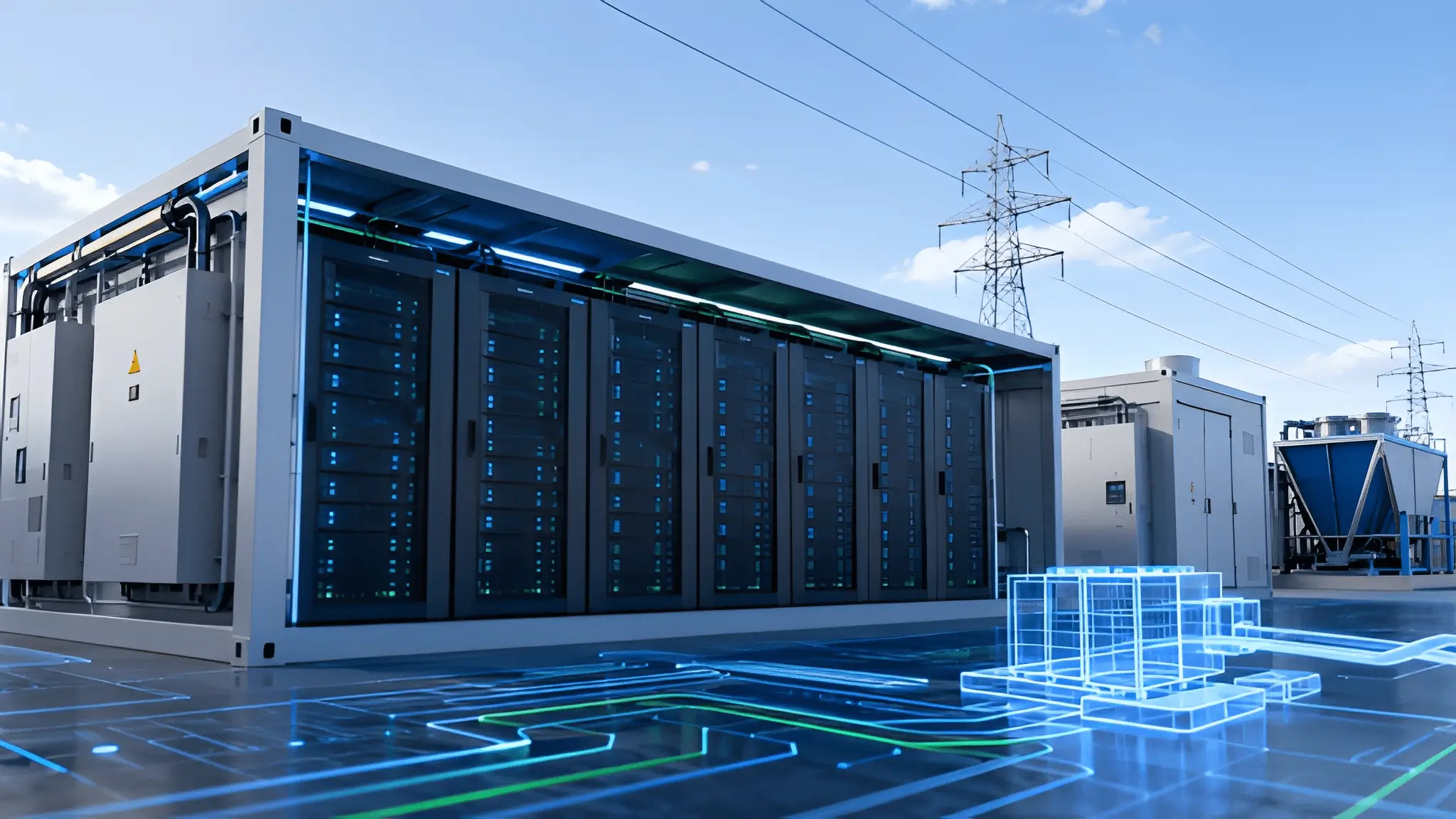
The collaboration will also explore innovations in closed-loop energy optimization, modular power and cooling skids, and standardized design methodologies. Such technologies could help operators manage the growing power and thermal requirements associated with AI clusters. Furthermore, modular designs may enable faster deployment schedules while supporting future expansion. The long-term objective is to establish scalable infrastructure models that can support the development of AI factories worldwide.
Industry Responds to Growing AI Capacity Requirements
The partnership arrives as demand for AI computing infrastructure continues to accelerate across sectors. Enterprises, cloud providers, and AI developers are investing heavily in facilities capable of supporting large-scale model training and inference workloads. These deployments require not only advanced compute hardware but also sophisticated power and cooling systems capable of sustaining high-density environments. As a result, infrastructure providers are increasingly collaborating to address bottlenecks across the value chain.
Young Liu, Chairman of Foxconn, emphasized the need for a new infrastructure model as AI adoption expands globally. “At the pace AI is evolving, the industry requires a new model for how infrastructure is designed, built, and delivered.” He added that combining Foxconn’s expertise in AI systems with Schneider Electric’s energy management capabilities creates an opportunity to deploy AI capacity more quickly and sustainably at scale.
Power availability and energy efficiency have become defining factors in AI data center development. Operators now evaluate infrastructure not only on computing performance but also on resilience, energy utilization, and operational sustainability. Schneider Electric sees intelligent energy management as a critical component of future AI deployments. The partnership positions the company to integrate those capabilities directly into AI infrastructure designs from the outset.
Olivier Blum, CEO of Schneider Electric, highlighted the importance of embedding energy intelligence into large-scale AI deployments. “The collaboration helps customers build capacity with speed, resilience, and efficiency by integrating power, cooling, and digital capabilities into AI data centers.” His comments underscore the industry’s growing focus on balancing AI expansion with operational efficiency and infrastructure reliability.
A New Model for Global AI Infrastructure Growth
The alliance between Foxconn and Schneider Electric signals a broader evolution in how AI infrastructure is designed and delivered. Rather than treating compute, power, and cooling as separate disciplines, the partnership seeks to create an integrated framework capable of supporting large-scale AI expansion. The strategy aligns with market demand for faster deployment timelines, standardized architectures, and improved operational efficiency. If successful, the collaboration could help establish a new blueprint for AI data center development as organizations scale digital infrastructure to meet rising AI demand.