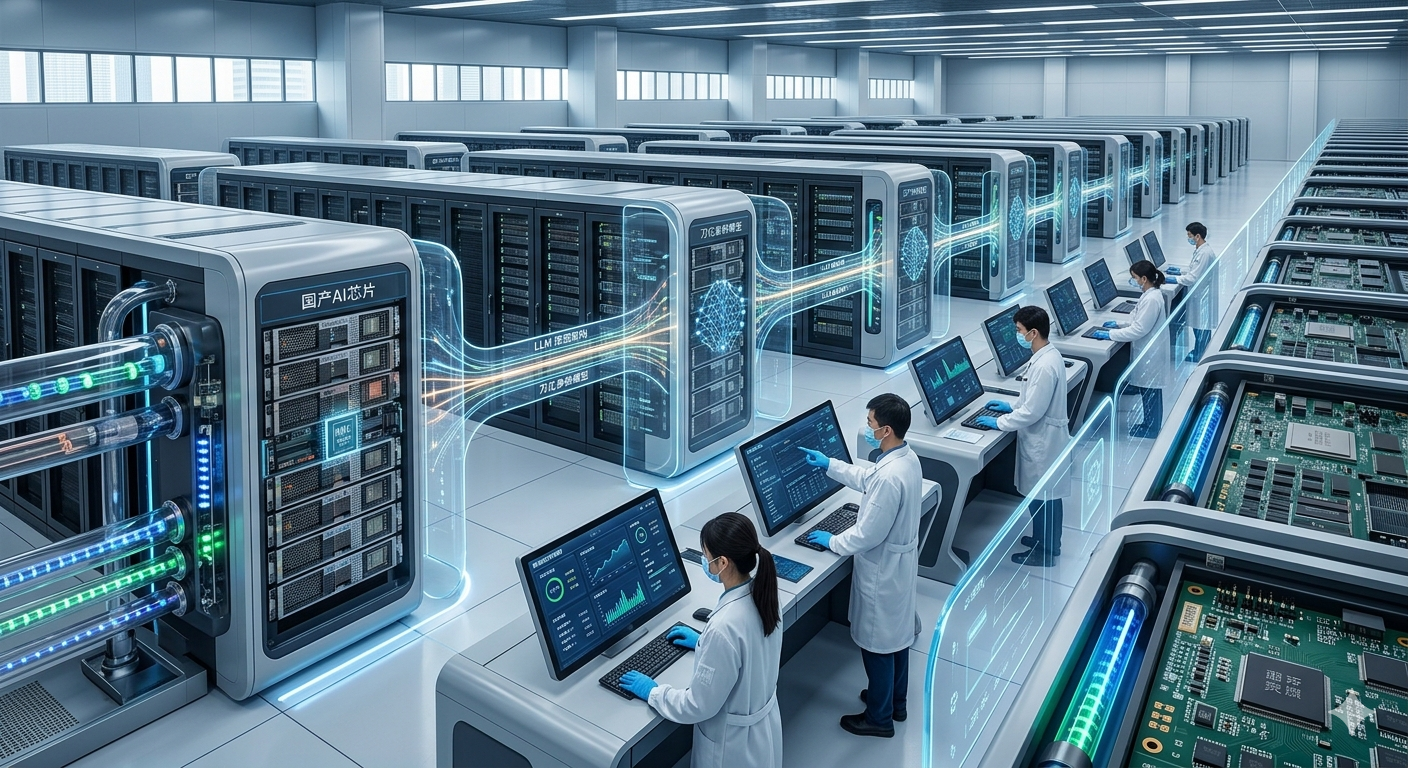
ByteDance is in discussions with Shanghai-based Iluvatar CoreX to purchase artificial intelligence chips for inference workloads and is also evaluating a potential deal involving Baidu’s Kunlunxin processors, according to sources familiar with the matter. If finalized, Iluvatar CoreX would become ByteDance’s third major domestic graphics processing unit (GPU) supplier after Huawei and Cambricon. The move highlights how China’s AI infrastructure ecosystem is increasingly shifting toward locally developed silicon as U.S. export restrictions continue to limit access to advanced foreign chips. The talks remain ongoing and could still change, the sources said.
Domestic AI Chips Gain Ground In China’s AI Infrastructure Market
The potential agreements underscore the growing adoption of domestic AI chips across China’s technology sector. Beijing has intensified efforts to strengthen semiconductor self-sufficiency while encouraging enterprises to reduce dependence on foreign hardware suppliers. ByteDance, the parent company of TikTok and operator of the AI chatbot Doubao, has emerged as one of China’s largest investors in AI infrastructure. The company continues to expand compute capacity to support growing demand for AI services and inference workloads. TikTok parent ByteDance is also considering using Baidu’s Kunlunxin chips, according to the sources. Tencent is already a Kunlunxin customer. Neither ByteDance, Iluvatar CoreX, Baidu nor Tencent responded to requests for comment.
Chinese Suppliers Capture Larger Share Of AI Compute Market
Chinese GPU and AI chip manufacturers captured nearly 41% of China’s AI accelerator server market in 2025, according to a Reuters report published earlier this year. The growth reflects increasing adoption of domestic alternatives as Chinese technology companies expand AI deployments. The shift has coincided with tighter U.S. export controls on advanced AI hardware. Nvidia Chief Executive Jensen Huang recently stated that the company’s market share in China had effectively fallen to zero, creating additional opportunities for local suppliers. Tencent Chief Strategy Officer James Mitchell said in May that Chinese AI chips would become available in large quantities during the second half of 2026.
Iluvatar CoreX Eyes Commercial Breakthrough
A deal with ByteDance would represent a significant commercial milestone for Iluvatar CoreX, one of China’s leading GPU startups. According to sources, the company is expected to ship at least 50,000 chips to ByteDance this year, with most deployments focused on inference workloads supporting Doubao and related AI services.
Inference workloads involve responding to user queries and running deployed AI applications. Unlike model training, inference typically prioritizes efficiency, scalability, and lower operating costs across large user bases. Until now, Iluvatar CoreX has largely supplied government procurement projects. The company reported revenue of approximately 1 billion yuan ($148 million) in 2025, with roughly 90% generated from GPU sales. The company listed in Hong Kong earlier this year and has benefited from rising demand for domestic AI hardware.
AI Infrastructure Demand Supports Growth
According to a research note from Huatai Securities, Iluvatar CoreX’s revenue could reach 3.04 billion yuan ($449.8 million) in 2026. The brokerage expects total chip shipments to exceed 100,000 units, representing a 139% increase year over year. Huatai Securities estimates that Iluvatar’s Zhikai inference chips carry an average selling price of approximately 12,000 yuan ($1,775) per unit.
The company’s product portfolio includes the Tiangai series for AI training workloads and the Zhikai series designed for inference applications. As China’s AI infrastructure market continues expanding, agreements involving major technology companies such as ByteDance could provide domestic chipmakers with critical commercial validation and larger deployment opportunities across the country’s rapidly growing compute ecosystem.