Skip to content
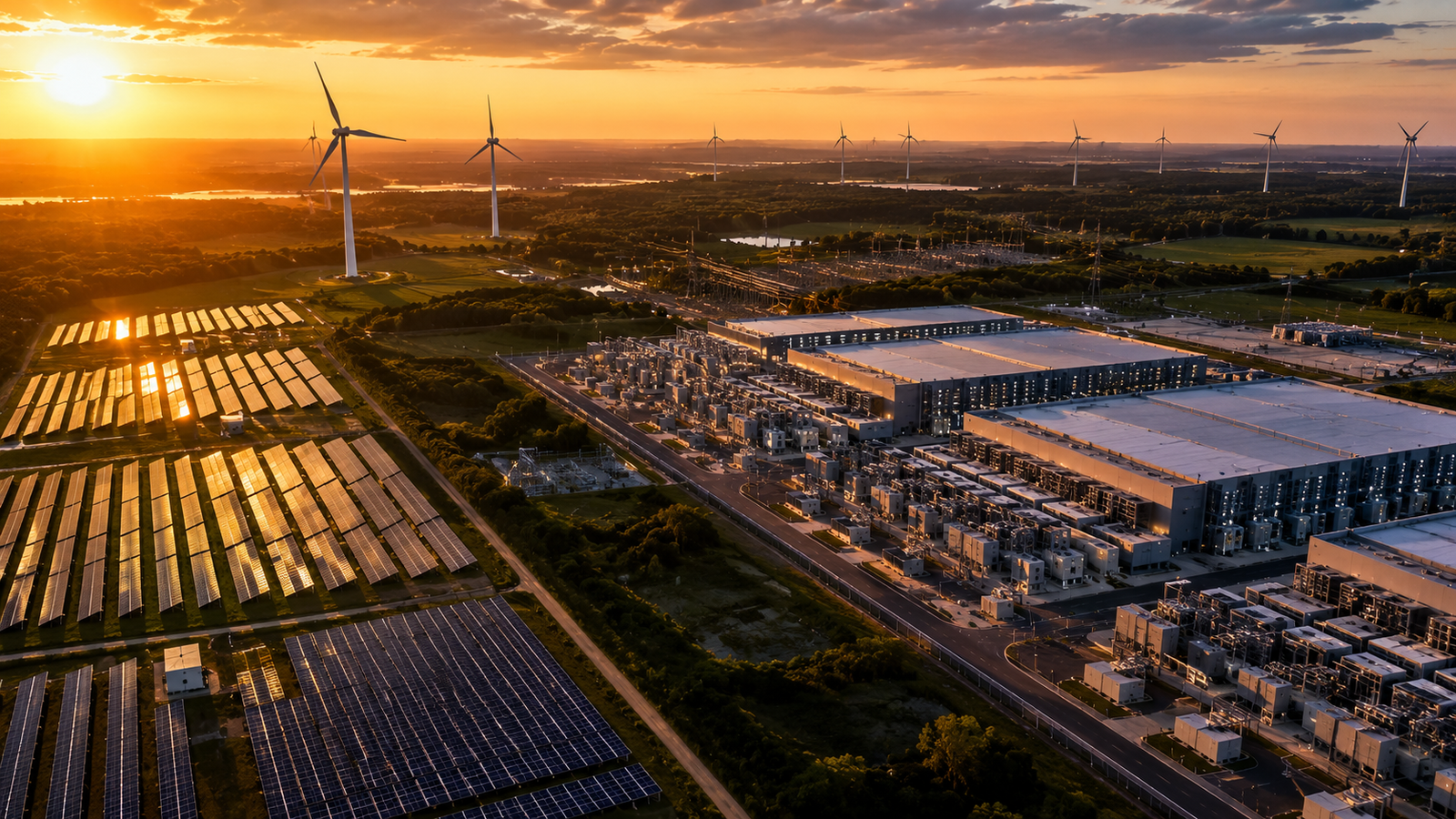
The power purchase agreement has become the most strategically important contract in AI infrastructure. It determines the electricity cost that governs facility economics for 15 to 20 years. It also shapes whether a facility can credibly claim carbon-free operation. In markets where utility queues stretch to seven years, it can determine whether the developer secures grid interconnection at all. Increasingly, it also determines whether developers build the facility at all, because lenders underwriting data center construction financing require PPA certainty before they advance capital.

PPAs are evolving into complex risk-sharing structures as hyperscale operators trade fixed pricing for physical delivery and grid-bypass certainty. That evolution has accelerated dramatically since 2023, when the scale of hyperscaler power demand began to exceed what spot market and standard utility tariff procurement could reliably serve. The hyperscalers who secured their power at the right terms, with the right counterparties, at the right moment in the development cycle, have structural advantages in their facility economics that competitors who procured power later cannot replicate at current market pricing.
The Structure That Has Emerged in 2026
In February 2026, TotalEnergies signed two 15-year PPAs with Google to supply 1 gigawatt of new solar capacity for Google’s Texas operations, covering the 805MW Wichita and 195MW Mustang Creek projects west of Dallas. The structure of those agreements illustrates how hyperscaler PPA design has evolved from simple fixed-price offtake contracts into multi-layered risk management instruments.
The first layer is price certainty. A 15-year fixed-price PPA insulates the data center from electricity market volatility for the duration of the contract. In markets like Texas, where wholesale electricity prices can swing by hundreds of percent during weather events, a fixed-price contract transforms a major variable operating cost into a predictable line item. That predictability has direct value for facility economics. A data center operator who knows their electricity cost for the next 15 years can price their compute services, structure their debt, and plan hardware refresh cycles with confidence that market-rate electricity buyers cannot match.

The second layer is additionality. Google, Microsoft, and Amazon have all committed to energy additionality requirements in their sustainability frameworks, meaning that the renewable energy their PPAs cover must come from new generation capacity rather than existing projects. The Wichita and Mustang Creek projects are new capacity that would not have been constructed without PPA revenue certainty. Additionality requirements changed the PPA market fundamentally. Hyperscalers cannot simply purchase renewable energy credits from existing wind and solar farms. They must financially underwrite new generation capacity, which turns them from energy buyers into energy infrastructure developers.
The Grid Bypass That Physical PPAs Now Provide
This shift has made hyperscalers the anchor tenants of the US renewable energy development market. Annual solar generation in the United States is forecast to grow 65% between 2026 and 2030, and a substantial fraction of that growth is underwritten by hyperscaler PPAs. The developers who build new solar, wind, and battery projects need a creditworthy offtaker to finance construction. The hyperscalers provide that credit. The energy market and the AI infrastructure market have become mutually dependent, with the PPA as the structural link between them.
Physical PPAs are gaining favour in 2026 for a specific reason beyond price certainty: grid bypass. In markets where interconnection queues stretch to seven years, a data center powered directly from a co-located or nearby generation asset can achieve commercial operation years ahead of a grid-connected facility. Texas accounts for over one-quarter of the national data center pipeline because the ERCOT market structure allows physical behind-the-meter generation at a scale that PJM and WECC markets do not. The data center that co-locates with its power source is not just managing electricity cost. It is solving its interconnection problem simultaneously.
Physical PPAs Versus Virtual PPAs
The hyperscaler PPA market has bifurcated into two distinct structures with different risk profiles and different implications for data center operations. Physical PPAs deliver actual electricity from a specific generation asset to a specific facility through a direct interconnection or contracted transmission path. Virtual PPAs are financial contracts that give the hyperscaler economic exposure to the price of renewable energy without creating a physical power delivery relationship.
Microsoft’s virtual PPA strategy covers 13 countries, enabling global carbon neutrality across its data center portfolio without requiring physical renewable delivery at each location. The financial settlement mechanism separates renewable attributes from physical power delivery, allowing Microsoft to claim renewable energy coverage in markets where direct physical delivery is not commercially viable. Virtual PPAs have been the dominant hyperscaler procurement structure historically because they offer geographic flexibility that physical PPAs cannot match.
The risk allocation between the two structures differs significantly. In a fixed-price physical PPA, the generation risk sits with the generator. If the solar project produces less electricity than contracted, the generator must make the data center whole or find alternative supply. As a result, that risk is priced into the PPA rate, which is why physical delivery PPAs typically carry higher rates than virtual PPAs. Accordingly, the data center operator pays a premium for the certainty of physical delivery. By contrast, in a virtual PPA, the basis risk sits with the data center operator. In that case, if the grid price at the operator’s consumption location diverges significantly from the hub price at the generation project’s delivery point, the financial settlement of the virtual PPA may not offset the operator’s actual electricity cost.
The Nuclear Addition That Changes the 24/7 Calculation
The 2026 PPA landscape has added a third generation type that was not part of hyperscaler energy strategy three years ago: nuclear. Amazon committed $500 million to X-energy’s small modular reactor programme. Google signed an agreement with Kairos Power for SMR capacity. Microsoft has committed to purchasing power from multiple nuclear projects as part of a broader clean firm power strategy. The nuclear PPA is motivated by a problem that physical solar and wind PPAs cannot fully solve: intermittency.
AI training clusters run at maximum power 24 hours a day, 7 days a week, for weeks or months at a time. Solar generates power for 6 to 8 hours per day. Wind is variable. Battery storage can bridge gaps of hours but not multi-day periods when both solar and wind generation are suppressed simultaneously. Nuclear power generates firm, dispatchable, carbon-free electricity at capacity factors above 90%. For a hyperscaler that has committed to carbon-free operations, nuclear is the only currently available source of 24/7 clean baseload power at the scale a hyperscale AI campus requires.
The nuclear PPA has a longer development timeline than solar or wind. SMR projects will not generate power until the late 2020s or early 2030s. But as our analysis of the NextEra-Dominion acquisition documented, hyperscalers and utilities are now planning on decade-long horizons because the AI infrastructure being built will be operational for 20 to 30 years. A nuclear PPA signed in 2026 for power delivered in 2030 is the right instrument for infrastructure that will be drawing power in 2050.
What PPA Structure Reveals About Competitive Position
The PPA portfolio of a hyperscaler or major data center operator is one of the clearest indicators of its long-term cost competitiveness. An operator with 15-year fixed-price renewable PPAs covering its full load in its primary markets is building with electricity cost visibility that market-rate buyers will never have. It can model its facility economics, its compute pricing, and its capital structure over a 15-year horizon with a level of precision that is simply not available to operators dependent on spot market or standard tariff electricity.
The electricity cost differential between a well-structured PPA portfolio and market-rate procurement can reach $80 to $100 million annually for a 100-megawatt facility. Over a 15-year operating period, that differential compounds to $1.2 to $1.5 billion in electricity savings on a single facility. The PPA is not a sustainability exercise. It is the most commercially important procurement decision an AI infrastructure operator makes, and the operators who made it earliest and best have structural cost advantages that their competitors will spend years trying to close.