AI Infrastructure Is Driving a Cooling Revolution
Artificial intelligence has transformed the economics of data center operations. As organizations deploy increasingly powerful AI models, the infrastructure supporting those workloads faces mounting pressure from escalating power densities and heat generation. Graphics processing units (GPUs), which serve as the foundation of modern AI computing, consume significantly more power than traditional server processors. This increase has made thermal management one of the most important challenges in the data center industry. Across Japan, technology companies are responding by accelerating the development and deployment of liquid cooling technologies designed specifically for AI infrastructure.
Traditional Cooling Methods Are Reaching Their Limits
For decades, most data centers relied on air-conditioning systems and airflow management to regulate server temperatures. That approach worked effectively when computing densities remained relatively low. Modern AI workloads have changed the equation. High-performance GPU clusters generate substantially more heat than conventional enterprise servers, placing greater demands on cooling infrastructure. Industry estimates suggest cooling systems account for between 30% and 40% of a data center’s total power consumption. As AI adoption grows, operators are increasingly looking for ways to reduce this overhead without compromising performance or reliability.
Why Liquid Cooling Is Gaining Momentum
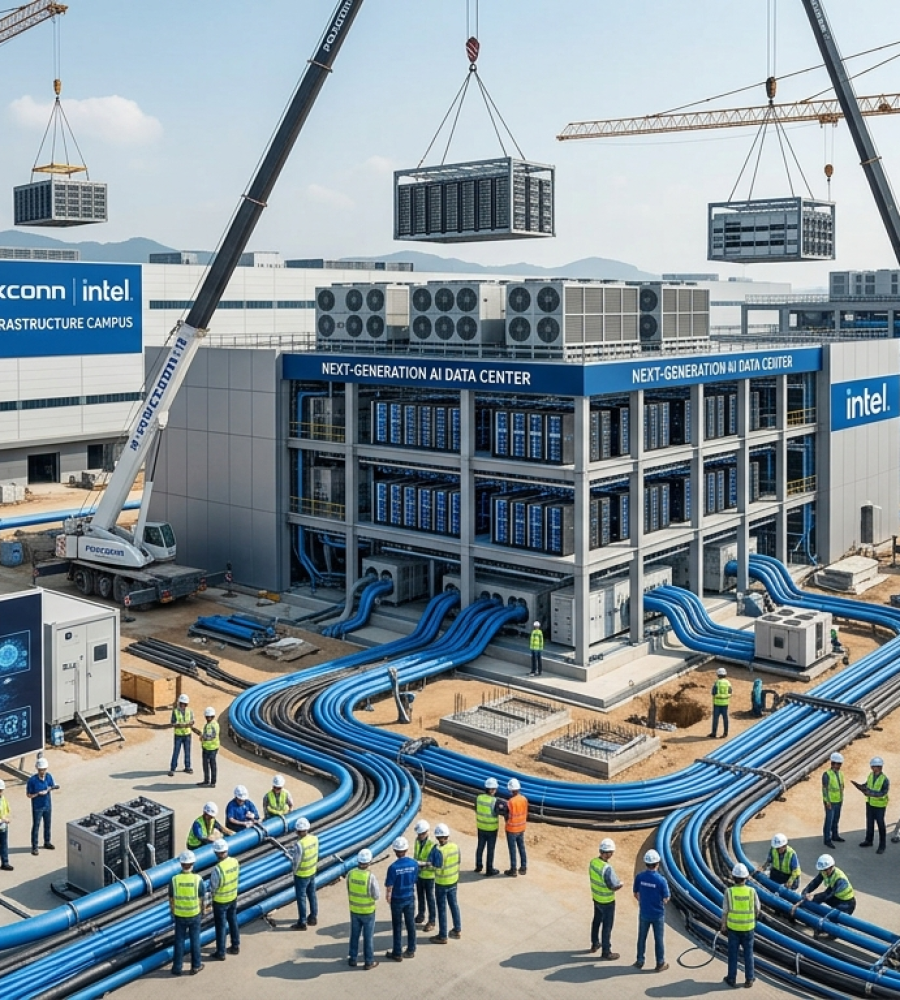
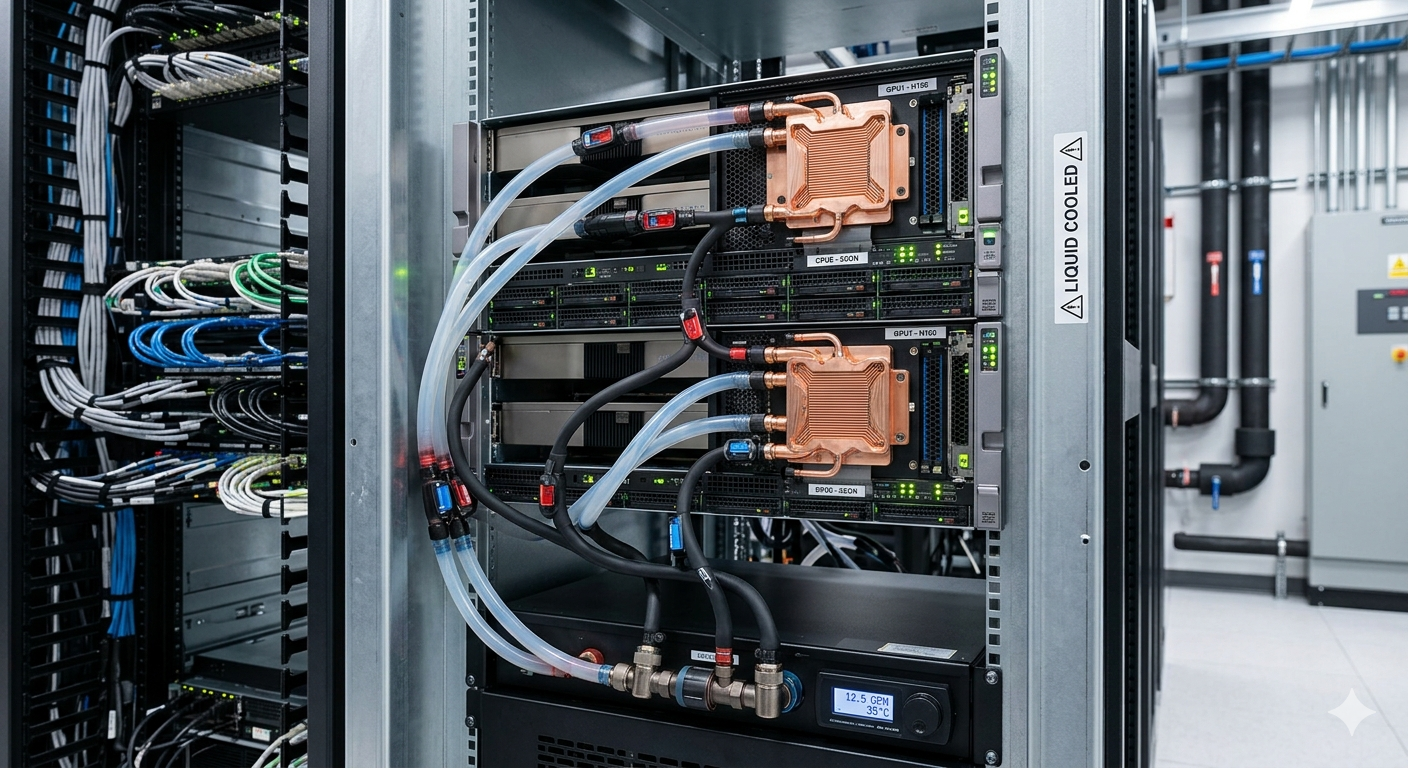
Liquid cooling addresses heat more efficiently by transferring thermal energy directly away from critical components. Instead of relying solely on air circulation, these systems use water or specialized coolants that flow through pipes positioned near high-temperature components such as GPUs. Because liquids can absorb and transfer heat more effectively than air, the process requires less energy to maintain operating temperatures. This improved efficiency has made liquid cooling one of the most promising technologies for supporting next-generation AI infrastructure. As rack densities continue increasing, many operators now view liquid cooling as a necessity rather than an optional enhancement.
Japan’s Industrial Expertise Offers a Competitive Advantage
Japanese manufacturers enter the liquid cooling market with decades of experience in thermal management technologies. Companies that developed highly efficient systems for industrial equipment, refrigeration, and consumer appliances are now applying that expertise to data center environments. This background provides a foundation for innovation as AI infrastructure requirements evolve. Japan’s engineering strengths in energy efficiency, precision manufacturing, and industrial automation position domestic companies to play a larger role in the global cooling market. The transition reflects how expertise from traditional industries is increasingly being applied to emerging AI infrastructure challenges.
Fuji Electric Targets Major Energy Savings
Among the companies investing heavily in liquid cooling technology is Fuji Electric. The company recently introduced a liquid cooling solution that replaces conventional chillers with an ejector-based cooling system. Traditional chillers depend heavily on compressors, which consume significant amounts of electricity. Fuji Electric’s design uses refrigerant flow control and kinetic energy to increase pressure while reducing overall power requirements. According to the company, the technology can lower cooling-related energy consumption by as much as 85% under certain operating conditions. Such gains could significantly improve the efficiency of AI-focused data center deployments.
Nidec Expands Production to Meet Growing Demand
Nidec is also expanding its presence in the liquid cooling market. The company manufactures coolant distribution units that support large-scale server deployments and has ramped up production capacity in Thailand to meet rising demand. These systems are designed to cool multiple server racks simultaneously while delivering greater efficiency than traditional air-based alternatives. Nidec reports that its liquid cooling solutions can achieve efficiency improvements of approximately 30% compared with conventional air-cooled systems. The company has already shipped more than 10,000 liquid cooling units, highlighting growing adoption among enterprise and hyperscale customers.
AI Server Vendors Are Accelerating Adoption
The shift toward liquid cooling is not occurring in isolation. Server manufacturers are increasingly designing systems optimized for direct liquid cooling. Companies such as Super Micro Computer have emerged as major adopters of advanced cooling technologies as customers seek infrastructure capable of supporting high-density AI workloads. Hardware vendors recognize that future generations of AI accelerators will require more sophisticated thermal management solutions. As a result, cooling technologies are becoming an increasingly important differentiator in the competitive AI infrastructure market.
Direct-to-Chip Cooling Is Emerging as a Key Technology
Mitsubishi Heavy Industries is pursuing another approach through its two-phase direct-to-chip cooling systems. These solutions deliver refrigerants directly to plates attached to processors and accelerators, allowing heat to be removed at its source. By combining liquid and gas cooling phases, the technology improves heat transfer efficiency while supporting increasingly demanding AI workloads. Direct-to-chip cooling has attracted growing interest across the industry because it enables operators to deploy more powerful processors without requiring proportionally larger cooling infrastructure. As AI hardware continues evolving, technologies that bring cooling closer to the source of heat generation are expected to play a larger role.
Hybrid Data Centers May Dominate the Near Term
Despite growing enthusiasm for liquid cooling, many operators are not abandoning air cooling entirely. Mitsubishi Corporation, which operates multiple data centers in Japan, has adopted a balanced strategy that supports both cooling methods. The company believes hybrid environments offer greater flexibility while helping manage deployment costs. Liquid cooling systems typically require significant upfront investment because infrastructure must be integrated directly into server architectures and facility designs. For many operators, combining air and liquid cooling provides a practical path toward modernization while maintaining compatibility with existing equipment.
AI Developers Are Driving Infrastructure Innovation
The demand for advanced cooling is not limited to infrastructure providers. AI developers themselves are becoming active participants in cooling innovation. Preferred Networks, one of Japan’s leading AI companies, is collaborating with Internet Initiative Japan and the Japan Advanced Institute of Science and Technology to develop liquid-cooled server technologies. These partnerships highlight how cooling infrastructure is becoming a strategic consideration for organizations building large-scale AI systems. Performance, energy efficiency, and operational costs increasingly depend on advances in thermal management as much as improvements in computing hardware.
Global Competition Is Intensifying
Japan’s efforts mirror broader trends across the global data center industry. International players such as Schneider Electric, Vertiv, and Lenovo are investing heavily in liquid cooling technologies to support the next generation of AI infrastructure. As AI workloads become more demanding, competition is shifting beyond processors and networking equipment toward supporting systems that determine overall operational efficiency. Cooling technologies are emerging as a critical battleground where incremental improvements can deliver substantial reductions in energy consumption and operating costs.
Energy Procurement Remains Part of the Equation
Cooling technology alone cannot solve every challenge associated with AI infrastructure growth. Operators are also exploring cleaner and more reliable energy sources to support rising power demand. Globally, companies are signing agreements for nuclear energy, renewable generation, and dedicated power infrastructure to secure long-term electricity supplies. In Japan, utilities and infrastructure providers are exploring ways to locate data centers closer to power generation assets. This strategy can reduce transmission losses while improving energy efficiency across the broader infrastructure ecosystem. As AI deployments scale, the relationship between computing infrastructure and energy systems is becoming increasingly interconnected.
Liquid Cooling Is Becoming a Strategic Necessity
The rapid growth of AI has transformed cooling from a background operational concern into a strategic infrastructure priority. Rising GPU power densities, escalating energy costs, and increasing sustainability requirements are accelerating the adoption of liquid cooling technologies worldwide. Japan’s technology sector is positioning itself at the center of this transition through innovations from companies such as Fuji Electric, Nidec, Mitsubishi Heavy Industries, and Preferred Networks. While challenges related to deployment costs and infrastructure complexity remain, liquid cooling is increasingly viewed as a critical enabler of future AI data center growth. As demand for AI computing continues expanding, the technologies that manage heat may become just as important as the processors generating it.